Knowledge Base

Knowledge Hub

Access BIOFIN's library of resources, including flagship publications, country reports, finance solution case studies, webinars, explainer videos, podcasts, and more.

Key Publications

Publications

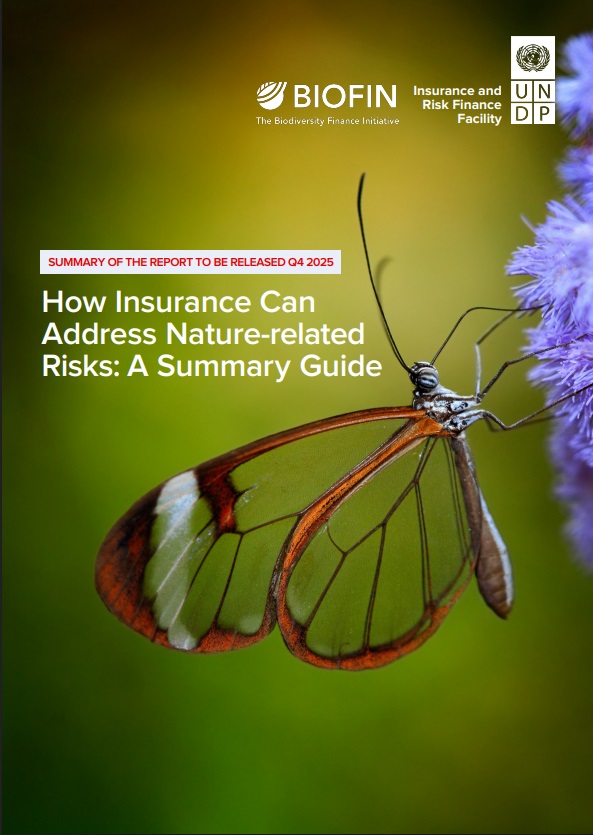
Insurance can play a crucial role in biodiversity conservation by providing financial protection against risks to natural assets, incentivizing sustainable practices, and securing key investments.
Publications

In 2022, countries adopted new global biodiversity targets under the Kunming-Montreal Global Biodiversity Framework (GBF), revisiting many goals that had gone unachieved or underachieved over the past decade.
Publications

Global Biodiversity Expenditure (GLOBE) is a taxonomy that categorizes all potential public expenditures for biodiversity.

The taxonomy consists of two components:
Publications

The BIOFIN Workbook 2024 provides detailed guidance to design and implement national biodiversity finance plans.  These are not mere plans. They set out a process to engage a coalition of actors around the issue of biodiversity finance for an extended time.
Publications

At the Conference of the Parties to the Convention on Biological Diversity 15 (CBD COP 15) in 2022, countries agreed to review and update their National Biodiversity Strategy and Action Plans
Publications

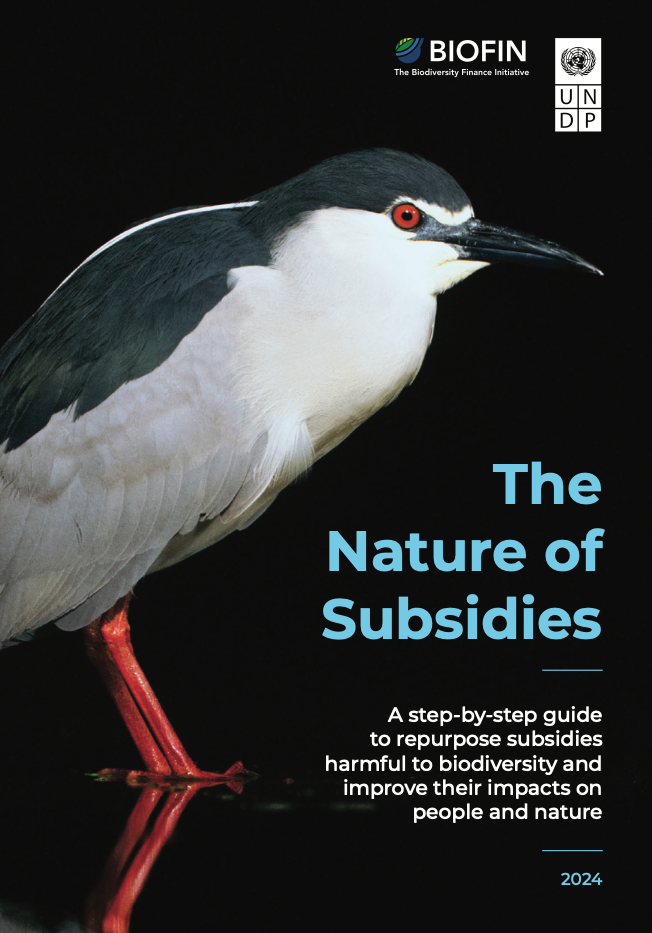
Well-intentioned subsidies aimed at socio-economic goals can have unintended negative impacts on the environment, including biodiversity. The BIOFIN team has developed a step-by-step guide to repurpose such subsidies and improve their positive impacts on people and nature.
Publications

The Kunming-Montreal Global Biodiversity Framework (GBF) calls for a whole-of-society approach to halting and reversing nature loss.

Publications

The Little Book of Investing in Nature provides an essential overview of the area of biodiversity finance at a time when governments and international negotiators are urgently seeking pragmatic solutions for the twin crises of climate change and the loss of nature.

E-LEARNING

Learning for nature: our free biodiversity finance certified e-learning course

Take our free biodiversity finance certified e-learning course. Master the methodology, connect with experts, and gain certification.

Start E-Learning
Browse the Knowledge Platform
4 Results
Publications

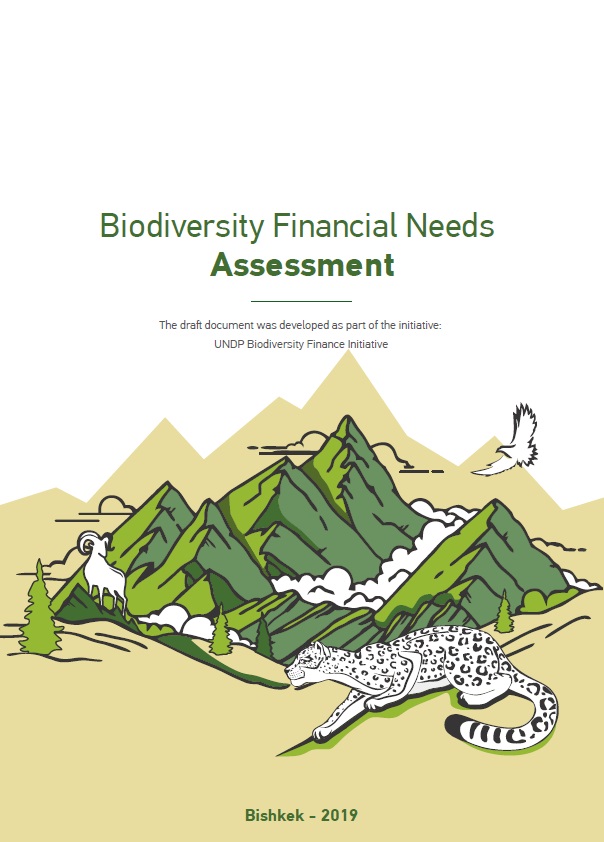
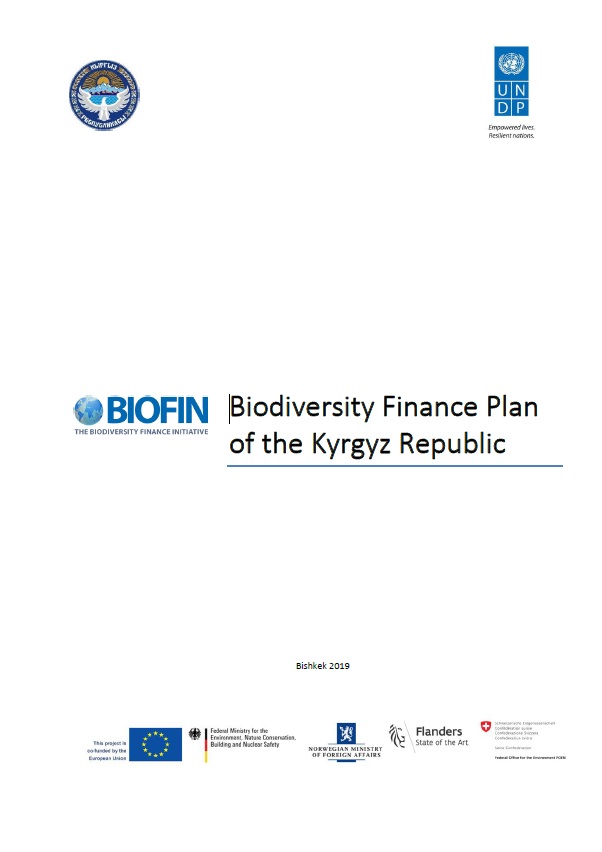
We suggest to your attention the Biodiversity Finance Plan of the Kyrgyz Republic summariz-ing the results of the first phase of the UNDP BIOFIN project. This project laid the groundwork for the pub-lic discussions on environmental finance issues: fi-nanciers and environmentalists reached an under-standing and began to use the same language. For many years it has been recognized that one of the causes of environmental degradation is the lack of funding for environmental protection measures. Thanks to the platform organized by the BIOFIN pro-ject, the Ministry of Finance of the Kyrgyz Republic for the first time acts as a leading body in integrating environmental issues and biodiversity conservation into budget planning and resource mobilization.

Publications

The Environmental Finance Political and Institutional Review (PIR) with focus on biodiversity and climate change adaptation was prepared by the Kyrgyzstan BIOFIN national team based on a participatory approach engaging ministries, agencies, stakeholders from academia, private sector, non-governmental organizations, development partners and independent experts.

The PIR focuses on the analysis of the current policy, economic, fiscal and institutional frameworks in environment, biodiversity and adaptation to climate change spheres. It includes a review of national strategy and policies, highlights sectoral linkages identifies driving forces of biodiversity changes, analyses impact of current financial frameworks on biodiversity and adaptation to climate change and describes institutions involvement. The PIR report consists of 7 chapters and includes key recommendations, applications, infographics and links.

The Kyrgyz Republic has been active in mainstreaming sustainable development and required steps of transition into the country’s main strategic documents, which determine the agenda of national development in accordance with international obligations in achieving the Sustainable Development Goals. These documents laid the foundation for incorporating the environment into the monitoring and evaluation system of   the socio-economic development of Kyrgyzstan.

Despite that the environment protection has been identified as a key national priority there is still a negative trend in natural resources management leading to natural resources depletion, environmental pollution, and loss of biological diversity in the Kyrgyz Republic. These factors undermine the capacity of ecosystem services to be functional and be restored. The pricing mechanism for the use of natural resources in the country does not take into account negative externalities, thus does not put economic restrictions on the excessive use of natural resources.

The publication proposes keys recommendations for decision makers to improve policy and sectoral development frameworks including strengthening institutional capacities and, budget planning and implementation processes. Some examples of these recommendations are the following:  

  • Mainstreaming and implementation of sustainable uses of natural resources and environment protection principles into national strategic documents related to economic growth to reduce biodiversity degradation and losses.
  • The ministries or agencies with environmental expenditures should adopt of result-based budgeting approach and align environmental expenditures with identified sustainable development priorities to ensure an increase of budget allocation and improve budget implementation efficiency.
  • Reforming or greening of potentially negative subsidies to reduce burden on the national budget. Most of subsidies were introduced to support low-income population; however, currently everyone can benefit from them. Potentially negative (harmful) subsidies for biodiversity must be reformed. Firstly, it is necessary to conduct a comprehensive assessment of their actual social effectiveness. This assessment will foster the plan for subsidies’ reform - “greening” with minimal disadvantage for vulnerable groups of the population who depend on these subsidies. The reform of subsidies will allow, on the one hand, to save and mobilize resources, on the other hand, to reduce their impact on the environment with benefits for future budget.
Publications

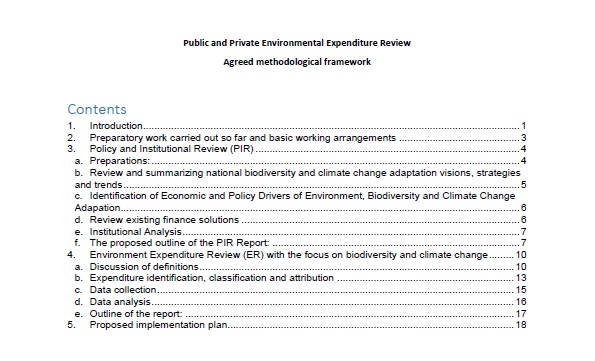
The agreed methodology framework roots itself in the overarching purpose of influencing national budget and planning processes to integrate biodiversity and climate change concerns and of influencing private sector behaviour through appropriate financial mechanisms.

BIOFIN Videos
SEE ALL