Knowledge Base

Knowledge Hub

Access BIOFIN's library of resources, including flagship publications, country reports, finance solution case studies, webinars, explainer videos, podcasts, and more.

Key Publications
Publications

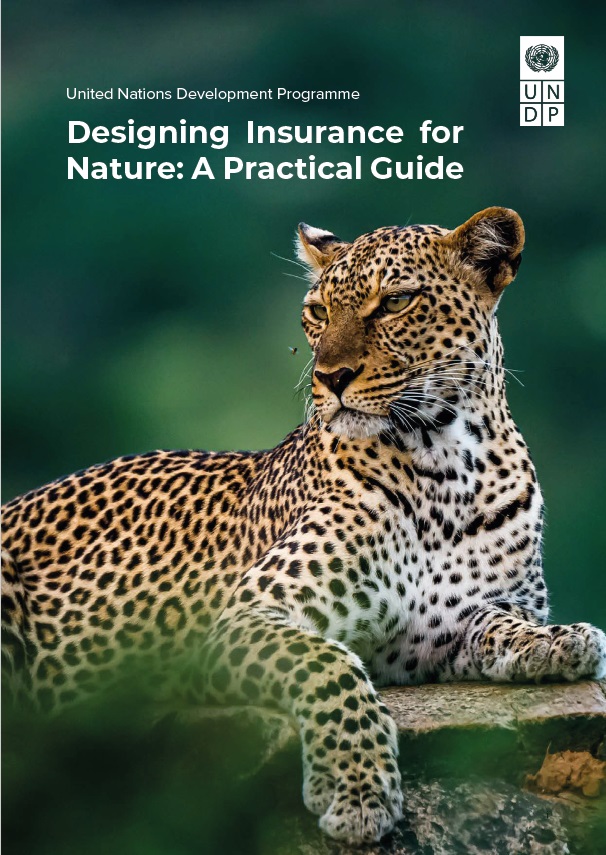
Insurance can play a crucial role in biodiversity conservation by providing financial protection against risks to natural assets, incentivizing sustainable practices, and securing key investments.
Publications

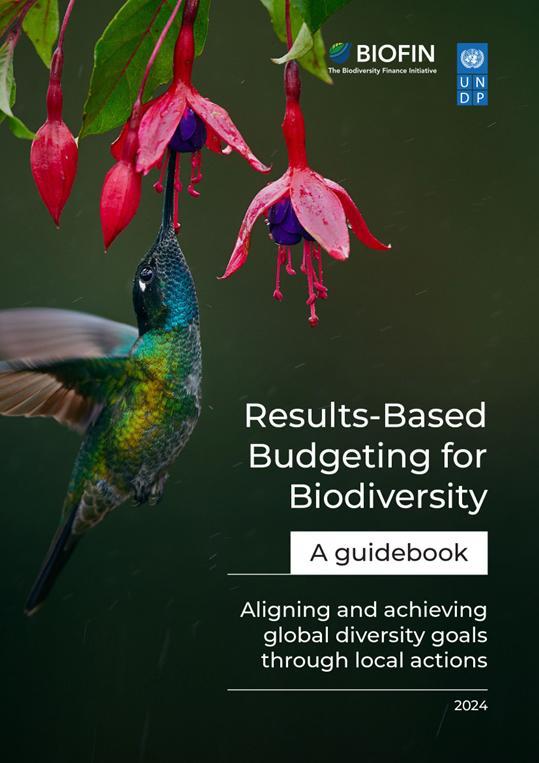
In 2022, countries adopted new global biodiversity targets under the Kunming-Montreal Global Biodiversity Framework (GBF), revisiting many goals that had gone unachieved or underachieved over the past decade.
Publications

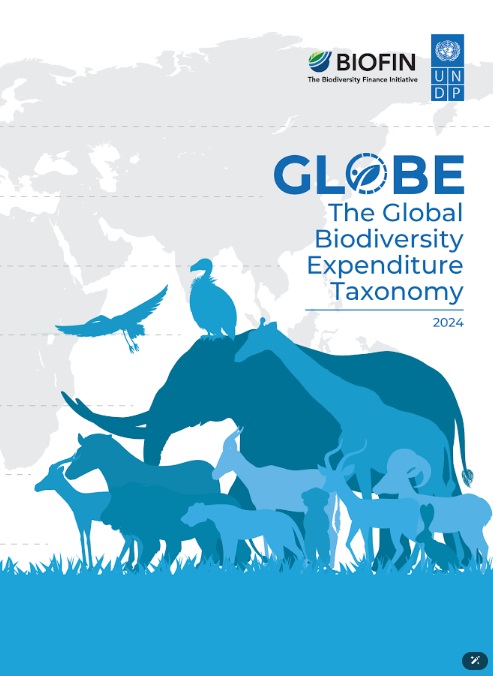
Global Biodiversity Expenditure (GLOBE) is a taxonomy that categorizes all potential public expenditures for biodiversity.

The taxonomy consists of two components:
Publications

The BIOFIN Workbook 2024 provides detailed guidance to design and implement national biodiversity finance plans.  These are not mere plans. They set out a process to engage a coalition of actors around the issue of biodiversity finance for an extended time.
Publications

At the Conference of the Parties to the Convention on Biological Diversity 15 (CBD COP 15) in 2022, countries agreed to review and update their National Biodiversity Strategy and Action Plans
Publications

Well-intentioned subsidies aimed at socio-economic goals can have unintended negative impacts on the environment, including biodiversity. The BIOFIN team has developed a step-by-step guide to repurpose such subsidies and improve their positive impacts on people and nature.
Publications

The Kunming-Montreal Global Biodiversity Framework (GBF) calls for a whole-of-society approach to halting and reversing nature loss.

Publications

The Little Book of Investing in Nature provides an essential overview of the area of biodiversity finance at a time when governments and international negotiators are urgently seeking pragmatic solutions for the twin crises of climate change and the loss of nature.

E-LEARNING

Learning for nature: our free biodiversity finance certified e-learning course

Take our free biodiversity finance certified e-learning course. Master the methodology, connect with experts, and gain certification.

Start E-Learning
Browse the Knowledge Platform
645 Results
Guidelines

This policy develops principles focused on achieving greater co-responsibility of the productive sectors to contribute to the conservation of protected areas and to reward vulnerable populations that support their care. Principles associated with good governance of protected areas and the System are incorporated. Special emphasis is placed on the need to increase management effectiveness, and the importance of protecting natural spaces with associated cultural elements and meanings is positioned.

Additionally, this policy is articulated with the 30x30 initiative aimed at protecting at least 30% of the oceans and 30% of the terrestrial areas and continental waters of the world by the year 2030, with at least 10% subject to strict protection, being discussed in the new Global Framework for Biodiversity post 2020. This Framework will establish new objectives and goals to be implemented by the member countries of the Convention on Biological Diversity.

The construction of this CONPES document began in 2019, with the support the Technical Secretariat of the National Planning Department and work from the Ministry of Environment and Sustainable Development, as well as the National Natural Parks of Colombia. The Worldwide Fund for Nature contributed in this process as the implementer of the GEF SINAP project supported by the IDB and the United Nations Development Program UNDP.

Publications

El capital natural y sus servicios ecosistémicos pueden ser valorados económicamente tomando en cuenta sus valores de no uso, y sus valores de uso. En este sentido, las Áreas Silvestres Protegidas también pueden analizarse bajo esa óptica, con valores de existencia expresados por el deseo de la sociedad a conservarlos, valores de uso indirecto que proveen estas áreas a través de servicios ecosistémicos como la regulación del agua y del clima, y valores de uso directo que se concentran en estas áreas en el servicio de recreación o ecoturismo.

Publications

El modelo de costos propuesto para estimar las tarifas de las Áreas Silvestres Protegidas (ASP) se sustenta en la premisa de explorar las necesidades y particularidades de cada una de ellas y a partir de ello contemplar los insumos necesarios, esto siguiendo la misma clasificación utilizada por el Presupuesto Nacional

Publications

Análisis detallado acerca de gasto efectivo, del Gobierno Central, órganos desconcentrados y entidades descentralizadas, destinado a la conservación y uso sostenible de la biodiversidad en Costa Rica, para el período 2015-2019, así como para el Presupuesto de la República para el año 2020, de conformidad con la metodología establecida en el Manual Iniciativa de Finanzas para la Biodiversidad (BIOFIN 2018).

Publications

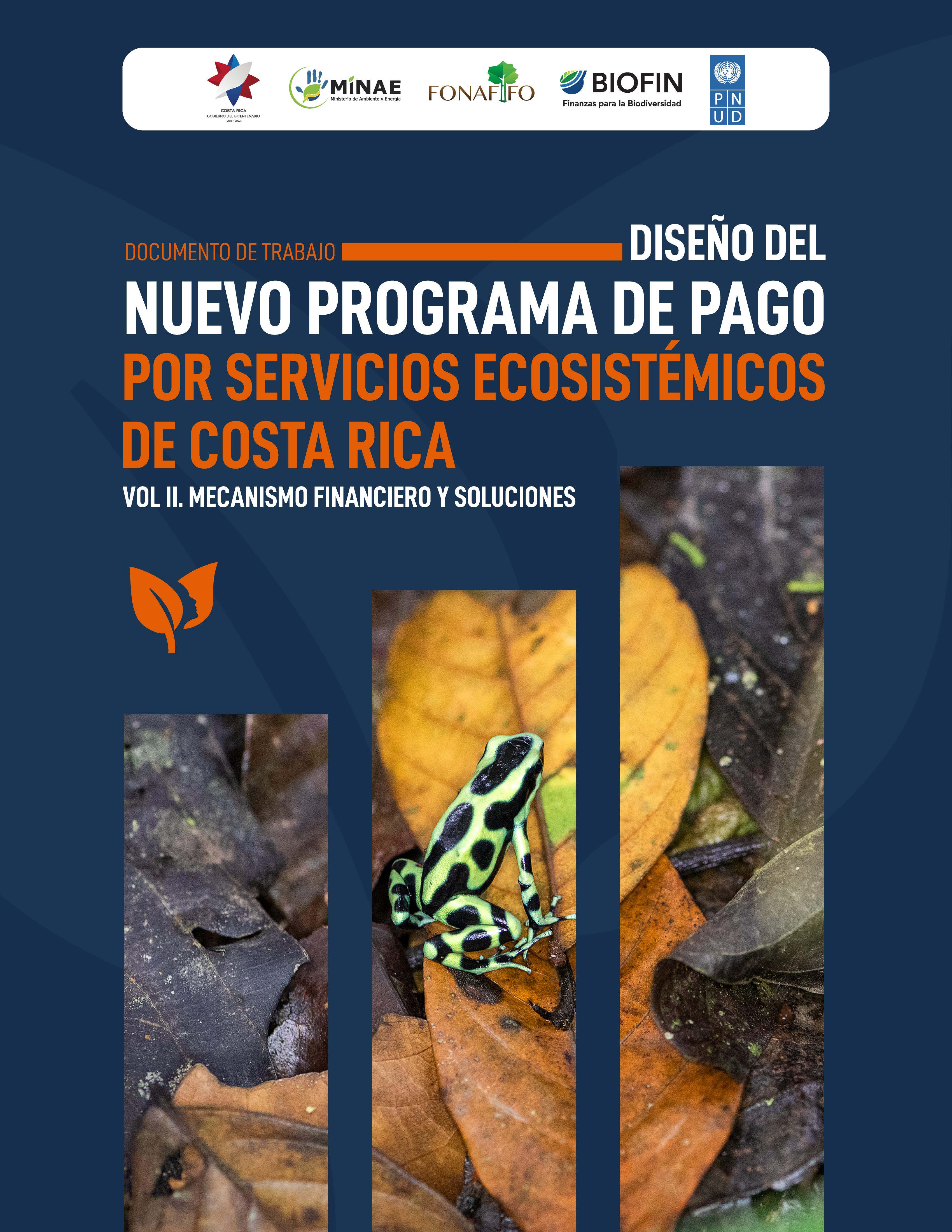
El presente Volumen, el último de la serie sobre el rediseño del programa de Pago por Servicios Ambientales de Costa Rica, se elabora a raíz del análisis técnico y político que realizó el equipo consultor junto con las autoridades del gobierno (i.e. MINAE y FONAFIFO) y BIOFIN sobre el mecanismo financiero propuesto en el Volumen II.

Publications

The Biodiversity Finance Plan (BFP) is Cambodia’s national roadmap to fund biodiversity, developed under UNDP’s BIOFIN. Using the 2018 BER baseline (US$112M spent vs. ~US$305M needed), it identifies a significant financing gap and sets priorities to mobilize resources, avoid harmful spending, and use funds more efficiently. After reviewing 24 NBSAP themes and engaging key ministries and stakeholders, five first-priority solutions were selected for 2021–2026: (1) develop sustainable, community-based ecotourism, (2) promote payment for ecosystem services, (3) enhance REDD+ impacts for conservation, (4) scale good agricultural practices to reduce biodiversity harm, and (5) strengthen institutional capacity for biodiversity finance review. Implementation strategies will be co-developed with lead agencies, with financing sought domestically and globally.

Publications

The Financial Needs Assessment (FNA) under UNDP’s BIOFIN quantifies the resources required to implement Cambodia’s NBSAP and compares them with current spending to reveal the financing gap. Covering 2018–2022, required budgets rise from US$305 million (2018) to US$652 million (2022); the 2018 shortfall is US$193 million. The FNA helps policymakers cost and prioritize NBSAP actions and informs a Biodiversity Finance Plan that identifies concrete funding sources and mechanisms to achieve Cambodia’s biodiversity goals.

Publications

The Biodiversity Expenditure Review (BER) under UNDP’s BIOFIN establishes Cambodia’s 2018 baseline of biodiversity spending aligned with the NBSAP. It defines what counts as biodiversity expenditure, maps public and private sources, channels and instruments, and assesses government revenues and funds to identify opportunities to mobilize finance. The BER answers how spending is defined, how much is allocated across NBSAP themes and key sectors, and the scale of private investment. Findings highlight main financing sources, where expenditures could be re-aligned, allocation/absorption bottlenecks, and practical next steps. While national revenues have grown under PFM reforms, biodiversity-linked revenues (e.g., timber, rubber, concessions) remain modest—pointing to avenues for stronger, targeted resource mobilization.

Publications

[English below]

โครงการไบโอฟินภายใต้โครงการพัฒนาแห่งสหประชาชาติ ได้เล็งเห็นถึงแนวโน้มการเปลี่ยนแปลงระบบการเงินเพื่อการดูแลความหลากหลายทางชีวภาพที่เพิ่มขึ้นอย่างมีนัยสำคัญของกระแสการเงินทั้งในและต่างประเทศที่มุ่งเน้นการลงทุนเพื่อบริหารจัดการความหลากหลายทางชีวภาพ โดยมีเครื่องมือทางการเงิน ผู้ให้บริการทางการเงิน และกลไกการส่งมอบบริการที่หลากหลายกว่าที่เคยเป็นมา อย่างไรก็ดี หนึ่งในความท้าทายที่ผู้เกี่ยวข้องกับเรื่องระบบการเงินเพื่อธรรมชาติพบเจอ คือการคัดเลือกกลไกการเงินที่สามารถตอบโจทย์นักลงทุนพร้อม แนวทางแก้ไขปัญหาที่เหมาะสม และมีประสิทธิผลมากที่สุด ซึ่งกลไกการเงินนั้นๆต้องสามารถผสานร่วมกับกลไกการเงินอื่นๆ สร้างนวัตกรรมแปลกใหม่ เพื่อให้ผู้ที่มีส่วนเกี่ยวข้องได้มีเครื่องมือที่เหมาะสมในการลงทุนเพื่อดูแลรักษาธรรมชาติได้ดีกว่าเดิม ดังนั้น “คู่มือ” ฉบับนี้จึงเป็นจุดเริ่มต้นของการรวบรวมชุดความคิด แนวทางการนำร่องกลไกการเงิน และกลยุทธ์ที่สามารถนำไปประยุกต์ใช้ได้จริง

--

The biodiversity finance landscape is changing. Both domestic and international financial flows have grown and the range of financing instruments, providers, and delivery mechanisms now available is significantly wider than ever before. One of the key challenges for practitioners is selecting the most appropriate and effective solutions out of the growing list of consolidated, emerging, and non-traditional mechanisms to fund nature and better align interest of various actors.

This “catalogue” is the beginning of a comprehensive list of these instruments, tools and strategies that are

applicable to the field of biodiversity finance.


Publications

The fact that Colombia is the country with the highest biodiversity per square kilometer and has around 14% of the world's biodiversity, implies a very important challenge in terms of mobilizing resources for the conservation of biodiversity and its ecosystem services, as well as to make these an engine for developing sustainably.

During the last 10 years, about 2 trillion pesos or about 546 million dollars of the public budget have been invested annually in biodiversity.

Public spending is managed mainly by central government entities and by territorial governments, with a smaller but important participation of regional autonomous corporations.

More than half of public sector funding for biodiversity management has been invested in projects related to the protection of ecosystems, followed by investment in restoration of degraded ecosystems, research, incorporation of biodiversity in different sectors and the sustainable use of natural resources.

See the post in spanish here

Publications

productos elaborados, es decir el mapeo de demanda de productos agropecuarios por parte del sector turístico, el mapeo de oferta de productos y productores agropecuarios y credenciales de sostenibilidad presentes en la región y finalmente el mapeo de los canales de intermediación de productos agropecuarios en la ZHN del país, con recomendaciones para la iniciativa Tu-MoDeLo y sus aliados.

BIOFIN Videos
SEE ALL