Knowledge Base

Knowledge Hub

Access BIOFIN's library of resources, including flagship publications, country reports, finance solution case studies, webinars, explainer videos, podcasts, and more.

Key Publications

Publications

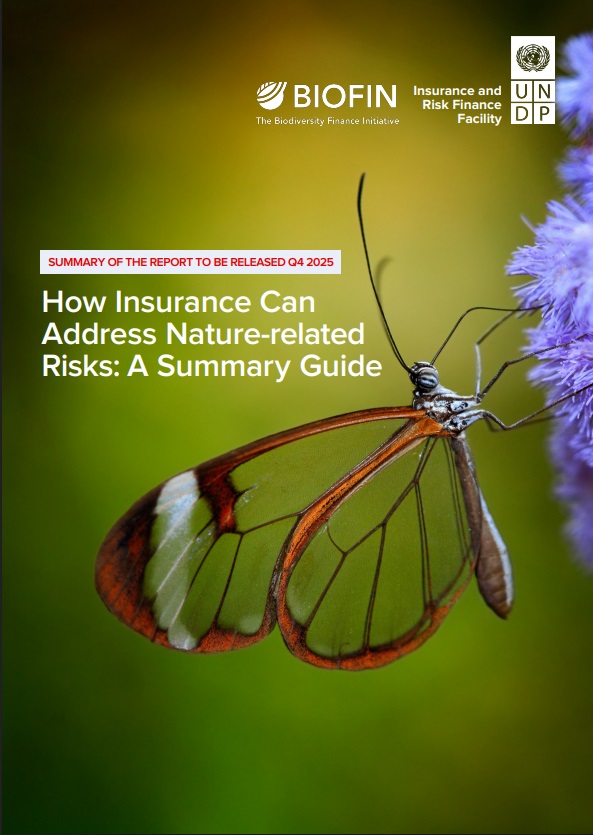
Insurance can play a crucial role in biodiversity conservation by providing financial protection against risks to natural assets, incentivizing sustainable practices, and securing key investments.
Publications

In 2022, countries adopted new global biodiversity targets under the Kunming-Montreal Global Biodiversity Framework (GBF), revisiting many goals that had gone unachieved or underachieved over the past decade.
Publications

Global Biodiversity Expenditure (GLOBE) is a taxonomy that categorizes all potential public expenditures for biodiversity.

The taxonomy consists of two components:
Publications

The BIOFIN Workbook 2024 provides detailed guidance to design and implement national biodiversity finance plans.  These are not mere plans. They set out a process to engage a coalition of actors around the issue of biodiversity finance for an extended time.
Publications

At the Conference of the Parties to the Convention on Biological Diversity 15 (CBD COP 15) in 2022, countries agreed to review and update their National Biodiversity Strategy and Action Plans
Publications

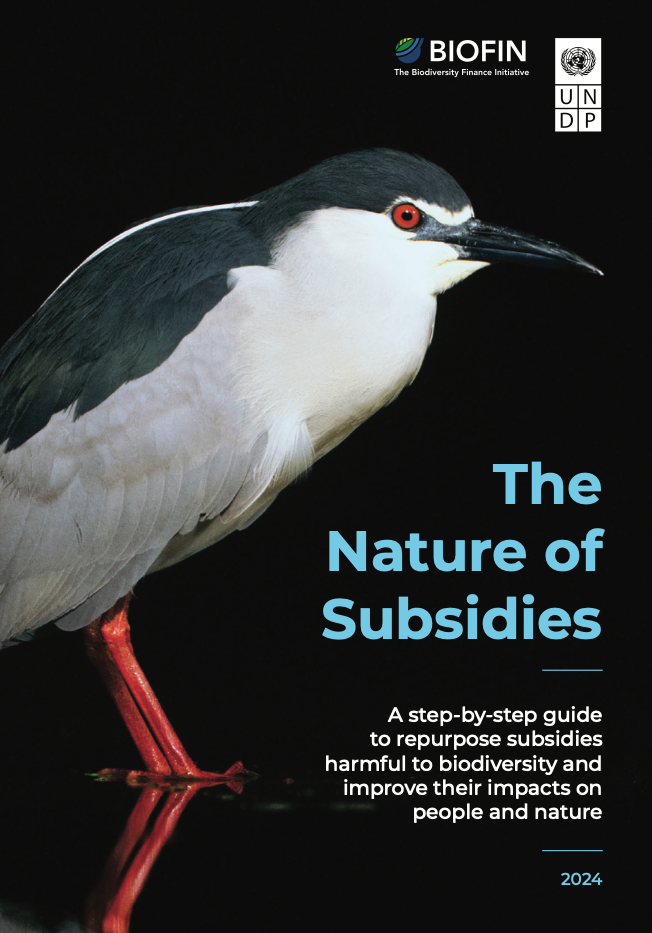
Well-intentioned subsidies aimed at socio-economic goals can have unintended negative impacts on the environment, including biodiversity. The BIOFIN team has developed a step-by-step guide to repurpose such subsidies and improve their positive impacts on people and nature.
Publications

The Kunming-Montreal Global Biodiversity Framework (GBF) calls for a whole-of-society approach to halting and reversing nature loss.

Publications

The Little Book of Investing in Nature provides an essential overview of the area of biodiversity finance at a time when governments and international negotiators are urgently seeking pragmatic solutions for the twin crises of climate change and the loss of nature.

E-LEARNING

Learning for nature: our free biodiversity finance certified e-learning course

Take our free biodiversity finance certified e-learning course. Master the methodology, connect with experts, and gain certification.

Start E-Learning
Browse the Knowledge Platform
645 Results
Publications

Insurance can play a crucial role in biodiversity conservation by providing financial protection against risks to natural assets, incentivizing sustainable practices, and securing key investments. This summary of a forthcoming report 'How Insurance Can Address Nature-related Risks: A Summary Guide' provides an overview of how insurance can contribute to biodiversity protection, highlighting key concepts, case studies, and recommendations for designing effective insurance solutions. The summary can be used by countries preparing their National Biodiversity Finance Plans, and by conservation agencies, community-based organizations, research institutions, nongovernmental organizations (NGOs), private sector investors and development partners involved in developing biodiversity conservation and restoration plans. 

Case Studies

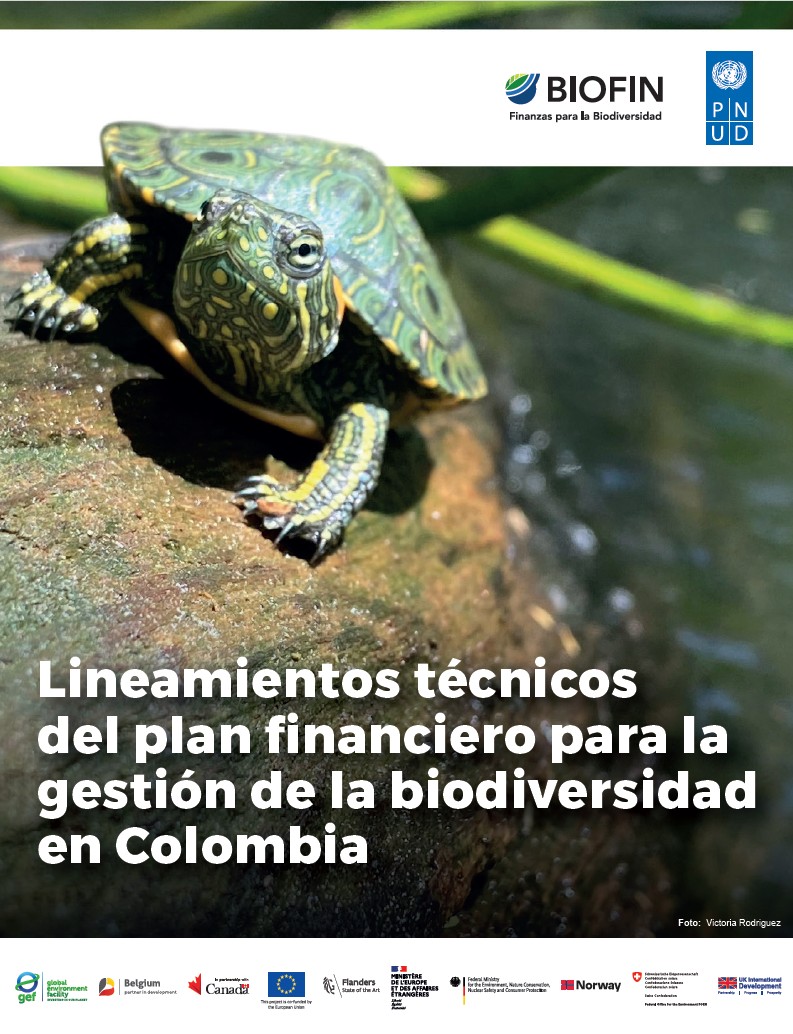
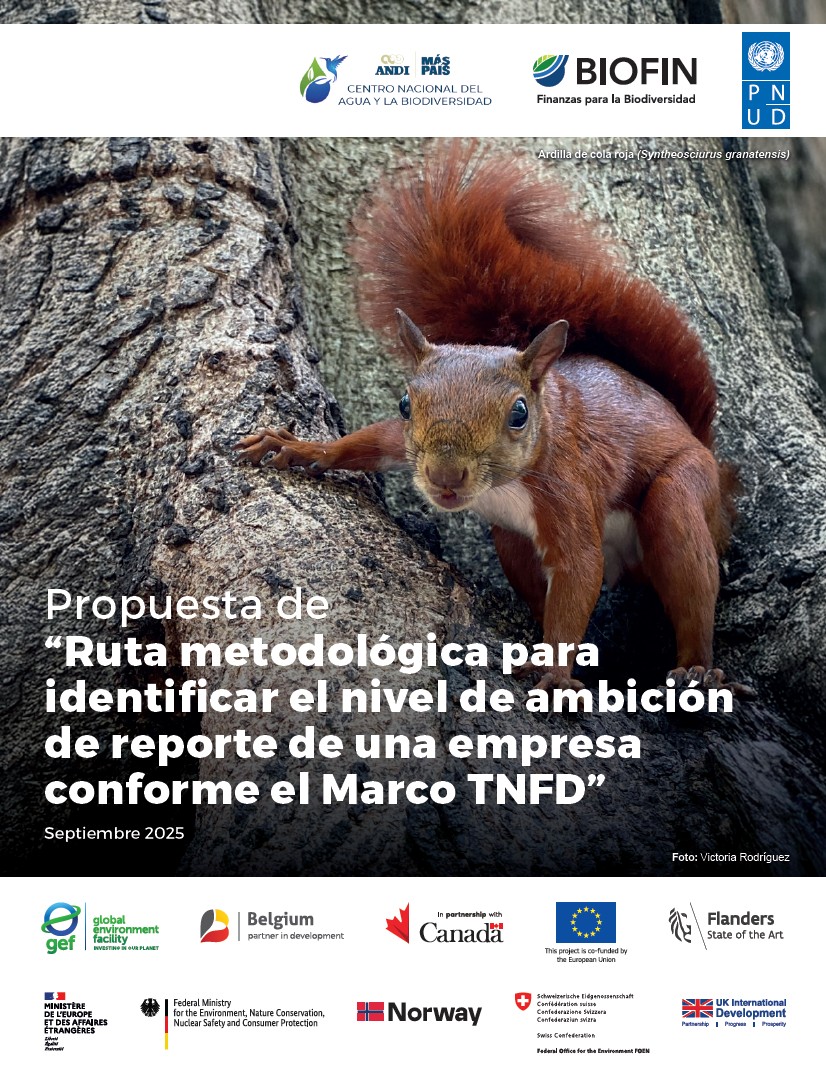
Conscientes del rol estratégico del financiamiento para transformar el campo colombiano, el Fondo para el Financiamiento del Sector Agropecuario (FINAGRO) y el PNUD diseñaron una ruta para reverdecer los créditos agropecuarios. El objetivo es que el acceso al crédito no solo impulse la productividad, sino que también fortalezca la conservación de los ecosistemas.

Este propósito es la materialización del análisis de incentivos del sector agropecuario con impactos negativos sobre la biodiversidad en Colombia realizado por la Iniciativa de Finanzas para la Biodiversidad (BIOFIN), como apoyo al gobierno nacional en el diseño de soluciones financieras que permitan movilizar, redireccionar y optimizar recursos públicos y privados para la conservación de la biodiversidad.

En ese sentido, este documento presenta los avances que el país ha tenido en el análisis y reforma de incentivos financieros perjudiciales, con el propósito de alinear las políticas de desarrollo rural y financiero con los compromisos internacionales adquiridos por el país ante el Convenio sobre la Diversidad Biológica (CDB). De igual forma, se presenta la primera ruta de reforma de incentivos para Colombia que FINAGRO y PNUD BIOFIN están implementando para alinear el crédito agropecuario a los modelos de producción sostenibles, mediante una metodología que combina el enfoque ecosistémico con criterios técnicos, financieros y sociales. El proceso ha convocado a expertos del sector financiero, agropecuario y ambiental para trabajar inicialmente en seis cadenas productivas: ganadería bovina, arroz, cacao, café, yuca y productos no maderables del bosque, seleccionadas por su importancia territorial, nivel de organización y demanda de crédito.

Case Studies

Aware of the strategic role of financing in transforming the Colombian countryside, The Financial Fund for the Agriculture Sector - FINAGRO and UNDP have designed a roadmap to greening agricultural credit. The goal is for access to credit to not only boost productivity but also strengthen ecosystem conservation.

This objective represents the materialization of the analysis of agricultural sector incentives with negative impacts on biodiversity in Colombia, conducted by the Biodiversity Finance Initiative (BIOFIN). It supports the national government in designing financial solutions aimed at mobilizing, redirecting, and optimizing public and private resources for biodiversity conservation.

In this context, this document presents the progress Colombia has made in analyzing and reforming harmful financial incentives, with the aim of aligning rural development and financial policies with the international commitments undertaken by the country under the Convention on Biological Diversity (CBD). Likewise, it introduces the first incentive reform roadmap for Colombia, which FINAGRO and UNDP BIOFIN are implementing to align agricultural credit with sustainable production models, using a methodology that combines the ecosystem approach with technical, financial, and social criteria. The process has brought together experts from the financial, agricultural, and environmental sectors to initially work on six productive value chains: cattle ranching, rice, cocoa, coffee, cassava, and non-timber forest products, selected for their territorial importance, level of organization, and credit demand.

Case Studies

Conscientes del rol estratégico del financiamiento para transformar el campo colombiano, el Fondo para el Financiamiento del Sector Agropecuario (FINAGRO) y el PNUD diseñaron una ruta para reverdecer los créditos agropecuarios. El objetivo es que el acceso al crédito no solo impulse la productividad, sino que también fortalezca la conservación de los ecosistemas.

Este propósito es la materialización del análisis de incentivos del sector agropecuario con impactos negativos sobre la biodiversidad en Colombia realizado por la Iniciativa de Finanzas para la Biodiversidad (BIOFIN), como apoyo al gobierno nacional en el diseño de soluciones financieras que permitan movilizar, redireccionar y optimizar recursos públicos y privados para la conservación de la biodiversidad.

En ese sentido, este documento presenta los avances que el país ha tenido en el análisis y reforma de incentivos financieros perjudiciales, con el propósito de alinear las políticas de desarrollo rural y financiero con los compromisos internacionales adquiridos por el país ante el Convenio sobre la Diversidad Biológica (CDB). De igual forma, se presenta la primera ruta de reforma de incentivos para Colombia que FINAGRO y PNUD BIOFIN están implementando para alinear el crédito agropecuario a los modelos de producción sostenibles, mediante una metodología que combina el enfoque ecosistémico con criterios técnicos, financieros y sociales. El proceso ha convocado a expertos del sector financiero, agropecuario y ambiental para trabajar inicialmente en seis cadenas productivas: ganadería bovina, arroz, cacao, café, yuca y productos no maderables del bosque, seleccionadas por su importancia territorial, nivel de organización y demanda de crédito.

Case Studies

Aware of the strategic role of financing in transforming the Colombian countryside, The Financial Fund for the Agriculture Sector - FINAGRO and UNDP have designed a roadmap to greening agricultural credit. The goal is for access to credit to not only boost productivity but also strengthen ecosystem conservation.

This objective represents the materialization of the analysis of agricultural sector incentives with negative impacts on biodiversity in Colombia, conducted by the Biodiversity Finance Initiative (BIOFIN). It supports the national government in designing financial solutions aimed at mobilizing, redirecting, and optimizing public and private resources for biodiversity conservation.

In this context, this document presents the progress Colombia has made in analyzing and reforming harmful financial incentives, with the aim of aligning rural development and financial policies with the international commitments undertaken by the country under the Convention on Biological Diversity (CBD). Likewise, it introduces the first incentive reform roadmap for Colombia, which FINAGRO and UNDP BIOFIN are implementing to align agricultural credit with sustainable production models, using a methodology that combines the ecosystem approach with technical, financial, and social criteria. The process has brought together experts from the financial, agricultural, and environmental sectors to initially work on six productive value chains: cattle ranching, rice, cocoa, coffee, cassava, and non-timber forest products, selected for their territorial importance, level of organization, and credit demand.

Publications

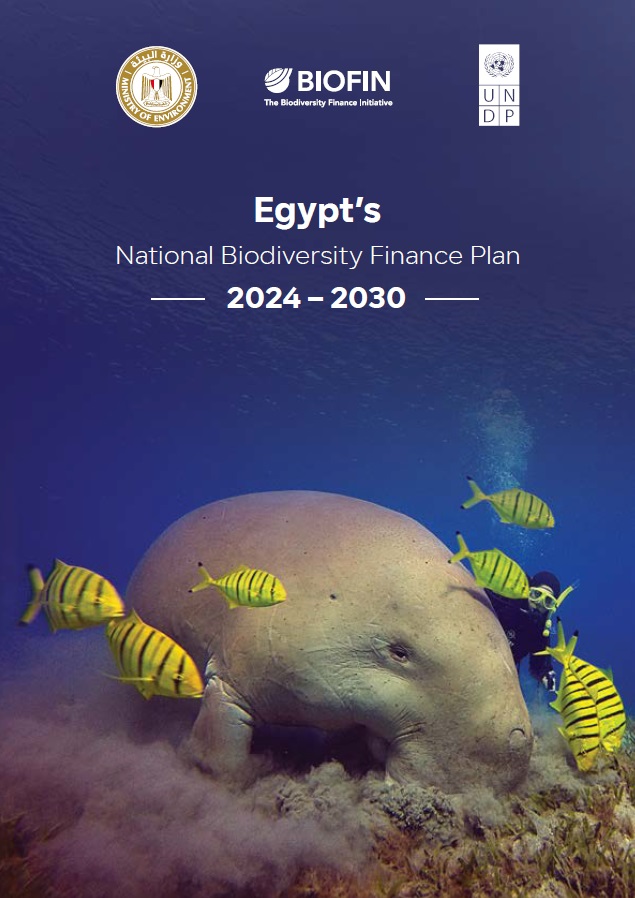
Egypt’s Biodiversity Finance Policy and Institutional Review (PIR) highlights the significant national financing gap for biodiversity conservation, while recognizing Egypt’s growing commitment to addressing this challenge through policy reform and international engagement. The review situates biodiversity as a key driver of Egypt’s economy, supporting sectors such as agriculture, fisheries, tourism, and energy, and underscores the substantial economic value of ecosystems such as coral reefs, protected areas, and rangelands. It finds that Egypt has a strong strategic and institutional foundation for biodiversity conservation, anchored in the National Biodiversity Strategy and Action Plan (NBSAP) and Egypt Vision 2030, and related national strategies on climate change, energy, tourism, agriculture, water, and urban development. However, biodiversity remains underfunded within the national budget, despite increasing allocations to green investments and ongoing reforms to phase out environmentally harmful subsidies.

The PIR reviews existing biodiversity finance mechanisms at the site, national, and international levels, noting reliance on international funding alongside emerging domestic and innovative finance approaches. It also analyzes stakeholder roles and engagement, identifying key institutions critical for advancing biodiversity finance reform. The review concludes with recommendations to strengthen governance and coordination, improve economic valuation of biodiversity, integrate biodiversity into national financial and planning systems, and expand innovative and private-sector financing, including corporate social responsibility (CSR), Public Private Partnerships (PPP), and Results-based Budgeting. Key priorities include reforming protected area revenue systems, eliminating harmful subsidies, deepening engagement with finance and planning authorities, and developing a National Biodiversity Finance Plan to systematically mobilize and allocate resources for long-term biodiversity conservation in Egypt.

Case Studies

Colombia, one of the most biodiverse countries in the world, faces a significant financing gap to meet its biodiversity and climate commitments, despite allocating around USD 660 million annually. Since 2015, UNDP, through its BIOFIN initiative, has supported the promotion of innovative financial solutions such as payments for ecosystem services and access to public and private funding. In parallel, key risks affecting the effectiveness of biodiversity investments have been identified, including environmental, social, and financial risks. To mitigate these, UNDP—through BIOFIN and the Investment Risk Finance Facility (IRFF), in partnership with the Colombian Federation of Insurers and other partners such as Previsora, Suramericana, South Pole, WWF, and Pipra—has promoted the development of specialized insurance products. This insure instrument, implemented through mechanisms like Habitat Banks and the Water Fund, aim to protect investments against critical risks, foster nature-based investments, and ensure the sustainability of conservation efforts.

Case Studies

El presente documento es un extracto de la versión extendida Biodiversity-related Risks and the Financial System: Evidence from Mexico desarrollado por Serafín Martínez Jaramillo; Luis Onésimo Escobar; Karina Caballero; Carlos López y Saúl Basurto. El estudio fue encargado por la Iniciativa Finanzas de la Biodiversidad (BIOFIN), del Programa de las Naciones Unidas para el Desarrollo en México (PNUD)con el objetivo de integrar las consideraciones sobre biodiversidad en el sector financiero, identificar riesgos y oportunidades derivados de la degradación y conservación de la naturaleza, respectivamente, y la creación de condiciones habilitantes para la participación del sector en los esfuerzos de conservación. El documento completo puede consultarse en este link.

Case Studies

This document is an excerpt from the extended version Biodiversity-related Risks and the Financial System: Evidence from Mexico developed by Seraf ín Martínez Jaramillo; Luis Onésimo Escobar; Karina Caballero; Carlos López and Saúl Basurto. The study was commissioned by the Biodiversity Finance Initiative (BIOFIN) of the United Nations Development Programme in Mexico (UNDP) with the aim of integrating biodiversity considerations into the financial sector, identifying risks and opportunities arising f rom nature degradation and conservation, respectively, and creating enabling conditions for the sector's participation in conservation efforts. The full document can be consulted through this link.

Publications

El presente documento expone el ejercicio de desarrollo entre los equipos técnicos de
BIOFIN y JPRF de una propuesta de regulación de divulgación de asuntos sociales, ambientales y de
gobernanza, a ser emitida por la Junta de Política y Regulación Financiera y orientada a sus sistemas,
sectores y entidades reguladas. Se plantea un sustento técnico jurídico que establezca la relevancia y
oportunidad en la emisión de una regulación tomando en cuenta el marco normativo, análisis
comparativo con otros países y capacidades actuales de dichas entidades. Adicionalmente se han
desarrollado propuestas de ámbito de la regulación y categorización y progresividad de la norma.

Publications

This policy brief presents key insights from a recent study proposing a strategic redesign of Rwanda’s Clean Cooking Results-Based Financing (CC-RBF) scheme. The brief explores how the CC-RBF could be enhanced to accelerate the country’s transition from traditional firewood use to cleaner, more sustainable cooking technologies.

The proposed redesign is not a finalized policy but a set of evidence-based recommendations aimed at addressing pressing environmental and social challenges. These include reducing deforestation, protecting biodiversity, improving public health, and promoting social equity—particularly for women and children who are most affected by traditional cooking practices.

The brief suggests scaling up access to clean cookstoves, targeting implementation in biodiversity and deforestation hotspots, and integrating sustainable fuel alternatives such as LPG and biomass briquettes. It also emphasizes the importance of robust monitoring systems, public awareness campaigns, and support for local innovation.

Aligned with Rwanda’s Vision 2050 and its climate commitments, these proposals provide a roadmap for a more inclusive and resilient transition to clean cooking. The accompanying policy brief outlines three potential pathways for implementation, offering a foundation for informed dialogue and future action.

Publications

As Rwanda continues its journey toward sustainable development, a recent study offers valuable insights into how the Crop Intensification Programme (CIP) could evolve to better support biodiversity and social equity. While the CIP has played a vital role in boosting agricultural productivity, the study highlights environmental and social challenges linked to its current subsidy model—particularly the reliance on inorganic fertilisers and monocropping practices.

The findings suggest that a phased reduction of inorganic fertiliser subsidies, especially in rice cultivation, could help mitigate biodiversity loss and soil degradation. The policy brief proposes reallocating resources to promote organic fertilisers, strengthen farmer support systems like the Girinka programme, and invest in research, extension services, and sustainable land management.

Importantly, these recommendations are intended to inform ongoing dialogue and policy development, offering a roadmap for aligning agricultural productivity with environmental sustainability and social inclusion.

This work supports Rwanda’s Vision 2050 and provides a foundation for future discussions on how to balance food security with ecological resilience. Stakeholder engagement, inclusive decision-making, and adaptive management are central to the proposed approach.

BIOFIN Videos
SEE ALL