
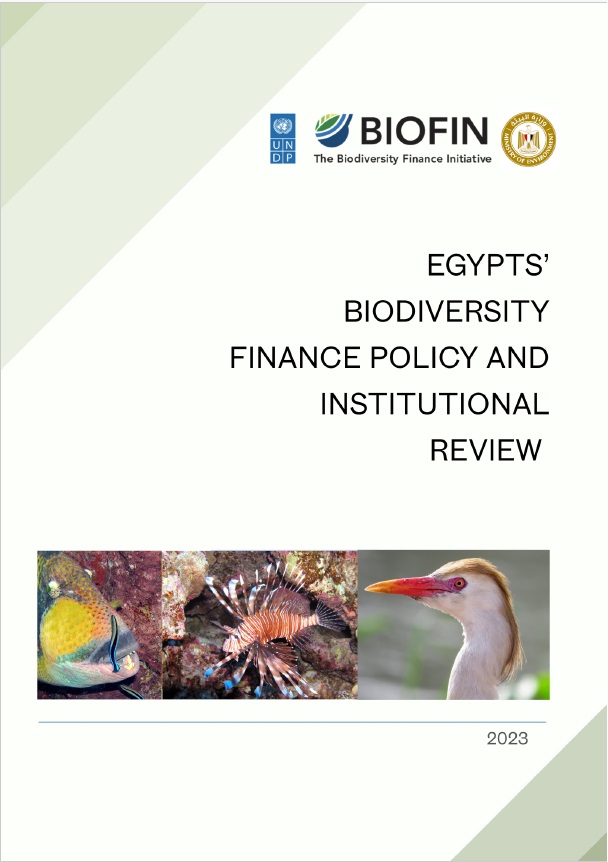
Egypt’s Biodiversity Finance Policy and Institutional Review (PIR) highlights the significant national financing gap for biodiversity conservation, while recognizing Egypt’s growing commitment to addressing this challenge through policy reform and international engagement. The review situates biodiversity as a key driver of Egypt’s economy, supporting sectors such as agriculture, fisheries, tourism, and energy, and underscores the substantial economic value of ecosystems such as coral reefs, protected areas, and rangelands. It finds that Egypt has a strong strategic and institutional foundation for biodiversity conservation, anchored in the National Biodiversity Strategy and Action Plan (NBSAP) and Egypt Vision 2030, and related national strategies on climate change, energy, tourism, agriculture, water, and urban development. However, biodiversity remains underfunded within the national budget, despite increasing allocations to green investments and ongoing reforms to phase out environmentally harmful subsidies.
The PIR reviews existing biodiversity finance mechanisms at the site, national, and international levels, noting reliance on international funding alongside emerging domestic and innovative finance approaches. It also analyzes stakeholder roles and engagement, identifying key institutions critical for advancing biodiversity finance reform. The review concludes with recommendations to strengthen governance and coordination, improve economic valuation of biodiversity, integrate biodiversity into national financial and planning systems, and expand innovative and private-sector financing, including corporate social responsibility (CSR), Public Private Partnerships (PPP), and Results-based Budgeting. Key priorities include reforming protected area revenue systems, eliminating harmful subsidies, deepening engagement with finance and planning authorities, and developing a National Biodiversity Finance Plan to systematically mobilize and allocate resources for long-term biodiversity conservation in Egypt.