Knowledge Base

Knowledge Hub

Access BIOFIN's library of resources, including flagship publications, country reports, finance solution case studies, webinars, explainer videos, podcasts, and more.

Key Publications

Publications

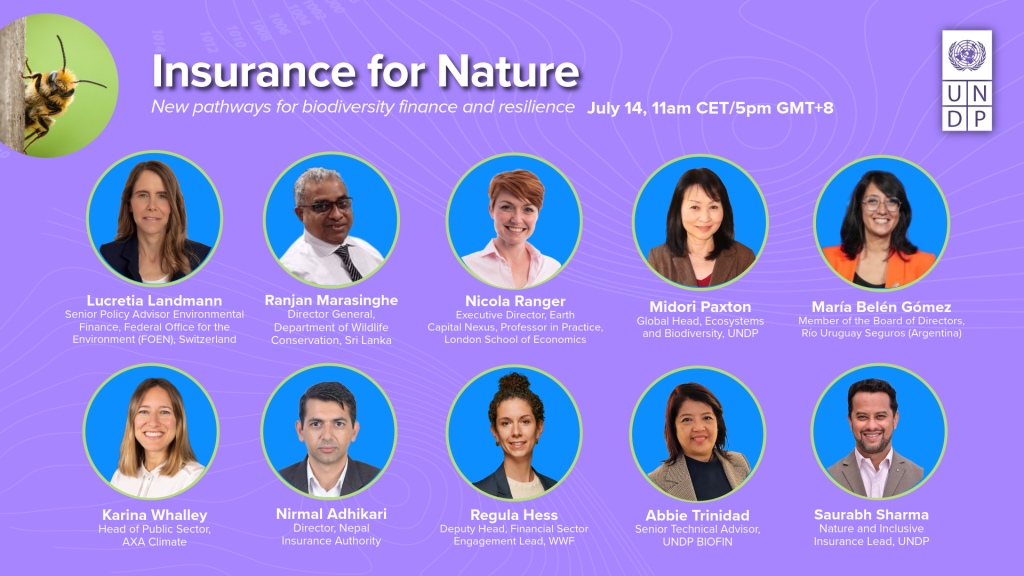
Insurance can play a crucial role in biodiversity conservation by providing financial protection against risks to natural assets, incentivizing sustainable practices, and securing key investments.

Publications

In 2022, countries adopted new global biodiversity targets under the Kunming-Montreal Global Biodiversity Framework (GBF), revisiting many goals that had gone unachieved or underachieved over the past decade.

Publications

Global Biodiversity Expenditure (GLOBE) is a taxonomy that categorizes all potential public expenditures for biodiversity.

The taxonomy consists of two components:

Publications

The BIOFIN Workbook 2024 provides detailed guidance to design and implement national biodiversity finance plans.  These are not mere plans. They set out a process to engage a coalition of actors around the issue of biodiversity finance for an extended time.

Publications

At the Conference of the Parties to the Convention on Biological Diversity 15 (CBD COP 15) in 2022, countries agreed to review and update their National Biodiversity Strategy and Action Plans

Publications

Well-intentioned subsidies aimed at socio-economic goals can have unintended negative impacts on the environment, including biodiversity. The BIOFIN team has developed a step-by-step guide to repurpose such subsidies and improve their positive impacts on people and nature.

Publications

The Kunming-Montreal Global Biodiversity Framework (GBF) calls for a whole-of-society approach to halting and reversing nature loss.

Publications

The Little Book of Investing in Nature provides an essential overview of the area of biodiversity finance at a time when governments and international negotiators are urgently seeking pragmatic solutions for the twin crises of climate change and the loss of nature.

E-LEARNING

Learning for nature: our free biodiversity finance certified e-learning course

Take our free biodiversity finance certified e-learning course. Master the methodology, connect with experts, and gain certification.

Start E-Learning

Browse the Knowledge Platform

656 Results
Publications

Biodiversity Finance Initiative (BIOFIN) Project Overview The Biodiversity Finance Initiative (BIOFIN) is a global partnership managed by United Nations Development Programme (UNDP) that supports countries in developing sustainable finance solutions for biodiversity conservation and management. In the Philippines, BIOFIN is implemented by the Biodiversity Management Bureau of the Department of Environment and Natural Resources (BMB-DENR) from 2018 to 2030.

BIOFIN Philippines aims to address the country’s biodiversity financing gap by strengthening policies, mobilizing investments, and identifying innovative finance solutions that support the implementation of the Philippine Biodiversity Strategy and Action Plan (PBSAP), the country's roadmap to conserving biodiversity. The project promotes sustainable and equitable management, protection, and restoration of biodiversity and ecosystems while helping align financial resources with national conservation priorities.

BIOFIN assesses biodiversity expenditures and financing needs, maps existing finance mechanisms, and develops practical finance solutions involving government or public sector, private sector, civil society, and local stakeholders. These solutions include resource mobilization, realignment of existing resources, avoiding future costs, and delivering better through synergies and partnerships that support conservation outcomes.

The project is being implemented across priority biodiversity landscapes and protected areas in the Philippines. Through its Biodiversity Finance Plan (BFP), BIOFIN seeks to help secure long-term investments for nature in the Philippines.

Webinars

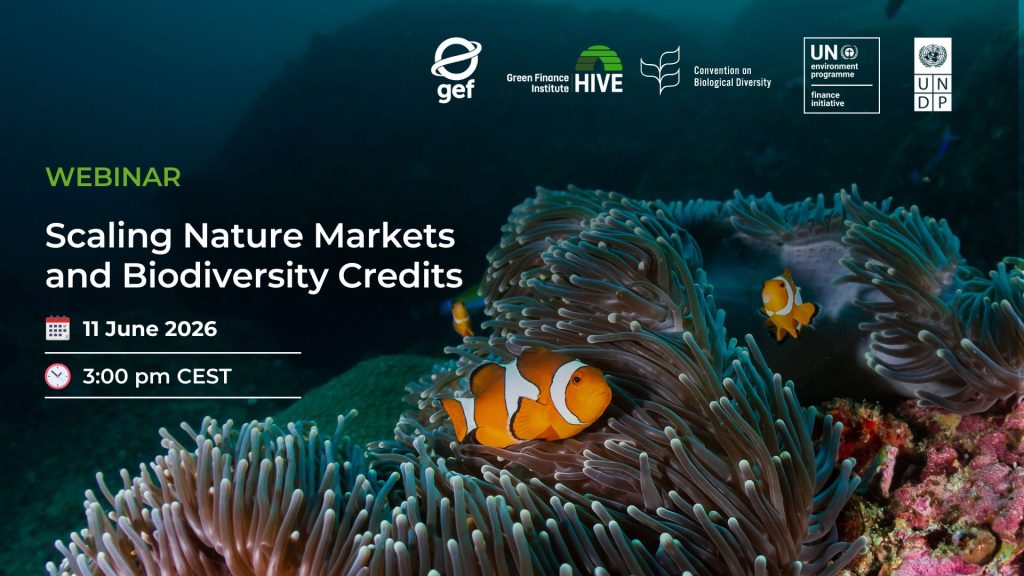
How can nature markets and biodiversity credits help close the biodiversity finance gap while ensuring integrity, equity, and real conservation outcomes?

In this webinar, experts from the public, private, and Indigenous sectors explore the rapidly evolving landscape of biodiversity credits and nature markets. Through case studies from Colombia, New Zealand, and global market analyses, speakers examine how compliance and voluntary markets are being designed, governed, and implemented in practice.

Key topics include:

  • The role of biodiversity credits in achieving global biodiversity targets
  • Lessons from Colombia’s Habitat Banking System and compliance-based biodiversity markets
  • Trends and opportunities in voluntary biodiversity credit markets
  • Governance, integrity, and enabling policy frameworks for nature markets
  • Indigenous-led approaches to biodiversity credits and data sovereignty
  • Practical insights on mobilizing private finance for conservation and restoration

The discussion highlights both the opportunities and challenges of scaling nature markets, emphasizing the importance of strong governance, benefit-sharing, and community participation to deliver lasting biodiversity outcomes.

Publications

This joint report by Bank Negara Malaysia (BNM), the World Bank, and United Nations Development Programme’s Biodiversity Finance Initiative (UNDP BIOFIN) provides a guide for financial institutions and firms to assess and disclose nature-related dependencies, impacts, risks and opportunities (DIROs). It aims to: 1) Assess the current state of nature-related risk assessments and disclosures among Malaysian financial institutions and firms; 2) Identify key gaps and challenges in these practices; and 3) Provide practical guidance and recommendations to accelerate progress across the financial ecosystem. The findings of this report are substantiated by several analytical components: an updated ENCORE analysis of nature-related dependencies and impacts within Malaysian banks’ commercial lending portfolios; two nationwide readiness surveys conducted with financial institutions and publicly listed companies; and five pilot LEAP assessments with three financial institutions and two firms.

Webinars

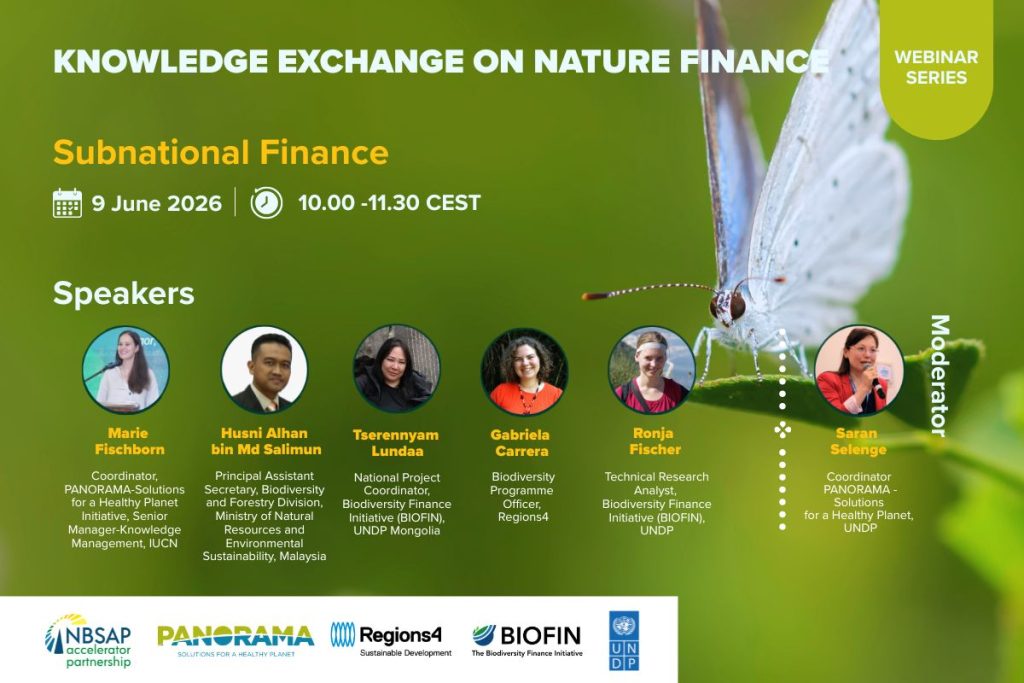
How can states, provinces, and municipalities mobilize resources to protect biodiversity?

In this webinar, experts from Malaysia, Mongolia, UNDP BIOFIN, Panorama, and Regions4 explore innovative approaches to financing biodiversity at the subnational level. Learn how ecological fiscal transfers, natural resource use fees, and local finance mechanisms are helping governments channel resources where conservation happens.

Key topics include:

  • Malaysia's Ecological Fiscal Transfer (EFT) model
  • Mongolia's Natural Resource Use Fees Law • Accessing funding through the FIRE platform
  • Practical lessons for subnational governments implementing biodiversity finance solutions.

Watch the recording to discover real-world examples, lessons learned, and practical approaches for strengthening biodiversity finance at the local and regional levels.

Webinars

This webinar is jointly organized by the UNDP BIOFIN GEF Umbrella Programme and the GEF-8 Umbrella Programme to Support NBSAP Update and the 7th National Reports, bringing together global, regional, and country teams engaged in the implementation of these two projects.

The session focuses on the practical application of UNDP’s Social and Environmental Standards (SES) in National Biodiversity Strategies and Action Plans (NBSAPs) and Biodiversity Finance Plans (BFPs), highlighting how safeguards can strengthen project design, implementation, and accountability across multi-country programmes. Drawing on country experiences, speakers will share practical lessons on stakeholder engagement, grievance redress mechanisms, and safeguards implementation throughout the project cycle.

Particular attention will be given to the importance of meaningful and inclusive engagement, especially with Indigenous Peoples and local communities, and women, to ensure that concerns are identified and addressed early. The discussion will also highlight how weak stakeholder engagement can contribute to grievances, underscoring the need for robust and inclusive processes from the outset.

FRENCH

SPANISH

Publications

El Convenio sobre la Diversidad Biológica (CDB) suscrito por el Ecuador1 tiene como objetivos: conservar la biodiversidad, promover el uso sostenible de sus componentes y garantizar la participación justa y equitativa de los beneficios derivados de la utilización de los recursos genéticos.

Como parte de los compromisos adquiridos con el CDB en el año 2000 se formuló la primera Política y Estrategia Nacional de Biodiversidad en Ecuador, desde entonces, muchos cambios experimentó el Ecuador, en sus dinámicas sociales, económicas y ambientales, principalmente desde octubre de 2008, cuando se definió una nueva concepción política del rol que debía asumir el Estado como garante del régimen del Buen Vivir o Sumak Kawsay, una nueva forma de convivencia ciudadana en diversidad y armonía con la naturaleza, garantizando los derechos de la naturaleza. Además, reconociendo como deberes primordiales del Estado: planificar el desarrollo nacional, erradicar la pobreza, promover el desarrollo sostenible y redistribuir equitativamente la riqueza (Art. 3, Constitución 2008).

Publications

La dépense mondiale en biodiversité (GLOBE) est une taxonomie qui classe l’ensemble des dépenses publiques potentielles en faveur de la biodiversité.

La taxonomie se compose de deux éléments :

  1. un document d’orientation expliquant les différents aspects de la taxonomie, y compris son intégration dans la méthodologie BIOFIN ; et
  2. la taxonomie elle-même, sous forme de fichier Excel, qui classe les dépenses publiques liées à la biodiversité en 9 catégories principales, sous-catégories et programmes de dépenses. Celles-ci sont liées à des accords mondiaux tels que le Cadre mondial pour la biodiversité (GBF), les Objectifs de développement durable (ODD), et d’autres. Chaque sous-catégorie ou programme de dépenses sera, à terme, associé à des taux d’attribution à la biodiversité (Biodiversity Attribution Rates – à intégrer dans une version future), eux-mêmes liés aux fonctions gouvernementales.

En plus de soutenir les examens des dépenses en biodiversité, GLOBE peut servir d’outil pour évaluer l’exhaustivité des Stratégies et plans d’action nationaux pour la biodiversité (SPANB) ou être appliqué au niveau infranational.

Télécharger

Pour toute demande, veuillez contacter ronja.fischer@undp.org, ainur.shalakhanova@undp.org ou annabelle.trinidad@undp.org.

Webinars

This session explores how marine finance and financial instruments can unlock credible revenue pathways to scale nature-positive investment and support national implementation of the Global Biodiversity Framework. Bringing together public, private, and community stakeholders, the session draws on emerging insights from Revenues for Nature–supported models and global case studies to examine practical approaches already in action, from regulatory and supply chain mechanisms to compensatory schemes.

This webinar is part of the UNDP-UNEP FI Public-Private Community of Practice on Nature and Development Finance series as part of Revenues for Nature, which bridges private finance strategies with government-led National Biodiversity Strategies and Action Plans (NBSAPs) to mobilize funding for nature. The series focuses on key enablers to achieve the Kunming-Montreal Global Biodiversity Framework (KMGBF) Target 19, aligning public and private sector priorities to unlock new investment opportunities.  

Publications

El Manual BIOFIN 2024 proporciona orientación detallada para diseñar e implementar planes nacionales de financiamiento de la biodiversidad. Estos no son simples planes. Establecen un proceso para involucrar a una coalición de actores en torno al tema del financiamiento de la biodiversidad durante un período prolongado. Este proceso está anclado en el sector financiero, incluidos los Ministerios de Finanzas, los bancos centrales, los organismos reguladores y los bancos de desarrollo. El desarrollo de capacidades de este grupo central de actores en cada país es un elemento clave del proceso.

Desde la creación de BIOFIN en 2012, los planes nacionales de financiamiento de la biodiversidad (BFP, por sus siglas en inglés) han evolucionado hasta convertirse en un instrumento reconocido a nivel mundial para movilizar y reorientar los flujos financieros hacia la naturaleza. Sobre la base de las lecciones aprendidas en los primeros 41 países que aplicaron la metodología BIOFIN, los donantes de BIOFIN y el Fondo para el Medio Ambiente Mundial (GEF) se comprometieron a apoyar el diseño e implementación de BFP en 132 países participantes, en el marco de los ambiciosos objetivos del GBF para 2030.

El primer grupo de países BIOFIN que implementaron sus planes de financiamiento de la biodiversidad logró resultados significativos. Entre ellos se incluyen un aumento presupuestario de 86 millones de dólares estadounidenses para áreas protegidas en Filipinas y de 70 millones de dólares en Kazajistán, 108 millones de dólares en créditos verdes en Ecuador, asignaciones de 120 millones de dólares mediante transferencias fiscales ecológicas en Malasia, y la emisión del primer bono verde en Zambia por un valor de 200 millones de dólares. Botsuana aumentó los ingresos de sus áreas protegidas en 3,6 millones de dólares al año, los gobiernos locales de Mongolia lograron un incremento de ingresos superior a 10 millones de dólares anuales y Seychelles creó la primera unidad de financiamiento de la biodiversidad para institucionalizar el proceso BIOFIN.

Webinars

An online knowledge exchange bringing together practitioners and policymakers to share real-world experiences in designing and implementing finance solutions for protected areas worldwide.

This inaugural webinar of the 2026 Knowledge Exchange on Nature Finance series is co-organized by UNDP Biodiversity Finance Initiative (BIOFIN), NBSAP Accelerator Partnership, and PANORAMA – Solutions for a Healthy Planet, providing a platform for peer learning, practical insights, and scalable approaches to financing nature.

Webinars

On 18 February 2026, UNDP’s Biodiversity Finance Initiative (BIOFIN) convened a peer-learning “teach-in” with colleagues from the UK’s Department for Environment, Food and Rural Affairs (DEFRA) to explore England’s transition from traditional agricultural subsidies to environmental land management incentives.

Publications

Le Manuel BIOFIN 2024 fournit des orientations détaillées pour concevoir et mettre en œuvre des plans nationaux de financement de la biodiversité. Il ne s’agit pas de simples plans : ils définissent un processus visant à mobiliser, sur la durée, une coalition d’acteurs autour de la question du financement de la biodiversité. Ce processus est ancré dans le secteur financier, incluant les ministères des Finances, les banques centrales, les régulateurs et les banques de développement. Le renforcement des capacités de ce groupe central d’acteurs dans chaque pays constitue un élément clé du processus.

Depuis la création de BIOFIN en 2012, les plans nationaux de financement de la biodiversité (BFP) sont devenus un mécanisme reconnu à l’échelle mondiale pour mobiliser et réorienter les flux financiers en faveur de la nature. S’appuyant sur les enseignements tirés des 41 premiers pays ayant mis en œuvre la méthodologie BIOFIN, les bailleurs de BIOFIN et le Fonds pour l’environnement mondial (FEM) ont apporté leur soutien à la conception et à la mise en œuvre des BFP dans 132 pays participants, dans le cadre des objectifs ambitieux du Cadre mondial de la biodiversité à l’horizon 2030.

Le premier groupe de pays BIOFIN ayant mis en œuvre leurs plans de financement de la biodiversité a obtenu des résultats significatifs. Cela inclut une augmentation budgétaire de 86 millions de dollars américains pour les aires protégées aux Philippines et de 70 millions de dollars au Kazakhstan, 108 millions de dollars de crédits verts en Équateur, des allocations de 120 millions de dollars via des transferts fiscaux écologiques en Malaisie, ainsi que l’émission de la toute première obligation verte en Zambie, d’une valeur de 200 millions de dollars. Le Botswana a augmenté les revenus de ses aires protégées de 3,6 millions de dollars par an, les collectivités locales en Mongolie ont enregistré une hausse de revenus de plus de 10 millions de dollars par an, et les Seychelles ont créé la toute première unité de financement de la biodiversité afin d’institutionnaliser le processus BIOFIN.

BIOFIN Videos
SEE ALL