ENGLISH
Guatemala introduces common guidance to track municipal environmental spending
Guatemala has introduced a guide to help its 340 municipalities identify, classify and report public spending on environmental protection. Developed…

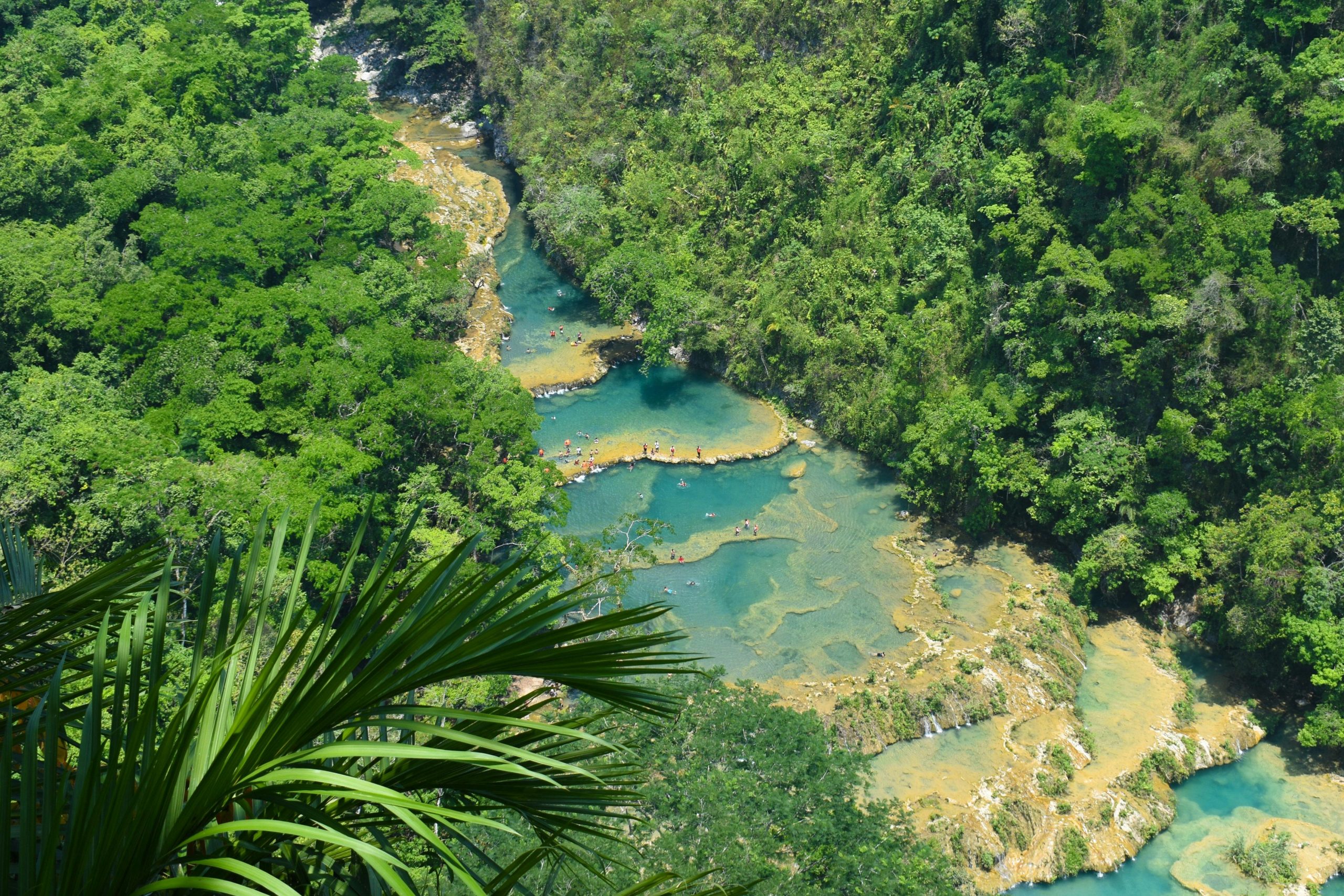


Guatemala is one of Central America's most biodiverse countries, with ecosystems ranging from Pacific and Caribbean coastal and marine areas to tropical forests, wetlands, highlands and volcanic landscapes. Its natural capital provides essential ecosystem services and supports agriculture, fisheries, tourism, water security and the livelihoods of communities across the country. Around one third of Guatemala's territory forms part of the national protected areas system, reflecting the importance of biodiversity to the country's sustainable development.
Yet Guatemala's biodiversity faces increasing pressures from land use change, ecosystem degradation, unsustainable resource use and climate change. The country's strong economic and social dependence on natural resources makes investing in biodiversity particularly important. At the same time, limited public resources and competing development priorities create a need to use existing expenditure more effectively and mobilize additional public, private and innovative finance for nature.
UNDP BIOFIN works with the Government of Guatemala, municipalities, the private sector and other partners to strengthen biodiversity finance and translate conservation priorities into practical financial solutions. The programme has helped integrate biodiversity into municipal and national public finance, strengthen the institutions and rules that govern how public resources account for nature, support financial vehicles for forests, protected areas and marine and coastal ecosystems, and develop innovative mechanisms to mobilize additional resources for biodiversity. To date, UNDP BIOFIN has helped mobilize US$9.6 million for biodiversity, including approximately US$4.5 million through results based municipal budgeting and projects financed by the Development Councils.
Finance Solution 1: Results-Based Municipal Budgeting for Biodiversity
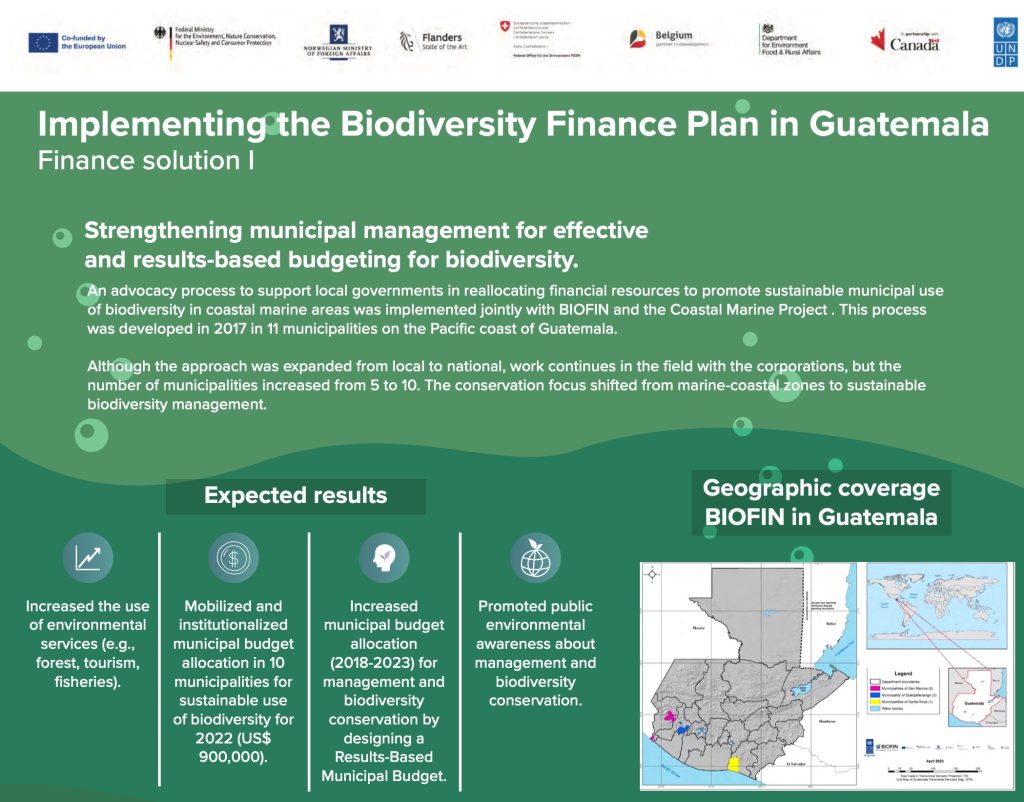
UNDP BIOFIN supports local governments in integrating biodiversity into municipal planning and results-based budgeting, helping increase and redirect public resources toward sustainable biodiversity management. Initially focused on marine and coastal ecosystems along Guatemala's Pacific coast, the approach has expanded to new municipalities and territories and broadened to sustainable biodiversity management. The solution also strengthens municipal capacity to classify and track environmental expenditure through the Municipal Environmental Public Expenditure Classification Guide, now formally adopted by the Ministry of Public Finance and being rolled out nationwide with municipal financial, planning, and environmental staff, supporting more effective and transparent allocation of public finance for biodiversity.
Finance Solution 2: Debt for Nature Swap and the National Nature Conservation Fund (FONACON)
UNDP BIOFIN supports Guatemala in assessing the feasibility of a debt for nature swap to free up public resources and channel them into the conservation and sustainable use of biodiversity. The work includes analysis of the country's public debt portfolio, the design of a conservation programme for the national protected areas system that would receive the resources, and an implementation strategy developed with the National Council of Protected Areas and the Ministry of Public Finance. In parallel, UNDP BIOFIN provides technical support to the programmatic design of the National Nature Conservation Fund (FONACON), so the country has a solid and well-governed mechanism able to receive, manage and invest this and other sources of biodiversity finance.
Finance Solution 3: Own Source Revenue for the Protected Areas System
UNDP BIOFIN supports the National Council of Protected Areas in strengthening the revenues it generates through the fees charged for the use of natural resources, registration, transport, commercialization, monitoring and the management of parks and monuments. The work reviewed the full fee schedule and proposed an updating methodology, identifying those fees that can realistically be adjusted and the institutional steps required to formalize them. Building on this, UNDP BIOFIN accompanies the automation and digitalization of the procedures associated with these fees, so that updated rates translate into effective collection and a more reliable flow of resources for protected areas.
Finance Solution 4: Green Fiscal Policy and Sustainable Finance
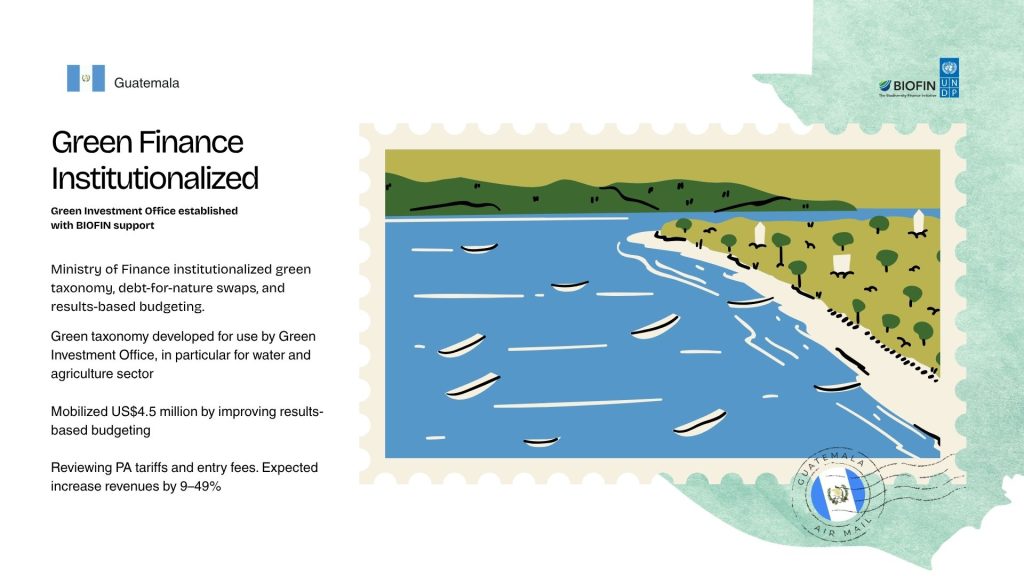
UNDP BIOFIN works with the Ministry of Public Finance and other national partners to integrate biodiversity, climate and sustainability into public financial management. This support contributed to the creation and institutionalization of the Green Fiscal Office, a permanent body responsible for bringing environmental considerations into how the country raises and spends public resources. UNDP BIOFIN accompanies the Green Fiscal Office’s implementation roadmap and the development of the national Environmental Fiscal Strategy, helping align fiscal policy with biodiversity and climate priorities.
Finance Solution 5: Wellbeing and Biodiversity through Traditional Knowledge
UNDP BIOFIN supports the design of financial solutions that link the conservation of biodiversity with the well-being of the communities that depend on it, building on the compensation programme of the national protected areas system. The work explores bioeconomy and sustainable tourism schemes rooted in the traditional knowledge of Indigenous Peoples and local communities, in the highlands and in marine and coastal areas of the country. The approach seeks to institutionalize these mechanisms, so they generate sustained benefits for communities while strengthening the conservation and sustainable use of biodiversity.
Finance Solution 6: Biodiversity and Climate Funds
UNDP BIOFIN supports the Ministry of Environment and Natural Resources in the design and strengthening of national funds for forests, biodiversity and climate. This work contributed to the creation of the Forest Protection and Recovery Fund and to the development of its operating framework, including the rules and guidance needed for the submission of plans and programmes. UNDP BIOFIN also accompanies the strengthening of the National Climate Change Fund through diagnostics, strategic investment guidelines, proposal design tools and training, and replicating these experiences to strengthen the country's main biodiversity financing instruments so that allocated resources translate into effective implementation on the ground.
Mobilizing Finance for Biodiversity
UNDP BIOFIN has helped Guatemala mobilize US$9.66 million for biodiversity through the implementation of biodiversity finance solutions. This includes resources mobilized through improved municipal budgeting, projects financed through Guatemala's Development Councils, and the creation of a national fund for forest protection and recovery, demonstrating how existing public finance mechanisms can be better aligned with biodiversity priorities.
Increasing Municipal Investment in Biodiversity
UNDP BIOFIN has worked with local governments to integrate biodiversity into results-based planning and budgeting, initially focusing on marine and coastal ecosystems along Guatemala's Pacific coast and later expanding to additional territories. The approach has helped mobilize approximately US$4.5 million through results-based municipal budgeting and projects financed by the Development Councils, with municipal expenditure on biodiversity growing substantially year on year. In partnership with the Ministry of Public Finance (MINFIN) and the Partnership for Action on Green Economy (PAGE), UNDP BIOFIN has also strengthened municipal capacity to classify and track environmental expenditure, supporting more effective allocation of public resources for biodiversity.
Institutionalizing a National Standard for Municipal Environmental Spending
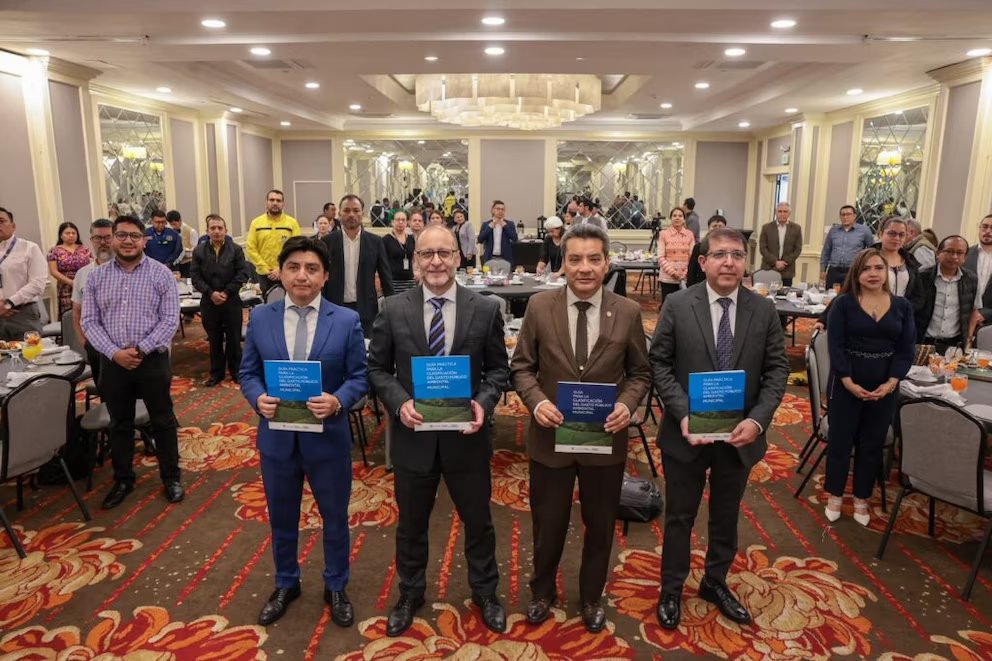
The Municipal Environmental Public Expenditure Classification Guide, developed with UNDP BIOFIN support, was formally approved by the Ministry of Public Finance and published in the official gazette. The Guide gives municipalities a common method to identify, classify and report what they invest in the environment and biodiversity. It is now being rolled out nationwide through the regional offices of the Directorate for Assistance to Municipal Financial Administration, reaching all 340 municipalities and bringing together municipal financial, planning and environmental staff.
Creating a Green Fiscal Office within the Ministry of Public Finance
With technical assistance and institutional support from UNDP BIOFIN, Guatemala created the Green Fiscal Office within the Ministry of Public Finance. Established through a reform to the Ministry's internal regulations, the Green Fiscal Office is a permanent body responsible for integrating environmental, biodiversity and climate considerations into public financial management. UNDP BIOFIN supports its implementation roadmap and the development of the national Environmental Fiscal Strategy.
Catalyzing a National Fund for Forest Protection and Recovery
UNDP BIOFIN supported the Ministry of Environment and Natural Resources in the technical design and financial estimation of the national forest recovery strategy, contributing to the creation of the Forest Protection and Recovery Fund (FOBOSQUES) and to an allocation of approximately US$5.2 million in the national budget. UNDP BIOFIN also provided technical inputs for the Fund's operating rules, including guidance for submitting plans and programmes, and continues to accompany its implementation so that allocated resources translate into results on the ground.
Mainstreaming Biodiversity into Public Finance
UNDP BIOFIN works with Guatemala's Ministry of Public Finance to strengthen the integration of biodiversity, climate and sustainability considerations into public financial management. This includes environmental expenditure tracking, results-based budgeting and the development of sustainable finance instruments. UNDP BIOFIN has also completed a feasibility study on a debt-for-nature swap, including an analysis of the country's public debt portfolio and the design of a conservation programme for the national protected areas system, with the potential to mobilize significant additional resources for biodiversity.
Generating New Revenue for Protected Areas and Municipalities
UNDP BIOFIN supported the review and update of municipal tariffs for biodiversity-related services in five municipalities, with the potential to generate approximately US$240,000 annually as a recurring source of local revenue. At the national level, UNDP BIOFIN supported a review of the full fee schedule of the National Council of Protected Areas, covering resource use, registration, transport, commercialization, monitoring and the management of parks and monuments, and now accompanies the digitalization and automation of these procedures so that updated rates translate into effective collection.
Updating Guatemala's Biodiversity Finance Framework
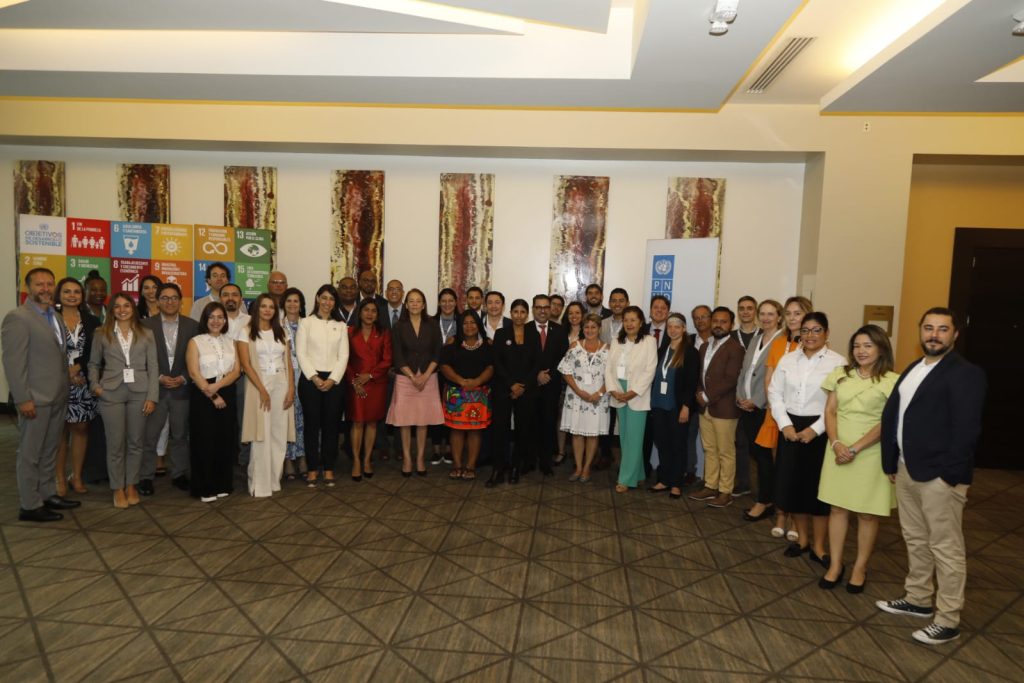
UNDP BIOFIN led the preparation of the country's updated Policy and Institutional Review, Biodiversity Expenditure Review and Biodiversity Finance Plan, including the finance needs assessment. Developed within the framework of the update of the National Biodiversity Strategy and Action Plan and aligned with the Kunming-Montreal Global Biodiversity Framework, these documents provide the evidence base for decision-making, policy formulation and resource mobilization. The process included a series of technical workshops across all 22 departments, with the participation of government, civil society, academia, local communities and Indigenous Peoples, and near parity in the participation of women and men.