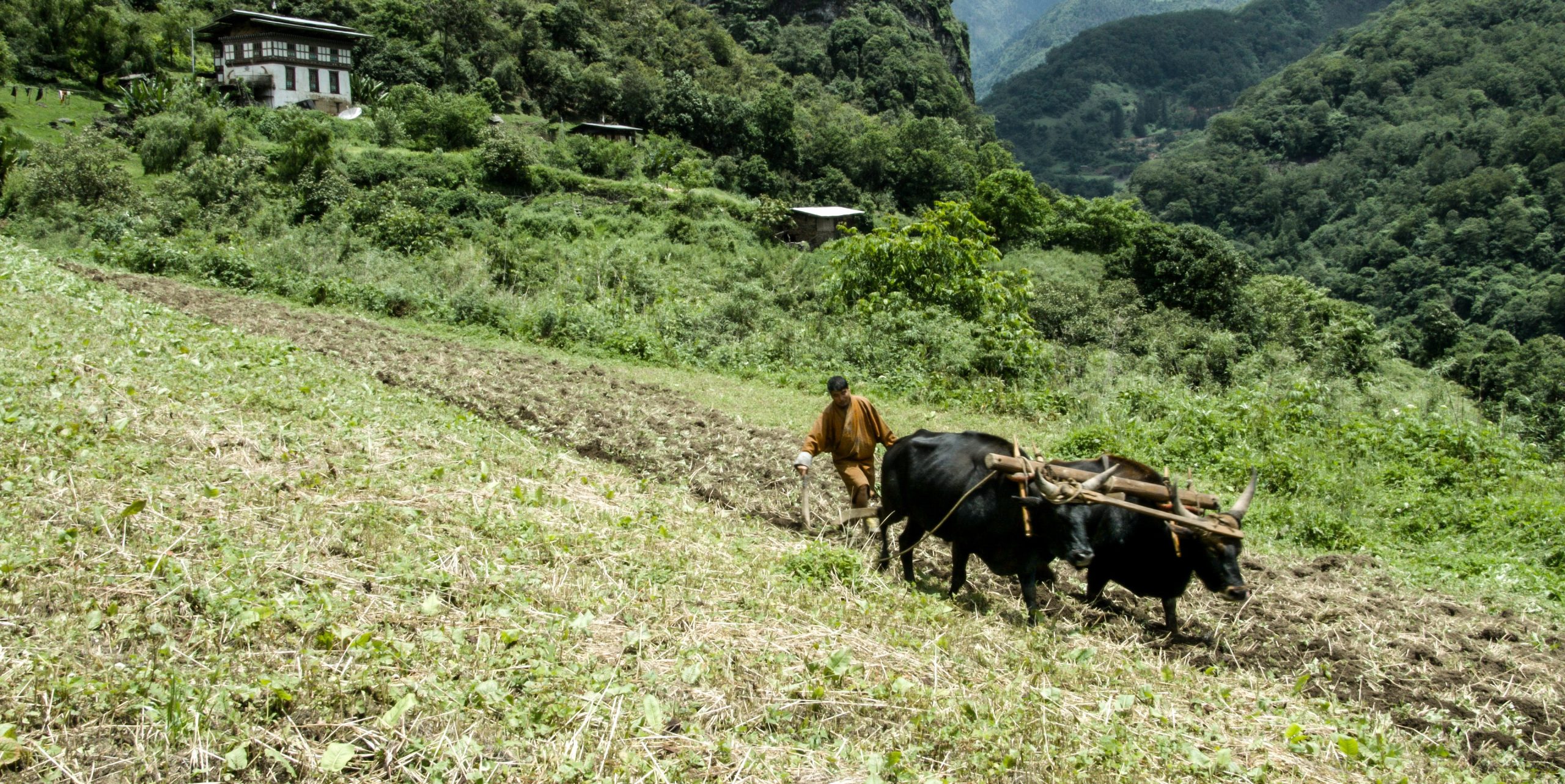
Bhutan lies within the Eastern Himalayas, one of the world’s most important biodiversity hotspots. Forests cover more than 70% of the country, while national parks, wildlife sanctuaries and biological corridors form an extensive network of protected landscapes. From alpine ecosystems and temperate forests to rivers, wetlands and subtropical habitats, Bhutan’s natural capital supports exceptional biodiversity while providing essential ecosystem services, livelihoods and economic opportunities for its people.

Bhutan has a strong tradition of environmental conservation, but maintaining its natural wealth requires sustained investment. Biodiversity faces pressures from climate change, habitat degradation, human-wildlife conflict and growing demands on natural resources, while financing remains insufficient to fully meet conservation priorities. An earlier UNDP BIOFIN assessment estimated a biodiversity financing gap of approximately US$75 million, highlighting the need to mobilize additional resources while improving the effectiveness of existing public finance.

UNDP BIOFIN is working with the Royal Government of Bhutan to strengthen the country’s biodiversity finance framework and translate these financing needs into practical solutions. Four priority finance solutions are under implementation, focusing on results-based budgeting and ecological fiscal transfers, integrating biodiversity finance into local government planning, increasing ecotourism revenues for conservation, and developing more sustainable financing for human-wildlife coexistence.

Bhutan is now entering a new phase of biodiversity finance. Following the launch of its 5th National Biodiversity Strategy and Action Plan in 2025, the country is updating its Finance Needs Assessment and Biodiversity Finance Plan to align investment with its biodiversity targets through 2030. This work aims to scale successful finance solutions, diversify funding for nature and strengthen the contribution of biodiversity to Bhutan’s sustainable and resilient development.

$75M

Finance Gap

Estimated biodiversity financing gap identified to implement Bhutan's Fourth National Biodiversity Strategy and Action Plan

6.3M

Tons of CO₂

Bhutan's forests sequester about 6.3 million tons of carbon dioxide annually, making it the world's only carbon-negative country.

52%

Protected Land

More than half of Bhutan's land area is protected through national parks and biological corridors.

69.7%

Forest Cover

Nearly 70% of Bhutan remains under forest cover, well above the constitutional minimum of 60%.

News and stories

SEE ALL

Finance solutions

1. Results-Based Budgeting and Ecological Fiscal Transfers

UNDP BIOFIN is supporting Bhutan to strengthen results-based budgeting and integrate biodiversity and climate considerations into public finance. The solution aims to improve how government resources are allocated and tracked, linking intergovernmental fiscal transfers and budget planning more closely to measurable biodiversity and environmental outcomes. This builds on Bhutan's pioneering work to integrate biodiversity and climate expenditure tracking into its public finance system.

2. Mainstreaming Biodiversity Finance into Local Government Planning

This finance solution seeks to integrate biodiversity finance and related financing mechanisms into local government plans and budgets. By embedding biodiversity priorities into local development planning and resource allocation, the approach aims to ensure that financing for nature is considered systematically at the local level and contributes to national biodiversity objectives.

3. Increasing Ecotourism Revenues for Protected Areas

UNDP BIOFIN is supporting Bhutan to strengthen the connection between tourism and conservation by increasing and diversifying revenues generated through ecotourism in protected areas. The solution aims to develop biodiversity-friendly tourism products and financing mechanisms, including fees whose revenues can be retained or reinvested in protected-area conservation and management.

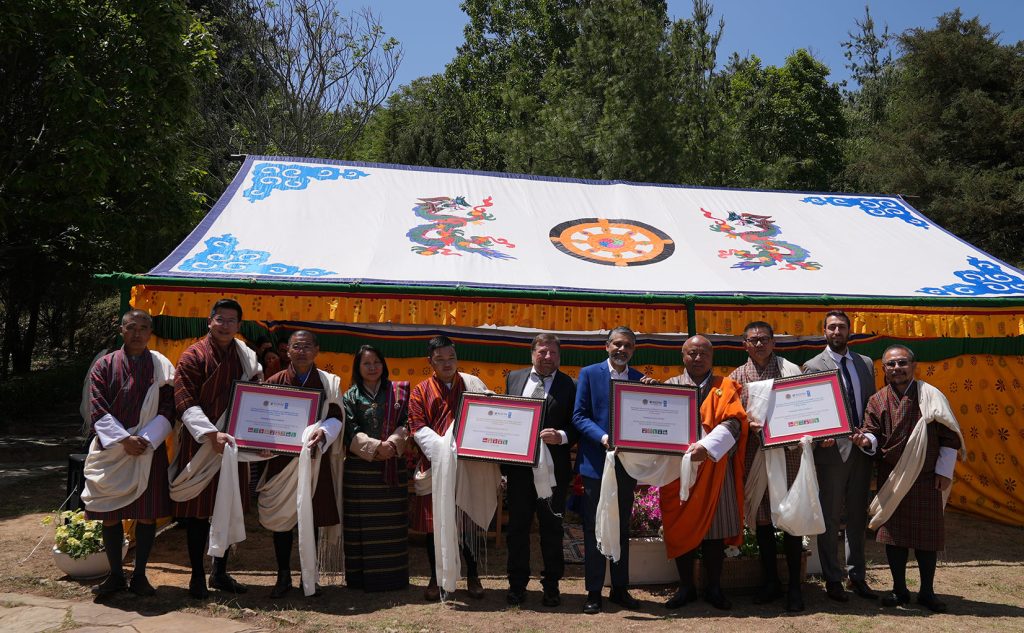
This solution is already moving into practical implementation. For example, UNDP BIOFIN has supported the development of river rafting as a biodiversity-friendly ecotourism product, including the international certification of eight river guides, as part of efforts to generate economic opportunities while strengthening conservation.

4. Redesigning the Human-Wildlife Conflict Financing Scheme

Bhutan is redesigning its approach to financing human-wildlife conflict management to strengthen community-based conservation and reduce the economic burden wildlife-related losses can place on rural communities. The solution aims to develop a more sustainable mechanism that supports coexistence between people and wildlife while helping reduce retaliatory killing, poaching and wildlife trafficking.

Key results

Four Biodiversity Finance Solutions Under Implementation

The Royal Government of Bhutan and UNDP BIOFIN launched four priority biodiversity finance solutions in 2023 to address the country's biodiversity financing needs. They focus on results-based budgeting and ecological fiscal transfers, mainstreaming biodiversity finance into local government planning, increasing ecotourism revenues for conservation, and redesigning financing for human-wildlife conflict. These solutions are now being implemented and aligned with Bhutan's updated biodiversity priorities.

Institutionalizing Biodiversity and Climate Expenditure Tracking

Bhutan has strengthened its ability to track how public resources contribute to biodiversity and climate objectives. In 2025, the Ministry of Finance validated the country's second Biodiversity and Climate Expenditure Review, covering expenditures from 2017–2022. UNDP BIOFIN is supporting the institutionalization of this approach so that biodiversity expenditure can be systematically tracked and used to inform future budgeting and investment decisions.

Advancing Results-Based Budgeting for Biodiversity

UNDP BIOFIN is working with the Ministry of Finance to institutionalize performance- and results-based budgeting within government agencies and local governments responsible for biodiversity outcomes. The approach links public expenditure more closely to measurable conservation results, helping improve the efficiency and effectiveness of existing biodiversity finance.

Unlocking the Potential of Ecotourism Finance

Bhutan is developing biodiversity-friendly tourism as a source of sustainable conservation finance and local employment. UNDP BIOFIN estimates that the ecotourism finance solution has the potential to generate an additional US$108 million annually and create around 1,400 jobs, while strengthening community businesses, public-private partnerships and conservation.

Turning River Tourism into a Conservation Opportunity

As part of the ecotourism finance solution, eight Bhutanese river rafting instructors achieved international certification in 2024. The guides are expected to train others across the country while also contributing to river conservation through improved waste management, reporting illegal activities and protecting sensitive river ecosystems. The initiative demonstrates how nature-based tourism can simultaneously generate livelihoods and support biodiversity conservation.

Redesigning Finance for Human-Wildlife Coexistence

UNDP BIOFIN is supporting Bhutan to develop a more financially sustainable approach to human-wildlife conflict. Work has included a renewed proposal for a national crop and livestock insurance scheme, designed to provide greater financial security to farmers while reducing incentives for retaliatory killing of wildlife. The proposed approach shifts from traditional compensation toward an insurance-based mechanism and seeks solutions to close the associated premium financing gap.

Key documents