

Central African Republic
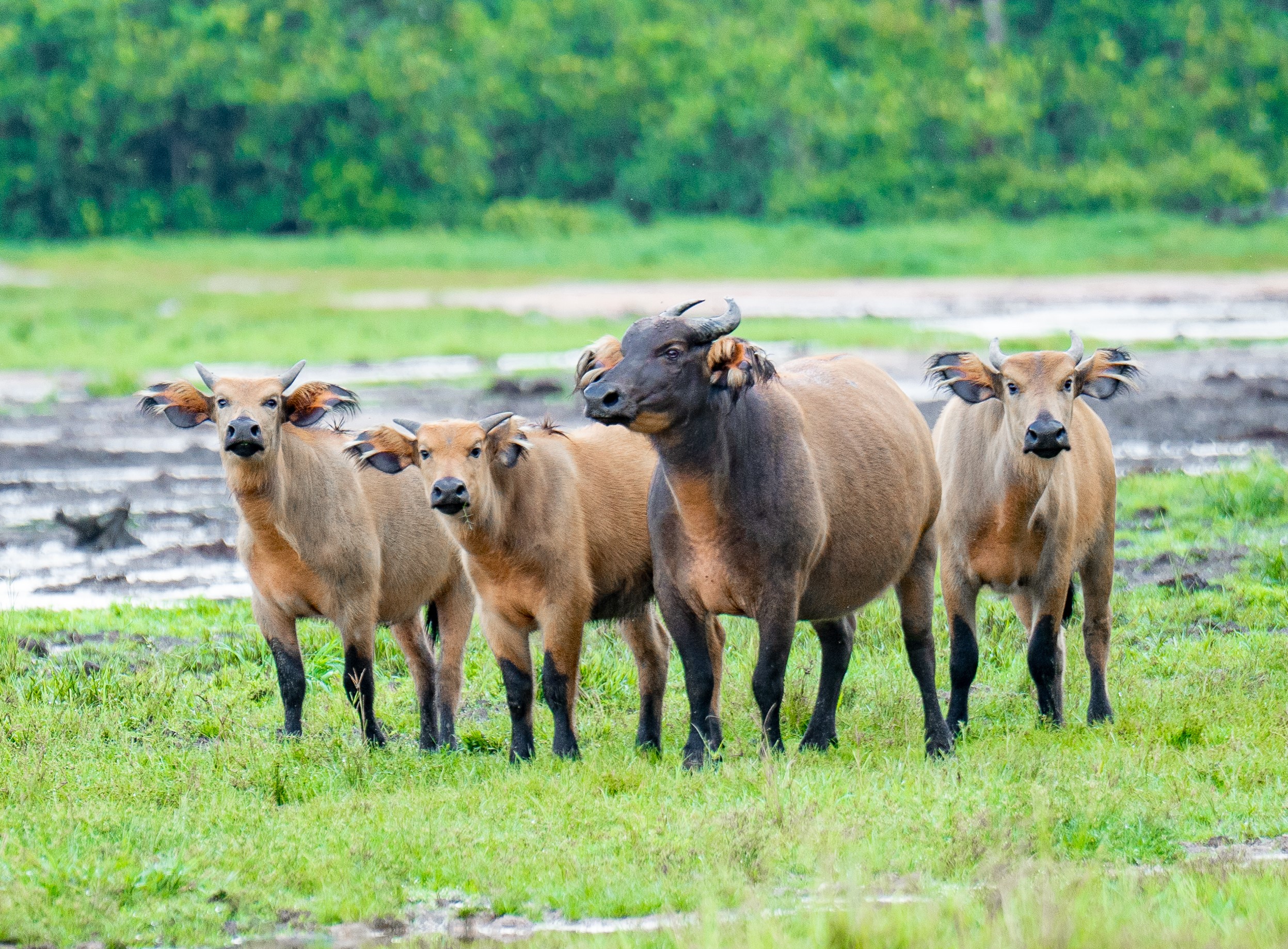
The Central African Republic (CAR) is home to exceptional natural wealth, with ecosystems ranging from dense tropical forests in the south to wooded and pastoral savannas in the north. Around 45–46% of the country is covered by natural forests, making CAR an important part of the Congo Basin, the world’s second-largest tropical forest region. This natural capital supports agriculture, livestock, fisheries, forestry and other economic activities and provides essential resources and livelihoods for more than 70% of the population.
Yet CAR’s biodiversity faces growing pressures from land-use change, reliance on fuelwood, mining, poaching, insecurity and climate change. These challenges are compounded by limited institutional and financial capacity. Domestic resources available for biodiversity remain constrained, while mobilizing and effectively using international finance requires stronger coordination and institutional capacity.
UNDP BIOFIN is supporting CAR to better understand how biodiversity is currently financed, determine future financing needs and identify practical opportunities to mobilize and use resources more effectively for nature. The Policy and Institutional Review has identified existing biodiversity finance mechanisms as well as opportunities to strengthen the country’s policy, institutional and financing environment.
CAR is progressing through the BIOFIN analytical process, with the Policy and Institutional Review moving through validation and data collection underway for the Biodiversity Expenditure Review and Financial Needs Assessment. Together, these analyses will provide the evidence needed to develop the country’s Biodiversity Finance Plan and prioritize feasible finance solutions for implementation.
No posts found.
Finance solutions
The Policy and Institutional Review has identified a range of potential finance solutions that could strengthen biodiversity conservation and sustainable use in the Central African Republic. These options have not yet been formally prioritized or approved and will be further assessed through the development of the Biodiversity Finance Plan.
1. Payments for Ecosystem Services
Explore mechanisms that provide financial incentives to communities and land managers for protecting and sustainably managing ecosystems and the services they provide, including water regulation, carbon sequestration and biodiversity conservation.
2. Environmental Taxes and Green Fiscal Instruments
Assess opportunities to strengthen environmental taxes, fees and other fiscal instruments that reflect environmental costs, encourage more sustainable practices and potentially generate additional resources for biodiversity.
3. Carbon and Nature-Based Finance
Explore opportunities to mobilize finance through REDD+, voluntary carbon markets and other high-integrity carbon mechanisms linked to forest conservation, restoration and nature-based solutions. Such approaches could generate resources while delivering benefits for biodiversity, climate and local communities.
4. Green Public-Private Partnerships
Explore partnerships between government and the private sector to mobilize investment for nature-positive activities, including ecotourism, agroforestry and other sustainable enterprises that can combine economic development with biodiversity conservation.
5. Biodiversity Offsets
Assess the potential for a regulatory framework requiring developers to address residual biodiversity impacts after applying measures to avoid and minimize environmental damage. Any future biodiversity-offset mechanism would need clear standards and safeguards to ensure measurable conservation outcomes.
6. Biodiversity Trust Fund
Explore the establishment or strengthening of a dedicated financing mechanism capable of mobilizing and managing long-term resources for biodiversity conservation, potentially drawing on domestic, international and climate-finance sources.
7. Corporate Finance for Biodiversity
Encourage businesses to integrate biodiversity considerations into corporate strategies, operations and investment, including through Corporate Social Responsibility initiatives and other forms of private-sector contribution to conservation.
8. Results-Based Budgeting for Biodiversity
Strengthen the link between public expenditure and measurable biodiversity outcomes by integrating conservation objectives and performance indicators into budgeting and public financial management.
9. Digitalizing Environmental Fine Payments
Modernize the collection and management of environmental fines through digital payment systems to improve efficiency, transparency and accountability and strengthen the implementation of environmental regulations.
These potential finance solutions are at an early stage of assessment. Their feasibility, expected biodiversity impact and financing potential will be further evaluated and prioritized through the Biodiversity Finance Plan process.
Key results
The BIOFIN project in the CAR has made several significant strides in the biodiversity planning and financing process. The results achieved to date can be summarized as follows:
• Official launch of the process: held during a workshop on September 30, 2025, attended by 60 participants (40 men and 20 women), marking the formal start of the initiative.
• Stakeholder consultation: A consultation workshop took place on January 13 and 14, 2026, in conjunction with the first steering committee meeting on January 13, 2026, enabling key stakeholders to participate in the development of the API.
• Preparation of the first draft of the API: The initial report was produced and submitted for technical validation during a workshop held on March 24 and 25, 2026.
• Data collection underway: Work is continuing on the Biodiversity Expenditure Analysis (BEA), the Financing Needs Assessment (FNA), and the preparation of the Biodiversity Financing Plan (BFP).