

Djibouti
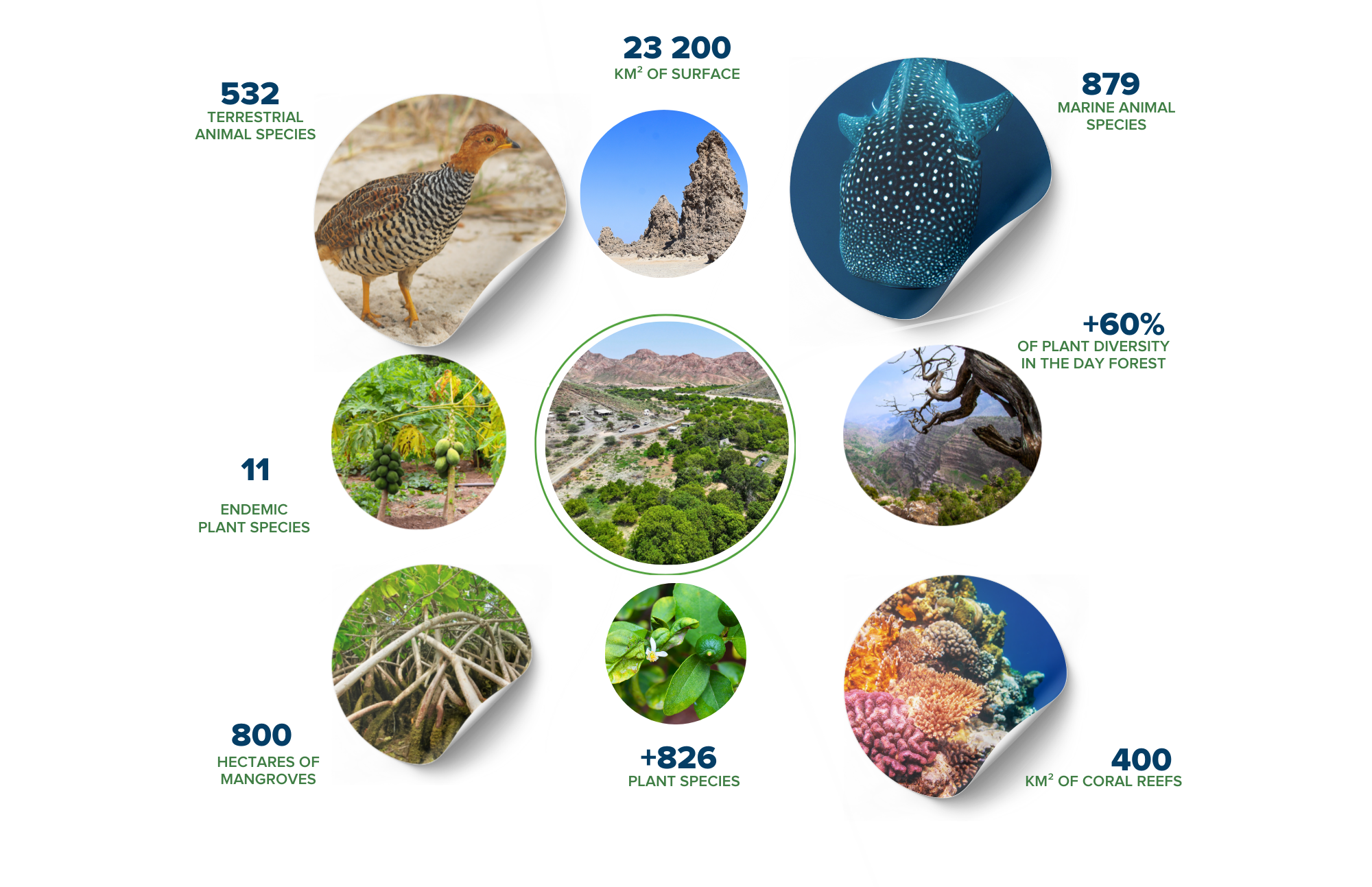







Djibouti is home to a distinctive diversity of terrestrial, coastal and marine ecosystems, including coral reefs, mangroves, seagrass beds, wetlands and arid rangelands. These ecosystems provide essential services that support fisheries, livestock production, tourism, water security, climate resilience and local livelihoods. Yet biodiversity is increasingly under pressure from climate change, land degradation, unsustainable natural resource use and rapid urbanization, while limited financial resources constrain conservation and restoration efforts.
UNDP BIOFIN is working with the Government of Djibouti to strengthen the country’s approach to financing biodiversity. Implemented in partnership with the Ministry of Environment and Sustainable Development and the Ministry of Economy and Finance in charge of Industry, the initiative is helping identify how biodiversity is currently financed, assess future financing needs and gaps, and explore opportunities to mobilize and use public and private resources more effectively for nature.
Djibouti is progressing through the BIOFIN methodology, including the Policy and Institutional Review, Biodiversity Expenditure Review and Finance Needs Assessment. Together, these analyses will provide the evidence needed to develop the country’s first Biodiversity Finance Plan and identify practical finance solutions that can improve existing financial flows and mobilize additional investment for biodiversity.
Through this process, Djibouti aims to establish a more coordinated and sustainable approach to biodiversity finance, supporting implementation of its National Biodiversity Strategy and Action Plan and commitments under the Kunming–Montreal Global Biodiversity Framework.
No posts found.
Potential Finance solutions
As UNDP BIOFIN is assessing a range of potential finance solutions to diversify funding for biodiversity, strengthen domestic resource mobilization and improve the effectiveness of existing financial flows in Djibouti. These options will be further assessed and prioritized through the Biodiversity Finance Plan process before moving toward implementation.
Finance Solution 1: Environmental Fiscal Reform
Assess opportunities to strengthen environmental taxes, fees and natural resource charges and improve their contribution to biodiversity conservation. The solution aims to generate additional domestic resources for nature while creating stronger financial incentives for the sustainable use and management of natural resources.
Finance Solution 2: National Biodiversity and Environment Fund
Explore the feasibility of establishing a dedicated financing mechanism to mobilize, pool and manage resources for biodiversity conservation and ecosystem restoration. The proposed fund could help combine domestic and international finance and provide a more sustainable and coordinated source of long-term investment in Djibouti's biodiversity priorities.
Finance Solution 3: Payments for Ecosystem Services
Assess the potential for Payments for Ecosystem Services (PES) to reward communities and land users for protecting and sustainably managing ecosystems that provide important benefits to society. Potential applications include watersheds, mangroves and other biodiversity-rich areas, linking conservation with local livelihoods and sustainable resource management.
Finance Solution 4: Mainstreaming Biodiversity into Public Finance and Investment
Strengthen the integration of biodiversity into national development planning, public investment and budgeting processes. The solution aims to improve the identification and allocation of public resources for biodiversity and ensure that investment decisions across sectors better account for impacts and dependencies on nature.
Finance Solution 5: Private-Sector and Blue Economy Finance
Explore opportunities to mobilize private investment for biodiversity through sustainable fisheries, ecotourism, coastal and marine ecosystem restoration and other nature-positive blue economy activities. The solution aims to connect conservation with viable economic opportunities while diversifying the sources of finance available for Djibouti's marine and coastal biodiversity.
Finance Solution 6: Carbon Markets and Nature-Based Carbon Finance
Build on the establishment of Djibouti's Carbon Agency to explore high-integrity carbon finance linked to nature-based solutions. Potential areas include mangrove conservation and restoration, sustainable rangeland management and ecosystem restoration. The approach aims to mobilize climate finance while generating additional benefits for biodiversity, climate resilience and community livelihoods.
These potential finance solutions are being further assessed through the BIOFIN analytical process and national consultations. The Biodiversity Finance Plan will determine which solutions are prioritized for implementation.
Key results
Establishing the Foundation for Biodiversity Finance
UNDP BIOFIN has been launched in Djibouti and national implementation and governance arrangements are in place. A Project Steering Committee has been established to guide the process and strengthen coordination among institutions responsible for biodiversity, public finance and national development planning.
Completing the Policy and Institutional Review
Djibouti has completed a draft Policy and Institutional Review (PIR), providing a comprehensive assessment of the country's biodiversity-related policy, legal and institutional landscape. The review identifies opportunities to strengthen biodiversity governance, improve institutional coordination and diversify financing mechanisms for conservation.
Tracking Biodiversity Expenditure
UNDP BIOFIN has initiated Djibouti's Biodiversity Expenditure Review (BER), including methodology development, stakeholder consultations and data collection. The assessment will help identify and analyse existing biodiversity-related expenditure across sectors and provide a clearer understanding of how public resources currently contribute to biodiversity.
Assessing Biodiversity Financing Needs
Preparation of the Biodiversity Needs Assessment has begun to determine the resources required to achieve Djibouti's biodiversity priorities. Together with the expenditure analysis, this assessment will provide the evidence needed to identify financing gaps and inform the development of the country's Biodiversity Finance Plan.
Strengthening National Capacity and Coordination for Biodiversity Finance
The BIOFIN process has strengthened collaboration among government institutions working on biodiversity, finance and development planning while building awareness and understanding of biodiversity finance among national stakeholders. This cross-sectoral engagement is helping establish the institutional foundation needed to integrate biodiversity more systematically into financial and development decision-making.ds Assessment, which will inform the future Biodiversity Finance Plan.