NEWS
Yerevan Biodiversity Finance Challenge
The Yerevan Biodiversity Finance Challenge is the country-level implementation platform of the COP17 Presidency of Armenia’s Flagship Initiative on Positive…


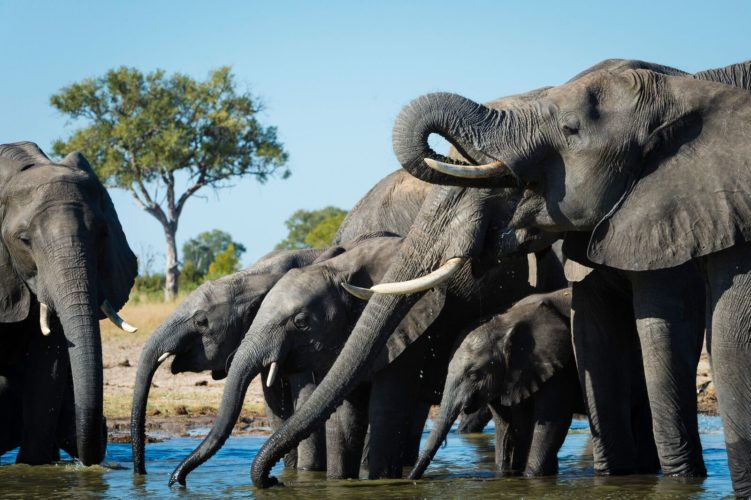
Zimbabwe is home to diverse ecosystems, including miombo and mopane woodlands, montane forests, wetlands, grasslands, rivers and lakes. This natural capital supports agriculture, tourism, fisheries and energy while providing food, water, fuel and other essential ecosystem services to communities across the country. Yet biodiversity continues to face growing pressures, while its economic value is not fully reflected in sectoral planning, public finance and investment decisions.
Zimbabwe has established a strong policy framework for biodiversity conservation, including its Third National Biodiversity Strategy and Action Plan (NBSAP3). With 23 national targets aligned with the Kunming–Montreal Global Biodiversity Framework, implementation of NBSAP3 is estimated to require approximately US$1.51 billion between 2025 and 2030. Mobilizing these resources will require not only additional finance, but also better alignment and more effective use of existing public, private and international financial flows.
UNDP BIOFIN is working with the Government of Zimbabwe to build the evidence needed to address this financing challenge. Led by the Ministry of Environment, Climate and Wildlife and the Ministry of Finance, Economic Development and Investment Promotion, the initiative is assessing the country's biodiversity-related policies and institutions, expenditure patterns and financing needs to understand where resources currently come from, how they are used and where financing gaps remain.
This evidence will inform Zimbabwe's Biodiversity Finance Plan and the identification of practical finance solutions to improve expenditure tracking, strengthen existing financial flows, address potentially harmful incentives and mobilize additional public and private investment for biodiversity.
Zimbabwe’s finance solutions will be refined through the BIOFIN process and validated through national consultations. The solutions listed below are drawn from the draft PIR and BER and represent existing mechanisms, emerging opportunities and potential reforms. They will be further screened and prioritised during the development of the Biodiversity Finance Plan, using criteria such as biodiversity impact, finance leverage, institutional feasibility, equity, safeguards and alignment with NBSAP3.
Finance solutions
Zimbabwe’s draft PIR identifies a broad set of biodiversity-relevant finance instruments, including public finance, protected area fees, hunting and safari revenues, concession fees, environmental levies, water tariffs, forest royalties, fines and penalties, trust funds, ecological fiscal transfers, private conservancies, CSR, impact investment, biodiversity-linked credit facilities, certification schemes, biodiversity offsets, biodiversity credit mechanisms, payments for ecosystem services, donor grants and multilateral funds. The BIOFIN Finance Solutions Catalogue classifies finance solutions according to results such as avoiding future costs, delivering finance more effectively, generating revenue, and realigning existing financial flows.
| Title / name | Description | Stage | Lead agencies / partners |
| 1. Biodiversity expenditure tagging and budget tracking | Establish or strengthen mechanisms to identify, classify and track biodiversity-related expenditure in national and sub-national budgets. This responds to the current lack of standard biodiversity budget tagging in Zimbabwe’s national budget classification system. The draft BER proposes activity-level budget review, engagement with MoFEDIP on budget classification reform, and use of programme analysis to identify biodiversity expenditure. | Piloting / designing | MoFEDIP; MECW; UNDP; ZIMSTAT; targeted MDAs; ZimParks; EMA; Forestry Commission; local authorities |
| 2. Biodiversity Expenditure Review database and finance-flow mapping | Develop a national biodiversity expenditure baseline covering public, private, donor, civil society and community finance flows. The draft BER results framework aims to establish an evidence-based baseline of biodiversity expenditures and improve policy coherence for NBSAP3 implementation. | Piloting / designing | MECW; MoFEDIP; UNDP; National Biodiversity Forum; ZimParks; EMA; Forestry Commission; private sector; CSOs; development partners |
| 3. Strengthening the Environmental Fund and environmental revenue instruments | Improve the performance of existing environmental charges, levies, fees and fines, and explore clearer earmarking of revenues for conservation and restoration. The draft PIR notes that the Environmental Management Act provides a legal basis for environmental charges, levies and fines, and that strengthening the Environmental Fund is a priority entry point for the BFP. | Idea / designing | MECW; EMA; MoFEDIP; local authorities; Rural District Councils |
| 4. Protected area revenue and wildlife economy finance | Strengthen revenue generation and reinvestment from park entrance fees, camping charges, hunting and safari revenues, concession fees and tourism-related contributions. The draft PIR notes that the Parks and Wildlife Act underpins protected areas, wildlife use, CAMPFIRE, concession systems and revenue-sharing arrangements central to the wildlife economy. | Full implementation, with improvements being designed | MECW; ZimParks; Rural District Councils; CAMPFIRE structures; tourism operators; private conservancies; communities |
| 5. Community conservation and benefit-sharing mechanisms | Strengthen finance mechanisms that increase benefits to communities living with biodiversity, including CAMPFIRE revenue-sharing, community conservation agreements, local environmental action planning and community-managed natural resource finance. The draft PIR notes that traditional leaders have mandates relevant to communal natural capital governance and that finance solutions in communal areas require formal engagement of traditional authorities. | Full implementation / piloting improvements | MECW; ZimParks; Rural District Councils; traditional leaders; CAMPFIRE Association; community institutions; CSOs |
| 6. Nature-positive incentives and subsidy reform | Identify harmful or misaligned incentives and redesign public support toward biodiversity-friendly land use, sustainable agriculture, restoration and sustainable forestry. The PIR highlights agriculture input subsidies and land-use incentives as entry points for reforming harmful incentives and promoting nature-positive production systems. The BIOFIN Catalogue also recognises biodiversity-friendly subsidies as tools that can support ecotourism, sustainable agriculture, non-timber forest products, reduced-impact forestry and fisheries. | Idea / considering | MoFEDIP; MECW; Ministry responsible for agriculture, fisheries, water and rural development; Forestry Commission; farmer organisations; private sector |
| 7. Watershed, wetland and catchment payment for ecosystem services | Explore water-use levies, watershed PES schemes, catchment restoration finance and wetland protection mechanisms to link biodiversity conservation with water security and disaster risk reduction. The PIR notes that water tariffs and abstraction charges provide a potential revenue base but are not yet systematically linked to ecosystem restoration finance. | Idea / considering | MECW; EMA; ZINWA; catchment councils; local authorities; water users; private sector; communities |
| 8. Forest-based finance, REDD+, carbon and sustainable forest enterprises | Scale finance for sustainable forest management, restoration, non-timber forest products, community forestry enterprises, REDD+, voluntary carbon markets and sustainable charcoal value chains. The PIR identifies potential to scale forest-based financing mechanisms while addressing policy inconsistencies that may encourage deforestation. | Idea / piloting | MECW; Forestry Commission; EMA; Rural District Councils; traditional leaders; private sector; community forestry groups; carbon market actors |
| 9. Access and Benefit-Sharing and biodiversity-based value chains | Develop finance solutions from biotrade, bioprospecting, natural products, genetic resources and traditional knowledge, ensuring fair and equitable sharing of benefits with the State, Indigenous Peoples and local communities. The PIR notes that Zimbabwe’s ABS frameworks create opportunities for biotrade, bioprospecting, natural product value-addition and revenue-sharing, although practical application remains limited. | Idea / considering | MECW; EMA; research institutions; universities; private sector; traditional knowledge holders; local communities |
| 10. Biodiversity offsets, credits and biobanking frameworks | Explore carefully regulated biodiversity offsets, credits or biobanking mechanisms for sectors such as mining, infrastructure, forestry and water, ensuring strong safeguards, measurable outcomes and fair benefit-sharing. The PIR states that the legal review will assess enabling provisions for PES, offsets, green bonds and ABS schemes. The BIOFIN Catalogue defines biodiversity offsets as measurable conservation outcomes that compensate for significant residual biodiversity loss after prevention and mitigation measures have been taken. | Idea / considering | MECW; EMA; MoFEDIP; mining and infrastructure regulators; private sector; conservation organisations; communities |
| 11. Green bonds and biodiversity-linked credit facilities | Explore opportunities for financial institutions to support nature-positive investment through green bonds, biodiversity-linked credit lines, impact investment and ecosystem-linked insurance products. The PIR includes biodiversity-linked credit facilities, impact investment, insurance products with ecosystem components and tourism operator conservation contributions among potential private finance instruments. | Idea / considering | MoFEDIP; RBZ; financial institutions; IDBZ; insurance sector; private sector; UNDP |
| 12. International, heritage-linked and multilateral biodiversity finance | Strengthen access to donor grants, concessional loans, GEF, GCF and heritage-linked financing for globally significant landscapes. The PIR notes that Mana Pools and Matobo Hills World Heritage designations can provide pathways to international heritage-linked finance windows, including UNESCO World Heritage Funds and GEF co-financing. | Full implementation / scaling up | MECW; ZimParks; National Museums and Monuments of Zimbabwe; UNESCO; GEF; GCF; UNDP; development partners |
Zimbabwe’s BIOFIN engagement is expected to strengthen the country’s evidence base for biodiversity finance, improve tracking of biodiversity-related expenditure, and support the mobilisation and realignment of finance for NBSAP3 implementation. Preliminary goals include establishing a national biodiversity expenditure baseline, improving budget classification and tagging, identifying harmful subsidies and incentives, strengthening environmental revenue instruments, and developing priority finance solutions through the Biodiversity Finance Plan.
As implementation advances, information will be updated with concrete results, including validated expenditure figures, finance mobilised, policy or legal reforms adopted, institutional tools established, and finance mechanisms implemented.