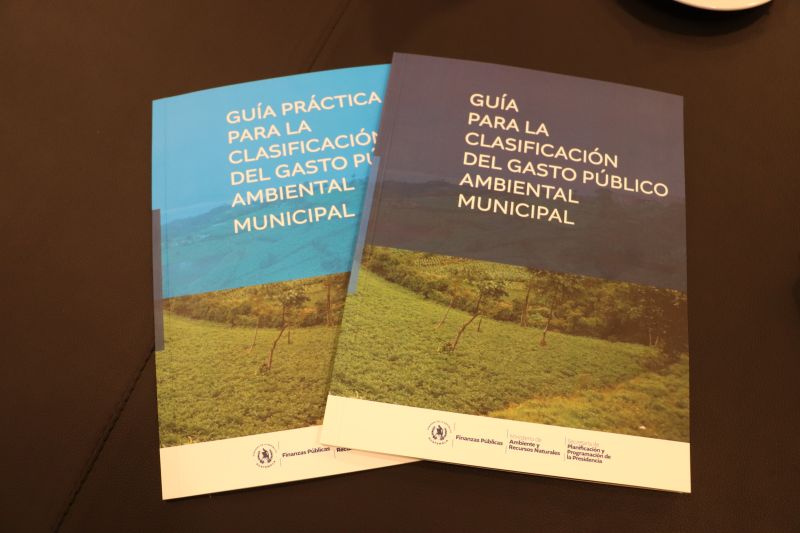
Guatemala has introduced a guide to help its 340 municipalities identify, classify and report public spending on environmental protection. Developed with technical support from UNDP BIOFIN and other partners, the tool aims to make environmental expenditure more visible in local budgets and support better-informed planning.
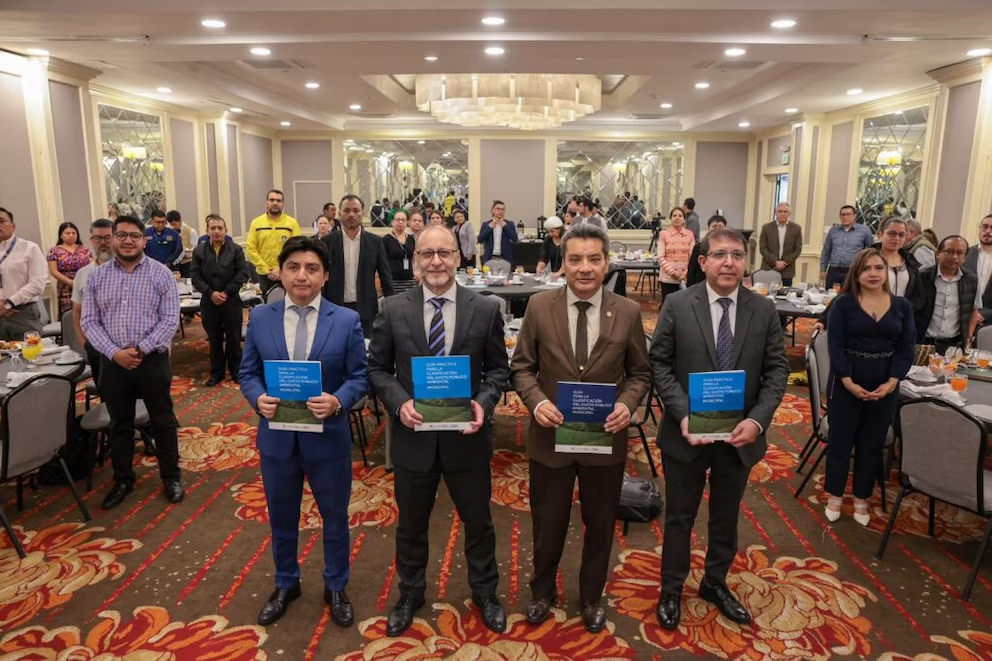
The Ministry of Finance presented the Guide for the Classification of Municipal Environmental Public Expenditure as part of Guatemala’s Environmental Fiscal Strategy. It provides common criteria for identifying which programmes, projects and activities qualify as environmental expenditure and recording them consistently.
The guide builds on experience in ten pilot municipalities. Its implementation has been institutionalized through the Ministry’s Directorate for Assistance to Municipal Financial Administration, providing a government-led structure for supporting its wider application.
Making environmental spending visible
The guide helps municipalities apply existing budget classifications rather than creating new budget lines. These cover waste management, wastewater management, pollution reduction, biodiversity and landscape protection, environmental research and other environmental activities. The methodology also incorporates classifications for disaster risk reduction and climate change mitigation and adaptation.
Using these classifications consistently will help local governments identify how much they allocate to environmental activities and where those resources go. It will also allow them to incorporate environmental considerations earlier, when projects and budgets are being prepared.
When environmental spending is difficult to identify in a municipal budget, it is also difficult to plan and track. More consistent budget information can help local governments understand where resources are going and make better-informed decisions about future environmental investment, including biodiversity conservation.
Supporting implementation across municipalities
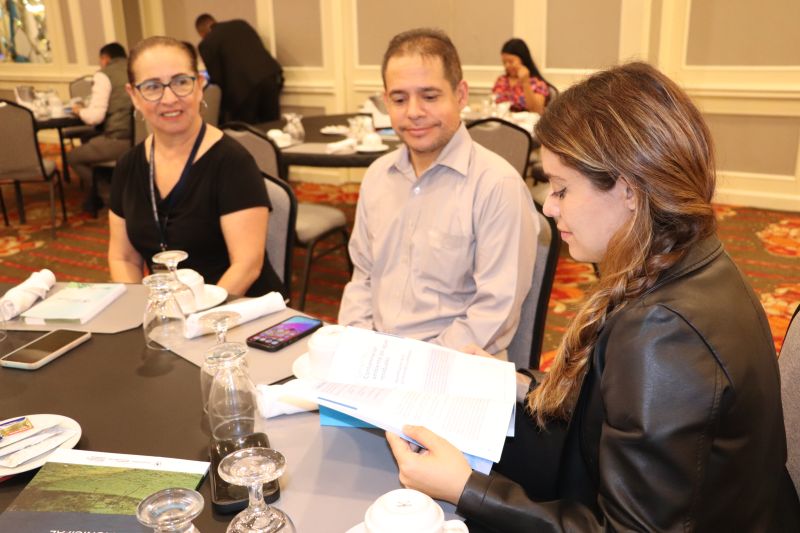
To support implementation, the Ministry of Finance, with support from UNDP BIOFIN, launched a nationwide training series. Following the kickoff, 16 regional workshops were scheduled over three weeks, with the aim of reaching all 340 municipalities. The workshops help municipal officials identify and classify environmental public expenditure and reflect it in their budget planning.
The guide was developed with technical support from the Ministry of Environment and Natural Resources, the Secretariat for Planning and Programming of the Presidency, UNDP, the Partnership for Action on Green Economy (PAGE) and UNDP BIOFIN.
The purpose extends beyond recording expenditure: clearer budget information can help connect national environmental priorities with local planning and public investment.
UNDP Resident Representative Carlos Benítez Verdún emphasized that environmental protection should become an integral part of municipal development agendas. Environment and Natural Resources Minister Edwin Castellanos also highlighted the value of reliable expenditure information for understanding how public resources are used and demonstrating Guatemala’s domestically financed environmental efforts.
The guide and training series provide practical tools for more consistent and transparent environmental budgeting. Their intended national reach offers an opportunity to strengthen how municipalities plan, record and report the resources supporting environmental protection, including biodiversity conservation.