Knowledge Base

Knowledge Hub

Access BIOFIN's library of resources, including flagship publications, country reports, finance solution case studies, webinars, explainer videos, podcasts, and more.

Key Publications

Publications

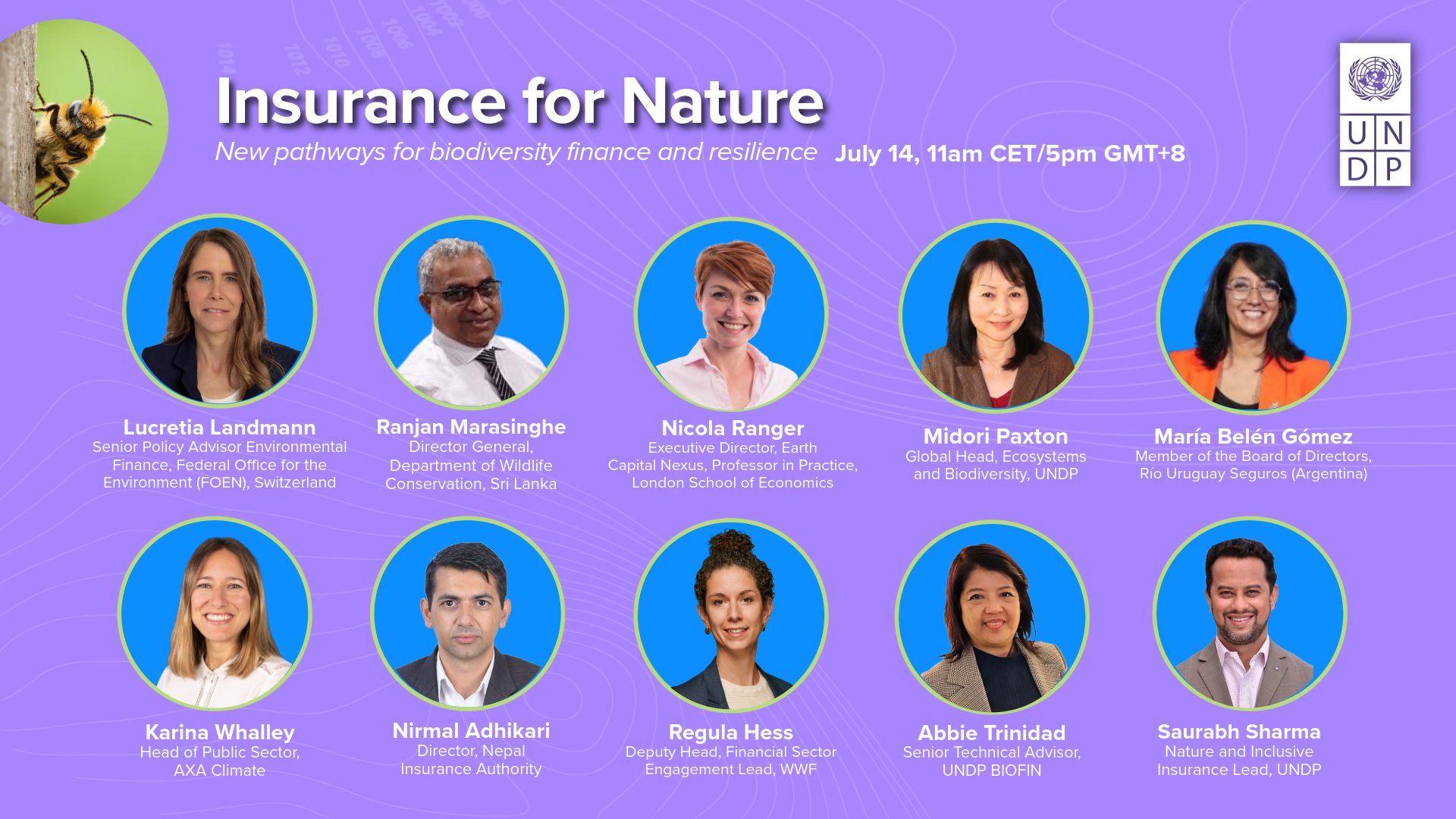
Insurance can play a crucial role in biodiversity conservation by providing financial protection against risks to natural assets, incentivizing sustainable practices, and securing key investments.
Publications

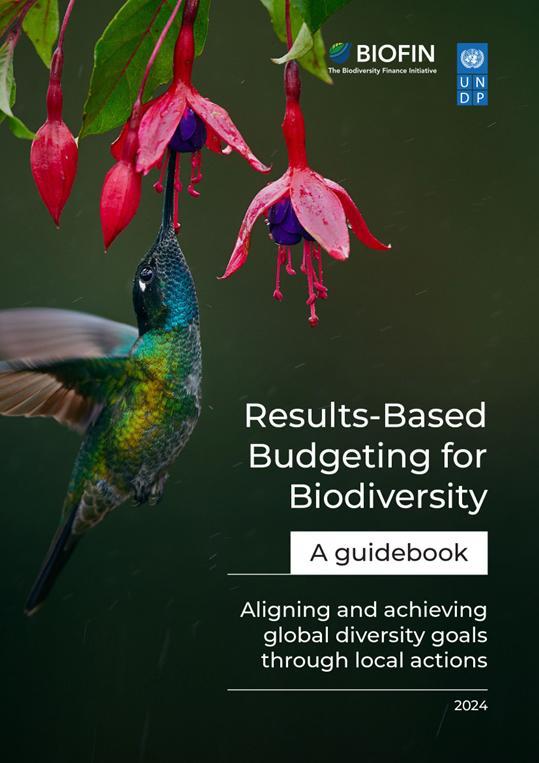
In 2022, countries adopted new global biodiversity targets under the Kunming-Montreal Global Biodiversity Framework (GBF), revisiting many goals that had gone unachieved or underachieved over the past decade.
Publications

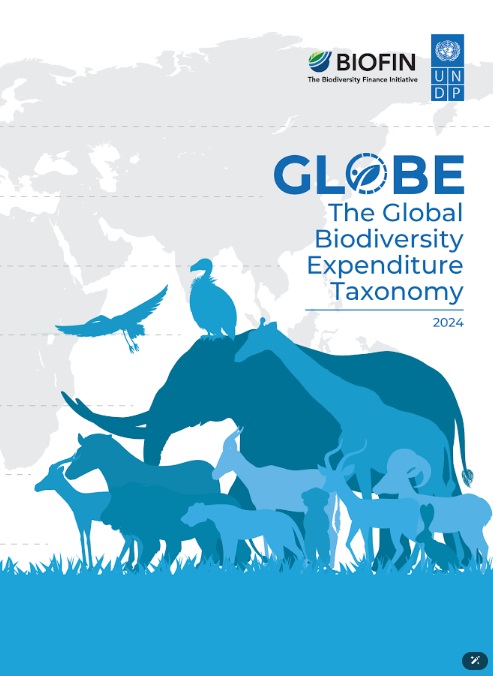
Global Biodiversity Expenditure (GLOBE) is a taxonomy that categorizes all potential public expenditures for biodiversity.

The taxonomy consists of two components:
Publications

The BIOFIN Workbook 2024 provides detailed guidance to design and implement national biodiversity finance plans.  These are not mere plans. They set out a process to engage a coalition of actors around the issue of biodiversity finance for an extended time.
Publications

At the Conference of the Parties to the Convention on Biological Diversity 15 (CBD COP 15) in 2022, countries agreed to review and update their National Biodiversity Strategy and Action Plans
Publications

Well-intentioned subsidies aimed at socio-economic goals can have unintended negative impacts on the environment, including biodiversity. The BIOFIN team has developed a step-by-step guide to repurpose such subsidies and improve their positive impacts on people and nature.
Publications

The Kunming-Montreal Global Biodiversity Framework (GBF) calls for a whole-of-society approach to halting and reversing nature loss.

Publications

The Little Book of Investing in Nature provides an essential overview of the area of biodiversity finance at a time when governments and international negotiators are urgently seeking pragmatic solutions for the twin crises of climate change and the loss of nature.

E-LEARNING

Learning for nature: our free biodiversity finance certified e-learning course

Take our free biodiversity finance certified e-learning course. Master the methodology, connect with experts, and gain certification.

Start E-Learning
Browse the Knowledge Platform
659 Results
Publications

The Policy and Institutional Review has provided an important snapshot into the current policy, institutional, and finance landscape for biodiversity finance in Belize. The introduction and implementation of the BIOFIN in Belize, in and of itself, has raised the profile of biodiversity finance in Belize.
 

Publications

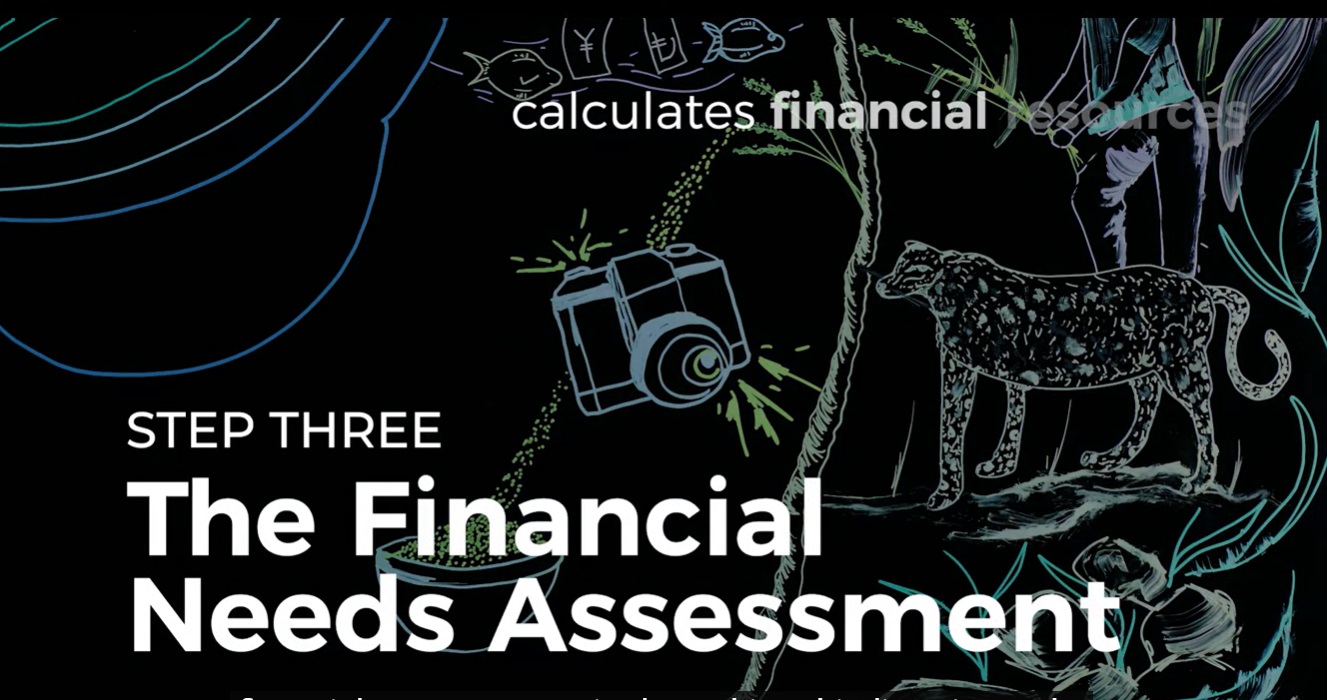
The Financial Needs Assessment (FNA) is the third output of BIOFIN, that assists in estimating the funds required to achieve the biodiversity targets of the country in accordance with the activities of the National Biodiversity Strategy and Action Plan (NBSAP). It aims to assist policy makers in understanding the total cost implications for implementing each NBSAP activity and aggregates the total cost for all strategies and actions within Belize's NBSAP
 

Publications

The result of applying the BIOFIN approach in Belize is The Biodiversity Finance Plan (BFP) presented here as the fourth output of BIOFIN Phase 1. The Plan proposes a suite of biodiversity finance solutions, which are capable of raising the financial and other resources required to achieve the country’s biodiversity targets in accordance with the activities of the National Biodiversity Strategy
and Action Plan (NBSAP), the long-term development strategy Horizon 2030, and the Sustainable Development Goals (SDGs). Belize acknowledges the urgency of effecting the finance plan given the reality that its economic stability strongly links to the conservation of its biological resources.
 

Publications

The Biodiversity Expenditure Review contains detailed data on public, private, and civil society biodiversity expenditures data. The BER engaged in assessing the expenditure status of investments pertinent to biodiversity conservation and environmental management throughout the period of 2012 – 2017.The overarching primary sectors and most pertinent agencies were identified and selected from
the Policy and Institutional Review’s prioritization “power and interest” matrix to undergo BIOFIN expenditure assessment. The BER focused its assessment on the key sectors and agencies which contribute both directly and/or indirectly to biodiversity conservation in Belize. 
 

Publications

This report compiles the findings from three assessments conducted as part of the national Biodiversity Finance Initiative (BIOFIN) process. The three assessments discussed include the policy and institutional review (PIR), the budget and expenditure review (BER), and the financial needs assessment (FNA). The PIR analyzes the policy and institutional context, identifies the biodiversity targets to be achieved, and lays out the context for the intended change in financing. The BER analyzes public and private expenditures for biodiversity and establishes past and projected expenditures on biodiversity. The FNA provides an estimation of the financing required to achieve identified biodiversity targets.

The FNA also assesses the financing gap between the status quo of projected expenses and the estimated budget to meet biodiversity goals. Findings from these three assessments feed into the formulation of the country’s Biodiversity Finance Plan (BFP) and are used to develop prioritized finance solutions that are then taken into the implementation phase of the BIOFIN process.

BIOFIN Thailand assesses the policy and institutional context by classifying biodiversity resources into four ecological functions. The latter are terrestrial, marine and coastal, wetlands, and urban ecosystems. The PIR finds that the key document that sets national goals for biodiversity is the National Biodiversity Strategy and Action Plan (NBSAP). In addition to this, key policy documents include the Ministry of Natural Resources and Environment (MONRE)’s 20-Year Strategic Plan (2017 – 2036), and the strategic and action plans of important line agencies.

These policy documents are set within the context of national development policies, which are the 20-Year National Strategy (2018 – 2037) and the five-year National Economic and Social Development Plan (NESDP). For biodiversity, key implementing agencies are all within MONRE. Three agencies are especially important. They are the Royal Forest Department (RFD), the Department of National Parks, Wildlife, and Plant Conservation (DNP), and the Department of Marine and Coastal Resources (DMCR). Of these three, RFD and DNP are responsible for the terrestrial ecosystem while the DMCR’s mandate is with regards to marine and coastal ecosystems. There are no designated agencies that are directly responsible for wetlands and urban ecosystems. Biodiversity in these two ecosystems are overseen by a wide range of agencies. Nonetheless, given the number of projects and activities related to wetlands in the NBSAP, it can be said that the wetlands ecosystem is given much importance. While the majority of institutions working on biodiversity in Thailand are government agencies, non-profit organizations and some from the private sector have also contributed to biodiversity efforts. 

Publications

This supplementary guidance document to the Biodiversity Finance Initiative (BIOFIN) 2018 Workbook aims to enhance public and private collaboration to unlock private capital for biodiversity and ecosystems. It is targeted towards biodiversity finance practitioners, financial institutions, conservation agencies, and private sector investors. It is BIOFIN’s ambition that it will assist them to find creative and appropriate private sector finance solutions for conserving biodiversity and ecosystems and, in doing, contribute to a growing global movement that is pushing the boundaries of private investment in conservation and monitoring closely the benefits, risks and accountabilities of this.

Publications
BIOFIN Videos
SEE ALL