Knowledge Base

KNOWLEDGE HUB

Knowledge Hub

Access BIOFIN's library of resources, including flagship publications, country reports, finance solution case studies, webinars, explainer videos, podcasts, and more.

Key Publications
Publications

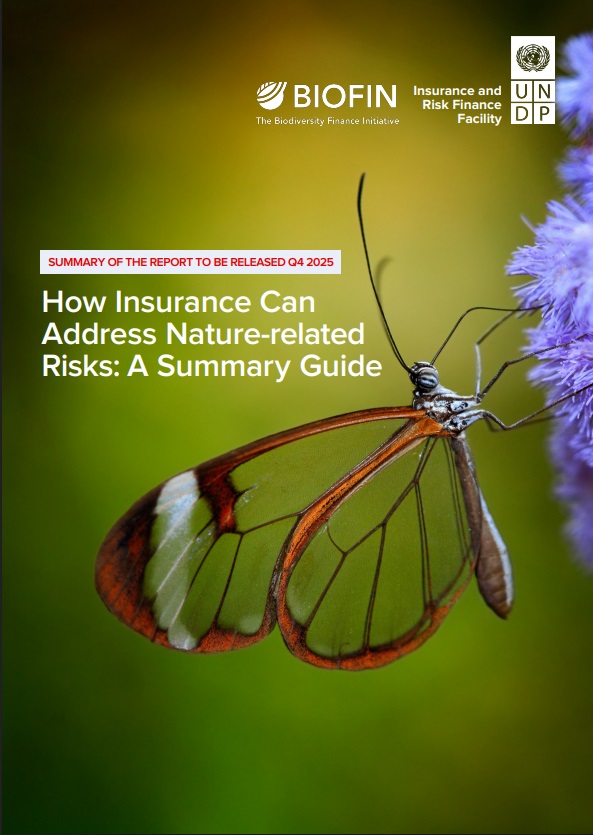
Insurance can play a crucial role in biodiversity conservation by providing financial protection against risks to natural assets, incentivizing sustainable practices, and securing key investments.
Publications

In 2022, countries adopted new global biodiversity targets under the Kunming-Montreal Global Biodiversity Framework (GBF), revisiting many goals that had gone unachieved or underachieved over the past decade.
Publications

Global Biodiversity Expenditure (GLOBE) is a taxonomy that categorizes all potential public expenditures for biodiversity.

The taxonomy consists of two components:
Publications

The BIOFIN Workbook 2024 provides detailed guidance to design and implement national biodiversity finance plans.  These are not mere plans. They set out a process to engage a coalition of actors around the issue of biodiversity finance for an extended time.
Publications

At the Conference of the Parties to the Convention on Biological Diversity 15 (CBD COP 15) in 2022, countries agreed to review and update their National Biodiversity Strategy and Action Plans
Publications

Well-intentioned subsidies aimed at socio-economic goals can have unintended negative impacts on the environment, including biodiversity. The BIOFIN team has developed a step-by-step guide to repurpose such subsidies and improve their positive impacts on people and nature.
Publications

The Kunming-Montreal Global Biodiversity Framework (GBF) calls for a whole-of-society approach to halting and reversing nature loss.

Publications


The Little Book of Investing in Nature provides an essential overview of the area of biodiversity finance at a time when governments and international negotiators are urgently seeking pragmatic solutions for the twin crises of climate change and the loss of nature.

E-LEARNING

Learning for nature: our free biodiversity finance certified e-learning course

Take our free biodiversity finance certified e-learning course. Master the methodology, connect with experts, and gain certification.

Start E-Learning
Browse the Knowledge Platform

636 Results
Publications

Рабочая книга БИОФИН 2016 была разработана на основе данных и уроков, полученных в ходе реализации БИОФИН в 30 странах: Белизе, Бразилии, Ботсване, Бутане, Чили, Колумбии, Коста-Рике, Кубе, Эквадоре, Фиджи, Грузии, Гватемале, Индии, Индонезии, Казахстане, Кыргызстане, Малайзии, Мексике, Монголии, Мозамбике, Перу, Филиппинах, Руанде, Сейшельских Островах, Южной Африке, Шри-Ланке, Таиланде, Уганде, Вьетнаме и Замбии. Авторскому коллекти-ву хотелось бы выразить благодарность нашим коллегам в БИОФИН, местным и международным консультантам, Страновым офисам ПРООН, правительствам, партнерам из частного сектора и граждан-ского общества в каждой их этих стран, а также региональным техни-ческим консультантам ПРООН-ГЭФ во всех регионах. Кроме того, был использован опыт проекта по мобилизации ресурсов Министерства охраны окружающей среды/GIZ в Намибии. С представителями пра-вительств и экспертами из этих стран были проведены интенсивные консультации в ходе восьми основных семинаров и четырех вебина-ров, объединивших уникальные идеи и подходы каждой страны с целью реализации и адаптирования методологии БИОФИН. Она со-держит вклад многих коллег и партнеров в странах БИОФИН, гло-бальных экспертов и коллег из ПРООН.

The 2016 BIOFIN Workbook was developed based on the in-puts and lessons generated from BIOFIN implementation in 30 countries: Belize, Brazil, Botswana, Bhutan, Chile, Colombia, Costa Rica, Cuba, Ecuador, Fiji, Georgia, Guatemala, India, Indonesia, Kazakhstan, Kyrgyzstan, Malaysia, Mexico, Mongolia, Mozambique, Peru, Philippines, Rwanda, Seychelles, South Africa, Sri Lanka, Thailand, Uganda, Vietnam and Zambia. The writing team would like to thank our BIOFIN colleagues, local and inter-national consultants, UNDP Country Offices, Governments, pri-vate sector and civil society partners in each of these countries, as well as the UNDP-GEF Regional Technical Advisors in each region. Additional lessons were drawn from the Ministry of Environment/GIZ Resource Mobilisation project in Namibia. It has undergone intensive consultations with government representatives and ex-perts from these countries through eight major workshops and four webinars, combining the unique ideas and approaches of each country to implement and adapt the BIOFIN methodology. It contains inputs from many colleagues and partners in BIOFIN countries, global experts, and UNDP colleagues.

Publications

Каталог финансово-экономических механизмов сохранения биоразнообразия подготовлен в рамках международного регионального проекта «Создание трансформационной политики и финансовых механизмов для увеличения инвестиций в управление биоразнообразием» (БИОФИН) в целях информирования лиц, принимающих решения, и всех заинтересованных сторон о новых инструментах решения вопросов сохранения биоразнообразия и экосистем, устойчивого природопользования и развития «зеленой» экономики.
БИОФИН направлен на оказание содействия странам-участницам проекта в определении
дефицита финансирования биоразнообразия и мобилизации ресурсов посредством инновационных финансовых и экономических механизмов.

The catalog of financial and economic mechanisms for biodiversity conservation was prepared within the framework of the regional project "Creation of Transformational Policies and Financial Mechanisms for Increasing Investments in Biodiversity Management" (BIOFIN) in order to inform decision-makers and all stakeholders about new tools for addressing biodiversity conservation and ecosystems, sustainable management of nature and the development of a "green" economy. 

Publications

This methodological guide has been developed as part of the Outcome 3 “Community involvement in conservation and sustainable use of biodiversity in and around PAs is enhanced”, UNDP-supported GEF-financed project “Improving sustainability of the PA system in desert ecosystems through promotion of biodiversity-compatible livelihoods in and around PAs”, implemented jointly with Government of Kazakhstan (hereinafter referred to as project).


The guide gives basic concepts and modalities to facilitate provision of local people with microcredits in 3 project areas, which are adjacent to protected areas of Almaty, Mangystau and Kyzylorda regions by offering replacement of unsustainable practices with alternative ones. This will allow reducing high pressure on the biodiversity of desert and semi-desert ecosystems, wetlands in three project areas. In the second phase (2020-2024), local communities will have access to microcredits in the periphery of all 27 protected areas of Kazakhstan located not more than 50 km from their boundaries, including emerging protected areas. The publication is designed for the staff and directors of protected areas, experts in the field of agriculture, fisheries, hunting management, tourism, rural people to involve them in protection and better management of biodiversity by using sustainable and environment-friendly natural resources management practices.

Publications

A well-functioning nature is essential for sustainable development, which is based on the balance between economic growth, social inclusion and the protection of the environment. 80% of the human diet comes from animal and vegetal species, so the decline of ecosystems not only affects the life of individuals, but also the entire society. Besides, biodiversity is vital for the economy: something as subtle as pollination is conditional for producing medicines, bio-fuels, fibers and construction materials. Chile is not exempt from this fact: 17.4% of its GDP and over a half of its exportations directly depend on natural resources. 

The loss and decline of biodiversity is a global process which is also present in Chile. In this country, the negative impacts are related to: (i) changes in land use, (ii) the introduction and spread of invasive exotic species, (iii) the intensive development of primary production sectors, (iv) forest fires and, (v) climate change. This is enhanced by practices and policies of the private sector and also of the State. Additionally, the allocated budgets for biodiversity protection are comparatively low to those given for productive development, which have an impact on nature. The analysis of the central government spending on biodiversity shows its low incidence: 0.036% of GDP (2014). Since optimization and redistribution of the available resources are required, it is suggested to enhance biodiversity funding through public policies aimed at: the environmental institutions strengthening, the implementation of an economic model based on the sustainable use of natural resources, and the expansion of market instruments to ease the support of the private sector for biodiversity funding.

Publications

A well-functioning nature is essential for sustainable development, which is based on the balance between economic growth, social inclusion and the protection of the environment. 80% of the human diet comes from animal and vegetal species, so the decline of ecosystems not only affects the life of individuals, but also the entire society. Besides, biodiversity is vital for the economy: something as subtle as pollination is conditional for producing medicines, bio-fuels, fibers and construction materials. Chile is not exempt from this fact: 17.4% of its GDP and over a half of its exportations directly depend on natural resources. 

The loss and decline of biodiversity is a global process which is also present in Chile. In this country, the negative impacts are related to: (i) changes in land use, (ii) the introduction and spread of invasive exotic species, (iii) the intensive development of primary production sectors, (iv) forest fires and, (v) climate change. This is enhanced by practices and policies of the private sector and also of the State. Additionally, the allocated budgets for biodiversity protection are comparatively low to those given for productive development, which have an impact on nature. The analysis of the central government spending on biodiversity shows its low incidence: 0.036% of GDP (2014). Since optimization and redistribution of the available resources are required, it is suggested to enhance biodiversity funding through public policies aimed at: the environmental institutions strengthening, the implementation of an economic model based on the sustainable use of natural resources, and the expansion of market instruments to ease the support of the private sector for biodiversity funding.

Publications

A well-functioning nature is essential for sustainable development, which is based on the balance between economic growth, social inclusion and the protection of the environment. 80% of the human diet comes from animal and vegetal species, so the decline of ecosystems not only affects the life of individuals, but also the entire society. Besides, biodiversity is vital for the economy: something as subtle as pollination is conditional for producing medicines, bio-fuels, fibers and construction materials. Chile is not exempt from this fact: 17.4% of its GDP and over a half of its exportations directly depend on natural resources. 

The loss and decline of biodiversity is a global process which is also present in Chile. In this country, the negative impacts are related to: (i) changes in land use, (ii) the introduction and spread of invasive exotic species, (iii) the intensive development of primary production sectors, (iv) forest fires and, (v) climate change. This is enhanced by practices and policies of the private sector and also of the State. Additionally, the allocated budgets for biodiversity protection are comparatively low to those given for productive development, which have an impact on nature. The analysis of the central government spending on biodiversity shows its low incidence: 0.036% of GDP (2014). Since optimization and redistribution of the available resources are required, it is suggested to enhance biodiversity funding through public policies aimed at: the environmental institutions strengthening, the implementation of an economic model based on the sustainable use of natural resources, and the expansion of market instruments to ease the support of the private sector for biodiversity funding.

Publications

Linkages between various actions identified by National Biodiversity Strategy and Action Plan (NBSAP) and other policy documents in environment sector as well as other economic sectors, which might have impact on biodiversity. 

Publications

The Policy and Institutional Review (PIR) was undertaken as part of the Uganda’s development of a Biodiversity Finance Plan supported by the Biodiversity Initiative (BIOFIN) project. The BIOFIN project is a global partnership seeking to address the biodiversity finance challenge in a comprehensive and systematic manner. It was launched by the United Nations Development Programme (UNDP) in October 2012 with financial support from the European Union (EU), Government of Germany, Switzerland and Norway through UNDP. The aim of the initiative is to enable governments to construct a sound business case for increasing investment in the sustainable and equitable management, protection and restoration of biodiversity and ecosystems. BIOFIN was implemented by the National Environment Management Authority (NEMA) on behalf of the Government of Uganda (GOU)