Knowledge Base

KNOWLEDGE HUB

Knowledge Hub

Access BIOFIN's library of resources, including flagship publications, country reports, finance solution case studies, webinars, explainer videos, podcasts, and more.

Key Publications

Publications

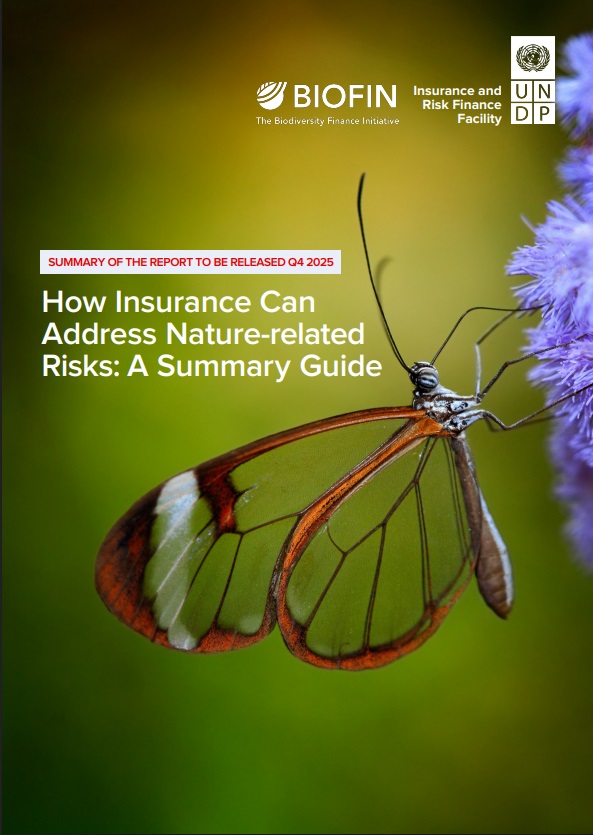
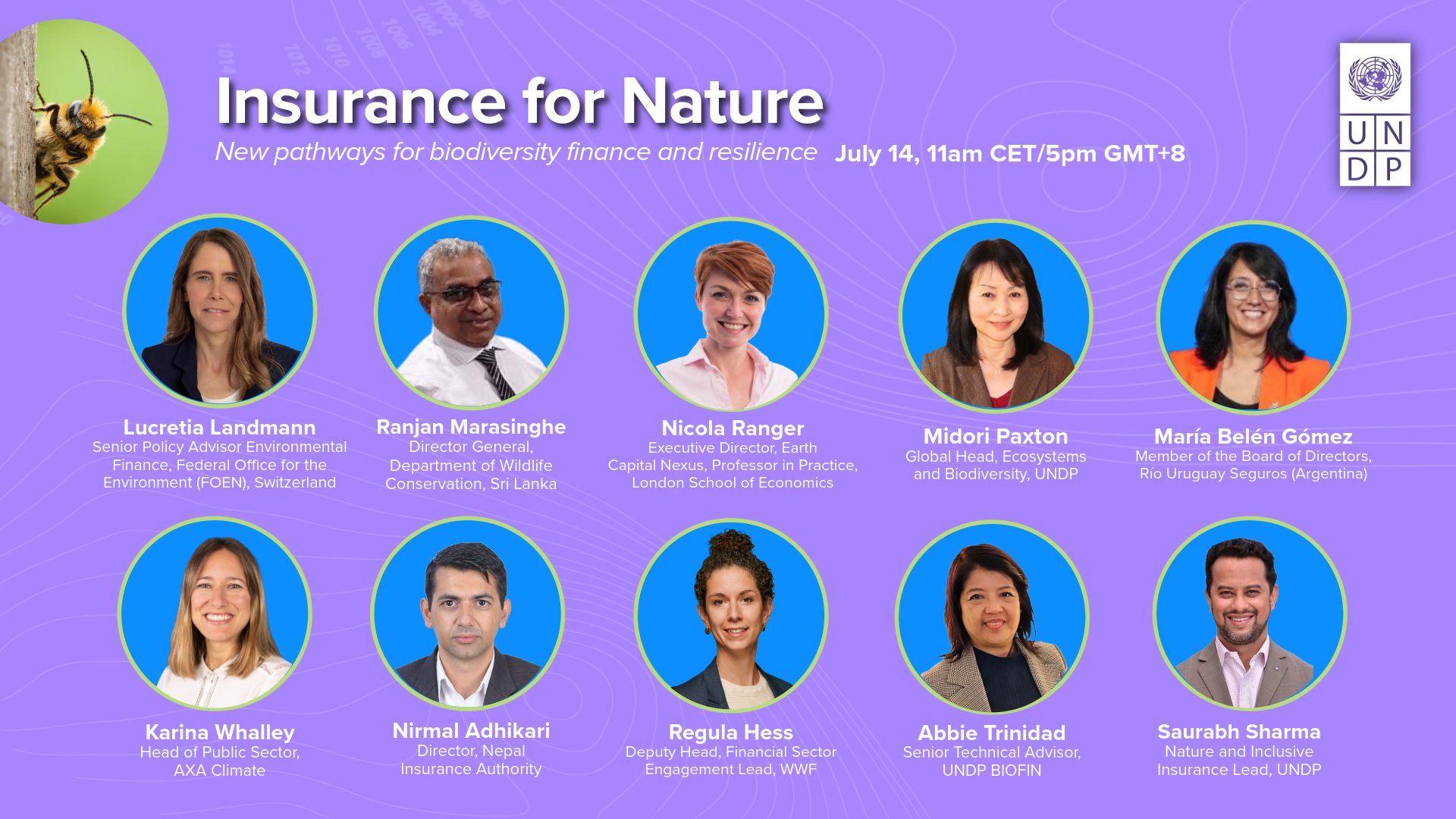
Insurance can play a crucial role in biodiversity conservation by providing financial protection against risks to natural assets, incentivizing sustainable practices, and securing key investments.
Publications

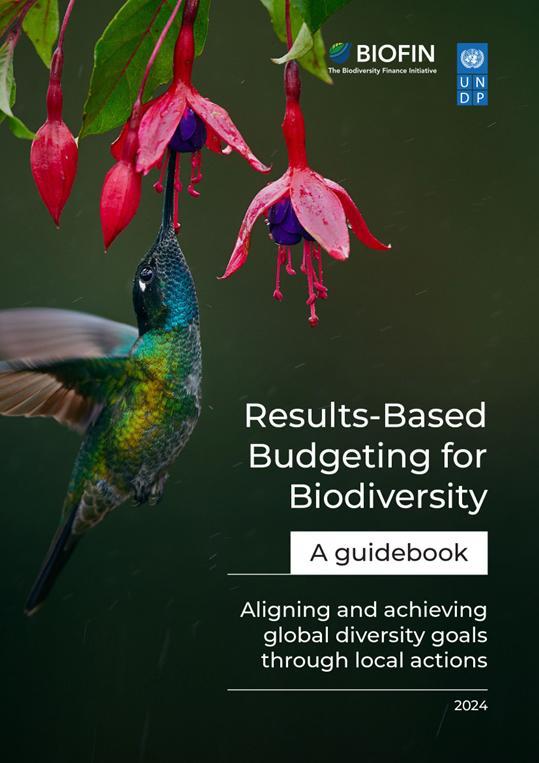
In 2022, countries adopted new global biodiversity targets under the Kunming-Montreal Global Biodiversity Framework (GBF), revisiting many goals that had gone unachieved or underachieved over the past decade.
Publications

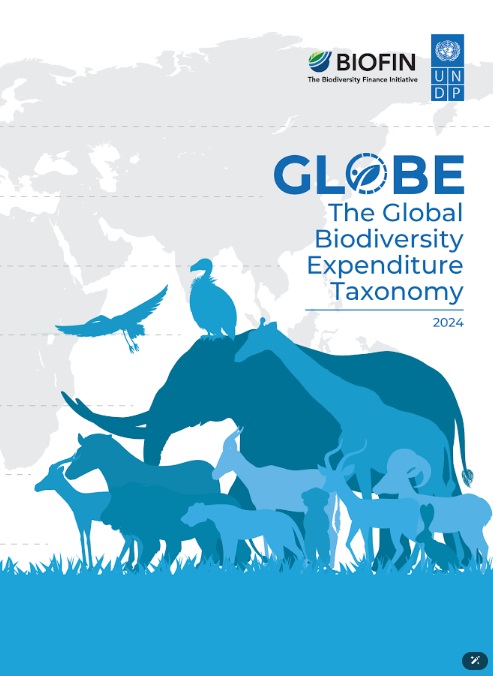
Global Biodiversity Expenditure (GLOBE) is a taxonomy that categorizes all potential public expenditures for biodiversity.

The taxonomy consists of two components:
Publications

The BIOFIN Workbook 2024 provides detailed guidance to design and implement national biodiversity finance plans.  These are not mere plans. They set out a process to engage a coalition of actors around the issue of biodiversity finance for an extended time.
Publications

At the Conference of the Parties to the Convention on Biological Diversity 15 (CBD COP 15) in 2022, countries agreed to review and update their National Biodiversity Strategy and Action Plans
Publications

Well-intentioned subsidies aimed at socio-economic goals can have unintended negative impacts on the environment, including biodiversity. The BIOFIN team has developed a step-by-step guide to repurpose such subsidies and improve their positive impacts on people and nature.
Publications

The Kunming-Montreal Global Biodiversity Framework (GBF) calls for a whole-of-society approach to halting and reversing nature loss.

Publications


The Little Book of Investing in Nature provides an essential overview of the area of biodiversity finance at a time when governments and international negotiators are urgently seeking pragmatic solutions for the twin crises of climate change and the loss of nature.

E-LEARNING

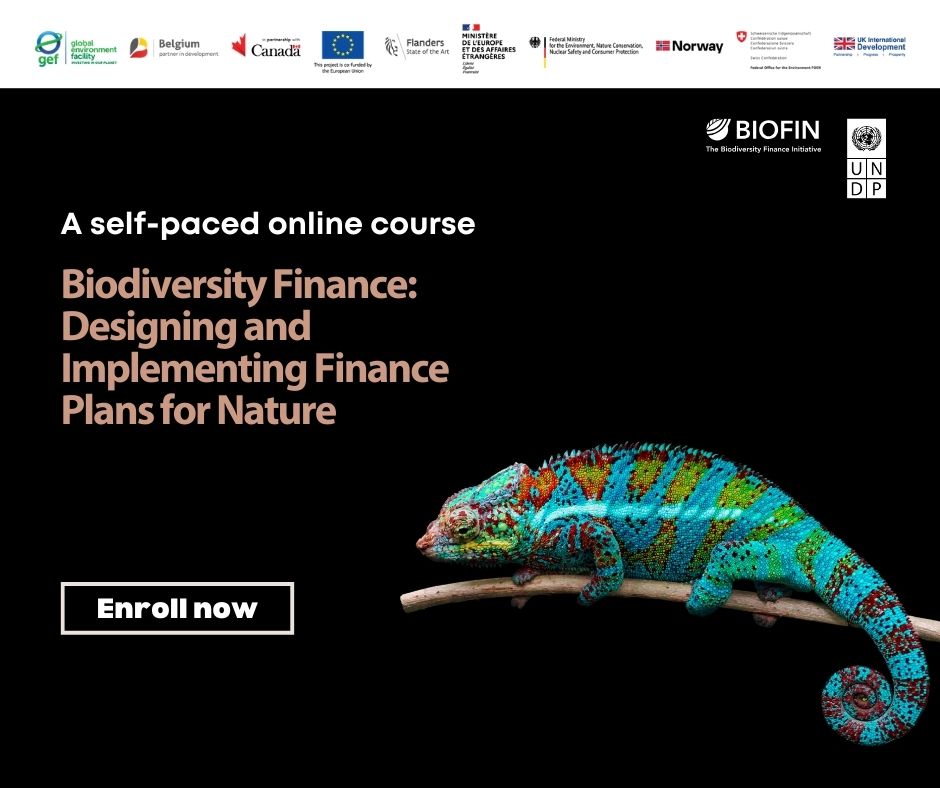
Learning for nature: our free biodiversity finance certified e-learning course

Take our free biodiversity finance certified e-learning course. Master the methodology, connect with experts, and gain certification.

Start E-Learning
Browse the Knowledge Platform

636 Results
Publications

The Biodiversity Finance Initiative (BIOFIN), the Poverty and Environment Initiative (PEI) and the Governance of Climate Finance Programme’s Climate Public Expenditure Review (CPEIR), implemented with UNDP support, provide a valuable entry point to link the new SDG prioritization and Bhutan’s national Five Year Plans with financing instruments. This is particularly important in an era where national resource mobilization and private sector contributions need to be blended with Official Development Assistance (ODA) and climate finance, and where development partners and the public demand higher levels of resource and institutional efficiency.

Publications

The Biodiversity Finance Initiative (BIOFIN), the Poverty and Environment Initiative (PEI) and the Governance of Climate Finance Programme’s Climate Public Expenditure Review (CPEIR), implemented with UNDP support, provide a valuable entry point to link the new SDG prioritization and Bhutan’s national Five Year Plans with financing instruments. This is particularly important in an era where national resource mobilization and private sector contributions need to be blended with Official Development Assistance (ODA) and climate finance, and where development partners and the public demand higher levels of resource and institutional efficiency.

Publications

The Biodiversity Finance Initiative (BIOFIN), the Poverty and Environment Initiative (PEI) and the Governance of Climate Finance Programme’s Climate Public Expenditure Review (CPEIR), implemented with UNDP support, provide a valuable entry point to link the new SDG prioritization and Bhutan’s national Five Year Plans with financing instruments. This is particularly important in an era where national resource mobilization and private sector contributions need to be blended with Official Development Assistance (ODA) and climate finance, and where development partners and the public demand higher levels of resource and institutional efficiency.

Publications

In Guatemala, The National Council of Protected Areas (CONAP) is responsible for directing SIGAP (Guatemalan Protected Areas System).  By 2015, it was formed by 328 protected areas. Its management approach is grounded by the design and implementation of a Master (including a financial plan) and Operative Plans that must be developed by the co-management partners or direct management partners.  A shortage of financial and human resources has been a barrier to ensure the existence of the Financial and Masters Plans.  For this reason, only 50 Master Plans and 44 Financial Plans were used. This data was standardized in order to implement the BIOFIN methodology and adapt budgets and programs. According to the BIOFIN Strategy, the Total Amount Needed for funding 50 Protected Areas, during 2006-2010 is $313.509,531.10

Publications

The Biodiversity Finance Initiative (BIOFIN), the Poverty and Environment Initiative (PEI) and the Governance of Climate Finance Programme’s Climate Public Expenditure Review (CPEIR), implemented with UNDP support, provide a valuable entry point to link the new SDG prioritization and Bhutan’s national Five Year Plans with financing instruments. This is particularly important in an era where national resource mobilization and private sector contributions need to be blended with Official Development Assistance (ODA) and climate finance, and where development partners and the public demand higher levels of resource and institutional efficiency.

Publications

The Biodiversity Finance Initiative (BIOFIN), the Poverty and Environment Initiative (PEI) and the Governance of Climate Finance Programme’s Climate Public Expenditure Review (CPEIR), implemented with UNDP support, provide a valuable entry point to link the new SDG prioritization and Bhutan’s national Five Year Plans with financing instruments. This is particularly important in an era where national resource mobilization and private sector contributions need to be blended with Official Development Assistance (ODA) and climate finance, and where development partners and the public demand higher levels of resource and institutional efficiency.

Publications

Government expenditure in biodiversity included: Forestry incentives (PINFOR, PINPEP), expenditures used for Natural Parks maintenance by The Ministry of Culture and Sports -MICUDE-. This estimating also includes Central and local government expenditure.

Private expenditure was estimated according to three leading implementing sectors: a) Productive Sector (agriculture, extractive, industrial and service companies); b) International Cooperation and c) NGOs and Universities.  

National expenditure in Biodiversity-related actions during 2010-2014, was $42,456,410 from which 67% was spent by Government sector ($ 28,445,794) and 33% by Private entities ($14,010,615). It is important to mention that the Total Expenditure on Biodiversity, in relation to GDP, remains on average in 0.14% over the years 2010-2014. 

Publications

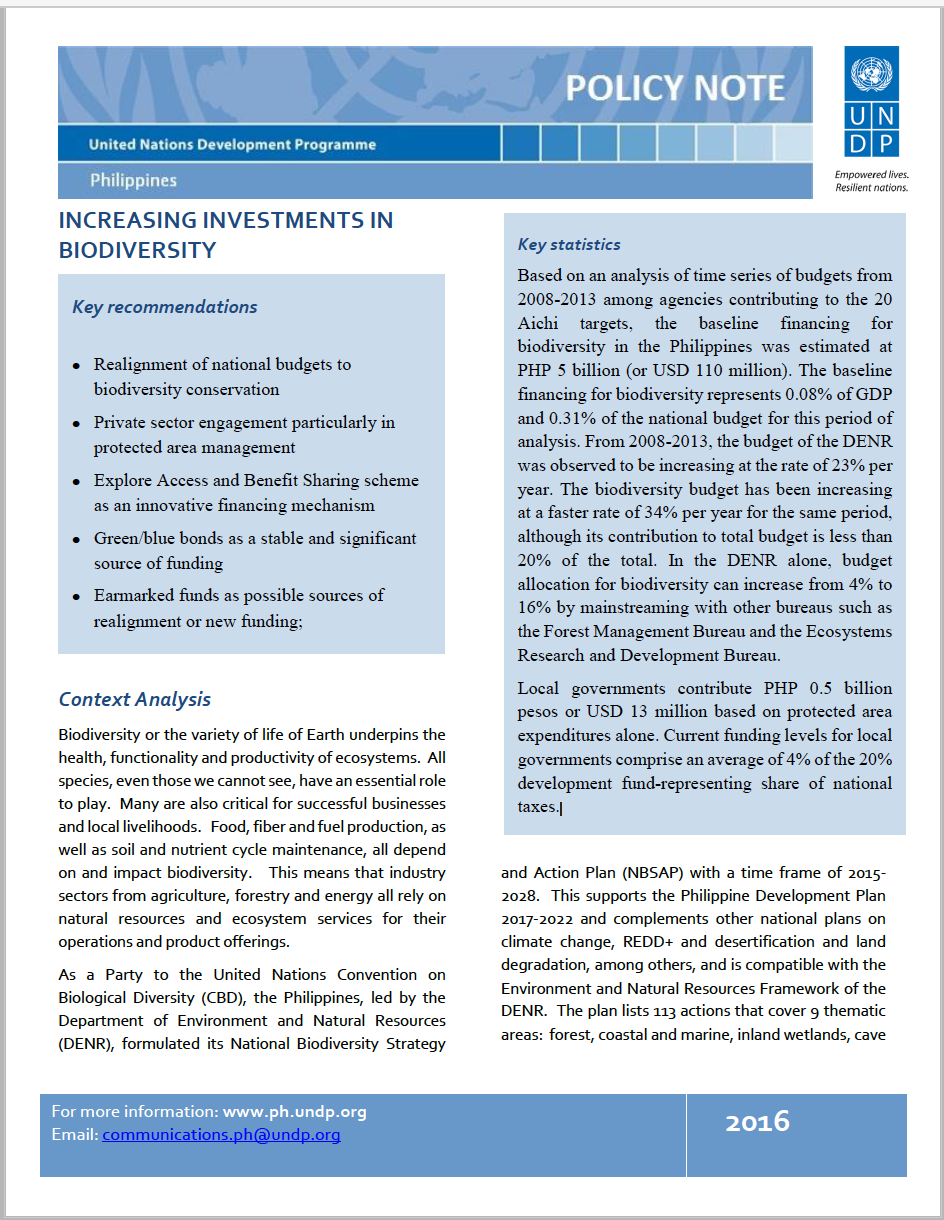
The BIOFIN Financing Plan for the Philippines is based on insights gleaned from the results of the three BIOFIN workbooks: the Policy and Institutional Review; the Public and Private Biodiversity Expenditure Review; and the Finance Needs Assessment Plan. This plan acknowledges the importance of tapping additional financing to support NBSAP but is also cognisant of the parallel challenges that could not be addressed by generating financing alone . Thus, the Plan transcends the focus on generating additional resources but instead, identifies a range of "finance solutions" that leverage finance, fiscal and economic tools and strategies to improve the outcome of biodiversity objectives in the country. Financing solutions include a range of transformative actions that include generating more financing to fund the NBSAP or associated planning documents; appropriate attribution of biodiversity expenditures in the budget; attaining cost effective budget execution by eradicating overlaps in biodiversity function s; eradicating expenditures that continue to or aggravate dissipation of biodiversity resources; and paving the groundwork for a responsive policy environment through greater awareness on biodiversity and biodiversity financing and enhancing institutional support towards monitoring of NBSAP.

More than PHP 5 billion is targeted to be raised by BIOFIN within the six year medium term planning period conforming to the incoming administration of presumptive President  Rodrigo  Duterte.  PHP 3 billion is to be sourced from increased public sector budget either through debt swaps, conservation incentives/ecological fiscal transfers, or through the flotation of a Sovereign Green Bond. Another 1.2 billion is to be tapped by working with local governments, civil society organisations and state universities and colleges to prepare and submit proposals eligible for funding under two earmarked funds: Energy Regulation 1-94 and the People's Survival Fund. Through realignment of expenditures within the Department of Environment and Natural Resources, another PHP 0.5 billion pesos would be tagged as contributing to biodiversity with the entire effort of tagging resulting to better understanding of the pervasiveness of biodiversity in the agenda of the department. Lastly, traditional ODA sources shall be tapped amounting to PHP 0.6 billion, based on the historical uptake of grants.

Each financing solution is translated into a work program for BIOFIN that shall serve as guidance for implementation of Component 4 from hereon till end of 2017. In conclusion, the "call to action " invokes an area of work on financing solutions that "deliver better" and "avoid future expenditures" and recommends for the BIOFIN method to be applied in preparing for these next batch of financing solutions.