Summary:
Biodiversity provides humanity with innumerable benefits. The most important benefit is the indispensable ecosystem services that biodiversity provides to the humankind. Since the ecosystem services are permanent needs of the humans, initiatives seeking their protection without deterioration of their values as well as their optimal utilization for meeting the needs of the population should be integrated into the short- and long term environmental programme, laws and procedures for mandatory implementation.
Given that the biodiversity resources have been rapidly depleting over the last half a century, the nations around the globe united with a common goal to plan and take wider-scale actions for new approaches and trends. A bright example is the UN Conference on “Environment and Development” held in Rio-de-Janeiro in 1992 where the decline in biodiversity was recognized globally, and the international Convention on Biological Diversity (CBD) was adopted and followed by ratification of over 160 states including Mongolia. Parliament of Mongolia ratified the Convention on Biological Diversity in 1993 becoming the 30th country to join the Convention.
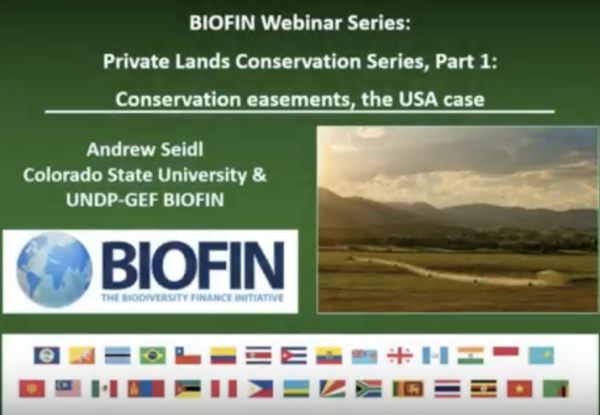
One of the main recommendations from the 12th Conference of Parties of the CBD was “each party to the CBD should develop their own national biodiversity programme incorporating the Aichi targets. Moreover, rapid developments in the social, economic and environment of Mongolia have necessitated the redevelopment of the National Biodiversity Strategic Action Plan ensuring cohesion with the Aichi 20 goals and the environment sector policies. In this regard, extensive research was conducted during 2012-2015, and the National Biodiversity Programme (NBP) was redeveloped and was approved by the Government order no.325 on 29 June 2015. NBP is a mid-term policy document, which elaborates the needs of national and international biodiversity targets, urgent issues to be solved, priority objectives and goals to be achieved. Policy and Institutional Review (PIR) of BIOFIN project aim to review the current biodiversity policies, practices, analyze the biodiversity finance landscapes, mechanisms, research the impacts on biodiversity, and identify pertinent stakeholders and main actors to successfully implement the NBP.
Environmental legal framework and policy documents are very well established in Mongolia. However, despite the well design of environment policy documents, they lack proper implementation in practice. This could be attributed to the lack of monitoring and evaluation system by the Ministry of Environment and Tourism. In other words, the implementation of environmental laws should be improved through an effective monitoring system, especially of the natural resources use.
Negative and positive impacts on biodiversity were also evaluated as part of the PIR research. It was found out that animal husbandry, agriculture, infrastructure, unplanned development are the main factors that have negative impacts on biodiversity. Moreover, five agricultural subsidies such as cashmere, wool, fertilizers etc., and two mining subsidies have negative impacts. Reducing or removing these subsidies could be an inexpensive alternative for effective biodiversity conservation.
As part of the biodiversity financing landscape, sources of biodiversity financing as per the current legal framework were analyzed. It was found out that most of the financial resources as per the current legal framework should be funded by the state and local budget, donor fund, and natural resources use fee. Presently, several finance solutions including the natural resources use fee, the polluter pays principles, protected area fees, and etc. are implemented in Mongolia. Nevertheless, more finance solutions such as conservation trust funds, income generation for protected areas, biodiversity offset, results-based budgeting, should be explored and implemented, as a huge potential was observed.
Biodiversity pertinent stakeholders were identified with reference to the legal framework and the sectors that have the most impacts on biodiversity. Key actors in implementing the NBP were assessed based on their weight and level of involvement of the identified pertinent stakeholders. Cooperation and partnership among Government ministries, their respective agencies and departments are critical for the implementation of the NBP, especially on initiatives such as to reduce the sectoral impacts (ecological footprint) on biodiversity. In other words, there is a need to study and analyze the sectoral impacts on biodiversity, and the appropriate conservation policies and actions should be incorporated to the respective sectoral policies, as biodiversity conservation activities and ensuring inter-sectoral cooperation is not only the duty of Ministry of Environment and Tourism but of other ministries as well. A stakeholder mapping with four levels of key actors was identified based on their present involvement in NBP. Successful implementation of the NBP is highly dependent on the key actors’ involvement and cooperation; thus, the following management actions should be ensured for each level of stakeholders.
Level I stakeholders: improve cooperation of horizontal organizations and encourage a mechanism that assess results based on participation. Level II stakeholders: build their capacity to a level that they can operationalize their interests in biodiversity conservation. Level III stakeholders: establish incentives to increase their interest in biodiversity conservation, so their full capacity and influence are utilized. Level IV stakeholders: explore their hidden capacity and establish incentives to increase their interest in biodiversity conservation.
Considering the current economic and financial situation in Mongolia, key measures to successfully conserve and sustain biodiversity are: right policy and proactive measures; appropriate options for institutional and management framework; community participation based on citizens’ initiatives; and private sector involvement based on the right balance of profitability and social responsibility.