Knowledge base

Browse the Knowledge Platform

636 Results
Multimedia
Publications

El componente Plan Financiero de la metodología BIOFIN tiene por objetivo identificar las posibles entidades, ingresos y viabilidad de la financiación que pueden ayudar a cubrir el déficit de financiación identificado en más de USD$ 22 millones anuales (aumento progresivo requerido a 2030), luego de haber rastreado el gasto público y privado orientado hacia la Biodiversidad e identificado el costo de la Política Nacional de Gestión Integral de la Biodiversidad y sus Servicios Ecosistémicos (PNGIBSE - NBSAP).

 BIOFIN en Colombia tiene adicionalmente un reto, teniendo en cuenta que el país está viviendo un proceso de transformación económica, social y política que hace que los recursos que se destinan anualmente para biodiversidad y a las cuentas ambientales en general, se vean afectados por ajustes fiscales. La variabilidad de los precios del petróleo, la depreciación del peso y los compromisos del país asociados con la consolidación de la paz, implicarán esfuerzos adicionales en materia de financiamiento público y privado. Adicionalmente Colombia se encuentra enfrentando una situación de pérdida de Biodiversidad a causa, de la disminución, pérdida o degradación de elementos de los ecosistemas nativos y agroecosistemas la pérdida anual de Bosque Natural es de 276.669 Hectáreas (IDEAM, 2015) Por lo anterior, la estrategia BIOFIN en Colombia se enfoca en repotenciar los mecanismos económicos existentes y alinearlos a los múltiples propósitos mencionados.

El Plan financiero de la biodiversidad se construyó articulando tres temas prioritarios en la Agenda de Desarrollo del país: 1) La consolidación de la paz, 2) El crecimiento verde y 3) Las finanzas del desarrollo sostenible (Cambio Climático y Biodiversidad). Lo anterior con el fin de aprovechar el impulso que la Agenda Nacional le está dando a estos temas, y en donde la gestión Biodiversidad desempeña un rol muy importante de manera transversal.

 Los mecanismos propuestos por BIOFIN Colombia son los siguientes:

  • Plataforma de Mercado para Compensaciones por Pérdida de la Biodiversidad
  • Instrumento integral a partir de la reactivación del CIF de conservación y su integración con el PSA, financiado a partir de los recursos obtenidos del Impuesto Nacional al Carbono.
  • El SGR con Áreas Protegidas promoviendo la articulación de iniciativas regionales de desarrollo.

Los cuales se esperan movilicen recursos 1,2 billones de dólares hacia el cumplimiento de las metas propuestas del PNGIBSE-NBSAP.


Publications
Publications

BIOFIN assessed the resources requirement to achieve national biodiversity targets of Sri Lanka till 2024. This brochure summarizes the information on resources requirement and proposed financial solutions to bridge the gap between existing situation and the best case scenario. 

Publications

BIOFIN assessed the resources requirement to achieve national biodiversity targets of Sri Lanka till 2024. This brochure summarizes the information on resources requirement and proposed financial solutions to bridge the gap between existing situation and the best case scenario. 

Publications

BIOFIN assessed the resources requirement to achieve national biodiversity targets of Sri Lanka till 2024. This brochure summarizes the information on resources requirement and proposed financial solutions to bridge the gap between existing situation and the best case scenario. 

Multimedia

Sri Lanka has one coal power generation facility and its creating significant impact on the terrestrial and marine biodiversity of the country. Still policy makers consider coal as a good option as initial capital investment  and per unit cost of production is lower than other options available for the country. The 'cheap' image for coal has been created by lobby groups who neglect the social and environmental costs associated with the coal power production. BIOFIN works with the Public Utilities Commission of Sri Lanka (PUCSL) to understand the market externalities associated with coal power production. Objective of this exercise is to increase awareness on the actual impact of coal on the country and therefore advocating a comprehensive costing formula to be adopted in decision making process related to future power generation plans preparation.

Multimedia

Sri Lanka has one coal power generation facility and its creating significant impact on the terrestrial and marine biodiversity of the country. Still policy makers consider coal as a good option as initial capital investment  and per unit cost of production is lower than other options available for the country. The 'cheap' image for coal has been created by lobby groups who neglect the social and environmental costs associated with the coal power production. BIOFIN works with the Public Utilities Commission of Sri Lanka (PUCSL) to understand the market externalities associated with coal power production. Objective of this exercise is to increase awareness on the actual impact of coal on the country and therefore advocating a comprehensive costing formula to be adopted in decision making process related to future power generation plans preparation.

Publications

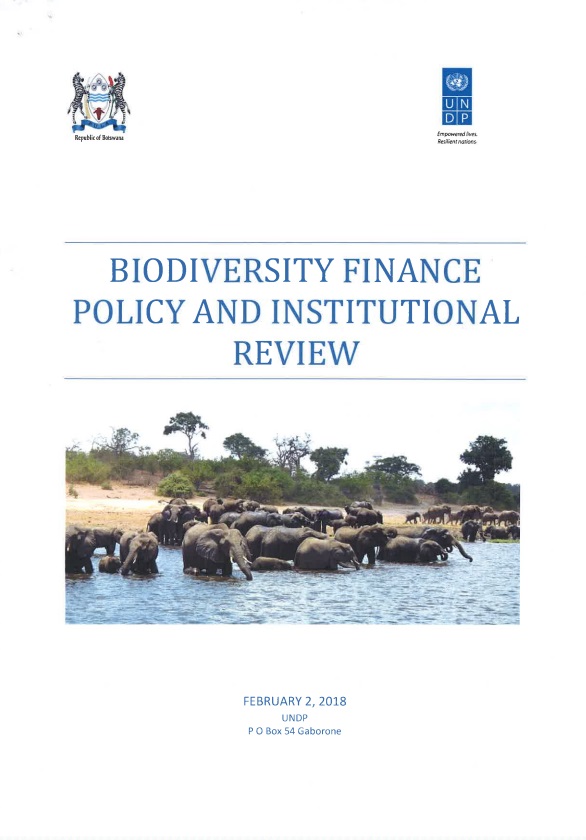
The Biodiversity Finance Policy and Institutional Review (PIR) in Viet Nam (VN) has been conducted by independent consultant from May 2017 to February 2018. The PIR report focuses on analyzing the status and progress of the National Biodiversity Strategy (NBS) of Viet Nam, presented in 6 chapters including introduction and recommendations as well as references and annexes.

In recent decades, the status of biodiversity (BD) in Viet Nam is worsening against a high annual economic growth (6-8% on average), which has strong impact on dependency sectors like agriculture, fishery and forestry in which most people with low incomes earn their living. Recent studies on BD valuation show that investment in BD conservation is significantly less than its contribution to economic development in provinces and the country, in general. A supplementary study on the Biodiversity Expenditure Review provides more information in this regard.

To improve biodiversity conservation, in recent years the legal framework has been strengthened, including the National Constitution (2013), the Law on Biodiversity (2008), the Law on Environment Protection (2005), the Law on Forestry (2004, revised in 2017), the Law on Fishery (2003, revised in 2017), all supported by a variety of government policies and regulations providing guidance to the implementation of legislation on BD conservation. The VN NBS is the most important policy to accelerate BD conservation in VN.

Publications
Publications

Knowledge Partners

Biodiversity and Ecosystem Services Network logo
Biodiversity finance resources library and forum.
Sustainable Development Finance Platform logo
Guidance and detailed descriptions of finance solutions for sustainable development.

NBSAP logo
Support for action on National Biodiversity Strategy and Action Plans