Knowledge base

Browse the Knowledge Platform

636 Results
Podcast

Private finance for nature is rapidly moving into the mainstream. Over the past few years, we’ve seen a surge in innovative mechanisms such as biodiversity credits, green bonds, and blended finance models.

In this video interview, Ingrid Barbosa Fang (Lead Biodiversity Coordinator at Natura, Brazil) and Carola Moreno (Coordinator for Finance and International Affairs, Ministry of Finance of Chile) share practical insights on what it takes to catalyze private investment for biodiversity. Watch the video and hear directly from the experts to explore the challenges, opportunities, and what needs to happen next to scale finance for nature.

Publications

Egypt’s National Biodiversity Finance Plan (BFP) 2024–2030 sets out a comprehensive, evidence-based framework to mobilize sustainable financing for biodiversity conservation, recognizing biodiversity as a cornerstone of economic growth, social equity, and environmental resilience. Aligned with Egypt Vision 2030, the Global Biodiversity Framework (GBF), and the National Biodiversity Strategy and Action Plan (NBSAP), the BFP was developed using the BIOFIN methodology and is underpinned by the Policy and Institutional Review (PIR), Biodiversity Expenditure Review (BER), and Financial Needs Assessment (FNA). These assessments identified a biodiversity financing gap of USD 291.9 million for 2024–2030, guiding the prioritization of nine high-impact and feasible finance solutions through an inclusive, multi-stakeholder process that balances biodiversity impact, financial potential, and likelihood of success.

The Plan proposes a diversified mix of government-led, market-based, private sector, and community-driven solutions that operationalize the shift from traditional funding to sustainable financing, in line with Egypt’s Integrated National Financing Strategy (E-INFS). Key interventions include reforms to protected area fees and concessions, performance-based budgeting, biodiversity-positive carbon credits, insurance schemes, biodiversity offsets, public–private partnerships, corporate social responsibility funding, and mobilization of international finance. Together, these measures aim to integrate biodiversity into national planning and financial systems, strengthen accountability and transparency, promote gender equality and community participation, and ensure adaptive implementation. As a living document, the BFP provides a practical roadmap to close the financing gap, scale conservation impact, and support Egypt’s long-term goals for sustainable development and biodiversity conservation.

Guidelines

La consolidación de la naturaleza como una prioridad estratégica para el sector productivo colombiano ha impulsado una mayor alineación con los objetivos del Plan de Acción de Biodiversidad – PAB a 2030. En respuesta a esta evolución, el Programa de las Naciones Unidas para el Desarrollo – PNUD y su Iniciativa de Finanzas para la Biodiversidad – BIOFIN en Colombia presentan la propuesta de “Ruta metodológica para identificar el nivel de ambición de reporte de una empresa conforme el marco TNFD”, el cual desarrolla dos componentes principales:

  1. un análisis técnico sobre los requerimientos de información ambiental, financiera y empresarial necesarios para la implementación de la arquitectura de métricas del marco TNFD;
  2. la formulación de una herramienta para orientar de manera gradual el uso de métricas que cuenten con fuentes de información compatibles con los estándares del TNFD.

Este documento aporta elementos clave para fortalecer la capacidad del sector privado en la gestión, evaluación y divulgación de asuntos relacionados con naturaleza y biodiversidad.
Podcast

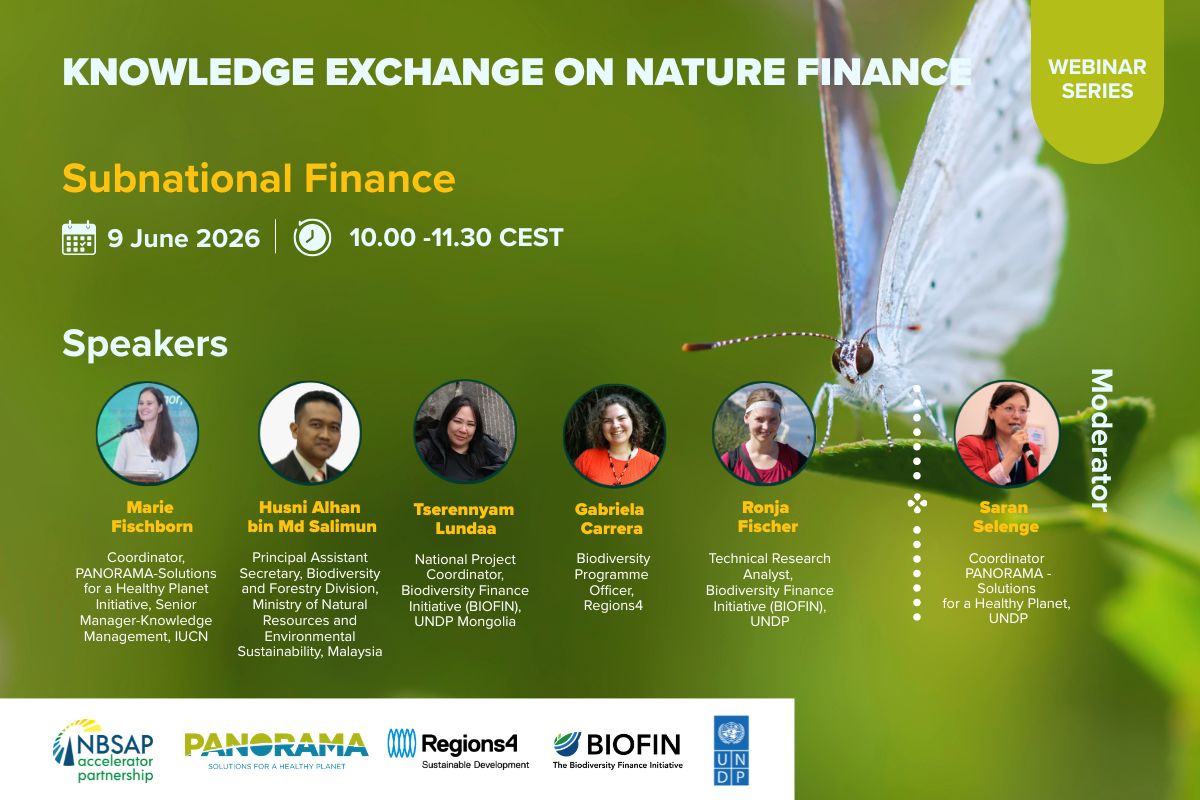
From Koh Tao’s tourist user fee, which supports coral reef protection and waste management, to results-based budgeting and the removal of harmful subsidies in Phetchaburi, Thailand is demonstrating what practical, sustainable biodiversity finance looks like in action.

These initiatives show how local governments, communities, and the private sector can work together to create long-term funding mechanisms that protect ecosystems while strengthening local economies. Watch the video to learn Thailand’s experience in implementing biodiversity finance solutions. 

Publications


El PNUD, a través de su iniciativa BIOFIN, avanza en la construcción del Plan Financiero para la gestión de la biodiversidad en Colombia, una estrategia que busca cerrar la brecha de financiamiento movilizando recursos hacia la conservación y el uso sostenible de la biodiversidad.
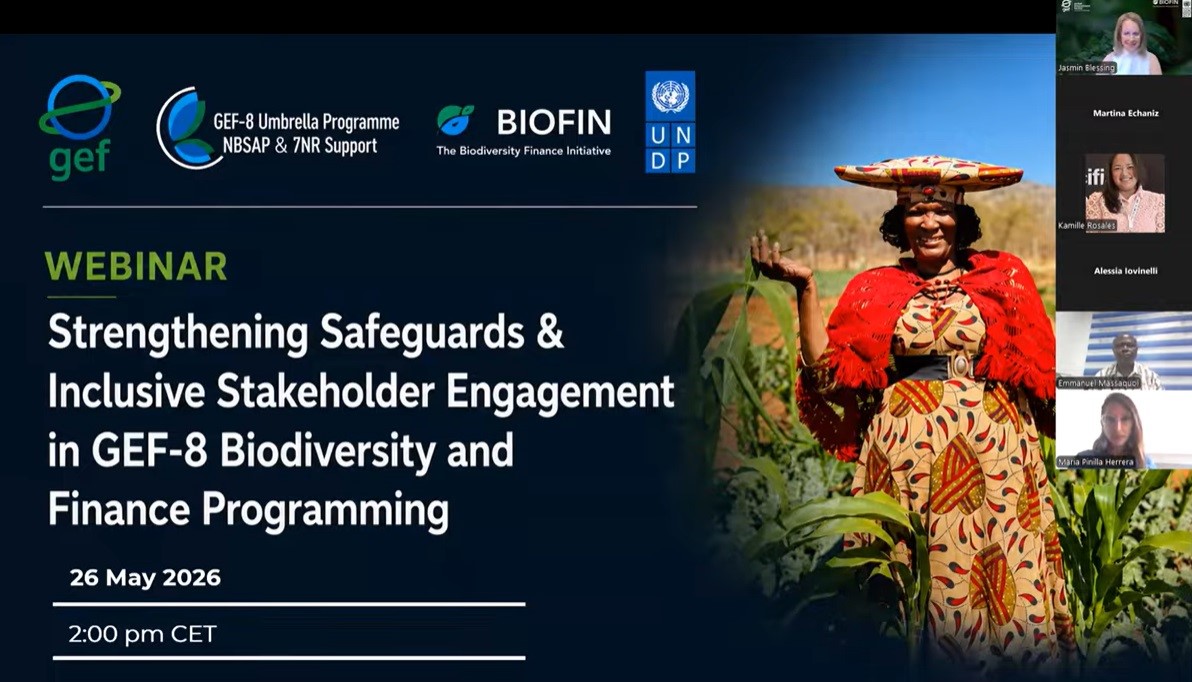
Descubre los nuevos insumos técnicos que aportan a esta meta:

  1. Lineamientos técnicos del Plan Financiero
  2. Diagrama interactivo de flujo del financiamiento de la biodiversidad en Colombia

Explora la herramienta en el siguiente link y el documento a continuación.

Podcast

Sri Lanka is one of the world’s most biodiversity-rich countries and it’s finding ways to balance rapid tourism growth with nature protection. Through UNDP’s Biodiversity Finance Initiative (BIOFIN), Sri Lanka is advancing biodiversity finance with practical tools: a national tourism certification programme, support for 200+ SMEs, and a sustainable finance roadmap led by the Central Bank.

Watch how these solutions, from leopard insurance to green banking, are helping Sri Lanka turn ideas into impact in this conversation with Abbie Trinidad, Senior Technical Advisor, BIOFIN Global, and Ramitha Wijethunga, National Project Coordinator, BIOFIN Sri Lanka. 

Publications

This full Policy and Institutional Review (PIR) provides a comprehensive assessment of Kazakhstan’s biodiversity governance system, examining policies, institutions, and financial mechanisms that shape conservation outcomes. It highlights progress in environmental legislation and rising awareness but identifies persistent gaps in integrating biodiversity into national planning, enforcing regulations, and ensuring stable financing.

Publications

This full Biodiversity Expenditure Review, prepared under BIOFIN, provides a comprehensive analysis of how public, private, and civil society resources are allocated to biodiversity conservation in Kazakhstan. It covers both direct and indirect expenditures contributing to the protection of ecosystems, forests, water, and wildlife. The report shows that public funding remains the primary source of biodiversity finance, while private sector and NGO involvement is still limited, highlighting the need to diversify and expand investments to achieve national biodiversity goals.

Publications

As the global community intensifies efforts to address the twin crises of climate change and biodiversity loss, the integration of nature into financial decision-making has become an urgent priority. The Taskforce on Nature-related Financial Disclosures (TNFD) offers a transformative framework to help countries and companies identify, assess, and disclose nature-related risks and opportunities. Rwanda, a nation globally recognized for its environmental leadership and green growth ambitions, is now taking bold steps to align its financial systems with this emerging global standard.

This policy brief, titled “Is Rwanda Ready for Nature-Related Financial Disclosures?”, provides a comprehensive assessment of the country’s readiness to adopt and implement TNFD-aligned reporting. It explores the institutional, regulatory, and market foundations that are already in place, while identifying critical gaps and opportunities for action.

Rwanda’s economy is deeply intertwined with nature. Over 70% of the population depends on agriculture, and key sectors such as tourism, energy, and water management rely heavily on healthy ecosystems. Yet, the country faces escalating nature-related risks—from land degradation and water stress to biodiversity loss—driven by climate change and unsustainable land use. Recognizing these challenges, Rwanda has made significant progress in valuing its natural capital through initiatives like Natural Capital Accounting (NCA), the Rwanda Green Taxonomy, and the Biodiversity Expenditure Review.

The brief highlights Rwanda’s robust legal and policy architecture, including the leadership of the National Bank of Rwanda (BNR) and the Capital Market Authority (CMA) in embedding sustainability into financial regulation. New guidelines aligned with IFRS S1 and S2 are paving the way for mandatory sustainability disclosures, while institutions like rwanda Environmental Managemnet Authority (REMA), rwanda Green Fund (RGF), and ICPAR are supporting implementation through technical expertise and capacity-building.

However, the transition to nature-related financial disclosure is still in its early stages. Most financial institutions do not yet assess biodiversity risks or use nature-based metrics in investment decisions. Data systems remain fragmented, and market awareness of TNFD principles is limited. To address these challenges, the brief proposes a phased roadmap grounded in international best practices, emphasizing institutional coordination, regulatory reform, data infrastructure, and stakeholder engagement.

This policy brief is both a diagnostic and a call to action. It underscores Rwanda’s potential to become a regional leader in nature-positive finance, provided it accelerates the institutionalization of nature-related risk management. With strong political will, a growing green finance ecosystem, and support from global partners like UNDP BIOFIN, Rwanda is well-positioned to align its financial systems with the needs of a sustainable, resilient future.

We invite policymakers, financial institutions, development partners, and civil society to engage with the findings and recommendations of this brief. Together, we can ensure that nature is not only protected but also valued as a cornerstone of Rwanda’s economic development.

Publications

Biodiversity loss is accelerating due to human activities, posing serious risks to ecosystems, economies, and societies. Adopted in 2022, the Kunming-Montreal Global Biodiversity Framework sets ambitious targets to halt and reverse nature loss by 2030, calling for coordinated action across all sectors. As public finance alone is insufficient, greater private sector engagement is critical. Businesses and financial institutions are increasingly expected to adopt nature-positive practices, assess and disclose nature-related risks, and align financial decision-making with global standards such as Taskforce on Nature-related Financial Disclosures, International Sustainability Standards Board, the Global Reporting Initiative, and the Corporate Sustainability Reporting Directive, responding also to growing consumer demand for sustainable and responsible practices.

Publications

This policy brief is the result of a study conducted to assess Madagascar's preparedness for nature-related financial disclosures. Through this study, the Malagasy government, with the support of UNDP-BIOFIN, has clarified the roles of the different financial authorities in nature-related financial disclosure, identified the public bodies best placed to collect information on biodiversity-related financing and risks from companies, and assessed the current state of impact or CSR reporting practices of Malagasy companies. Although the study shows that Madagascar is not very advanced in this area, stakeholders (government, partners, private sector, etc.) are aware of the importance of taking progressive steps towards greater transparency in order to preserve Madagascar's unique biodiversity.

Multimedia

Namibia’s rich biodiversity is a cornerstone of its natural heritage, economy, and cultural identity. This biodiversity factsheet provides a clear, accessible overview of the country’s unique ecosystems, species, and conservation efforts, enabling decision-makers, educators, researchers, and the public to understand what is at stake.

By summarizing key information in one place, the factsheet helps raise awareness of the value of biodiversity. It also serves as an advocacy and communication tool to attract investment, encourage sustainable resource use, and strengthen Namibia’s profile in regional and global conservation initiatives.

Knowledge Partners

Biodiversity and Ecosystem Services Network logo
Biodiversity finance resources library and forum.
Sustainable Development Finance Platform logo
Guidance and detailed descriptions of finance solutions for sustainable development.
NBSAP logo
Support for action on National Biodiversity Strategy and Action Plans