
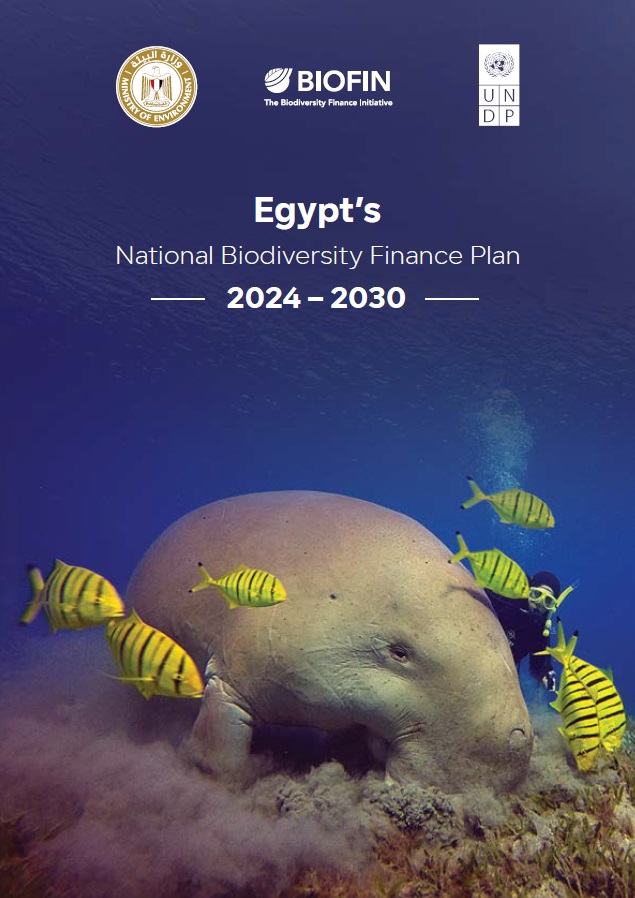
Egypt’s National Biodiversity Finance Plan (BFP) 2024–2030 sets out a comprehensive, evidence-based framework to mobilize sustainable financing for biodiversity conservation, recognizing biodiversity as a cornerstone of economic growth, social equity, and environmental resilience. Aligned with Egypt Vision 2030, the Global Biodiversity Framework (GBF), and the National Biodiversity Strategy and Action Plan (NBSAP), the BFP was developed using the BIOFIN methodology and is underpinned by the Policy and Institutional Review (PIR), Biodiversity Expenditure Review (BER), and Financial Needs Assessment (FNA). These assessments identified a biodiversity financing gap of USD 291.9 million for 2024–2030, guiding the prioritization of nine high-impact and feasible finance solutions through an inclusive, multi-stakeholder process that balances biodiversity impact, financial potential, and likelihood of success.
The Plan proposes a diversified mix of government-led, market-based, private sector, and community-driven solutions that operationalize the shift from traditional funding to sustainable financing, in line with Egypt’s Integrated National Financing Strategy (E-INFS). Key interventions include reforms to protected area fees and concessions, performance-based budgeting, biodiversity-positive carbon credits, insurance schemes, biodiversity offsets, public–private partnerships, corporate social responsibility funding, and mobilization of international finance. Together, these measures aim to integrate biodiversity into national planning and financial systems, strengthen accountability and transparency, promote gender equality and community participation, and ensure adaptive implementation. As a living document, the BFP provides a practical roadmap to close the financing gap, scale conservation impact, and support Egypt’s long-term goals for sustainable development and biodiversity conservation.