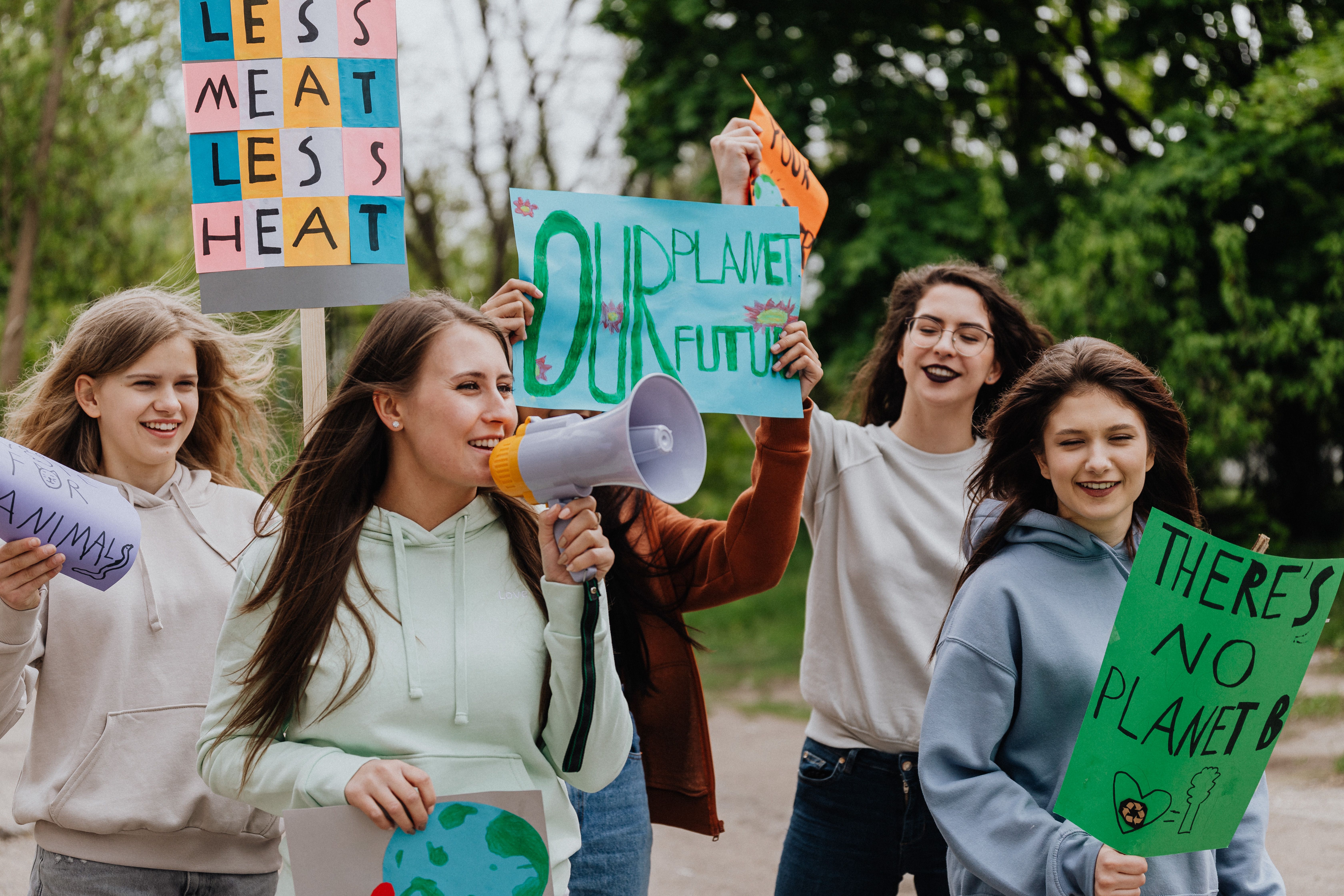
Luigi Capoani, President of the European Youth Think Tank (EYTT), and Marta Bisol, Policy Analyst at the European Youth Think Tank.
The missing voice in nature finance
Nature is becoming a defining issue for younger generations. Across Europe, young people are calling for stronger action on biodiversity loss and the climate crisis, yet they have limited influence over a central question: how do we pay for nature? The answer will shape how public money is spent, which industries receive incentives, who pays for environmental damage and whether investments create healthier ecosystems.
In the European Parliament's 2024 Youth Survey, 33% of respondents aged 16–30 said the environment and climate should be prioritized by the European Union. Through the Global Youth Biodiversity Network (GYBN), the main coordination platform for youth participation in negotiations under the Convention on Biological Diversity and a network with more than 60 national and regional chapters, young people also contributed to the Kunming-Montreal Global Biodiversity Framework.
Participation, however, does not automatically bring influence over finance. As young researchers, we see young people active in biodiversity policy and action, but less visible in decisions about the budgets, incentives and investments that turn commitments into results. They are asking not only how much money is mobilized, but where it goes, who benefits, whether it delivers measurable results and who is accountable.
Biodiversity is also an economic issue
Biodiversity finance concerns the natural systems that make economies possible: forests, clean water, fertile soils, fisheries, pollination, and protection from floods and extreme heat. The World Bank estimates that the collapse of selected ecosystem services could reduce global GDP by US$2.7 trillion every year by 2030. For younger citizens, nature loss today means weaker livelihoods, higher restoration costs and greater pressure on tomorrow's public finances.
Public money must reward better choices
A generational perspective raises a basic question: what is public money supporting today? Target 18 of the Global Biodiversity Framework calls for harmful incentives to be reduced by at least US$500 billion annually by 2030, alongside an increase in positive incentives. Reforming environmentally harmful subsidies, taxes and charges can discourage destructive activities and support cleaner technologies.
These reforms must be fair. Support should help farmers and vulnerable households adopt biodiversity-friendly practices, while ecological fiscal transfers, public grants and payments for ecosystem services reward those who protect nature. Not every solution needs to create a market: regulation, spatial planning, protected areas, community stewardship and the rights of Indigenous Peoples and local communities remain indispensable.
Environmental damage must have a price
Environmental regulations should follow the mitigation hierarchy: damage must first be avoided, then minimized and restored, with compensation used only for residual impacts. In ecologically sensitive or irreplaceable areas, regulators should be prepared to refuse approval altogether.
Valuation, however, should never become a license to destroy. Some ecological losses are irreversible, and monetary estimates cannot capture every cultural, ecological or social value. Pricing environmental damage is a tool for accountability, but it should never replace prevention.
Private finance: scale is not enough
Environmental, Social and Governance (ESG) investing has moved sustainability closer to financial decision-making. Yet labels can obscure whether capital reduces pressure on ecosystems or merely improves an organization’s image. European regulators increasingly recognize misleading sustainability claims as a greenwashing risk.
Target 19 of the Global Biodiversity Framework calls for mobilizing at least US$200 billion annually for biodiversity by 2030. More finance is essential, but volume cannot substitute for impact. The questions are also who receives finance, who controls it, and under what conditions. Green bonds, blended finance and other instruments need measurable outcomes, human-rights-based approaches and robust environmental and social safeguards; otherwise, they may reinforce existing power imbalances. Private capital should complement, not replace, public responsibility.
From participation to access to finance
Biodiversity Finance Plans can translate national goals into practical strategies by assessing biodiversity expenditures, identifying financing needs, prioritizing finance solutions and aligning budgets with national objectives. Consistent with Target 22 of the Global Biodiversity Framework, youth participation should be built into these processes from the beginning.
But participation also requires access to finance. The 2026 Ecologies of Empowerment report, based on 161 youth-led biodiversity initiatives in 57 countries, found that 85% lacked adequate funding. Among respondents, 62% reported average grants below US$10,000, 58% reported grants lasting less than one year, and 88% reported project-restricted funding.
This does not mean abandoning due diligence, but making it proportionate through simpler eligibility rules, flexible multi-year support, participatory grantmaking, direct small grants and trusted intermediaries. Modest resources can help young farmers, researchers, entrepreneurs and community organizations turn local knowledge into practical action.
The generational case is not simply that young people will inherit today's decisions. They should help make them now. Nature finance will be more credible and durable when younger generations are treated not only as future beneficiaries, but as present-day partners with ideas and projects worth financing.
About the authors
Luigi Capoani is President and Founder of the European Youth Think Tank (EYTT). He is a researcher in applied economics and Adjunct Professor of International Economics at Ca' Foscari University of Venice. His research focuses on international trade, sustainable development, industrial policy, regional economics and public policy.
Marta Bisol is a Policy Analyst at the European Youth Think Tank (EYTT). Her work focuses on European public policies, sustainable finance, environmental governance and international cooperation, with particular attention to the role of young generations in shaping future policy agendas.
Categories
Archives
- Agosto 2026 (1)
- Julio 2026 (11)
- Junio 2026 (10)
- Mayo 2026 (4)
- Abril 2026 (13)
- Marzo 2026 (6)
- Febrero 2026 (3)
- Enero 2026 (3)
- Diciembre 2025 (2)
- Noviembre 2025 (5)