

Protecting biodiversity has never been simply an environmental challenge. Around the world, governments increasingly recognize that conserving forests, restoring wetlands, protecting oceans and safeguarding wildlife all depend on one essential ingredient: sustainable finance.
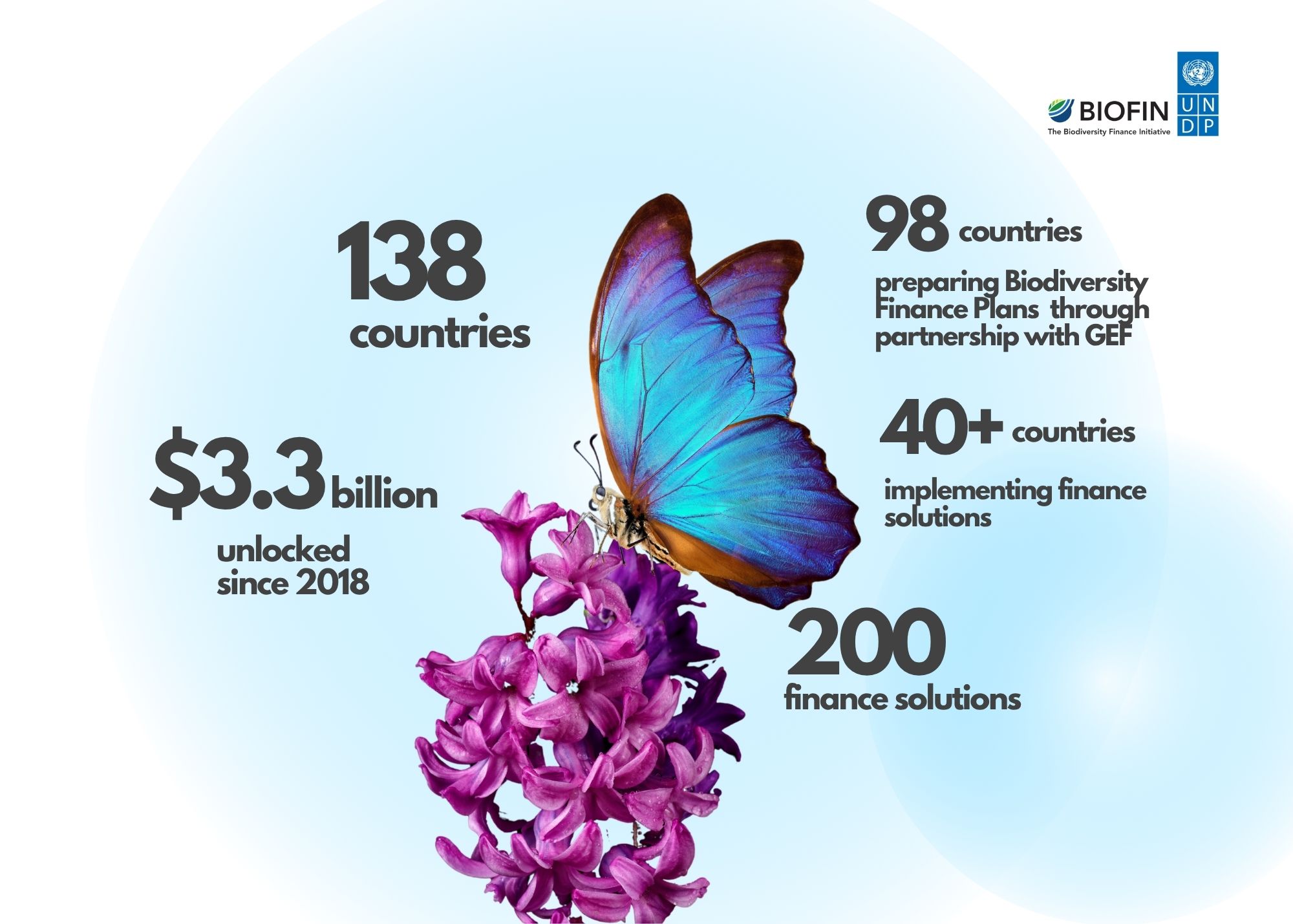
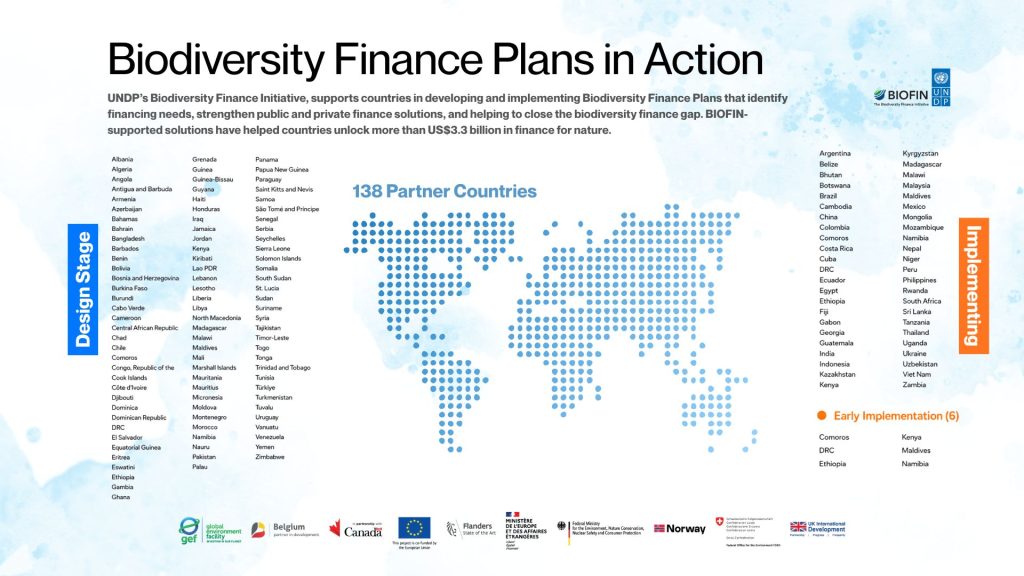
Through the UNDP Biodiversity Finance Initiative (BIOFIN), countries are identifying practical finance solutions that generate new revenues, improve public spending and attract investment for nature. Since 2018, these efforts have helped catalyse more than US$3.3 billion for biodiversity, with 41 countries already implementing finance solutions and more than 130 countries participating in BIOFIN worldwide.
But the real story lies beyond the numbers.
Across the world, biodiversity finance is helping governments expand protected areas, restore ecosystems, support local livelihoods, strengthen public institutions and reduce conflicts between people and wildlife.
Today, 138 countries are part of the BIOFIN partnership, at different stages of developing and implementing Biodiversity Finance Plans.
Protecting more nature through smarter public finance
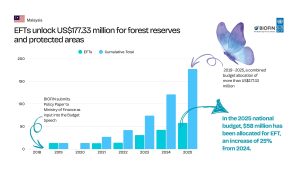
In Malaysia, states receive additional government funding to protect forests and biodiversity through the country’s Ecological Fiscal Transfer mechanism. Since its introduction, the mechanism has channelled more than US$177 million to state governments, helping expand protected areas by approximately 350,000 hectares while creating long-term financial incentives for conservation.
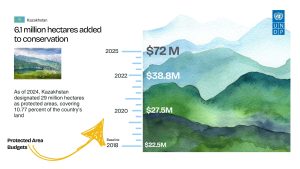
In Kazakhstan, public financing for protected areas has increased nearly tenfold since 2018, reaching US$202 million. The additional investment has helped strengthen the management of protected areas covering millions of hectares, improving conservation while making nature tourism more sustainable. Today, Kazakhstan’s protected areas cover around 30.9 million hectares.
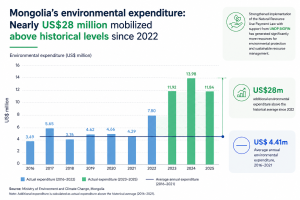
In Mongolia, UNDP BIOFIN supported the Government in strengthening implementation of the Natural Resource Use Fee Law, which requires a share of revenues collected from the use of natural resources to be reinvested in environmental protection and natural resource rehabilitation. Strengthened regulations, a public environmental budget and expenditure database, standardized planning and reporting, and nationwide capacity-building have helped improve implementation of the law and the transparency and accountability of environmental spending. Since 2022, these efforts have helped mobilize nearly US$28 million in additional environmental expenditure above historical levels.
Unlocking new sources of investment
In many countries, UNDP BIOFIN is helping governments move beyond traditional conservation funding by creating new mechanisms capable of unlocking investment on a scale.
In Zambia, the development of the country’s Green Bond Framework helped mobilize US$150 million, demonstrating how capital markets can contribute to environmental and sustainable development goals.
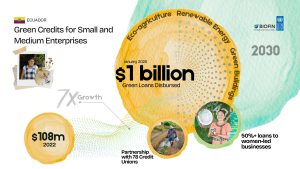
In Ecuador, environmental criteria have been integrated into public lending systems, helping green more than US$1 billion in loans. By embedding environmental considerations into financial decision-making, the country is demonstrating how mainstream finance can support more sustainable economic development.

Supporting communities while protecting wildlife
Some of the most innovative biodiversity finance solutions protect not only threatened species, but also the livelihoods of people who live alongside them. By reducing the financial costs of human-wildlife conflict, insurance can remove one of the pressures that leads to retaliatory killing.
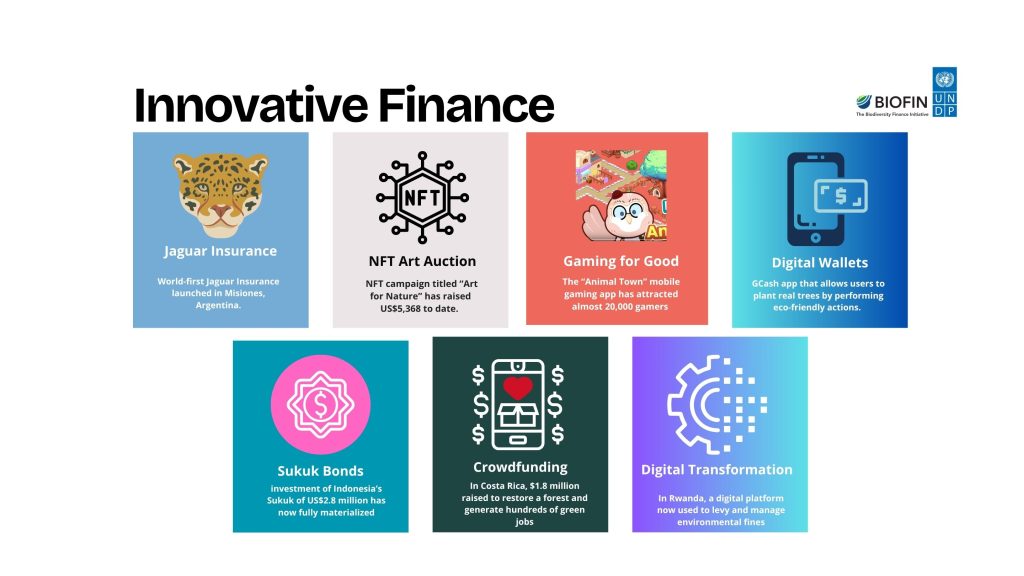
In Argentina, UNDP BIOFIN supported the development of the world’s first insurance product designed to protect both jaguars and livestock farmers. The scheme compensates farmers for verified livestock losses, reducing the financial burden of living alongside one of Latin America’s most iconic species while creating stronger incentives for coexistence.
A year after its launch, the programme had reached more than 100,000 people. More importantly, no retaliatory jaguar killings had been reported following verified livestock attacks since the programme began. The initiative is also strengthening community engagement and encouraging preventive measures that help people and wildlife coexist.
In Sri Lanka, an insurance scheme addresses conflict between livestock farmers and the endangered Sri Lankan leopard. By compensating farmers for livestock lost to leopard attacks, the mechanism helps protect rural livelihoods while reducing the incentive for retaliatory killing — benefiting both communities and one of the island’s most iconic predators.
Nepal is using the same principle to address conflict with elephants, rhinos and other wildlife. Insurance mechanisms help reduce the financial risks faced by communities living near wildlife habitats while supporting greater tolerance and long-term coexistence between people and threatened species.


When a visitor fee restores the place people come to see
Sometimes an effective biodiversity finance solution can begin with less than one dollar.
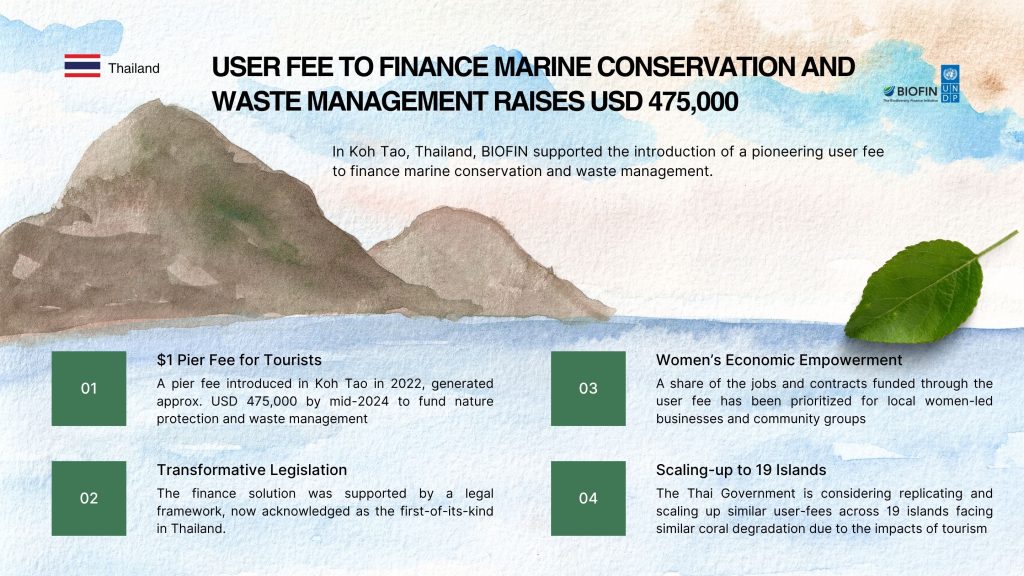
On Koh Tao in Thailand, hundreds of thousands of tourists arrive each year to dive, snorkel and experience the island’s coral reefs. But tourism also places pressure on those same ecosystems through waste, wastewater, anchoring and other activities.
In 2022, the municipality introduced a visitor fee of just 20 Thai baht — around US$0.60 — per tourist, following work supported by UNDP BIOFIN.
The fee has since become a recurring source of conservation finance, generating approximately US$300,000 annually. The revenues support coral reef conservation, environmental management and waste management. The model has proved sufficiently promising that similar approaches are being replicated elsewhere in Thailand.
When protected areas earn more, without simply attracting more visitors
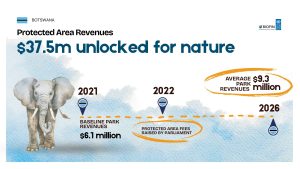
In Botswana, protected-area entrance fees had remained largely unchanged for more than two decades, even as the costs of conservation continued to rise.
UNDP BIOFIN supported the Government in reviewing the country’s fee structure using market analysis, willingness-to-pay studies and consultations with tourism stakeholders.
Following the reform, protected-area fees generated approximately US$37.5 million in cumulative revenues, around US$12 million more than would have been generated under the previous fee structure.
The additional resources strengthen the financial base for managing national parks and game reserves, including conservation infrastructure and services, in a country where roughly 40 percent of the territory is under some form of legal environmental protection.
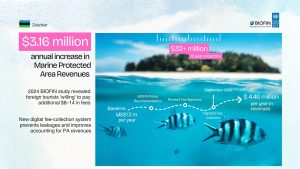
A similar transformation is taking place in Zanzibar, where tourism depends heavily on coral reefs, seagrass beds, mangroves and other marine ecosystems. A new fee structure introduced in August 2025, alongside a digital cashless payment system, has made revenue collection more efficient and transparent. In the fourth quarter of 2025, revenues increased by more than 150 percent compared with the same period a year earlier.
Annual revenues are projected to rise from around US$1.3 million to more than US$4.3 million, with 80 percent of collections reinvested in conservation, community livelihoods and fisheries management. The resources will help strengthen the management of more than 2,000 square kilometres of Marine Conservation Areas, including through better equipment, increased management capacity and conservation activities.
Botswana and Zanzibar demonstrate an important principle of biodiversity finance: countries do not always need to invent entirely new sources of finance. Sometimes the opportunity lies in improving existing systems so that nature receives a fairer share of the economic value it already generates.
When biodiversity finance reaches Indigenous communities
Mobilizing finance for biodiversity also means ensuring that resources reach communities whose livelihoods, knowledge and cultures are closely connected to nature.
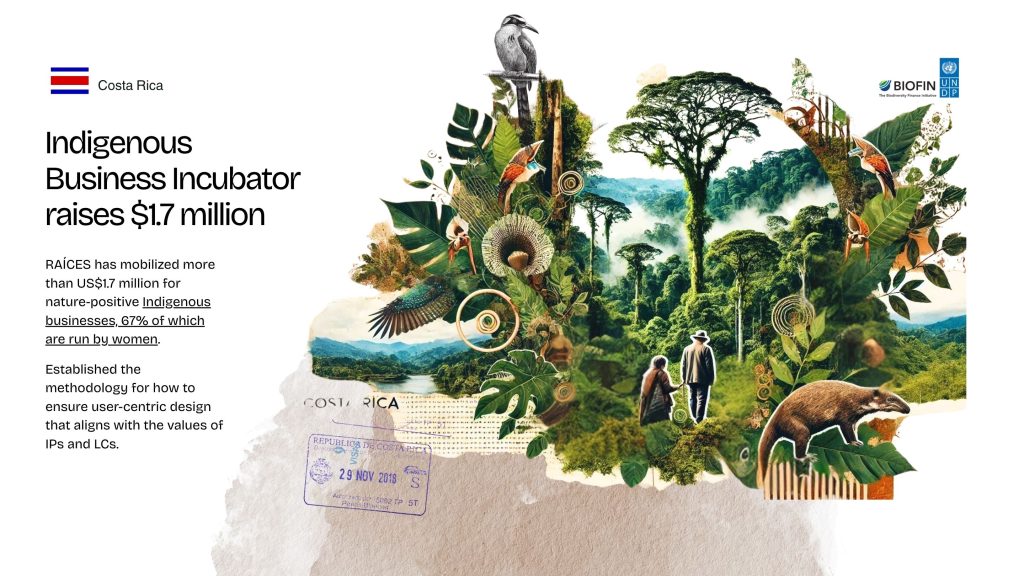
In Costa Rica, the Raíces programme is showing how biodiversity finance can support Indigenous-led businesses while helping conserve the landscapes on which they depend.
Launched in 2021 with support from UNDP BIOFIN, Raíces is Costa Rica’s first business incubation programme focused on sustainable tourism enterprises in Indigenous territories.
Since its launch, Raíces has mobilized US$1.89 million and supported 35 Indigenous tourism ventures, with more than 2,221 hectares of forest now under sustainable management through participating enterprises. By combining access to finance with business development, Raíces enables entrepreneurs to generate income through tourism while sharing Indigenous culture and knowledge and maintaining the forests and biodiversity on which their businesses depend.
Digital innovation for nature
Technology is opening new ways for governments, businesses and individuals to participate in biodiversity finance, sometimes turning everyday digital activities into direct support for nature.
In Kyrgyzstan, UNDP BIOFIN supported the modernization of the national forest management system, transforming it into a comprehensive digital platform that improves transparency, financial administration and revenue collection across the forestry sector.
In the Philippines, digital innovation is connecting millions of people with biodiversity action. Through the GCash GForest platform, users earn virtual green energy by completing environmentally friendly activities, which can then be used to support tree planting. The initiative has engaged more than 20 million users and helped plant over 4 million trees, restoring an estimated 14,300–18,000 hectares while providing additional income opportunities for more than 11,000 farmers.
The Philippines is also experimenting with gamification. Animal Town, a mobile game developed with GCash, enables users to learn about threatened Philippine wildlife while supporting conservation. The game has attracted almost 20,000 players, demonstrating how digital platforms can engage new audiences with biodiversity in unexpected ways.
In Thailand, the NEXTOPIA digital platform is exploring another model for citizen participation, enabling consumers to contribute to biodiversity conservation through everyday purchases and creating new opportunities for businesses and individuals to help finance nature.
Together, these initiatives show how digital technology can broaden participation in biodiversity finance, connecting public institutions, companies and millions of individual users with opportunities to contribute to nature through tools they already use every day.
From US$3.3 billion to the next US$10 billion
The more than US$3.3 billion catalysed since 2018 demonstrates what is possible when governments combine biodiversity priorities with practical financial reform.
But the ambition is considerably larger.
As UNDP BIOFIN expands across more than 130 countries and a new generation of Biodiversity Finance Plans moves from analysis to implementation, the opportunity is to take successful approaches — ecological fiscal transfers, sustainable bonds, biodiversity-sensitive budgets, insurance, fintech, tourism revenues and many others — and adapt them to new national contexts.
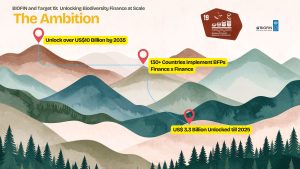
Reaching that figure will matter.
But the more important question will remain the same:
What did the finance make possible?
More forests standing.
More reefs recovering.
More wildlife living alongside people.
More communities earning sustainable livelihoods.
And financial systems in which nature is no longer treated as an invisible externality, but as something worth investing in.
That is the real measure of biodiversity finance.