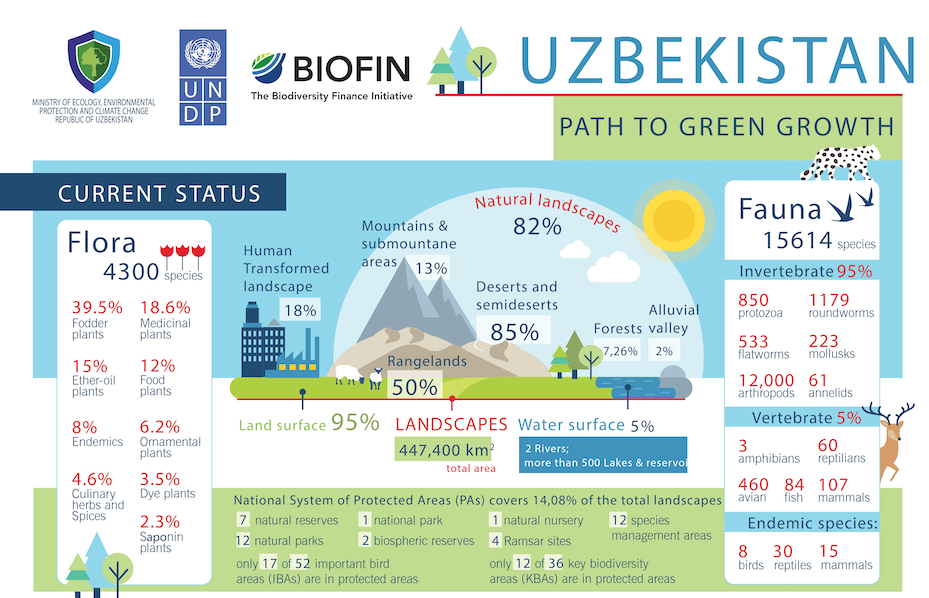
Uzbekistan is a landlocked country at the heart of Central Asia, with diverse ecosystems ranging from deserts and semi-deserts to mountains, forests, wetlands, river valleys and the unique landscapes of the Aral Sea region. These ecosystems support rich biodiversity while providing essential services for agriculture, water security, livelihoods and economic development. Protected areas now cover around 12% of the country's territory.
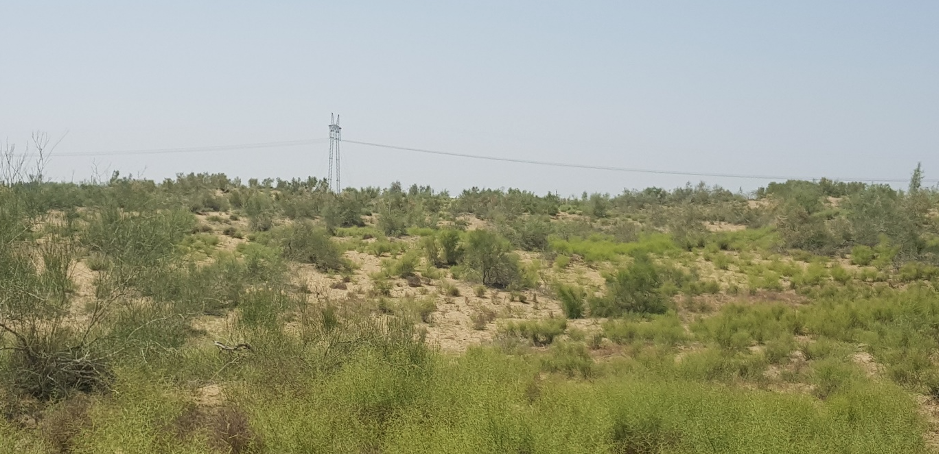
At the same time, Uzbekistan's biodiversity faces growing pressures from land degradation, desertification, water scarcity, unsustainable resource use and climate change. These challenges are particularly significant in a country where more than 80% of the territory consists of desert and semi-desert ecosystems and where water resources are increasingly constrained. Protecting and restoring biodiversity therefore requires not only effective environmental policies, but also adequate and sustainable financing.
Uzbekistan joined UNDP BIOFIN in 2021 to strengthen the country's approach to biodiversity finance. Working with the Government, civil society, the private sector and other national partners, UNDP BIOFIN has assessed biodiversity-related policies and institutions, tracked public expenditure and identified financing needs and opportunities to mobilize additional resources for national biodiversity priorities.
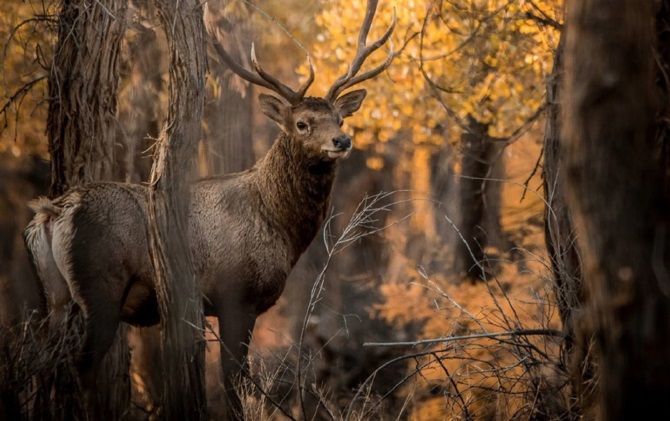
Photo: Endangered Bukhara deers (Lat. Cervus elaphus bactrianus) in the protected tugai forests on the banks of Amudarya river (Source: Meteojurnal)
Building on this evidence, Uzbekistan has identified 11 priority biodiversity finance solutions spanning public finance, private investment and innovative financial mechanisms. Together, these solutions have the potential to mobilize approximately US$1.09 billion by 2034, helping close the biodiversity finance gap while strengthening the contribution of nature to Uzbekistan's sustainable development.
$60M
Finance Gap
Estimated funding gap for implementing national biodiversity priorities through 2028.
$1.09B
Finance Potential
Potential biodiversity finance mobilized by 2034 through 11 priority finance solutions.
11
Finance Solutions
Identified in Uzbekistan's Biodiversity Finance Plan.
Finance Solution 1: National Blended Finance Facility
This finance solution proposes the establishment of a national blended finance facility to mobilize public and private investment for biodiversity conservation. By combining public funding with commercial and development finance, the facility aims to reduce investment risks, attract private capital, and scale up financing for biodiversity-positive projects.
Finance Solution 2: Biodiversity Offsets
This finance solution introduces biodiversity offsets as a regulatory instrument to compensate for unavoidable biodiversity losses resulting from development projects. The mechanism follows the mitigation hierarchy, ensuring that impacts are first avoided and minimized before offsets are applied to achieve no net loss or a net gain for biodiversity.
Finance Solution 3: Biodiversity Credit Market
This finance solution explores the feasibility of establishing a voluntary biodiversity credit market in Uzbekistan. Biodiversity credits would create incentives for private investment in ecosystem restoration and conservation while enabling companies to demonstrate measurable positive impacts on nature.
Finance Solution 4: Reform of Harmful Subsidies
This finance solution identifies and gradually reforms subsidies that negatively affect biodiversity. Redirecting public financial support toward sustainable agriculture, forestry, water management, and other biodiversity-positive activities will help reduce environmental pressures while improving the efficiency of public spending.
Finance Solution 5: Biodiversity Budget Tagging
This finance solution integrates biodiversity into Uzbekistan's public finance system through Biodiversity Budget Tagging. Building on the country's Green Budget Tagging reforms, it will improve the identification, monitoring, and reporting of biodiversity-related expenditures, strengthening evidence-based budget planning and accountability.
Finance Solution 6: Conservation License Plates
This finance solution introduces conservation-themed vehicle license plates, allowing citizens to voluntarily contribute to biodiversity conservation through vehicle registration fees. The mechanism is expected to generate additional domestic revenue while increasing public awareness of biodiversity conservation.
Finance Solution 7: Biodiversity Crowdfunding
This finance solution establishes a national crowdfunding mechanism to mobilize financial contributions from citizens, businesses, and philanthropists for biodiversity conservation projects. The platform will support community initiatives and increase public participation in financing nature.
Finance Solution 8: Payment for Ecosystem Services (PES)
This finance solution pilots a Payment for Ecosystem Services (PES) programme in the Fergana Valley, rewarding land users for protecting watersheds, improving soil conservation, and maintaining ecosystem services. The pilot is intended to demonstrate the feasibility of expanding PES to other regions of Uzbekistan.
Finance Solution 9: REDD+ for Forest Conservation
This finance solution promotes the implementation of REDD+ to mobilize climate finance for forest conservation, restoration, and erosion prevention. By reducing emissions from deforestation and forest degradation, the initiative seeks to generate new funding while strengthening ecosystem resilience.
Finance Solution 10: Nature Bonds
This finance solution expands Uzbekistan's existing SDG and Green Bond framework to enable the issuance of biodiversity and nature bonds. The objective is to attract institutional investment for projects that restore ecosystems, conserve biodiversity, and support sustainable natural resource management.
Finance Solution 11: Academic Capacity Development
This finance solution institutionalizes biodiversity finance education by integrating the BIOFIN methodology into the curriculum of the Central Asian Green University. The initiative develops national expertise in biodiversity finance through university education, professional training, and the adaptation of BIOFIN's global learning resources into Uzbek.
Key results
Developing a Roadmap to Close the Biodiversity Finance Gap
BIOFIN completed Uzbekistan's first Biodiversity Finance Plan, identifying a biodiversity financing gap of at least US$60 million through 2028 and proposing 11 priority finance solutions. The plan estimates that these solutions could mobilize up to US$1.09 billion by 2034, providing a long-term strategy to increase investment in biodiversity conservation and support implementation of the National Biodiversity Strategy and Action Plan. During the reporting period, one finance solution was fully operationalized, while agreements were secured to implement two additional systemic finance solutions between 2026 and 2027.
Launching Uzbekistan's First Biodiversity Finance Academic Programme
BIOFIN successfully implemented the first finance solution under Uzbekistan's Biodiversity Finance Plan by launching the country's first academic module on biodiversity finance. Developed in partnership with the Central Asian Green University, the course is now offered as part of the Master's Programme in Sustainable Finance, institutionalizing the BIOFIN methodology within the national higher education system. The initiative is complemented by the adaptation of the BIOFIN global online course into Uzbek, helping build a new generation of biodiversity finance professionals.
Advancing Biodiversity Budget Reform
BIOFIN secured an agreement with the Ministry of Economy and Finance to implement Biodiversity Budget Tagging as part of Uzbekistan's broader Green Budget Tagging reform. The initiative will integrate biodiversity considerations into the national budgeting system, improve the tracking of biodiversity-related expenditures, strengthen transparency, and support evidence-based public finance decisions. The partnership also includes work on reforming subsidies harmful to biodiversity, marking a major step toward mainstreaming biodiversity into fiscal policy.
Introducing Innovative Green Finance
BIOFIN contributed to the development of Uzbekistan's new "Green Ticket" mechanism, introduced through a Presidential Decree in 2026. The voluntary scheme allows passengers using air, rail, metro, and taxi services to offset the carbon footprint of their travel, generating additional resources for the national Yashil Makon (Green Space) afforestation programme. It represents one of Uzbekistan's first government-backed innovative financing mechanisms for nature.
Building National Expertise in Biodiversity Finance
BIOFIN and the Central Asian Green University launched a dedicated academic module on biodiversity finance in 2026. The initiative responds to the need for professionals who can design and implement nature-finance instruments across government and the financial sector. It complements the BIOFIN global course, which is now available in Uzbek, and supports capacity development for the more than 53,000 public servants involved in Uzbekistan’s green transition.
Key documents
The report examines Uzbekistan’s public biodiversity funding from 2020 to 2022 and forecasts spending for 2024 to 2028. Environmental and biodiversity expenditures are notably low, at 1.62% and 0.5% respectively. It underscores the need for a budget tagging system to align spending with biodiversity commitments, which would enhance data tracking and analysis. The report also outlines three future spending scenarios and offers recommendations for biodiversity conservation.
The report delves into several areas. Firstly, a synopsis of the prevailing environmental policy, legislation, and institutional arrangements which directly or indirectly affect biodiversity conservation, environmental safeguarding, and related legal enforcement. Secondly, it looks at Uzbekistan’s execution of obligations under the CBD and other international biodiversity conservation treaties, and its efforts to expand ecosystem services. Thirdly, the report inspects state subsidies to various sectors and their consequent impact on biodiversity and ecosystem service development. Finally, the report provides for an assessment of the status and trajectories of biodiversity, pinpointing primary adverse trend drivers and proposing mitigation measures.
The Financial Needs Assessment (FNA) for Uzbekistan’s biodiversity sector identifies a funding gap of almost US$60 million for key biodiversity conservation activities envisaged in the current National Biodiversity Strategy and Action Plan (NBSAP) covering the period of 2024-2028. This gap highlights the urgency of securing additional funds to address the most pressing challenges in the protection and sustainable use of natural resources. The FNA makes several recommendations, including increasing domestic budget allocations, engaging more effectively with international donors, and exploring innovative financing mechanisms. Strengthening financial governance and improving tracking systems have been identified as essential for fostering growth in public and private investments in nature. Implementing these strategies is crucial for achieving Uzbekistan's biodiversity goals and ensuring sustainable development.
The Biodiversity Finance Plan (BFP) summarizes all findings from the national biodiversity finance review process guided by the BIOFIN approach. It attempts to present a coherent and comprehensive national approach to biodiversity finance that encompasses a full suite of finance solutions, well beyond the mobilization of new and additional resources, engaging the public sector, private sector, and civil society. The goal is to produce a nationally validated Biodiversity Finance Plan that proposes steps to implement a mix of finance solutions to expand and improve the country’s biodiversity finance and achieve national biodiversity targets. The BFP offers a comprehensive array of financial solutions and implementation strategies to assist the Government in urgently addressing the US$60 million biodiversity financing gap identified by the BIOFIN research in Uzbekistan. If fully implemented under the best-case scenario, the proposed BFP can mobilize up to $3.6 billion by 2034, making a significant contribution to the achievement of national biodiversity conservation objectives.
The Biodiversity Finance Plan (BFP) summarizes all findings from the national biodiversity finance review process guided by the BIOFIN approach. It attempts to present a coherent…
The Financial Needs Assessment (FNA) for Uzbekistan’s biodiversity sector identifies a funding gap of almost US$60 million for key biodiversity conservation activities envisaged in the current…
Biodiversity Finance Policy and Institutional Review in Uzbekistan
The report delves into several areas. Firstly, a synopsis of the prevailing environmental policy, legislation, and institutional arrangements which directly or indirectly affect biodiversity conservation, environmental…