Knowledge Base

Knowledge Hub

Access BIOFIN's library of resources, including flagship publications, country reports, finance solution case studies, webinars, explainer videos, podcasts, and more.

Key Publications

Publications

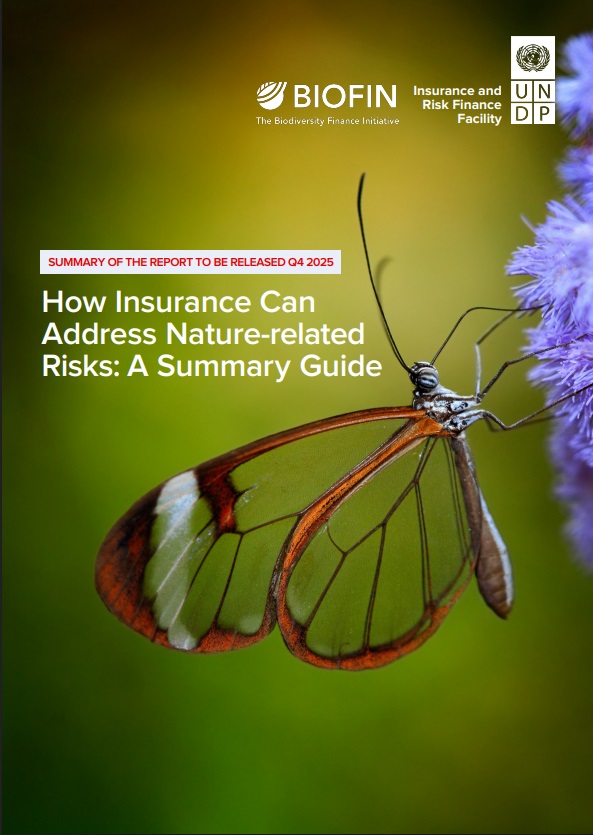
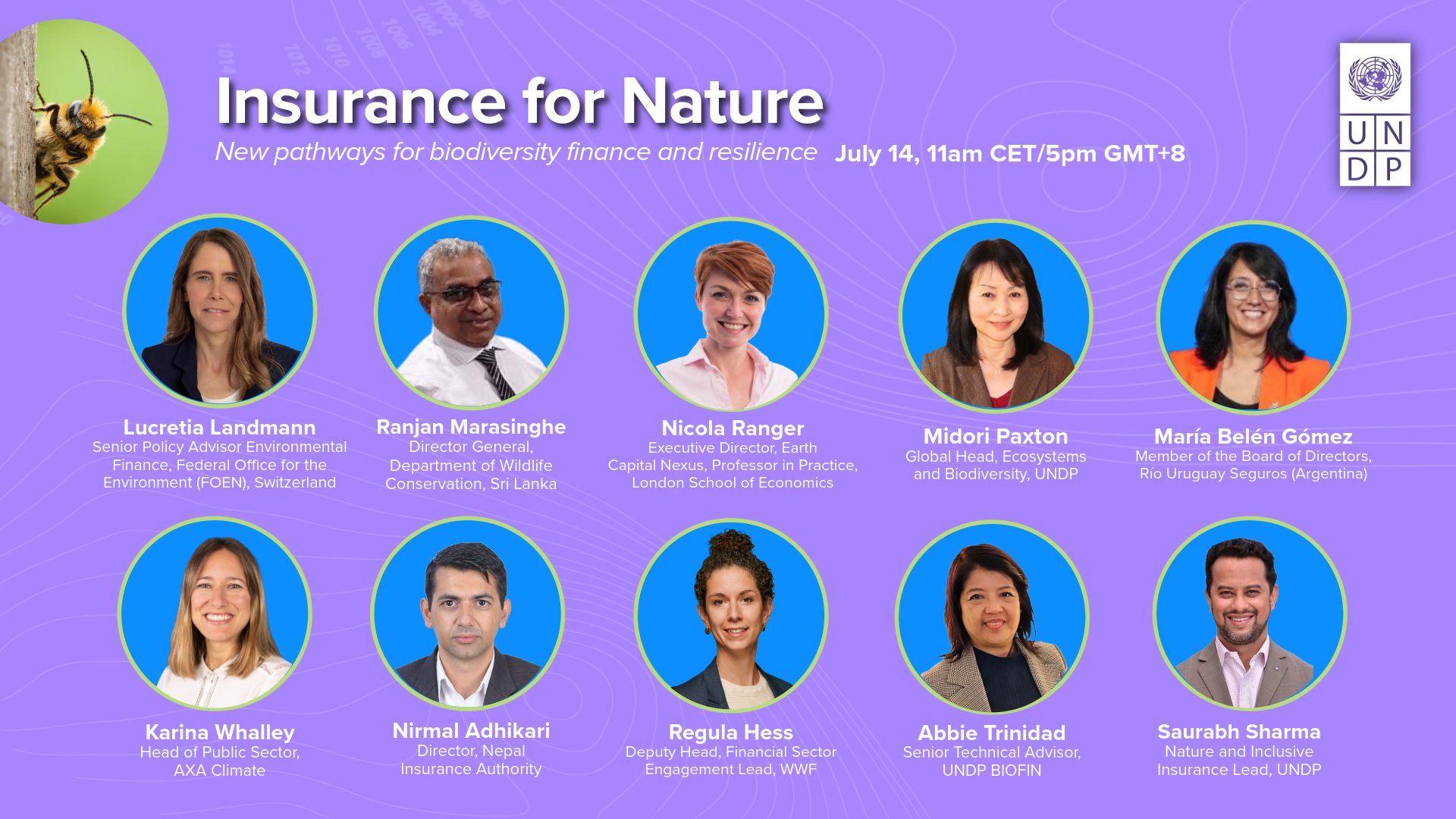
Insurance can play a crucial role in biodiversity conservation by providing financial protection against risks to natural assets, incentivizing sustainable practices, and securing key investments.
Publications

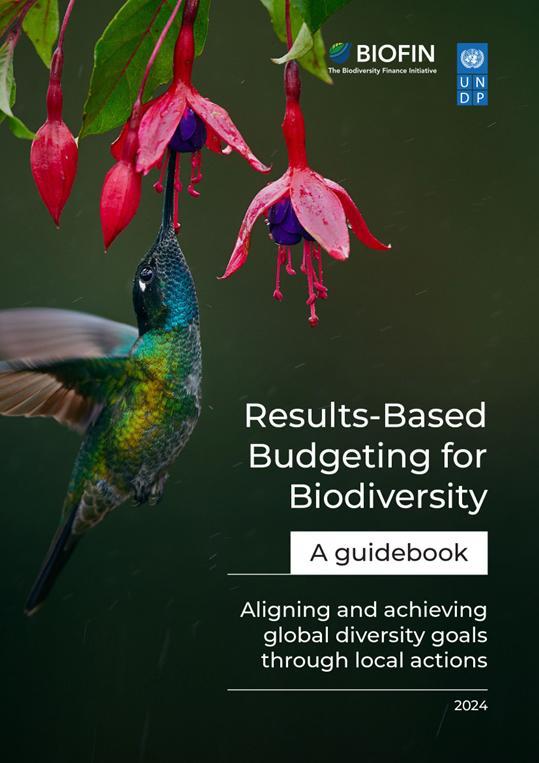
In 2022, countries adopted new global biodiversity targets under the Kunming-Montreal Global Biodiversity Framework (GBF), revisiting many goals that had gone unachieved or underachieved over the past decade.
Publications

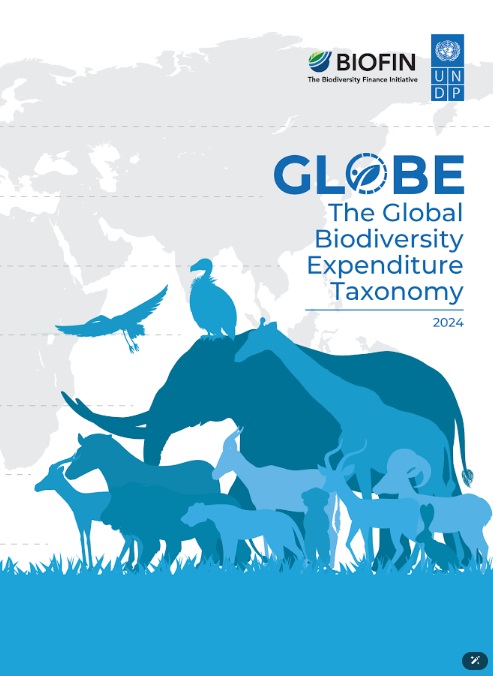
Global Biodiversity Expenditure (GLOBE) is a taxonomy that categorizes all potential public expenditures for biodiversity.

The taxonomy consists of two components:
Publications

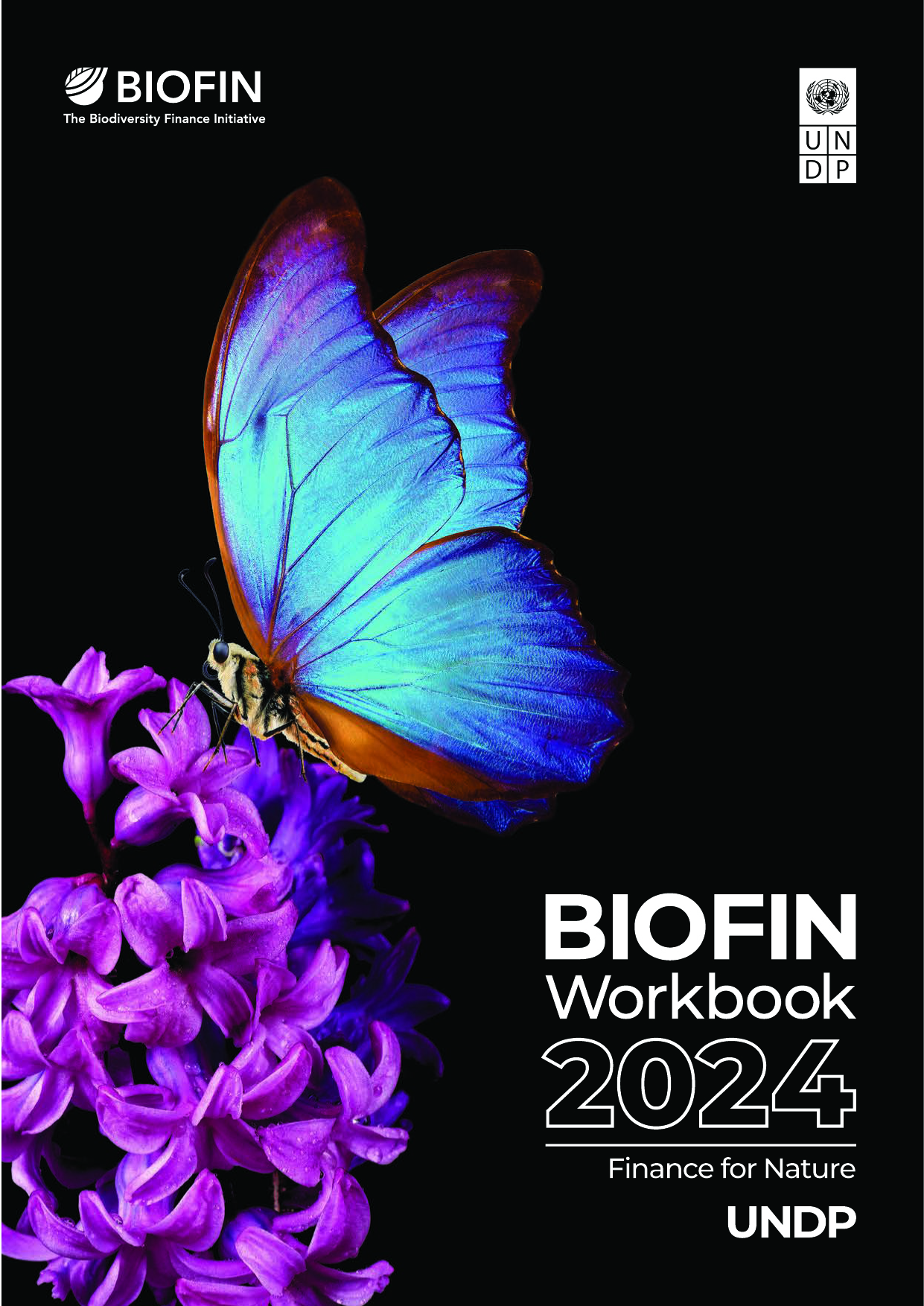
The BIOFIN Workbook 2024 provides detailed guidance to design and implement national biodiversity finance plans.  These are not mere plans. They set out a process to engage a coalition of actors around the issue of biodiversity finance for an extended time.
Publications

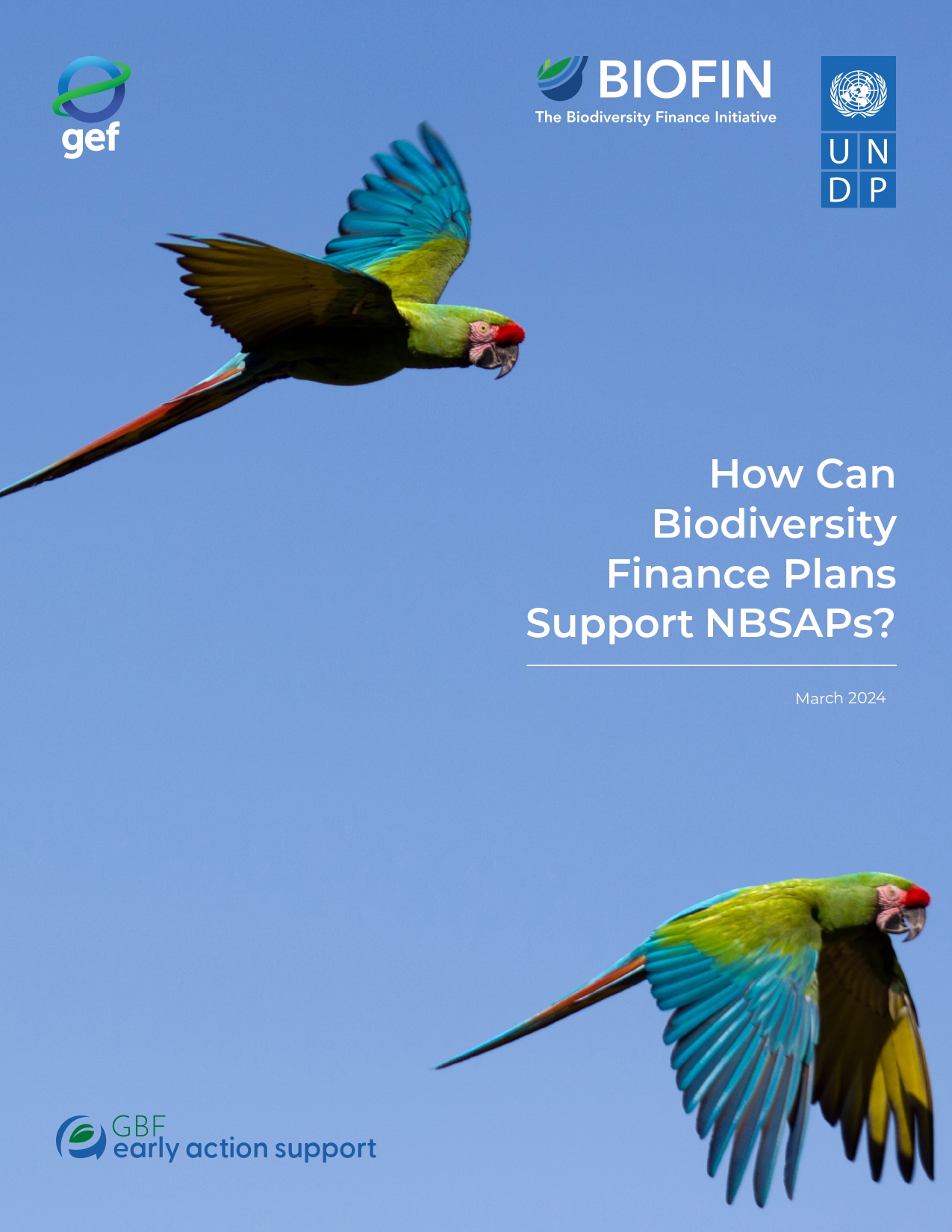
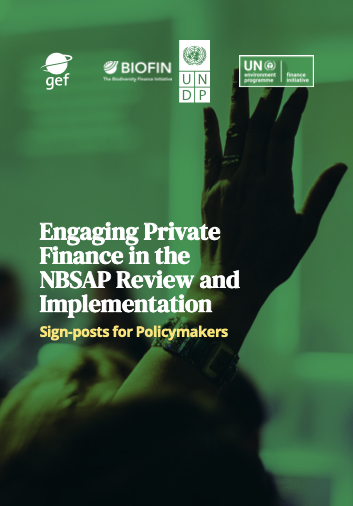
At the Conference of the Parties to the Convention on Biological Diversity 15 (CBD COP 15) in 2022, countries agreed to review and update their National Biodiversity Strategy and Action Plans
Publications

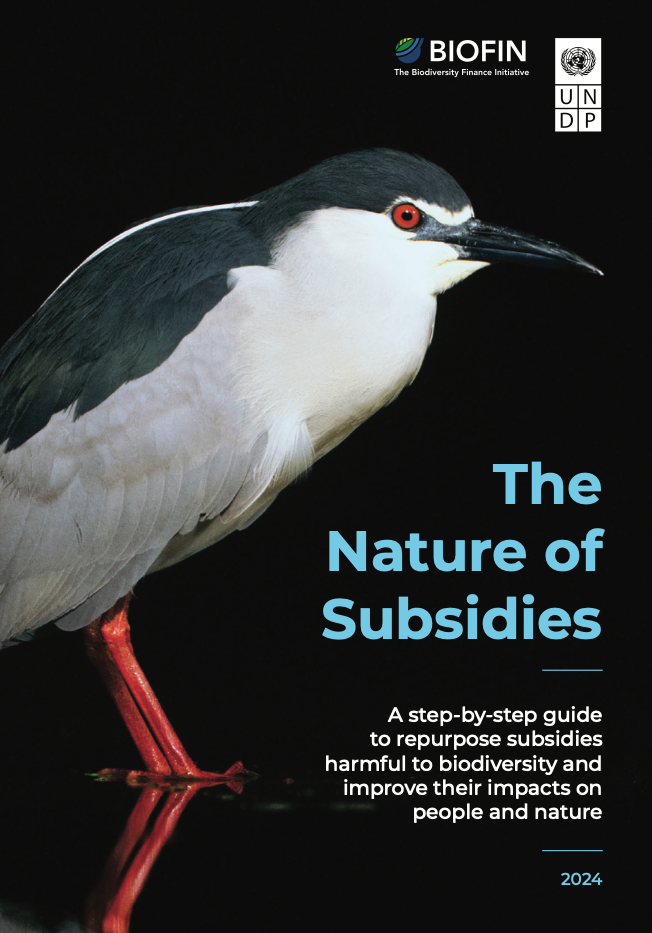
Well-intentioned subsidies aimed at socio-economic goals can have unintended negative impacts on the environment, including biodiversity. The BIOFIN team has developed a step-by-step guide to repurpose such subsidies and improve their positive impacts on people and nature.
Publications

The Kunming-Montreal Global Biodiversity Framework (GBF) calls for a whole-of-society approach to halting and reversing nature loss.

Publications

The Little Book of Investing in Nature provides an essential overview of the area of biodiversity finance at a time when governments and international negotiators are urgently seeking pragmatic solutions for the twin crises of climate change and the loss of nature.

E-LEARNING

Learning for nature: our free biodiversity finance certified e-learning course

Take our free biodiversity finance certified e-learning course. Master the methodology, connect with experts, and gain certification.

Start E-Learning
Browse the Knowledge Platform
645 Results
Publications

This report is an excerpt from the original document in Spanish. The main objective of this report is to present a pathway for reviewing and redesigning subsidies harmful to biodiversity for the country to meet target number 18 of the Kunming-Montreal Global Biodiversity Framework.  This goal determines the identification of harmful subsidies by 2025 and their reform and/or elimination by 2030.

Publications

El presente informe tiene como objetivo central proponer una ruta de revisión y rediseño de los subsidios perjudiciales para la biodiversidad, con el fin de que el país cumpla con la meta número 18 del Marco Global de Biodiversidad Kunming-Montreal. Esta meta establece la identificación de los subsidios perjudiciales hasta el año 2025, así como su reforma y/o eliminación hasta el año 2030.

Case Studies

El caso de México en la movilización de recursos a nivel subnacional.

Case Studies

The case of Mexico in mobilizing resources at the subnational level.

Publications

Más del 70% del territorio de Bogotá es área rural, allí se albergan ecosistemas estratégicos como bosques, páramos y humedales que, entre otros servicios ecosistémicos, proveen el recurso hídrico para la población de la ciudad.

Desde 2021, a través de una alianza entre el PNUD y la Secretaría Distrital de Ambiente, se trabaja en la implementación del Programa Distrital de Pago por Servicios Ambientales-PSA en la zona rural de Bogotá, con el fin de conservar y restaurar ecosistemas necesarios para la provisión de agua a los cerca de 7.9 millones de bogotanos.

Esta es una estrategia de política del gobierno distrital que se estableció como meta del Plan Distrital de Desarrollo 2020-2024 para diseñar e implementar un programa de incentivos a la conservación ambiental rural, a través de pago por servicios ambientales en 1.000 has. 

De acuerdo con el Decreto 870 de 2017, los PSA son un incentivo económico en dinero o en especie que se reconoce a los propietarios, poseedores y ocupantes de buena fe por las acciones de preservación y restauración en sus predios localizados en áreas y ecosistemas estratégicos, mediante la celebración de acuerdos voluntarios.

En 2021 el PNUD y la Secretaría Distrital de Ambiente firmaron un acuerdo de cooperación por aproximadamente 1 millón de dólares que apalancaron la movilización de cerca de 500 mil dólares para la conservación, protección y restauración de la biodiversidad en la ruralidad de Bogotá y el diseño e implementación del Programa Distrital de Pago por Servicios Ambientales-PSA, que garantice la conservación del recurso hídrico para la provisión del servicio a los bogotanos.

Como valor agregado a esta alianza, el PNUD contribuye en la aplicación de salvaguardas ambientales y sociales para:

  • Facilitar los escenarios de consulta, sensibilización y participación para personas que ya hacen parte del programa y para quienes se encuentran interesados.

  • Implementar lineamientos de género para aumentar la participación de las mujeres en estos espacios.

  • Fortalecer capacidades en conservación de ecosistemas y en prácticas productivas de bajo impacto.

Además, el Programa Distrital de Pago por Servicios Ambientales hace uso de tecnologías innovadoras. A través de sobrevuelos con drone y aplicaciones SIG para la captura y análisis de imágenes satelitales, el Programa avanza en el monitoreo para la preservación y la restauración de los ecosistemas vinculados a los acuerdos voluntarios de conservación.

A mayo de 2023, este programa se ha desarrollado en cuatro de las nueve localidades que conforman la ruralidad de Bogotá: Sumapaz, Usme, Ciudad Bolívar, Chapinero y a la fecha son 41 acuerdos de conservación firmados (22 en Usme, 15 en Sumapaz, 3 en Ciudad Bolívar, 1 en Chapinero) en 62 predios ubicados en ecosistemas estratégicos con acuerdos de PSA, vinculando así 1.000 hectáreas bajo esquemas de PSA.

El (97%) corresponden a preservación: con áreas cubiertas por vegetación de páramo, bosques y ecosistemas de humedal, cuyos propietarios han protegido en sus predios; mientras que 28 hectáreas, es decir, un (3%) en restauración: áreas que anteriormente eran utilizadas para el desarrollo de procesos productivos, como la ganadería y el cultivo de papa, que los beneficiarios destinaron para retornar a una condición similar a la de los ecosistemas naturales aledaños (bosques y páramos).


Ver noticia completa de la Secretaría Distrital de Ambiente sobre los resultados del Programa Distrital de PSA aquí

Publications

Análisis sobre la igualdad de género y el empoderamiento de las mujeres en su diversidad en el sector de ambiente, energía y mares, como un insumo que permita asegurar que el Primer Plan Estratégico Sectorial esté orientado hacia esta meta.

Publications

The goal of this document is to provide information about what Habitat Banks are and their advantages as an instrument for the effective mobility of resources for funding biodiversity in Colombia, as an environmental offset mechanism, and as an economic driver of the rural economy. First of all, a context is provided on the current state of biodiversity finance in Colombia. Second, it is explained what Habitat Banks are and their advantages as an offset mechanism, financial instrument, and generator of employment and rural development. In conclusion, it mentions public policy needs to advance in implementing Habitat Banks in relation to the current regulation, to materialize the potential of this mechanism, together with a high-integrity biodiversity credits market for the country.


To see this document in english, click in the below link

Para ver este documento en español, haga click en el siguiente enlace

Publications

The goal of this document is to provide information about what Habitat Banks are and their advantages as an instrument for the effective mobility of resources for funding biodiversity in Colombia, as an environmental offset mechanism, and as an economic driver of the rural economy. First of all, a context is provided on the current state of biodiversity finance in Colombia. Second, it is explained what Habitat Banks are and their advantages as an offset mechanism, financial instrument, and generator of employment and rural development. In conclusion, it mentions public policy needs to advance in implementing Habitat Banks in relation to the current regulation, to materialize the potential of this mechanism, together with a high-integrity biodiversity credits market for the country.


To see this document in english, click in the below link

Para ver este documento en español, haga click en el siguiente enlace

Case Studies

This document provides an initial analysis of harmful incentives affecting biodiversity in Colombia, laying the groundwork for discussions that support the country’s international environmental commitments.

The findings are presented in two phases:

  • National-Level Analysis: The first phase examines bibliographic, statistical, and cartographic data to identify incentives that may negatively impact biodiversity. It also offers recommendations for developing a reform roadmap.
  • Regional Case Study – La Mojana: The second phase assesses how these incentives affect ecosystem services in the La Mojana region. This analysis integrates technical, statistical, and cartographic information with fieldwork, including workshops and structured and semi-structured interviews with local communities, farmer associations, producers, and public institutions. The aim is to capture their perspectives on changes in the ecosystem services essential to their livelihoods.

This study was conducted by UNDP through its BIOFIN initiative in Colombia, with technical support from the Latin American Center for Rural Development - Rimisp, in strategic partnership with Colombia Rural Organization and the Research Center on Agri-Food Systems at Universidad de Los Andes. It also draws on technical analyses from the Mojana “Climate and Life” Program, which UNDP is implementing with funding from the Green Climate Fund and the Colombian government.

Publications

Este documento es una primera aproximación al análisis de los incentivos perversos sobre la biodiversidad en Colombia, el cual permite establecer bases para la generación de discusiones que permita dar cumplimiento a los compromisos internacionales adquiridos en materia ambiental. Este documento presenta los resultados en dos fases: la primera, a nivel nacional a partir de análisis de información bibliográfica, estadística y cartográfica para identificar incentivos con potenciales impactos negativos sobre la biodiversidad y generar recomendaciones para la implementación de una hoja de ruta de reforma; y la segunda, un análisis de la incidencia de los incentivos en los servicios ecosistémicos de la región de La Mojana, que consideró información técnica, estadística y cartográfica, complementada con un ejercicio de levantamiento de información en campo a partir de talleres y entrevistas estructuradas y semiestructuradas a las comunidades, asociaciones de campesinos, productores e instituciones públicas presentes en el territorio a fin de conocer sus apreciaciones sobre los cambios en los servicios ecosistémicos más importantes para el desarrollo de sus actividades.

Para el desarrollo de este análisis, el PNUD a través de su iniciativa BIOFIN en Colombia, contó con la asesoría técnica del Centro Latinoamericano para el Desarrollo Rural – Rimisp en alianza estratégica con la Organización Colombia Rural y el Centro de Investigación en Sistemas Agroalimentarios de la Universidad de Los Andes. Además, contó con los análisis técnicos proporcionados por el Programa Mojana “Clima y Vida” que el PNUD viene implementando con recursos del Fondo Verde del Clima y el gobierno nacional en Colombia.

Para consultar el documento, haga click aquí.

Case Studies

This document provides an initial analysis of harmful incentives affecting biodiversity in Colombia, laying the groundwork for discussions that support the country’s international environmental commitments.

The findings are presented in two phases:

  • National-Level Analysis: The first phase examines bibliographic, statistical, and cartographic data to identify incentives that may negatively impact biodiversity. It also offers recommendations for developing a reform roadmap.
  • Regional Case Study – La Mojana: The second phase assesses how these incentives affect ecosystem services in the La Mojana region. This analysis integrates technical, statistical, and cartographic information with fieldwork, including workshops and structured and semi-structured interviews with local communities, farmer associations, producers, and public institutions. The aim is to capture their perspectives on changes in the ecosystem services essential to their livelihoods.

This study was conducted by UNDP through its BIOFIN initiative in Colombia, with technical support from the Latin American Center for Rural Development - Rimisp, in strategic partnership with Colombia Rural Organization and the Research Center on Agri-Food Systems at Universidad de Los Andes. It also draws on technical analyses from the Mojana “Climate and Life” Program, which UNDP is implementing with funding from the Green Climate Fund and the Colombian government.

BIOFIN Videos
SEE ALL