Knowledge Base

KNOWLEDGE HUB

Knowledge Hub

Access BIOFIN's library of resources, including flagship publications, country reports, finance solution case studies, webinars, explainer videos, podcasts, and more.

Key Publications
Publications

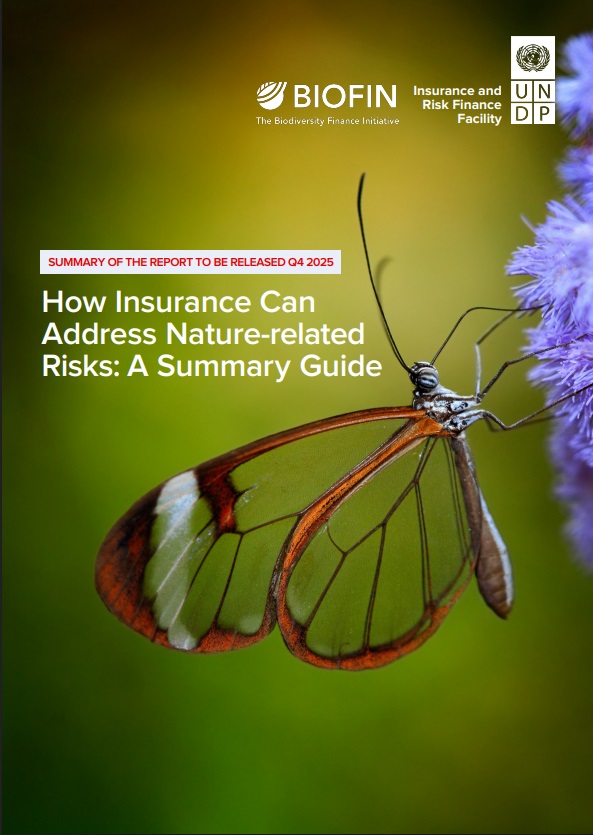
Insurance can play a crucial role in biodiversity conservation by providing financial protection against risks to natural assets, incentivizing sustainable practices, and securing key investments.
Publications

In 2022, countries adopted new global biodiversity targets under the Kunming-Montreal Global Biodiversity Framework (GBF), revisiting many goals that had gone unachieved or underachieved over the past decade.
Publications

Global Biodiversity Expenditure (GLOBE) is a taxonomy that categorizes all potential public expenditures for biodiversity.

The taxonomy consists of two components:
Publications

The BIOFIN Workbook 2024 provides detailed guidance to design and implement national biodiversity finance plans.  These are not mere plans. They set out a process to engage a coalition of actors around the issue of biodiversity finance for an extended time.
Publications

At the Conference of the Parties to the Convention on Biological Diversity 15 (CBD COP 15) in 2022, countries agreed to review and update their National Biodiversity Strategy and Action Plans
Publications

Well-intentioned subsidies aimed at socio-economic goals can have unintended negative impacts on the environment, including biodiversity. The BIOFIN team has developed a step-by-step guide to repurpose such subsidies and improve their positive impacts on people and nature.
Publications

The Kunming-Montreal Global Biodiversity Framework (GBF) calls for a whole-of-society approach to halting and reversing nature loss.

Publications


The Little Book of Investing in Nature provides an essential overview of the area of biodiversity finance at a time when governments and international negotiators are urgently seeking pragmatic solutions for the twin crises of climate change and the loss of nature.

E-LEARNING

Learning for nature: our free biodiversity finance certified e-learning course

Take our free biodiversity finance certified e-learning course. Master the methodology, connect with experts, and gain certification.

Start E-Learning
Browse the Knowledge Platform
636 Results
Publications


An overview of who we are and what we do across the world to help protect and restore nature with innovative finance solutions. 

你可以在这里下载中文版

Publications

A summary of Little Book for Investing in Nature, an indispensable guide to finance solutions for people and planet. 

Guidelines

This document presents the results addressed in the framework of the alliance between the District Secretary of Environment and the UNDP BIOFIN initiative in Colombia. The information is organized in four chapters: the first describes the conceptual and regulatory framework on payments for water environmental services in Colombia. The second, deals with the technical bases for the environmental zoning of rural areas of special environmental importance in Bogotá as input for the identification of potential areas to be considered in the district program of payment for environmental services. The third, examines the problems and the intervention framework for the implementation of this initiative in the rural areas of Bogotá. Finally, the fourth chapter presents the structure of the program in the rural areas of Bogotá, composed of a socioeconomic analysis, estimation of the incentive value, legal feasibility analysis, determination of the main ecological structure, design of a system of monitoring and evaluation, proposal of the conservation agreement, and the registration of projects with environmental and territorial authorities and operation of the program.

This document is only available in Spanish, as it remains under construction between the District Secretary for the Environment, UNDP, and the beneficiaries.

Publications

El presente Volumen, el cuarto de la colección sobre el diseño de un nuevo esquema de Pago por Servicios Ecosistémicos para Costa Rica (PSE), tiene el objetivo de estimar el valor económico del capital natural que contemplará el nuevo PSE. Los resultados que se proveen en este Volumen representan el primer esfuerzo en Costa Rica en valorar los servicios ecosistémicos del país a nivel nacional, por lo que sin duda es un importante paso para cerrar una brecha existente de conocimiento en este sentido, así como para la toma de decisiones basadas en conocimiento científico.

Guidelines

This policy develops principles focused on achieving greater co-responsibility of the productive sectors to contribute to the conservation of protected areas and to reward vulnerable populations that support their care. Principles associated with good governance of protected areas and the System are incorporated. Special emphasis is placed on the need to increase management effectiveness, and the importance of protecting natural spaces with associated cultural elements and meanings is positioned.

Additionally, this policy is articulated with the 30x30 initiative aimed at protecting at least 30% of the oceans and 30% of the terrestrial areas and continental waters of the world by the year 2030, with at least 10% subject to strict protection, being discussed in the new Global Framework for Biodiversity post 2020. This Framework will establish new objectives and goals to be implemented by the member countries of the Convention on Biological Diversity.

The construction of this CONPES document began in 2019, with the support the Technical Secretariat of the National Planning Department and work from the Ministry of Environment and Sustainable Development, as well as the National Natural Parks of Colombia. The Worldwide Fund for Nature contributed in this process as the implementer of the GEF SINAP project supported by the IDB and the United Nations Development Program UNDP.

Guidelines

This policy develops principles focused on achieving greater co-responsibility of the productive sectors to contribute to the conservation of protected areas and to reward vulnerable populations that support their care. Principles associated with good governance of protected areas and the System are incorporated. Special emphasis is placed on the need to increase management effectiveness, and the importance of protecting natural spaces with associated cultural elements and meanings is positioned.

Additionally, this policy is articulated with the 30x30 initiative aimed at protecting at least 30% of the oceans and 30% of the terrestrial areas and continental waters of the world by the year 2030, with at least 10% subject to strict protection, being discussed in the new Global Framework for Biodiversity post 2020. This Framework will establish new objectives and goals to be implemented by the member countries of the Convention on Biological Diversity.

The construction of this CONPES document began in 2019, with the support the Technical Secretariat of the National Planning Department and work from the Ministry of Environment and Sustainable Development, as well as the National Natural Parks of Colombia. The Worldwide Fund for Nature contributed in this process as the implementer of the GEF SINAP project supported by the IDB and the United Nations Development Program UNDP.

Guidelines

This policy develops principles focused on achieving greater co-responsibility of the productive sectors to contribute to the conservation of protected areas and to reward vulnerable populations that support their care. Principles associated with good governance of protected areas and the System are incorporated. Special emphasis is placed on the need to increase management effectiveness, and the importance of protecting natural spaces with associated cultural elements and meanings is positioned.

Additionally, this policy is articulated with the 30x30 initiative aimed at protecting at least 30% of the oceans and 30% of the terrestrial areas and continental waters of the world by the year 2030, with at least 10% subject to strict protection, being discussed in the new Global Framework for Biodiversity post 2020. This Framework will establish new objectives and goals to be implemented by the member countries of the Convention on Biological Diversity.

The construction of this CONPES document began in 2019, with the support the Technical Secretariat of the National Planning Department and work from the Ministry of Environment and Sustainable Development, as well as the National Natural Parks of Colombia. The Worldwide Fund for Nature contributed in this process as the implementer of the GEF SINAP project supported by the IDB and the United Nations Development Program UNDP.

Publications

El capital natural y sus servicios ecosistémicos pueden ser valorados económicamente tomando en cuenta sus valores de no uso, y sus valores de uso. En este sentido, las Áreas Silvestres Protegidas también pueden analizarse bajo esa óptica, con valores de existencia expresados por el deseo de la sociedad a conservarlos, valores de uso indirecto que proveen estas áreas a través de servicios ecosistémicos como la regulación del agua y del clima, y valores de uso directo que se concentran en estas áreas en el servicio de recreación o ecoturismo.

Publications

El modelo de costos propuesto para estimar las tarifas de las Áreas Silvestres Protegidas (ASP) se sustenta en la premisa de explorar las necesidades y particularidades de cada una de ellas y a partir de ello contemplar los insumos necesarios, esto siguiendo la misma clasificación utilizada por el Presupuesto Nacional

Publications

Análisis detallado acerca de gasto efectivo, del Gobierno Central, órganos desconcentrados y entidades descentralizadas, destinado a la conservación y uso sostenible de la biodiversidad en Costa Rica, para el período 2015-2019, así como para el Presupuesto de la República para el año 2020, de conformidad con la metodología establecida en el Manual Iniciativa de Finanzas para la Biodiversidad (BIOFIN 2018).

Publications

El presente Volumen, el último de la serie sobre el rediseño del programa de Pago por Servicios Ambientales de Costa Rica, se elabora a raíz del análisis técnico y político que realizó el equipo consultor junto con las autoridades del gobierno (i.e. MINAE y FONAFIFO) y BIOFIN sobre el mecanismo financiero propuesto en el Volumen II.

Publications

The Biodiversity Finance Plan (BFP) is Cambodia’s national roadmap to fund biodiversity, developed under UNDP’s BIOFIN. Using the 2018 BER baseline (US$112M spent vs. ~US$305M needed), it identifies a significant financing gap and sets priorities to mobilize resources, avoid harmful spending, and use funds more efficiently. After reviewing 24 NBSAP themes and engaging key ministries and stakeholders, five first-priority solutions were selected for 2021–2026: (1) develop sustainable, community-based ecotourism, (2) promote payment for ecosystem services, (3) enhance REDD+ impacts for conservation, (4) scale good agricultural practices to reduce biodiversity harm, and (5) strengthen institutional capacity for biodiversity finance review. Implementation strategies will be co-developed with lead agencies, with financing sought domestically and globally.