Knowledge Base

Knowledge Hub

Access BIOFIN's library of resources, including flagship publications, country reports, finance solution case studies, webinars, explainer videos, podcasts, and more.

Key Publications

Publications

Insurance can play a crucial role in biodiversity conservation by providing financial protection against risks to natural assets, incentivizing sustainable practices, and securing key investments.
Publications

In 2022, countries adopted new global biodiversity targets under the Kunming-Montreal Global Biodiversity Framework (GBF), revisiting many goals that had gone unachieved or underachieved over the past decade.
Publications

Global Biodiversity Expenditure (GLOBE) is a taxonomy that categorizes all potential public expenditures for biodiversity.

The taxonomy consists of two components:
Publications

The BIOFIN Workbook 2024 provides detailed guidance to design and implement national biodiversity finance plans.  These are not mere plans. They set out a process to engage a coalition of actors around the issue of biodiversity finance for an extended time.
Publications

At the Conference of the Parties to the Convention on Biological Diversity 15 (CBD COP 15) in 2022, countries agreed to review and update their National Biodiversity Strategy and Action Plans
Publications

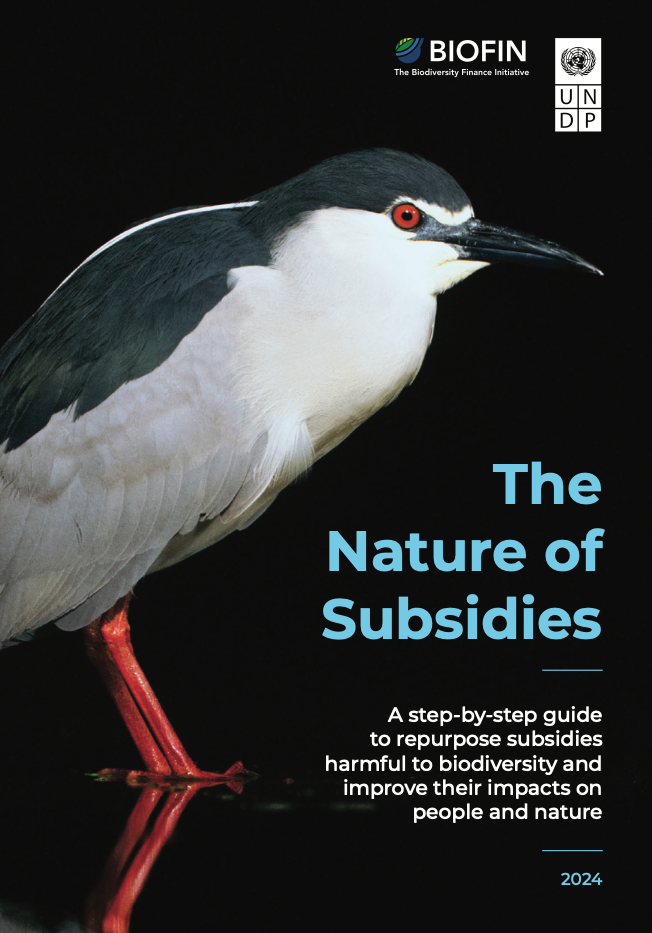
Well-intentioned subsidies aimed at socio-economic goals can have unintended negative impacts on the environment, including biodiversity. The BIOFIN team has developed a step-by-step guide to repurpose such subsidies and improve their positive impacts on people and nature.
Publications

The Kunming-Montreal Global Biodiversity Framework (GBF) calls for a whole-of-society approach to halting and reversing nature loss.

Publications

The Little Book of Investing in Nature provides an essential overview of the area of biodiversity finance at a time when governments and international negotiators are urgently seeking pragmatic solutions for the twin crises of climate change and the loss of nature.

E-LEARNING

Learning for nature: our free biodiversity finance certified e-learning course

Take our free biodiversity finance certified e-learning course. Master the methodology, connect with experts, and gain certification.

Start E-Learning
Browse the Knowledge Platform
645 Results
Case Studies

This pioneering study assesses the financial risks associated with biodiversity loss in Mexico, one of the most biodiverse countries in the world. Using an innovative approach that combines socioeconomic data, input-output matrices, environmental dependency and impact assessments (ENCORE), and spatial analysis with geolocated firm data, the report estimates the exposure of Mexico’s financial system to physical risks (such as water stress) and transition risks (such as the expansion of protected areas). The findings reveal that up to 66% of national output, 70% of employment, and 53% of the credit portfolio could be at risk due to high dependencies or impacts on ecosystem services. The study also identifies key industries and presents concrete scenarios to illustrate how nature-related risks can propagate through supply chains and affect the financial system. This assessment provides critical empirical evidence to inform public policy and strengthen risk management strategies among financial institutions and regulators.

Publications

La Guía de Bonos Temáticos de la Bolsa de Valores de Guayaquil presenta lineamientos prácticos para la emisión de bonos temáticos en el sector real de la economía, empezando desde una evaluación inicial para la toma de decisiones hasta la estructuración legal y financiera para la oferta pública de estos instrumentos.

Publications

The Study on Nature-Related Financial Risks in Zambia draws on lessons and insights from international experiences, tailored to Zambia’s unique context. It serves as a national diagnostic, assessing how financial institutions are both exposed to and impacting nature and biodiversity.

The report directly supports Target 15 of the Global Biodiversity Framework, which calls on businesses to assess, disclose, and reduce biodiversity-related risks and impacts. It also contributes to advancing the work of the Taskforce on Nature-related Financial Disclosures (TNFD) by providing locally grounded insights for financial decision-makers.

Publications

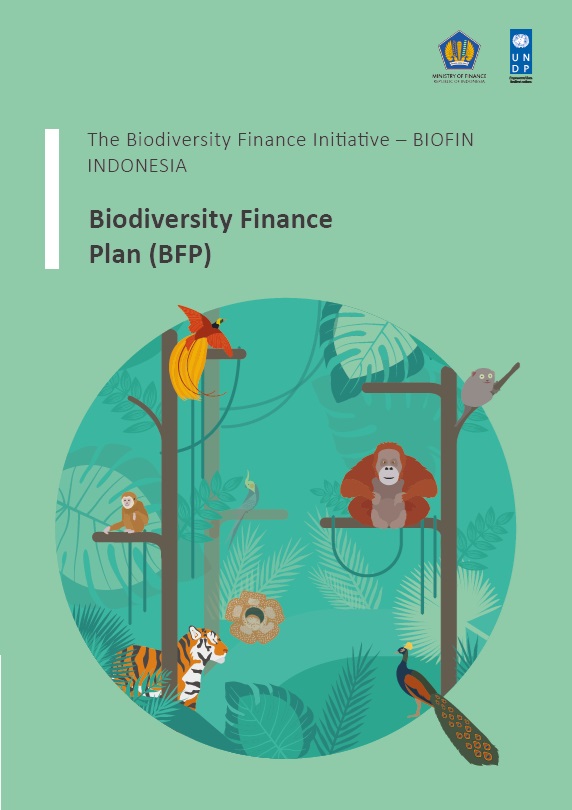
The Biodiversity Finance Strategy (BFP) aims to maximize the impact of resources allocated for conservation through a strategic framework that facilitates the conditions for the National Biodiversity Strategy and its Action Plan (NBSAP) 2025-2030 to achieve its goals by efficiently mobilizing national and international financial resources that fund the country's needs. BIOFIN employs a globally validated methodological and strategic framework to analyze and prioritize funding requirements, identify new investment opportunities, and develop innovative finance solutions.

Publications

Rwanda is exploring innovative ways to make its tourism sector more inclusive and environmentally sustainable. This policy brief, summarized the potential of redesigning the country’s tourism tax incentive to better support biodiversity, equity, and climate resilience.

The policy brief proposes a dual-track tax incentive system—one that maintains benefits for large-scale investors while introducing a new pathway for smaller developers who adopt certified green technologies. This approach could help reduce ecological harm, promote innovation, and create more opportunities for local businesses in eco-tourism.

The key findings offer a strategic direction for aligning fiscal incentives with Rwanda’s Vision 2050, which prioritizes sustainable development and a clean, resilient environment. The policy brief also highlights key environmental challenges linked to tourism infrastructure, such as habitat fragmentation and water pollution, and suggests ways to address them through policy reform.

This brief is intended to inform dialogue among policymakers, investors, and conservation stakeholders. It invites further discussion on how Rwanda can lead the way in sustainable tourism by integrating environmental performance into investment incentives.


Publications


BIOFIN Colombia ha desarrollado la Ruta de decisión comunitaria para la financiación de la biodiversidad, una herramienta clave para que personas y organizaciones de base puedan fortalecer su rol en la gestión de mecanismos financieros para la biodiversidad.

Esta ruta guía a través de una serie de preguntas estratégicas que permiten:

  • Identificar necesidades ambientales prioritarias.
  • Explorar opciones de financiación adecuadas.
  • Construir alianzas estratégicas.
  • Formular proyectos efectivos para la conservación.

La generación de información estructurada es fundamental para mejorar el acceso a recursos y asegurar que las acciones de conservación sean sostenibles en el tiempo. Con esta herramienta, más comunidades podrán participar activamente en la protección de nuestro patrimonio natural.

Publications


BIOFIN Colombia ha desarrollado la Ruta de decisión comunitaria para la financiación de la biodiversidad, una herramienta clave para que personas y organizaciones de base puedan fortalecer su rol en la gestión de mecanismos financieros para la biodiversidad.

Esta ruta guía a través de una serie de preguntas estratégicas que permiten:

  • Identificar necesidades ambientales prioritarias.
  • Explorar opciones de financiación adecuadas.
  • Construir alianzas estratégicas.
  • Formular proyectos efectivos para la conservación.

La generación de información estructurada es fundamental para mejorar el acceso a recursos y asegurar que las acciones de conservación sean sostenibles en el tiempo. Con esta herramienta, más comunidades podrán participar activamente en la protección de nuestro patrimonio natural.

Publications

La Estrategia de captación de recursos y sostenibilidad financiera del Fondo Ambiental de Quito (FAQ), presenta un enfoque integral y sistemático para mejorar la capacidad de captación de fondos y garantizar la sostenibilidad financiera del FAQ. Esta estrategia se basa en las mejores prácticas internacionales y se adapta a las necesidades y condiciones locales de Quito (capital del Ecuador)

Publications

This Summary Findings and Policy Brief Report provides a summary of the programme of work on fees for permits and licences.

Publications

La matriz de priorización de subsidios fue utilizada en el ejercicio de Análisis de Subsidios desarrollado por BIOFIN.

Publications

El documento "Análisis de Subsidios Nacionales con Potenciales Efectos en la Biodiversidad: Resultados y Recomendaciones" examina el impacto de los subsidios en México sobre la biodiversidad y propone estrategias para su reforma. Se enmarca en el Marco Global de Biodiversidad Kunming-Montreal, que busca eliminar o rediseñar incentivos perjudiciales para la biodiversidad. A través de BIOFIN México, se desarrolla una metodología para identificar y clasificar subsidios con impactos negativos, neutros o positivos en la biodiversidad, centrándose en sectores como la agricultura, ganadería, infraestructura y pesca.

El análisis evalúa 17 programas presupuestarios mediante criterios de impacto ambiental y social, y prioriza subsidios con mayor viabilidad de transformación. Se presentan recomendaciones para redirigir apoyos financieros hacia modelos productivos más sostenibles sin afectar el bienestar de los beneficiarios. El informe enfatiza la necesidad de mecanismos de control, incentivos a prácticas agroecológicas y reformas institucionales para asegurar la compatibilidad de los subsidios con la conservación de la biodiversidad. También identifica barreras como la resistencia política, la falta de datos y la limitada coordinación intersectorial. Este estudio sienta las bases para una segunda fase de reforma de subsidios, promoviendo decisiones financieras alineadas con la sostenibilidad ambiental y la productividad rural.

Publications

Estudio de Revisión Política e Institucional de Financiamiento de la Biodiversidad (PIR) en Ecuador, que incluye dos partes: 

Parte A - Informe “Situación de la Biodiversidad en Ecuador”, que incluye el marco legal institucional y de política pública para la conservación y financiamiento de la Biodiversidad.

Parte B - Informe de “Tendencias y escenarios para la conservación y el financiamiento de la biodiversidad en Ecuador”

BIOFIN Videos
SEE ALL