Knowledge Base

Knowledge Hub

Access BIOFIN's library of resources, including flagship publications, country reports, finance solution case studies, webinars, explainer videos, podcasts, and more.

Key Publications

Publications

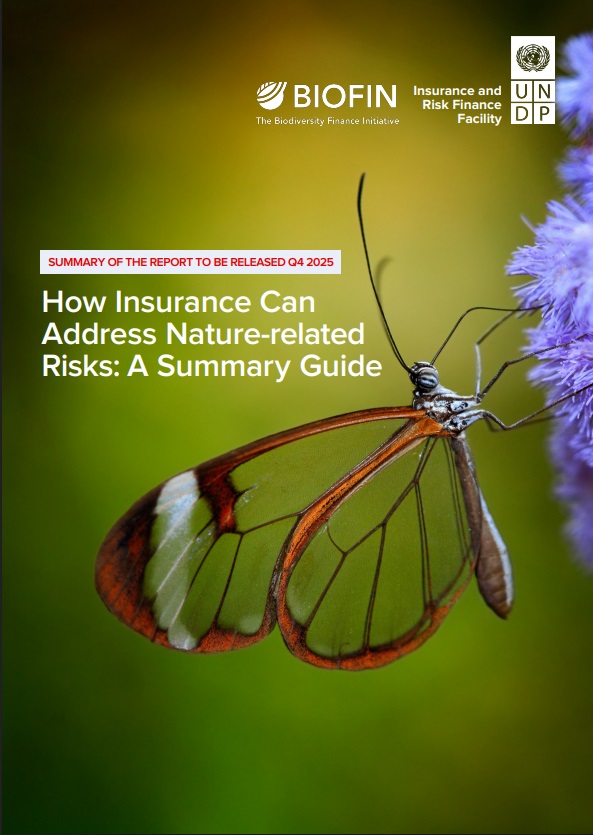
Insurance can play a crucial role in biodiversity conservation by providing financial protection against risks to natural assets, incentivizing sustainable practices, and securing key investments.
Publications

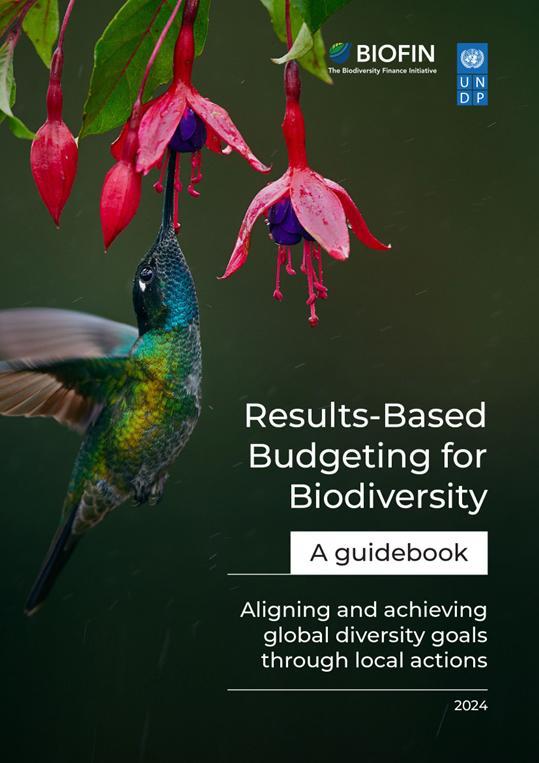
In 2022, countries adopted new global biodiversity targets under the Kunming-Montreal Global Biodiversity Framework (GBF), revisiting many goals that had gone unachieved or underachieved over the past decade.
Publications

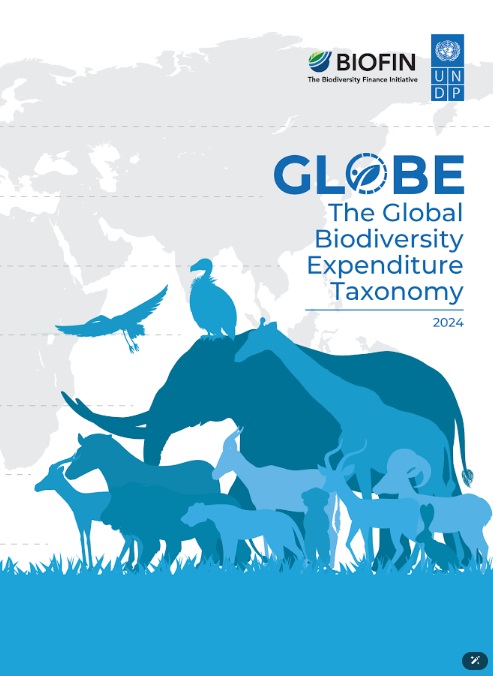
Global Biodiversity Expenditure (GLOBE) is a taxonomy that categorizes all potential public expenditures for biodiversity.

The taxonomy consists of two components:
Publications

The BIOFIN Workbook 2024 provides detailed guidance to design and implement national biodiversity finance plans.  These are not mere plans. They set out a process to engage a coalition of actors around the issue of biodiversity finance for an extended time.
Publications

At the Conference of the Parties to the Convention on Biological Diversity 15 (CBD COP 15) in 2022, countries agreed to review and update their National Biodiversity Strategy and Action Plans
Publications

Well-intentioned subsidies aimed at socio-economic goals can have unintended negative impacts on the environment, including biodiversity. The BIOFIN team has developed a step-by-step guide to repurpose such subsidies and improve their positive impacts on people and nature.
Publications

The Kunming-Montreal Global Biodiversity Framework (GBF) calls for a whole-of-society approach to halting and reversing nature loss.

Publications

The Little Book of Investing in Nature provides an essential overview of the area of biodiversity finance at a time when governments and international negotiators are urgently seeking pragmatic solutions for the twin crises of climate change and the loss of nature.

E-LEARNING

Learning for nature: our free biodiversity finance certified e-learning course

Take our free biodiversity finance certified e-learning course. Master the methodology, connect with experts, and gain certification.

Start E-Learning
Browse the Knowledge Platform
645 Results
Webinars

This free, seven-week MOOC will provide you with the tools to assess the policy, institutional, and economic context for biodiversity finance; conduct a financial needs assessment to achieve a country’s biodiversity goals; and develop a biodiversity finance plan that identifies the most suitable finance solutions. This course will teach you how to develop financially sound and politically feasible biodiversity finance plans. The course is aimed at conservation planning and biodiversity finance practitioners and policymakers, but is open to anyone.

REGISTER HERE

Multimedia
Case Studies

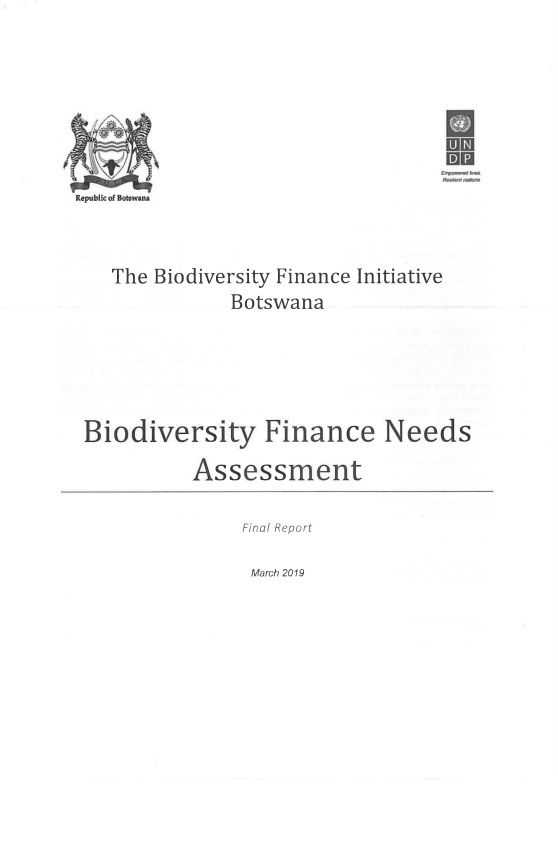
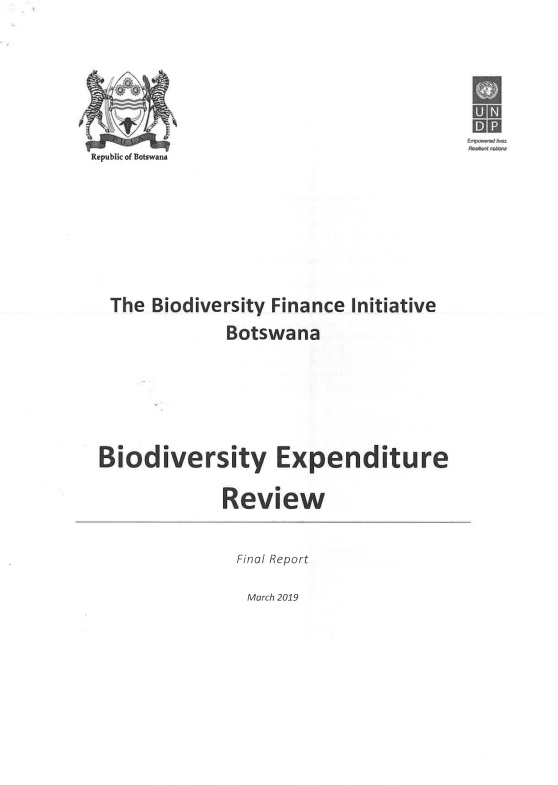
The PIR has been completed and is being readied for publishing. The process included a review of the policies, legal instruments and institutional set ups for biodiversity financing. Through the PIR, Botswana has been able to identify the priority sectors of focus for BIOFIN as well as recommendations of some of the finance solutions for consideration. Good policies and strategies are in place to guide the processes, however, weak institutional mechanisms to support implementation, fragmented responsibilities, and resource inadequacies, centralised decision making which also results in the resource burden on the side of government.

Publications

Executive Summary of the 2018 edition of the BIOFIN Workbook

Publications

Executive Summary of the 2018 edition of the BIOFIN Workbook

Publications

Executive Summary of the 2018 edition of the BIOFIN Workbook

Publications

Executive Summary of the 2018 edition of the BIOFIN Workbook

Publications

Executive Summary of the 2018 edition of the BIOFIN Workbook

Publications

According to studies conducted under the BIOFIN, the financial needs for the implementation of the Concept for conservation and sustainable use of the biodiversity of Kazakhstan are 285.9 billion KZT. The finance gap estimated in the framework of the study for biodiversity conservation in Kazakhstan is at least 157.7 billion KZT, or more than 50% of the total finance of biodiversity in the country. The dynamics of the state biodiversity financing are unstable and decreasing from year to year. A rough estimate of the amount of private investments is less than 2% of the total financing of biodiversity in Kazakhstan.

Publications

Based on detailed assessments done in consultation with technical experts, the annual average financial requirement for implementing the National Biodiversity Action Plan (NBAP) is estimated to be nearly USD 16.5 billion (2017-18 to 2021-22). Annual average gap in available public resources for implementing the NBAP is estimated to be nearly USD 6.5 billion for the period of 2017-18 to 2021-22. Based on the FNA and BER exercises, some of the priority areas for enhancing biodiversity finance include: Strengthening and Integration of In-Situ Conservation, Regulation of Invasive Alien Species Introduction and their Management, Development and Integration of Biodiversity Database, Valuation of Goods and Services provided by Biodiversity and Use of Economic Instruments and Decision-making processes & International Cooperation.

Multimedia

Building on the business case for biodiversity, Thailand aims to fill the financing gap for biodiversity by implementing the right scale and mix of financing solutions, enhancing traditional finance mechanisms and introducing innovative financing mechanisms. 

The Plan looks forward to delivering a prioritised set of biodiversity finance solutions – seizing this opportunity to address thematic areas of intervention by recommending new partnerships and finance mechanisms for investing in biodiversity. The prioritised biodiversity finance solutions in the Plan are complementary and offer a combination of system and site level sustainable financing, policy changes, and other incentive mechanisms. This can be summarised as follows:

1. Sustainable Tourism Finance Solution: Increasing sources of revenue for safeguarding biodiversity (coral reef rehabilitation) and environmental management (waste management) through the sufficient management of established financial mechanism (the establishment of biodiversity conservation fund)

2. Wildlife and Protected Areas Finance Solution: Deployment of conservation vehicle license plates to support wildlife conservation in Thailand (with pilot for tiger conservation at the Western Forest Complex)

3. Government Budget Finance Solution: Enhancing effectiveness and biodiversity impact of local budgets in Thailand

4. Private Sector Finance Solution: Mobilising the private sector and impact investment in support of biodiversity


BIOFIN Videos
SEE ALL