Knowledge Base

Knowledge Hub

Access BIOFIN's library of resources, including flagship publications, country reports, finance solution case studies, webinars, explainer videos, podcasts, and more.

Key Publications
Publications

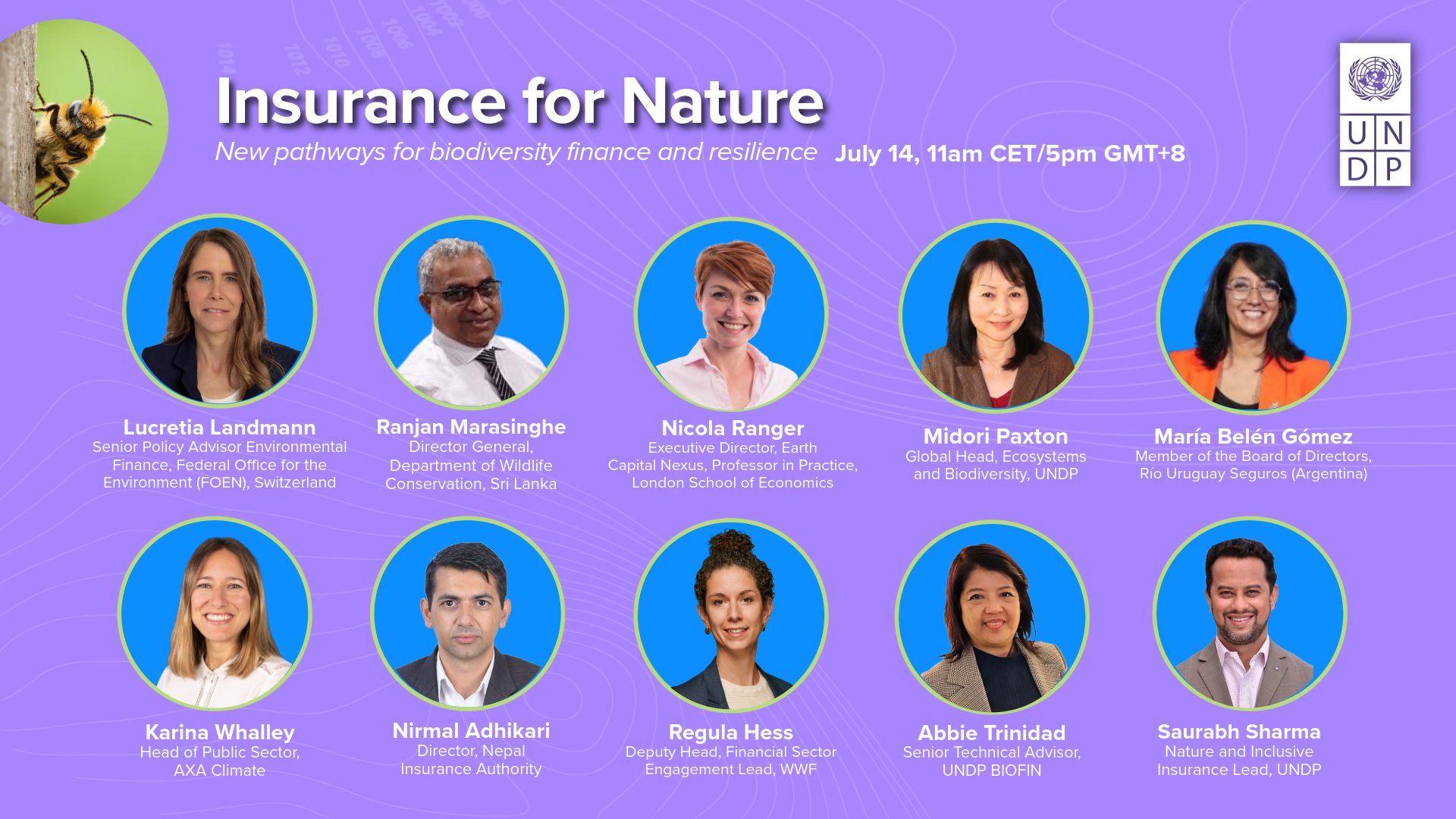
Insurance can play a crucial role in biodiversity conservation by providing financial protection against risks to natural assets, incentivizing sustainable practices, and securing key investments.
Publications

In 2022, countries adopted new global biodiversity targets under the Kunming-Montreal Global Biodiversity Framework (GBF), revisiting many goals that had gone unachieved or underachieved over the past decade.
Publications

Global Biodiversity Expenditure (GLOBE) is a taxonomy that categorizes all potential public expenditures for biodiversity.

The taxonomy consists of two components:
Publications

The BIOFIN Workbook 2024 provides detailed guidance to design and implement national biodiversity finance plans.  These are not mere plans. They set out a process to engage a coalition of actors around the issue of biodiversity finance for an extended time.
Publications

At the Conference of the Parties to the Convention on Biological Diversity 15 (CBD COP 15) in 2022, countries agreed to review and update their National Biodiversity Strategy and Action Plans
Publications

Well-intentioned subsidies aimed at socio-economic goals can have unintended negative impacts on the environment, including biodiversity. The BIOFIN team has developed a step-by-step guide to repurpose such subsidies and improve their positive impacts on people and nature.
Publications

The Kunming-Montreal Global Biodiversity Framework (GBF) calls for a whole-of-society approach to halting and reversing nature loss.

Publications

The Little Book of Investing in Nature provides an essential overview of the area of biodiversity finance at a time when governments and international negotiators are urgently seeking pragmatic solutions for the twin crises of climate change and the loss of nature.

E-LEARNING

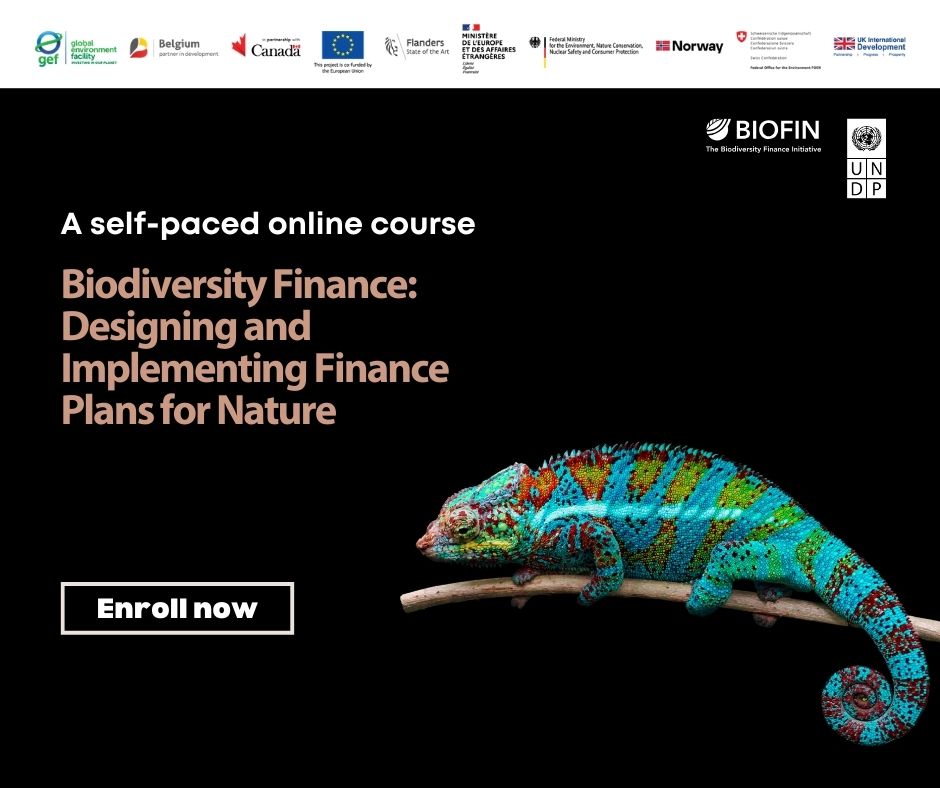
Learning for nature: our free biodiversity finance certified e-learning course

Take our free biodiversity finance certified e-learning course. Master the methodology, connect with experts, and gain certification.

Start E-Learning
Browse the Knowledge Platform

645 Results
Publications

A well-functioning nature is essential for sustainable development, which is based on the balance between economic growth, social inclusion and the protection of the environment. 80% of the human diet comes from animal and vegetal species, so the decline of ecosystems not only affects the life of individuals, but also the entire society. Besides, biodiversity is vital for the economy: something as subtle as pollination is conditional for producing medicines, bio-fuels, fibers and construction materials. Chile is not exempt from this fact: 17.4% of its GDP and over a half of its exportations directly depend on natural resources. 

The loss and decline of biodiversity is a global process which is also present in Chile. In this country, the negative impacts are related to: (i) changes in land use, (ii) the introduction and spread of invasive exotic species, (iii) the intensive development of primary production sectors, (iv) forest fires and, (v) climate change. This is enhanced by practices and policies of the private sector and also of the State. Additionally, the allocated budgets for biodiversity protection are comparatively low to those given for productive development, which have an impact on nature. The analysis of the central government spending on biodiversity shows its low incidence: 0.036% of GDP (2014). Since optimization and redistribution of the available resources are required, it is suggested to enhance biodiversity funding through public policies aimed at: the environmental institutions strengthening, the implementation of an economic model based on the sustainable use of natural resources, and the expansion of market instruments to ease the support of the private sector for biodiversity funding.

Publications

A well-functioning nature is essential for sustainable development, which is based on the balance between economic growth, social inclusion and the protection of the environment. 80% of the human diet comes from animal and vegetal species, so the decline of ecosystems not only affects the life of individuals, but also the entire society. Besides, biodiversity is vital for the economy: something as subtle as pollination is conditional for producing medicines, bio-fuels, fibers and construction materials. Chile is not exempt from this fact: 17.4% of its GDP and over a half of its exportations directly depend on natural resources. 

The loss and decline of biodiversity is a global process which is also present in Chile. In this country, the negative impacts are related to: (i) changes in land use, (ii) the introduction and spread of invasive exotic species, (iii) the intensive development of primary production sectors, (iv) forest fires and, (v) climate change. This is enhanced by practices and policies of the private sector and also of the State. Additionally, the allocated budgets for biodiversity protection are comparatively low to those given for productive development, which have an impact on nature. The analysis of the central government spending on biodiversity shows its low incidence: 0.036% of GDP (2014). Since optimization and redistribution of the available resources are required, it is suggested to enhance biodiversity funding through public policies aimed at: the environmental institutions strengthening, the implementation of an economic model based on the sustainable use of natural resources, and the expansion of market instruments to ease the support of the private sector for biodiversity funding.

Publications

A well-functioning nature is essential for sustainable development, which is based on the balance between economic growth, social inclusion and the protection of the environment. 80% of the human diet comes from animal and vegetal species, so the decline of ecosystems not only affects the life of individuals, but also the entire society. Besides, biodiversity is vital for the economy: something as subtle as pollination is conditional for producing medicines, bio-fuels, fibers and construction materials. Chile is not exempt from this fact: 17.4% of its GDP and over a half of its exportations directly depend on natural resources. 

The loss and decline of biodiversity is a global process which is also present in Chile. In this country, the negative impacts are related to: (i) changes in land use, (ii) the introduction and spread of invasive exotic species, (iii) the intensive development of primary production sectors, (iv) forest fires and, (v) climate change. This is enhanced by practices and policies of the private sector and also of the State. Additionally, the allocated budgets for biodiversity protection are comparatively low to those given for productive development, which have an impact on nature. The analysis of the central government spending on biodiversity shows its low incidence: 0.036% of GDP (2014). Since optimization and redistribution of the available resources are required, it is suggested to enhance biodiversity funding through public policies aimed at: the environmental institutions strengthening, the implementation of an economic model based on the sustainable use of natural resources, and the expansion of market instruments to ease the support of the private sector for biodiversity funding.

Publications

Linkages between various actions identified by National Biodiversity Strategy and Action Plan (NBSAP) and other policy documents in environment sector as well as other economic sectors, which might have impact on biodiversity. 

Publications

The Policy and Institutional Review (PIR) was undertaken as part of the Uganda’s development of a Biodiversity Finance Plan supported by the Biodiversity Initiative (BIOFIN) project. The BIOFIN project is a global partnership seeking to address the biodiversity finance challenge in a comprehensive and systematic manner. It was launched by the United Nations Development Programme (UNDP) in October 2012 with financial support from the European Union (EU), Government of Germany, Switzerland and Norway through UNDP. The aim of the initiative is to enable governments to construct a sound business case for increasing investment in the sustainable and equitable management, protection and restoration of biodiversity and ecosystems. BIOFIN was implemented by the National Environment Management Authority (NEMA) on behalf of the Government of Uganda (GOU)

Publications

This publication presents Zambia’s Policy and Institutional Review (PIR) of biodiversity financing, examining the policy, legal, and institutional frameworks that underpin investments in biodiversity conservation. While Zambia is richly endowed with biodiversity that supports livelihoods, ecosystem services, and socio-economic development, growing pressures on forests, wildlife, fisheries, and other natural resources highlight significant financing gaps. The review assesses past and current biodiversity expenditures, identifies resource constraints, and outlines opportunities to strengthen financing mechanisms. It also proposes sector-specific finance solutions across agriculture, environment, forestry, fisheries, water, and wildlife, aligned with the National Biodiversity Strategy and Action Plan (2015–2025) and the Seventh National Development Plan, to support more effective and sustainable biodiversity conservation.

Publications

Mongolian territory spans across the Siberian taiga, Euroasian steppes and the desserts of Central Asia. Due to the transitional ecosystems and harsh continental climatic conditions, the biodiversity in Mongolia is quite delicate, thus natural rehabilitation is very slow and sometimes the negative impacts can be almost irreversible. In addition, the nomadic civilization and pastoral farming has been a unique part of Mongolian biodiversity.

BIOFIN Videos
SEE ALL