Knowledge Base

Knowledge Hub

Access BIOFIN's library of resources, including flagship publications, country reports, finance solution case studies, webinars, explainer videos, podcasts, and more.

Key Publications

Publications

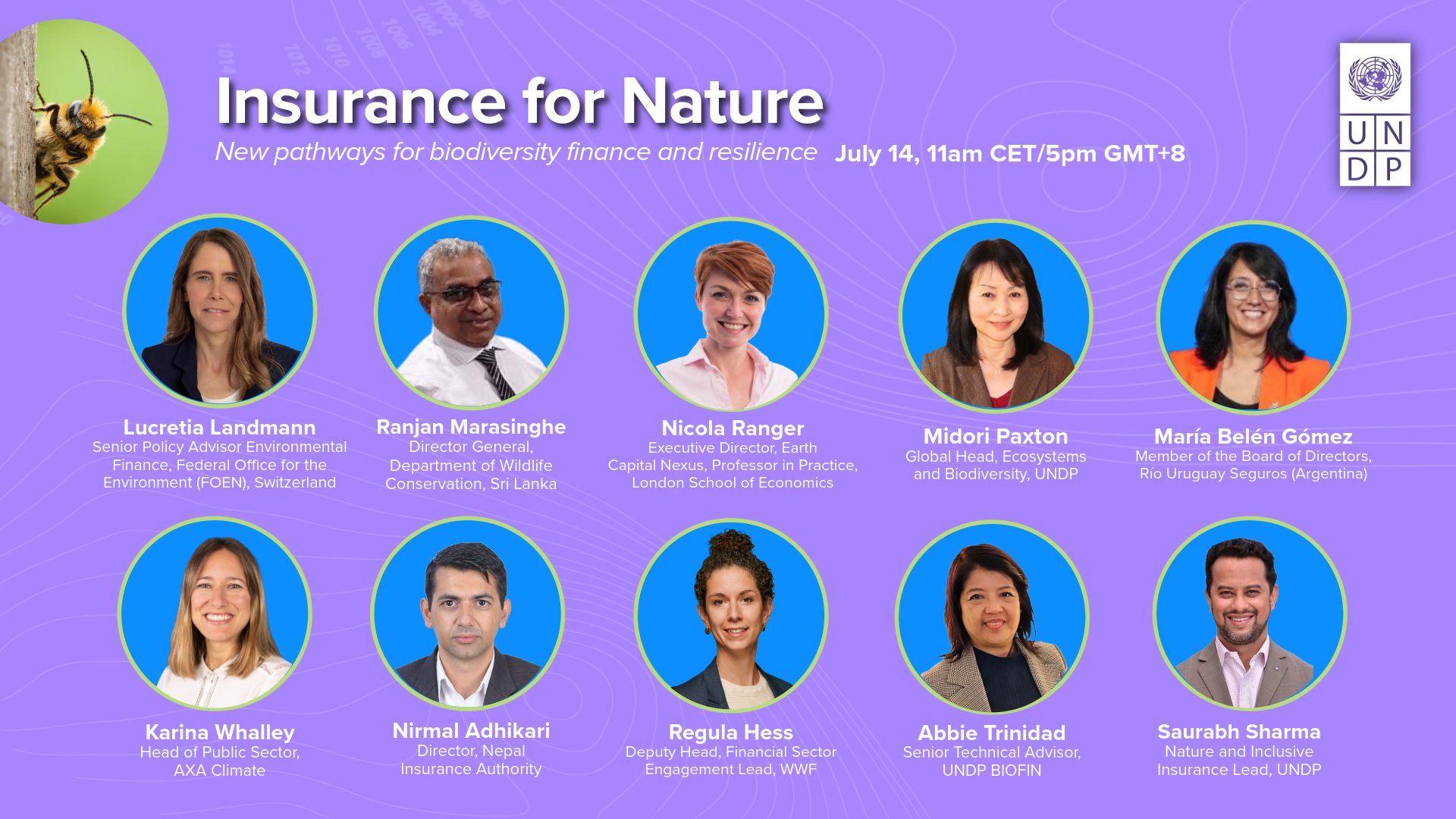
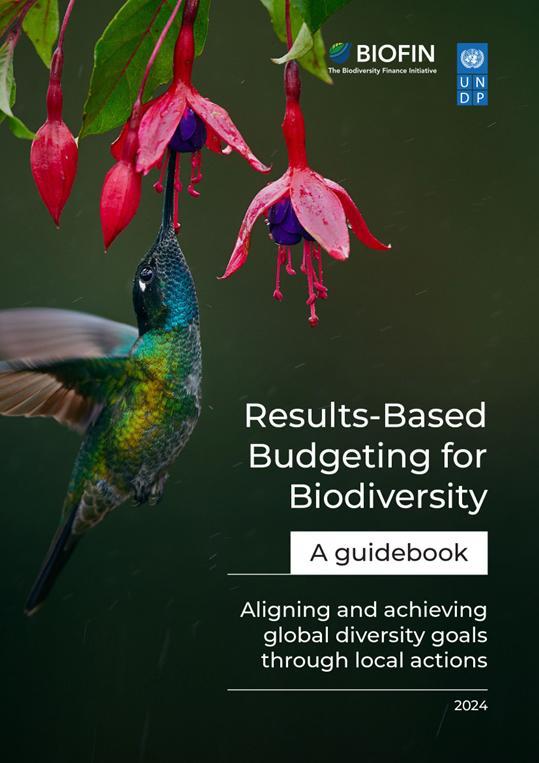
Insurance can play a crucial role in biodiversity conservation by providing financial protection against risks to natural assets, incentivizing sustainable practices, and securing key investments.
Publications

In 2022, countries adopted new global biodiversity targets under the Kunming-Montreal Global Biodiversity Framework (GBF), revisiting many goals that had gone unachieved or underachieved over the past decade.
Publications

Global Biodiversity Expenditure (GLOBE) is a taxonomy that categorizes all potential public expenditures for biodiversity.

The taxonomy consists of two components:
Publications

The BIOFIN Workbook 2024 provides detailed guidance to design and implement national biodiversity finance plans.  These are not mere plans. They set out a process to engage a coalition of actors around the issue of biodiversity finance for an extended time.
Publications

At the Conference of the Parties to the Convention on Biological Diversity 15 (CBD COP 15) in 2022, countries agreed to review and update their National Biodiversity Strategy and Action Plans
Publications

Well-intentioned subsidies aimed at socio-economic goals can have unintended negative impacts on the environment, including biodiversity. The BIOFIN team has developed a step-by-step guide to repurpose such subsidies and improve their positive impacts on people and nature.
Publications

The Kunming-Montreal Global Biodiversity Framework (GBF) calls for a whole-of-society approach to halting and reversing nature loss.

Publications

The Little Book of Investing in Nature provides an essential overview of the area of biodiversity finance at a time when governments and international negotiators are urgently seeking pragmatic solutions for the twin crises of climate change and the loss of nature.

E-LEARNING

Learning for nature: our free biodiversity finance certified e-learning course

Take our free biodiversity finance certified e-learning course. Master the methodology, connect with experts, and gain certification.

Start E-Learning
Browse the Knowledge Platform
645 Results
Publications

The BIOFIN Workbook 2024 provides detailed guidance to design and implement national biodiversity finance plans.  These are not mere plans. They set out a process to engage a coalition of actors around the issue of biodiversity finance for an extended time. This is anchored in the finance sector including Ministries of Finance, Central Banks, regulators, and development banks. The capacity development of this core group of actors in every country is a centerpiece of the process.    

Since BIOFIN's inception in 2012, national biodiversity finance plans (BFPs) have matured into a globally recognized vehicle to mobilize and realign finance flows for nature. Based on lessons learned in the first 41 countries to undertake the BIOFIN methodology, BIOFIN donors and the Global Environmental Facility (GEF) pledged support to design and implement BFPs in 132 participating countries under the ambitious 2030 goals of the GBF.   

The first cohort of BIOFIN countries implementing their biodiversity finance plans achieved considerable results. This includes a US$ 86 million budget increase for protected areas in the Philippines and US$ 70 million in Kazakhstan, US$ 108 million green credits in Ecuador, allocations of US$ 120 million through Ecological Fiscal Transfers in Malaysia, and the issuance of the first-ever green bond in Zambia valued at US$ 200 million. Botswana increased the revenue from their protected areas by US$ 3.6 million per year, Mongolian local governments realized a revenue increase of over US$ 10 million per year and Seychelles created the first-ever biodiversity finance unit to institutionalize the BIOFIN Process.  

Download

Podcast

We are pleased to present a video podcast featuring Ana Orozco, BIOFIN Environmental Finance Analyst for the LAC Region, and Alonso Martinez, BIOFIN Coordinator in Mexico. In this episode, they discuss integrating nature into Mexico's financial system and the crucial role it plays in closing the biodiversity finance gap. With nature's rapid decline, protecting biodiversity is more urgent than ever. Discover how BIOFIN is working in 132 countries to mobilize public and private sector resources to support the future of our planet. 

Publications

El Plan de Soluciones de Financiamiento para la Biodiversidad en Guanajuato (PSF Guanajuato) presenta los resultados de la colaboración entre el gobierno de Guanajuato y la Iniciativa de Finanzas para la Biodiversidad (BIOFIN) del Programa de las Naciones Unidas para el Desarrollo (PNUD). 

El PSF de Guanajuato presenta una estrategia integral para movilizar recursos financieros destinados a la conservación de la biodiversidad en el estado. A través de un análisis exhaustivo de políticas públicas y mecanismos de financiamiento, el PSF identifica soluciones viables para reducir la brecha de financiamiento en biodiversidad y promover la sustentabilidad ambiental. El documento incluye propuestas para la integración de la biodiversidad en sectores estratégicos, el fortalecimiento de instrumentos financieros, y la participación del sector privado e internacional en proyectos de conservación.

Este plan busca no solo mejorar el bienestar ambiental del estado, sino también contribuir al cumplimiento de los Objetivos de Desarrollo Sostenible (ODS) y enfrentar los retos del cambio climático.

Publications

El Plan de Soluciones de Financiamiento para la Biodiversidad en Guanajuato (PSF Guanajuato) presenta los resultados de la colaboración entre el gobierno de Guanajuato y la Iniciativa de Finanzas para la Biodiversidad (BIOFIN) del Programa de las Naciones Unidas para el Desarrollo (PNUD). 

El PSF de Guanajuato presenta una estrategia integral para movilizar recursos financieros destinados a la conservación de la biodiversidad en el estado. A través de un análisis exhaustivo de políticas públicas y mecanismos de financiamiento, el PSF identifica soluciones viables para reducir la brecha de financiamiento en biodiversidad y promover la sustentabilidad ambiental. El documento incluye propuestas para la integración de la biodiversidad en sectores estratégicos, el fortalecimiento de instrumentos financieros, y la participación del sector privado e internacional en proyectos de conservación.

Este plan busca no solo mejorar el bienestar ambiental del estado, sino también contribuir al cumplimiento de los Objetivos de Desarrollo Sostenible (ODS) y enfrentar los retos del cambio climático.

Publications

South Africa is home to some of the world's most diverse ecosystems, boasting a rich natural heritage that is crucial for both global biodiversity and the nation's socio-economic well-being. However, the country is facing a growing biodiversity funding gap that threatens its conservation efforts. The gap, initially highlighted by BIOFIN in 2018, has widened significantly due to escalating fiscal constraints. 

In this context, South Africa’s successful biodiversity stewardship model, which has played a pivotal role in conserving vital ecosystems, is now under severe financial pressure. There is, therefore, a need to rethink the financing model, by incorporating innovative financing mechanisms and increased private sector involvement.

Podcast

Ahead of COP16 in Colombia, BIOFIN’s Senior Technical Advisor for Latin America and the Caribbean, Marina Bellot interviewed Juan Camilo Pinto, special advisor to Colombia's Minister of Environment and Sustainable Development on the preparations to host COP16.

In this podcast, Juan Camilo shares how Colombia is integrating innovative financial mechanisms into its biodiversity efforts, with a strong focus on combining climate and biodiversity goals.

He also highlights the crucial role of private sector engagement and the importance of structuring funds effectively to close the global finance gap for nature.

BIOFIN has been instrumental in supporting Colombia by analyzing harmful subsidies, updating national biodiversity plans, and aligning financial flows with private sector interests. 

Publications

El Análisis del Gasto en Biodiversidad en México 2022 ofrece una evaluación detallada del gasto público federal destinado a la conservación de la biodiversidad en el país, destacando la importancia de identificar y cuantificar los recursos asignados para mejorar la gestión ambiental y proteger los ecosistemas. El documento analiza la metodología aplicada, los resultados obtenidos y las tendencias de financiamiento desde 2003 hasta 2022, brindando un panorama integral sobre la movilización de recursos a nivel nacional. Además, propone recomendaciones para mejorar la planificación y gestión financiera en materia de biodiversidad y destaca la necesidad de alinear estos esfuerzos con estrategias globales y nacionales, como la Estrategia Nacional sobre Biodiversidad y los Objetivos de Desarrollo Sostenible.

Publications

The Policy and Institutional Review (PIR) and Biodiversity Expenditure Review (BER) in Kazakhstan provide a national diagnostic of how policies, institutions, and financial flows interact with biodiversity. They highlight gaps, strengths, and opportunities for reform, ensuring that biodiversity is better integrated into economic planning and decision-making. The findings support Kazakhstan’s efforts to meet the Global Biodiversity Framework and inform the alignment of financial systems with nature-positive development.

Publications

The Policy and Institutional Review (PIR) and Biodiversity Expenditure Review (BER) in Kazakhstan provide a national diagnostic of how policies, institutions, and financial flows interact with biodiversity. They highlight gaps, strengths, and opportunities for reform, ensuring that biodiversity is better integrated into economic planning and decision-making. The findings support Kazakhstan’s efforts to meet the Global Biodiversity Framework and inform the alignment of financial systems with nature-positive development.

Publications

El Sector de Bienes y Servicios Ambientales (SBySA) es una iniciativa clave para medir y fortalecer la participación del sector privado en la conservación del medio ambiente en México. Este sector incluye la producción de bienes y servicios diseñados para la protección ambiental y la gestión sostenible de los recursos naturales. La cuenta del SBySA, desarrollada por el Instituto Nacional de Estadística y Geografía (INEGI) en colaboración con la Iniciativa Finanzas para la Biodiversidad (BIOFIN) del Programa de las Naciones Unidas para el Desarrollo (PNUD), se enfoca en cuantificar estas actividades y su impacto en la biodiversidad. Para obtener una descripción detallada del SBySA, su metodología, su desarrollo y su impacto en México, te invitamos a consultar el siguiente documento.

Podcast

Dive into the intersection of environmental sustainability and economic development in China with two esteemed Chinese academics and BIOFIN Coordinator in China, who joined the EAPAC 10th Regional Dialogue on Biodiversity Finance in Georgia on 11-13 June. Our distinguished guests have shared their insights on the academic, policy and practical dimensions of green finance transformation in China. Discover how nature-aligned investments can be mainstreamed and explore the major trends in biodiversity finance, including financing instruments that can mobilize capital for nature. Learn about the role of BIOFIN China in fostering an environment conducive to biodiversity-positive investments.

Guests:

• Ms. Wang Yao, Director General, International Institute of Green Finance, and BIOFIN China Senior Technical Advisor

• Mr. Li Zhiqing, Associate Professor and Executive Director of Fudan Institute of Green Finance

• Fei Leng, BIOFIN National Coordinator

• Eva Bortolotti, Programme Specialist, Nature Finance, UNDP Nature Hub


BIOFIN Videos
SEE ALL