


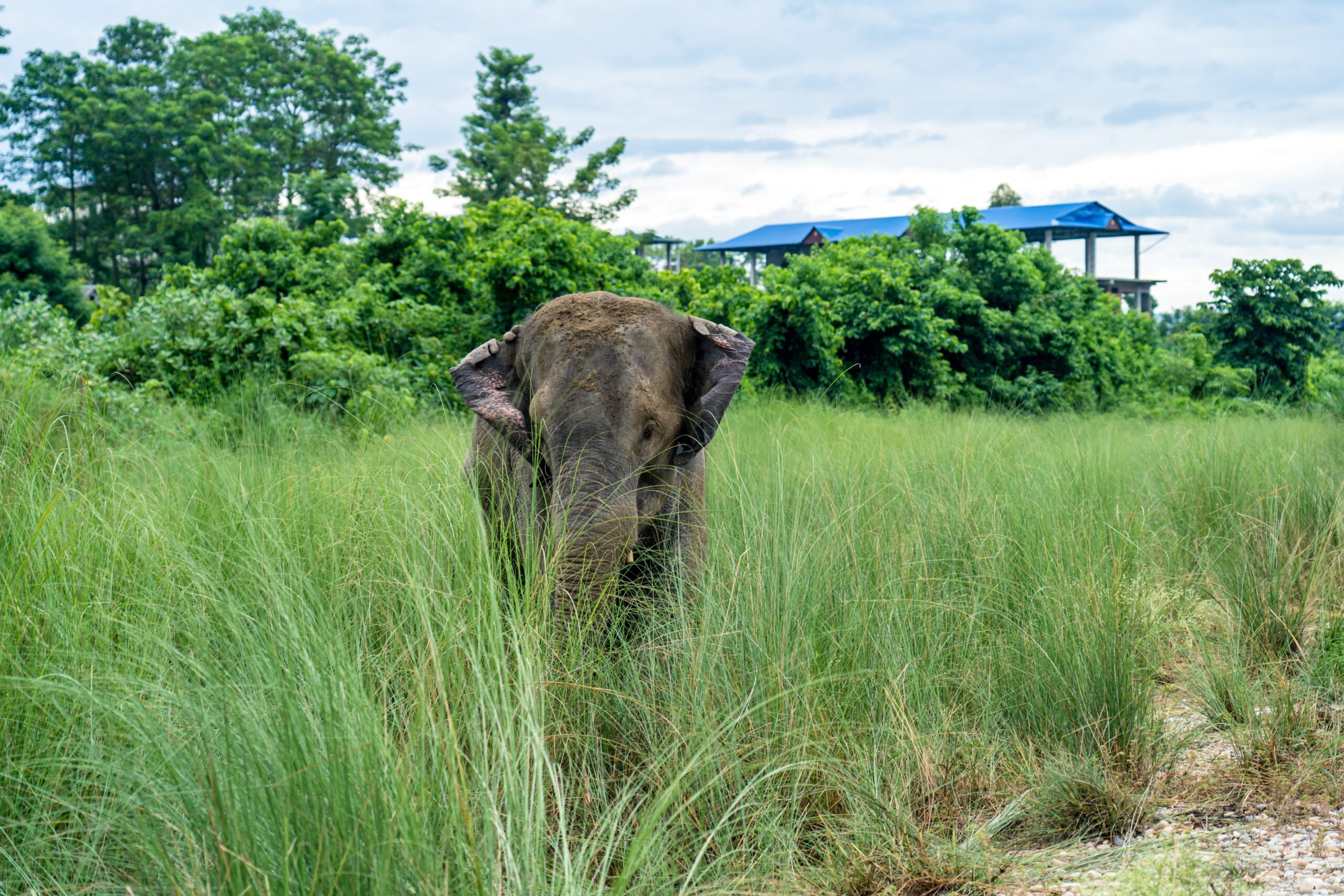
For a farmer living near a forest, the sound of an elephant outside the house, the roar of a tiger nearby or the sight of a wild boar entering a field can signal more than a frightening encounter. It can mean a season’s harvest lost overnight, livestock killed, a damaged home or, in the worst cases, a life changed forever.
For communities across Nepal, living alongside wildlife carries significant financial and personal risks. Between 2020 and 2025, more than 64,000 human–wildlife conflict incidents were reported—an average of more than 10,700 a year. During this period, 252 people lost their lives and 963 were injured.
A 2025 field survey conducted by UNDP BIOFIN in selected pilot areas also found that 82.5 percent of surveyed households had experienced wildlife-related crop losses. A further 8.8 percent reported livestock losses and 5.5 percent reported damage to property.
Behind these figures are families whose livelihoods depend on crops, livestock and assets accumulated over many years. Nepal is now preparing to pilot a new approach to help communities manage these risks: insurance for wildlife-related losses.
A new financial safety net
Nepal has made internationally recognized progress in wildlife conservation. However, conservation gains also bring a responsibility to address the costs borne by people who share their landscapes with wildlife.
The new insurance product is intended to provide households with financial protection against several forms of wildlife-related loss. It covers crop damage, livestock mortality, human death, injury and disability, as well as damage to houses and other physical structures caused by 18 listed wildlife species.
For an annual premium of NPR 1,500 plus VAT, a policyholder can receive coverage of up to NPR 2.65 million, depending on the type of loss. The policy provides year-round protection and permits multiple claims during the policy period, subject to the relevant limits and conditions.
The claims process has also been designed with accessibility in mind. Local governments will lead loss assessments, documentation requirements have been kept limited, and approved claims are expected to be settled within seven days after all required documents have been received.
“Communities living alongside wildlife bear disproportionate costs,” said Rajendra Dhungana, Under Secretary at the Ministry of Agriculture, Forests and Environment. “Alongside prevention, protection and response, we need a new financial safety net, one that helps communities manage the risks and losses they face.”
Insurance will not prevent wildlife incidents. Nor is it intended to replace conflict-prevention measures, government relief or community-based conservation efforts. Instead, it provides an additional mechanism through which some of the financial consequences of unavoidable losses can be transferred away from individual households.
“Insurance does not prevent wildlife incidents,” explained Nirmal Adhikari, Director at the Nepal Insurance Authority. “It reduces the financial consequences when a covered loss occurs.”
A biodiversity finance solution shaped by local experience
UNDP BIOFIN identified wildlife-risk insurance as one of Nepal’s priority biodiversity finance solutions. By pooling risk across many policyholders, insurance can enable households to pay a relatively small premium in exchange for protection against losses that might otherwise have devastating financial consequences.
The product was developed by the Nepal Insurance Authority in collaboration with UNDP BIOFIN following nine months of consultations, risk assessments and field-based learning.
The BIOFIN team visited communities experiencing different forms of human–wildlife conflict, including Suklaphanta and Kanchanpur in Sudurpaschim Province; Bardiya, where interactions between people and tigers remain a concern; and Bahundangi in Jhapa, which has long experienced conflict involving elephants.
These consultations demonstrated that a single-species or location-specific approach would not be sufficient. Wildlife-related losses take different forms across the country and do not stop at the boundaries of protected areas. This contributed to the development of a bundled product covering several categories of loss and multiple wildlife species.
Insurance is therefore being positioned as part of a broader approach to coexistence, one that combines financial protection with prevention, early warning, community-based protection, rapid response and continued government support.
“Insurance is one practical solution, but it is not the only answer,” said Bijendra Basnyat, Project Coordinator of UNDP BIOFIN Nepal. “To live in harmony with nature, we need awareness, sound policy, trust, transparency and joint accountability, and we need to work together for the insurance to succeed.”
Moving from policy to implementation
On 31 August 2026, the Human–Wildlife Coexistence Insurance National Dissemination Workshop brought together 105 participants to examine how the new product can be put into practice.
Participants included representatives of government agencies, local authorities, conservation organizations, civil society, academia, farmers’ organizations, insurance companies, the private sector and the media, as well as people from areas affected by human–wildlife conflict.
The workshop provided an opportunity to review the product, discuss the risks it is intended to address and consider how it can be strengthened during implementation.
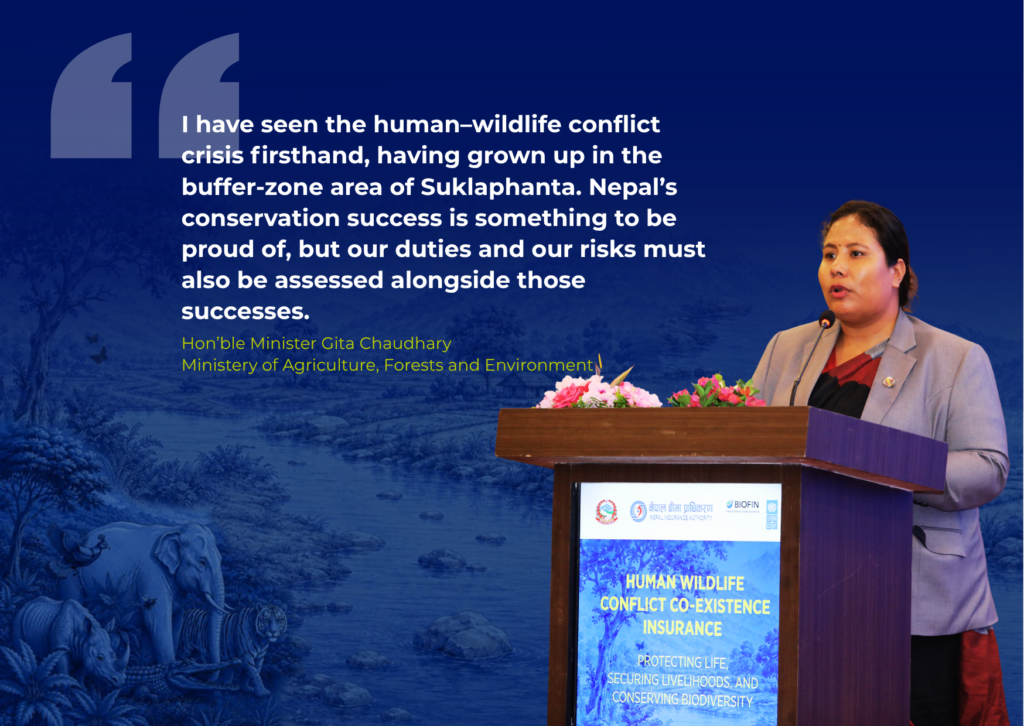
Minister for Agriculture, Forests and Environment Gita Chaudhary, who grew up in the buffer-zone area of Suklaphanta, reflected on her own experience of human–wildlife conflict and the need to consider the risks communities assume as part of the country’s conservation journey.
“Our duties and our risks should also be assessed along with all the successes of our conservation journey,” she said.
The next phase will pilot the insurance product in selected local areas between 2026 and 2028. The pilot will generate evidence, collect feedback from communities and institutions, and inform adjustments before the product is considered for wider application.
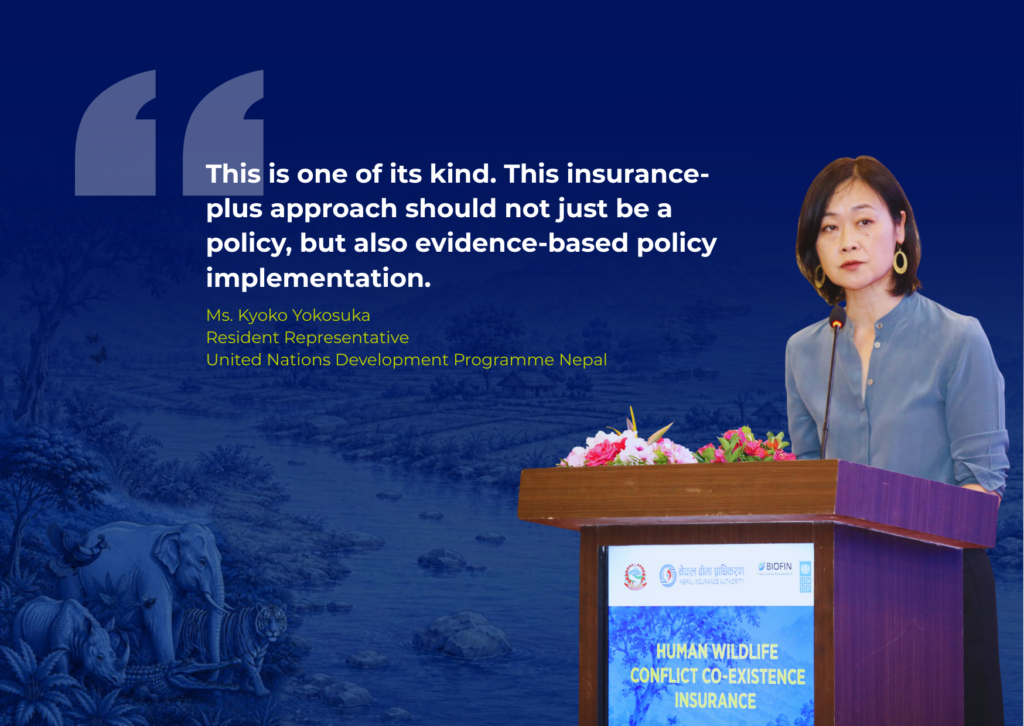
For UNDP Resident Representative Kyoko Yokosuka, the emphasis must now be placed on translating the policy into an effective, evidence-based approach.
“This insurance-plus approach should not just be a policy, but also evidence-based policy implementation,” she said.
Ensuring that protection reaches those most at risk
The pilot will need to answer important questions about accessibility, inclusion and financial sustainability.
How can landless farmers and people without formal ownership documents obtain coverage? How should crop losses be valued at different stages of production? How should compensation account for the age and value of livestock? Can local governments conduct timely and consistent assessments? And how can the insurance remain affordable for households while also being financially viable for insurers?
These questions are not weaknesses in the approach. They are precisely the issues that the pilot is intended to examine.
During the national workshop, participants emphasized that the product’s success will depend on its ability to reach those most vulnerable to wildlife-related losses.
“Insurance can only strengthen resilience if it reaches the people who are most vulnerable,” said Sita Aryal, Director at the Federation of Community Forestry Users Nepal. “We need to think carefully about landless farmers, community groups and how losses are valued.”
The implementation phase will also require clear roles for communities, insurers, local governments and provincial and federal institutions. Insurance should not be understood as government withdrawing from its responsibilities. It is a way of sharing risk and strengthening the protection currently available to communities.
“The insurance policy is about sharing risk and ownership,” said Joint Secretary Dipak Gyawali. “As we implement it, we will learn, improve and revise it so that people receive better protection than they do today.”
Building a fairer model of coexistence
The new insurance product will not eliminate human–wildlife conflict. Its success will depend on public awareness, accessible enrolment, transparent loss assessments, timely claim settlements and sustained cooperation among communities, insurers, governments and conservation partners.
It must also operate alongside continued investment in prevention, early warning, habitat management, community-based protection and rapid response.
However, the product offers something important: a new mechanism to ensure the financial burden of living alongside wildlife does not fall entirely on individual families.
The pilot will provide Nepal with an opportunity to test the approach, understand what works, and refine the product based on evidence and community experience.
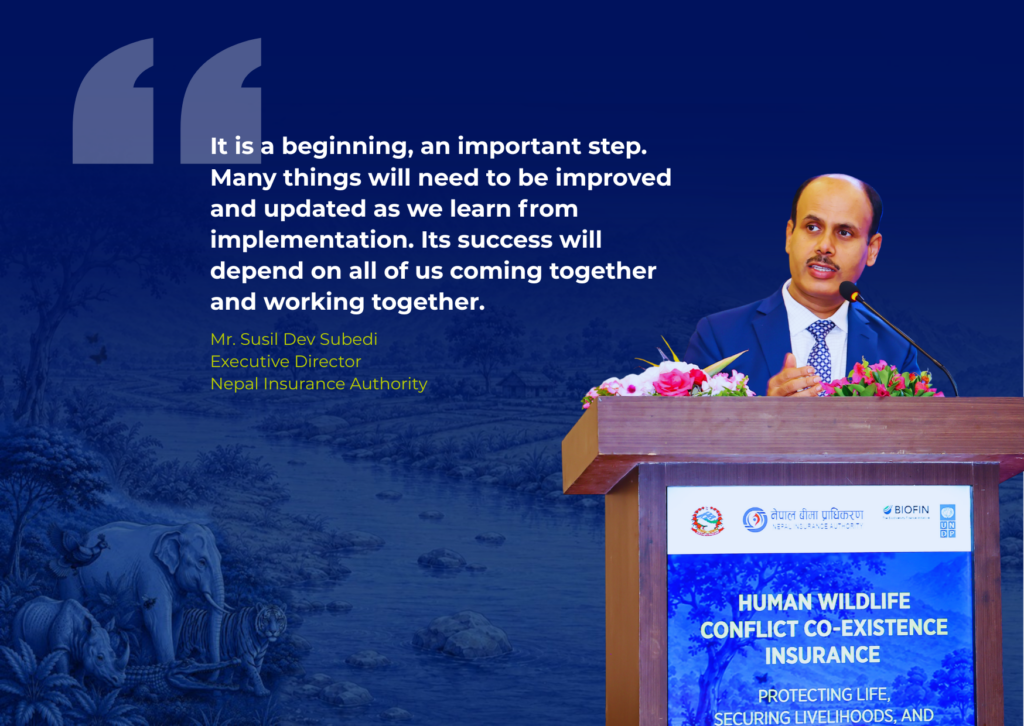
“It is a beginning—an important step,” said Nepal Insurance Authority Executive Director Susil Dev Subedi. “Many things will need to be improved and updated as we learn from implementation. Its success will depend on all of us coming together and working together.”
The journey from conflict to coexistence will not be achieved through insurance alone. By sharing risk, strengthening household resilience, and learning from implementation, Nepal can take another important step toward ensuring that conservation and community well-being advance together.