Knowledge Base

KNOWLEDGE HUB

Knowledge Hub

Access BIOFIN's library of resources, including flagship publications, country reports, finance solution case studies, webinars, explainer videos, podcasts, and more.

Key Publications

Publications

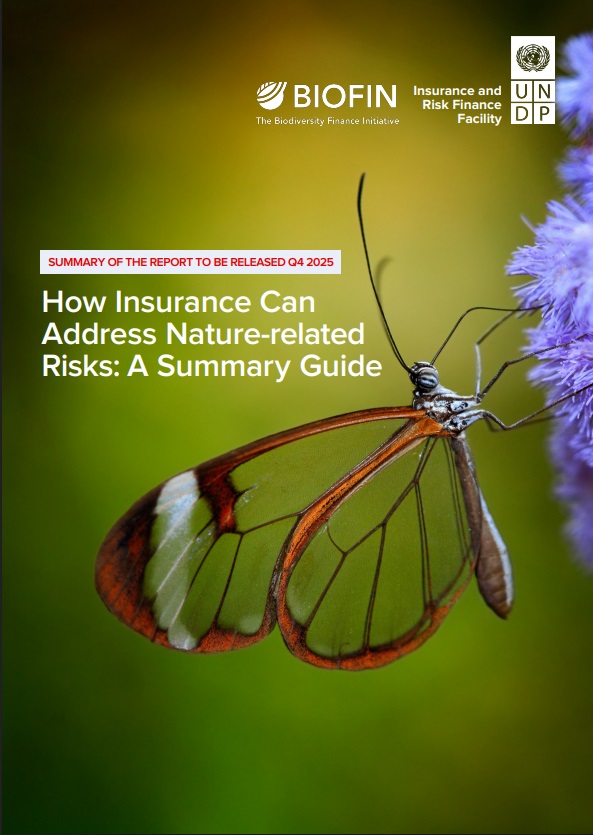
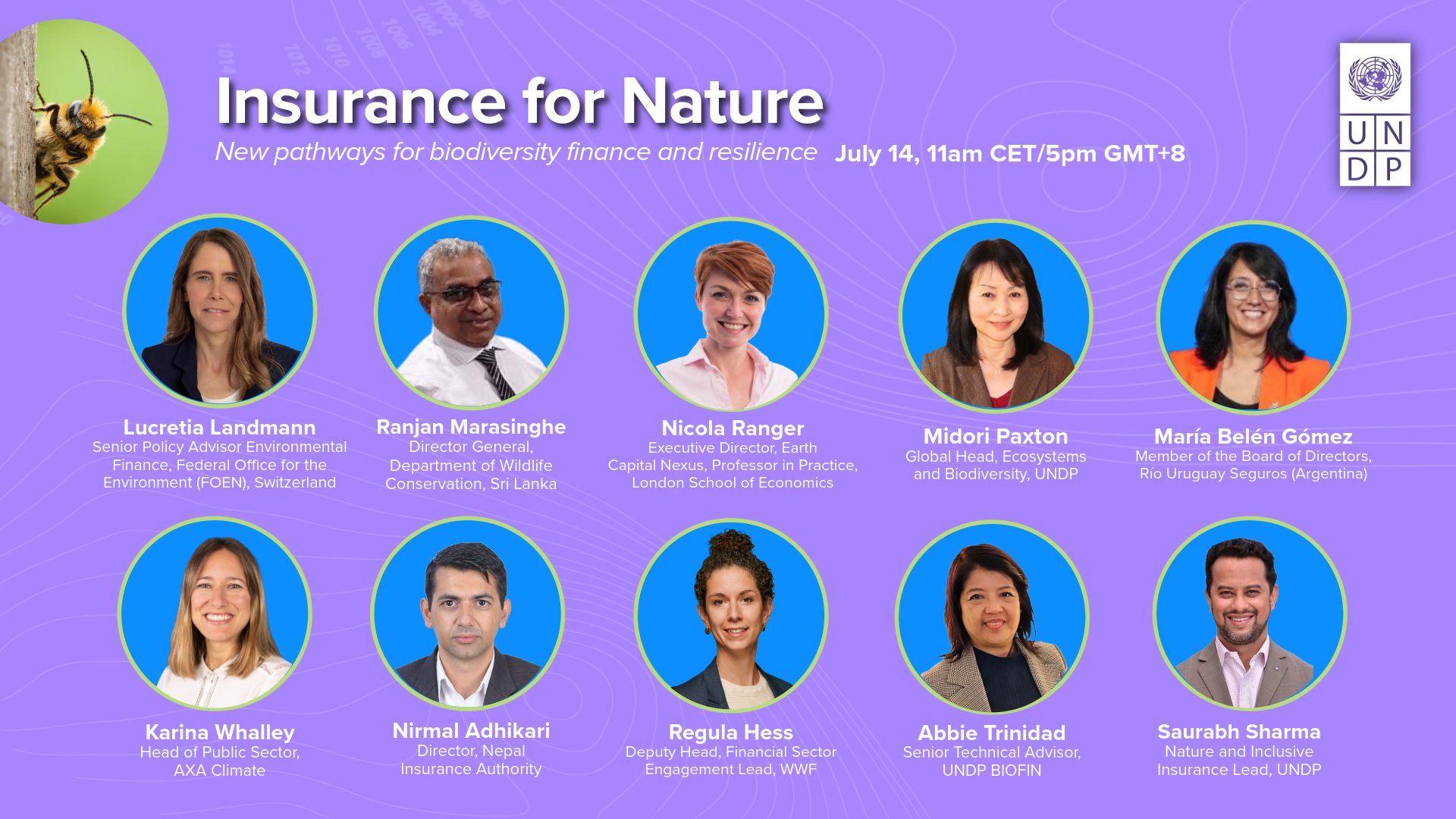
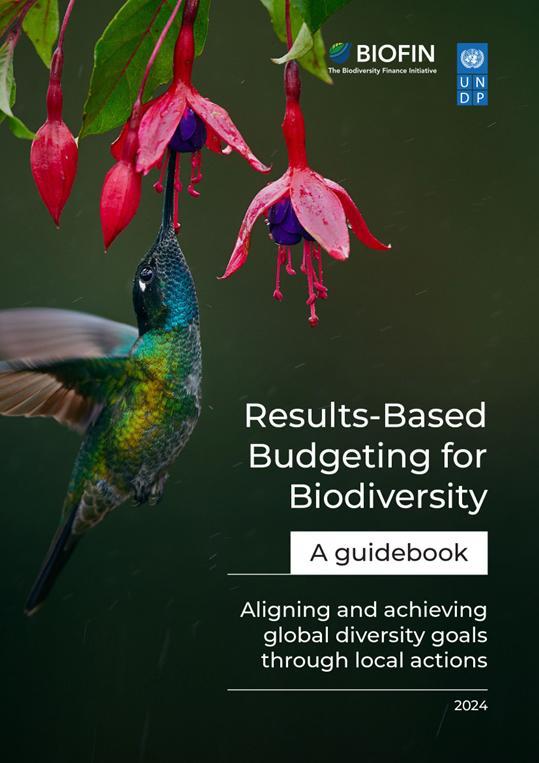
Insurance can play a crucial role in biodiversity conservation by providing financial protection against risks to natural assets, incentivizing sustainable practices, and securing key investments.
Publications

In 2022, countries adopted new global biodiversity targets under the Kunming-Montreal Global Biodiversity Framework (GBF), revisiting many goals that had gone unachieved or underachieved over the past decade.
Publications

Global Biodiversity Expenditure (GLOBE) is a taxonomy that categorizes all potential public expenditures for biodiversity.

The taxonomy consists of two components:
Publications

The BIOFIN Workbook 2024 provides detailed guidance to design and implement national biodiversity finance plans.  These are not mere plans. They set out a process to engage a coalition of actors around the issue of biodiversity finance for an extended time.
Publications

At the Conference of the Parties to the Convention on Biological Diversity 15 (CBD COP 15) in 2022, countries agreed to review and update their National Biodiversity Strategy and Action Plans
Publications

Well-intentioned subsidies aimed at socio-economic goals can have unintended negative impacts on the environment, including biodiversity. The BIOFIN team has developed a step-by-step guide to repurpose such subsidies and improve their positive impacts on people and nature.
Publications

The Kunming-Montreal Global Biodiversity Framework (GBF) calls for a whole-of-society approach to halting and reversing nature loss.

Publications


The Little Book of Investing in Nature provides an essential overview of the area of biodiversity finance at a time when governments and international negotiators are urgently seeking pragmatic solutions for the twin crises of climate change and the loss of nature.

E-LEARNING

Learning for nature: our free biodiversity finance certified e-learning course

Take our free biodiversity finance certified e-learning course. Master the methodology, connect with experts, and gain certification.

Start E-Learning
Browse the Knowledge Platform
10 Results
Publications

In the COP15, countries agreed to a Global Biodiversity Framework which sets targets to protect 30% of the earth’s land, inland waters, oceans and coastal areas by 2030 with emphasis on areas important for biodiversity and ecosystem services. Expanding restricted spaces for conservation may present transition risks to mining, agriculture and tourism sectors if applied in the Philippines.  The Philippines has sound strategies and comprehensive environmental laws and policies, but some penalties need updating.  Taxes, subsidies, fines, and penalties if set high enough, are effective mechanisms to discourage pollutive activities and promote green practices. Policies to attract green investments using incentives are found in the Green Jobs Act and AFRD or the Agriculture, Fisheries and Rural Development Financing Enhancement Act. These recent laws refer to “green” activities, but the term will need further definition.

Biodiversity financing requires significant investments, but public budgets are inadequate. The BIOFIN public and private biodiversity expenditure study shows scenarios where better alignment of public budgets can augment spending for biodiversity in the ENR sectors. Private finance will be needed to augment financing for “green” activities with nature-positive outcomes and climate change adaptation. The Philippines recently published a Sustainable Finance Road map which outlines plans to raise finance through a mix of tools, including better disclosures and the adoption of a green taxonomy. The Philippine Financial System holds substantial assets where a large part is held by banks. The larger banks lend more to the capital-intensive sectors, whereas the smaller banks lend to agriculture and retail consumers, mostly MSMEs. Regardless of size, bank portfolios are exposed to climate and nature risks.

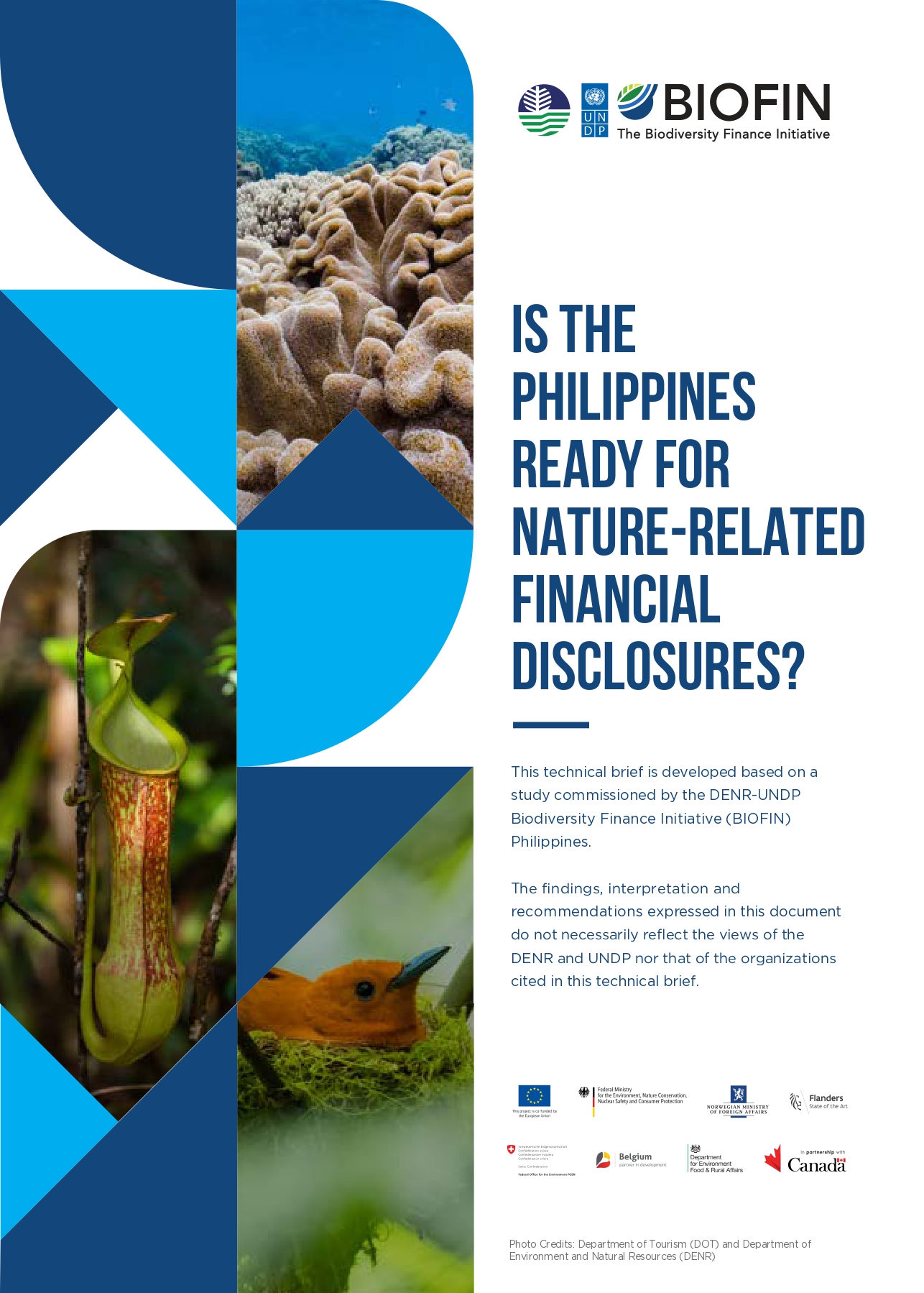
This technical brief highlights the findings and recommendations of the study conducted by BIOFIN Philippines on the country’s readiness for nature-related finance disclosures. The study assessed Philippines’ institutional, policy and regulatory readiness for disclosure of nature-related finance and risks. It also assessed the institutional arrangements readiness and capacities of national and local associations of economic agents and put forward a set of entry points and recommendations moving forward.

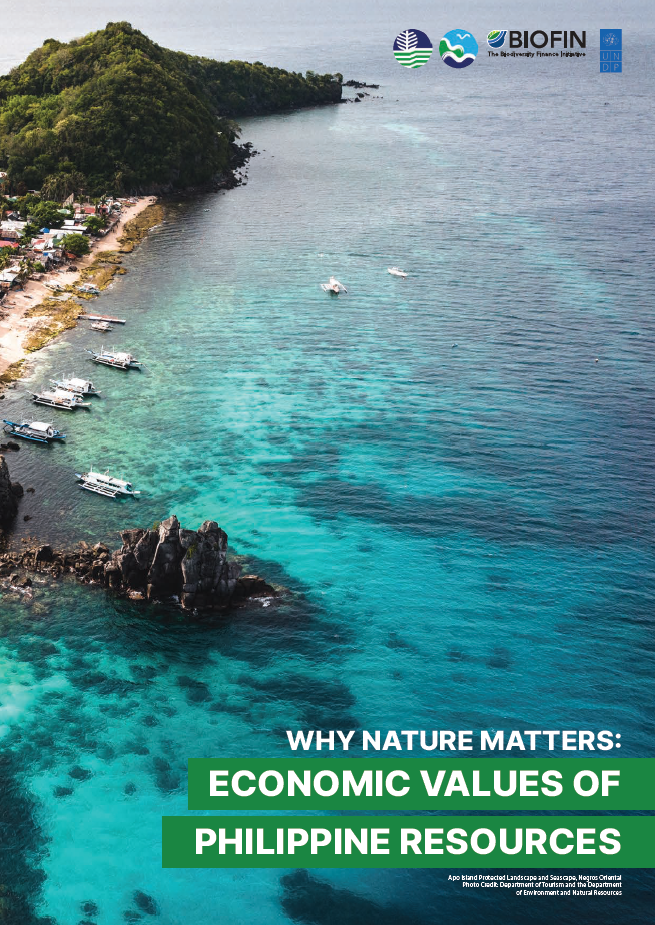
NAT00732.jpg

Photo credit: Photo by Department of Tourism and Department of Environment and Natural Resources in the Philippines

DOWNLOAD

Publications


Biodiversity finance solutions have the potential to unlock a better future for people and the planet, but they can only work when partners from all levels come together. This collection of 11 stories demonstrates the power and sheer variety of biodiversity finance solutions being implemented across the world. 

Each story, authored by a partner working alongside UNDP-BIOFIN, offers an insight into how biodiversity finance solutions help put us on a path to a nature-positive future. From community leaders to mayors, from national park Directors to government partners, the authors speak to the power of biodiversity finance solutions and how they are protect and restore nature while also boosting economies more sustainably.  

Screenshot 2022-12-07 at 10.18.19.png

Publications
Publications

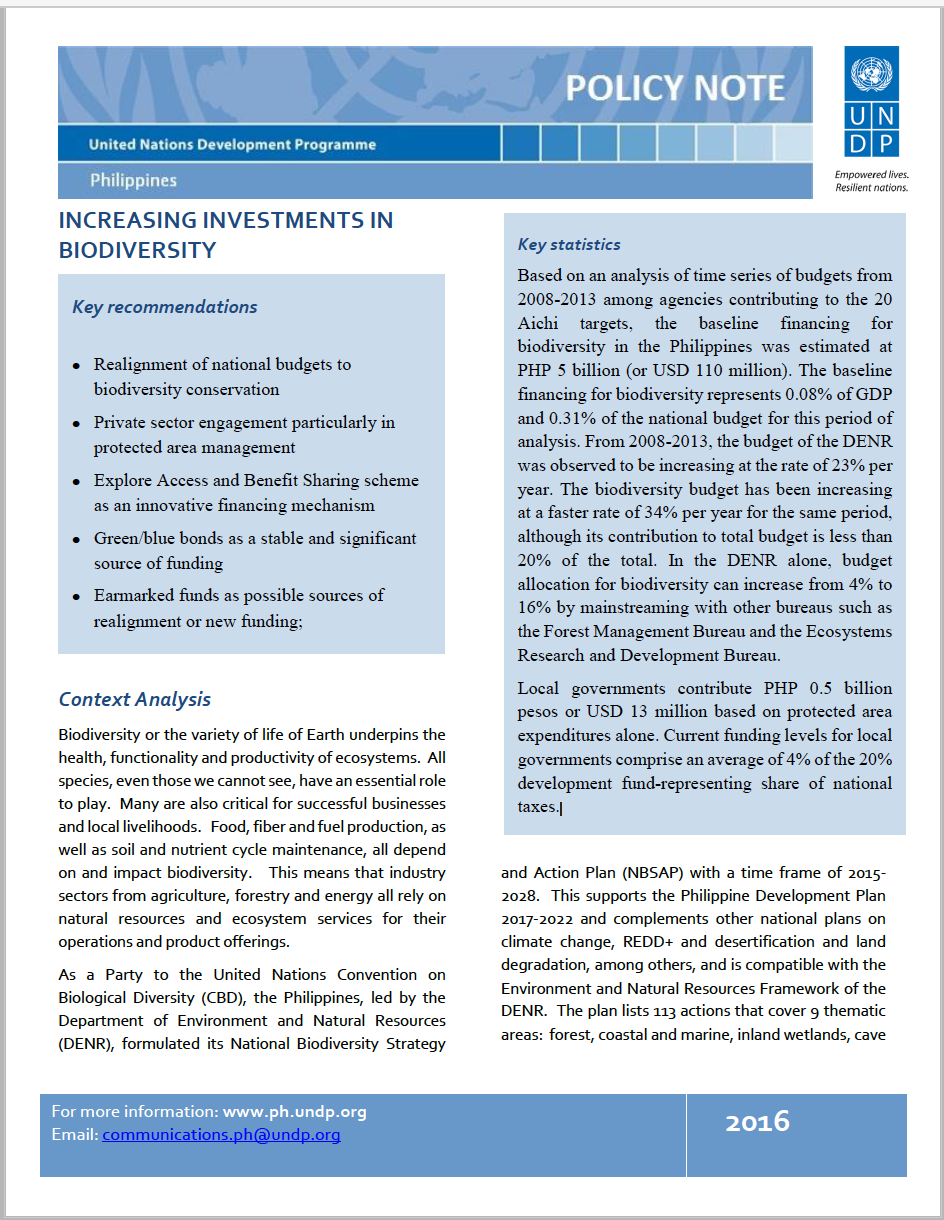
Based on an analysis of time series of budgets from 2008-2013 among agencies contributing to the 20 Aichi targets, the baseline financing for biodiversity in the Philippines was estimated at PHP 5 billion (or USD 110 million). The baseline financing for biodiversity represents 0.08% of GDP and 0.31% of the national budget for this period of analysis. From 2008-2013, the budget of the DENR was observed to be increasing at the rate of 23% per year. The biodiversity budget has been increasing at a faster rate of 34% per year for the same period, although its contribution to total budget is less than 20% of the total. In the DENR alone, budget allocation for biodiversity can increase from 4% to 16% by mainstreaming with other bureaus such as the Forest Management Bureau and the Ecosystems Research and Development Bureau. 


Local governments contribute PHP 0.5 billion pesos or USD 13 million based on protected area expenditures alone. Current funding levels for local governments comprise an average of 4% of the 20% development fund-representing share of national taxes.

Publications

The BIOFIN Financing Plan for the Philippines is based on insights gleaned from the results of the three BIOFIN workbooks: the Policy and Institutional Review; the Public and Private Biodiversity Expenditure Review; and the Finance Needs Assessment Plan. This plan acknowledges the importance of tapping additional financing to support NBSAP but is also cognisant of the parallel challenges that could not be addressed by generating financing alone . Thus, the Plan transcends the focus on generating additional resources but instead, identifies a range of "finance solutions" that leverage finance, fiscal and economic tools and strategies to improve the outcome of biodiversity objectives in the country. Financing solutions include a range of transformative actions that include generating more financing to fund the NBSAP or associated planning documents; appropriate attribution of biodiversity expenditures in the budget; attaining cost effective budget execution by eradicating overlaps in biodiversity function s; eradicating expenditures that continue to or aggravate dissipation of biodiversity resources; and paving the groundwork for a responsive policy environment through greater awareness on biodiversity and biodiversity financing and enhancing institutional support towards monitoring of NBSAP.

More than PHP 5 billion is targeted to be raised by BIOFIN within the six year medium term planning period conforming to the incoming administration of presumptive President  Rodrigo  Duterte.  PHP 3 billion is to be sourced from increased public sector budget either through debt swaps, conservation incentives/ecological fiscal transfers, or through the flotation of a Sovereign Green Bond. Another 1.2 billion is to be tapped by working with local governments, civil society organisations and state universities and colleges to prepare and submit proposals eligible for funding under two earmarked funds: Energy Regulation 1-94 and the People's Survival Fund. Through realignment of expenditures within the Department of Environment and Natural Resources, another PHP 0.5 billion pesos would be tagged as contributing to biodiversity with the entire effort of tagging resulting to better understanding of the pervasiveness of biodiversity in the agenda of the department. Lastly, traditional ODA sources shall be tapped amounting to PHP 0.6 billion, based on the historical uptake of grants.

Each financing solution is translated into a work program for BIOFIN that shall serve as guidance for implementation of Component 4 from hereon till end of 2017. In conclusion, the "call to action " invokes an area of work on financing solutions that "deliver better" and "avoid future expenditures" and recommends for the BIOFIN method to be applied in preparing for these next batch of financing solutions.

Publications

Taking off from the key findings of the Policy and Institutional Review of the BIOFIN Method, this

PPBER revisits and expands the institutional profile of public sector agencies that contribute to

PBSAP implementation and/or marked as contributing to the 20 Aichi targets. Using time series data

across all agencies, budget data was collected and tagged using a Biodiversity Relevance Factor

(BRF), developed specifically by BIOFIN Philippines. This BRF is an index that emerged from the

costing of the NBSAP with a relational tagging to the Aichi targets.

Publications

This Report provides a compilation and synthesis of available information on resource/ecosystem valuation in the Philippines as part of BIOFIN’s attempt to make a case in financing biodiversity conservation in the Philippine. It is hoped that government and various stakeholders can gain better appreciation and understanding of the breadth and value of the diversity of our ecosystems, and sustain - even increase, the current efforts and funding for the management and conservation of the environment for future generations.

Publications

This report is a supplement to the Policy and Institutional Review (PIR) Final Report (November 2014) of the Biodiversity Finance Initiative (BIOFIN) – Philippines. 

In general, the BIOFIN aims to implement comprehensive national resource mobilization strategies at national level by supporting governments in reviewing policies and institutions relevant for biodiversity finance, determining baseline investment and assessing the costs of implementing the National Biodiversity Strategies and Action Plans and quantifying the biodiversity finance gap.1 

The PIR component of the BIOFIN methodology concluded last year, serves to provide the review of context by identifying the biodiversity-related policies and institutions. The key results of the PIR are: 

(1) Policies that should be enhanced, improved, amended or modified to achieve positive and prevent negative biodiversity and ecosystem status and trends, 

(2) Policies/Recommendations for Resource Mobilisation.

Publications

The Philippines PIR version 1, published in November 2014.