Knowledge Base

KNOWLEDGE HUB

Knowledge Hub

Access BIOFIN's library of resources, including flagship publications, country reports, finance solution case studies, webinars, explainer videos, podcasts, and more.

Key Publications

Publications

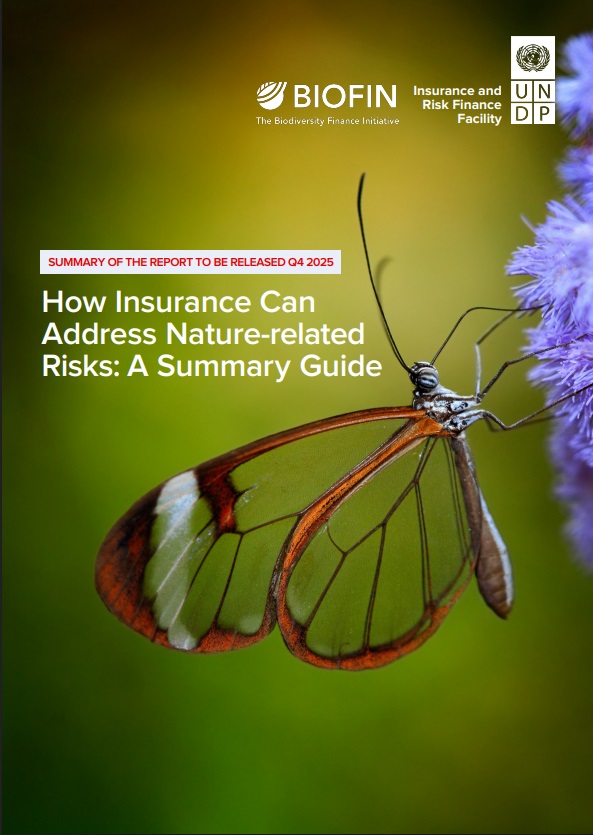
Insurance can play a crucial role in biodiversity conservation by providing financial protection against risks to natural assets, incentivizing sustainable practices, and securing key investments.
Publications

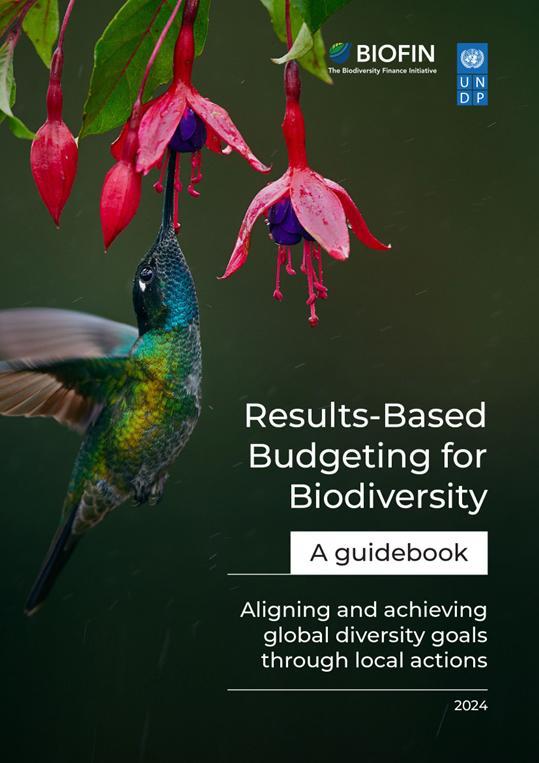
In 2022, countries adopted new global biodiversity targets under the Kunming-Montreal Global Biodiversity Framework (GBF), revisiting many goals that had gone unachieved or underachieved over the past decade.
Publications

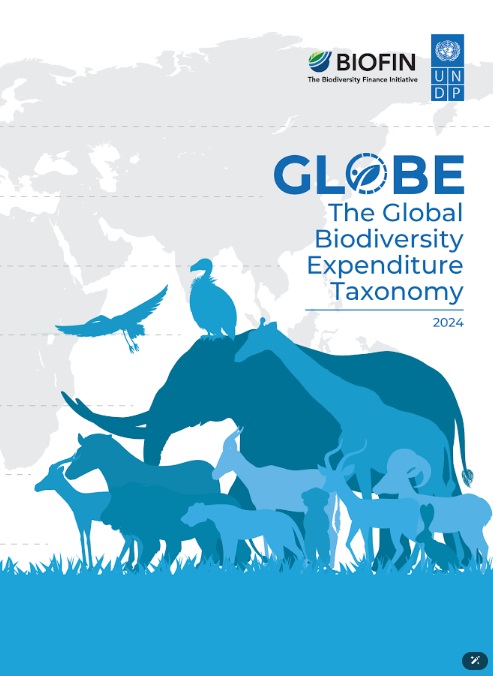
Global Biodiversity Expenditure (GLOBE) is a taxonomy that categorizes all potential public expenditures for biodiversity.

The taxonomy consists of two components:
Publications

The BIOFIN Workbook 2024 provides detailed guidance to design and implement national biodiversity finance plans.  These are not mere plans. They set out a process to engage a coalition of actors around the issue of biodiversity finance for an extended time.
Publications

At the Conference of the Parties to the Convention on Biological Diversity 15 (CBD COP 15) in 2022, countries agreed to review and update their National Biodiversity Strategy and Action Plans
Publications

Well-intentioned subsidies aimed at socio-economic goals can have unintended negative impacts on the environment, including biodiversity. The BIOFIN team has developed a step-by-step guide to repurpose such subsidies and improve their positive impacts on people and nature.
Publications

The Kunming-Montreal Global Biodiversity Framework (GBF) calls for a whole-of-society approach to halting and reversing nature loss.

Publications


The Little Book of Investing in Nature provides an essential overview of the area of biodiversity finance at a time when governments and international negotiators are urgently seeking pragmatic solutions for the twin crises of climate change and the loss of nature.

E-LEARNING

Learning for nature: our free biodiversity finance certified e-learning course

Take our free biodiversity finance certified e-learning course. Master the methodology, connect with experts, and gain certification.

Start E-Learning
Browse the Knowledge Platform
636 Results
Publications

2019 Regional Nodes brochure

Case Studies
Case Studies

This Finance Needs Assessment (FNA) serves to estimate the “finance gap” associated with implementing Botswana’s National Biodiversity Strategy and Action Plan (NBSAP). It therefore quantifies the additional costs associated with the implementation of the NBSAP’s strategies and actions. A programme-based approach to costing the actions was adopted for this process and the BIOFIN methodology guided the assessment.

The results of the cost estimation process indicate that the additional funds required to implement the NBSAP would amount to approximately P833 million (US$79 million), including inflation, over the 10 years of the NBSAP, starting in 2016. This translates to an average of P83 million (US$8 million) per year, although funding needs vary substantially between years and are particularly high in the early years of implementation. Note that this amount excludes the salary costs for existing staff, some of whom would be responsible for the implementation of the NBSAP. The Biodiversity Finance Plan should therefore aim to lessen this funding/finance gap

Case Studies

Government Expenditure

The expenditure review focused on the priority sectors as identified through the Biodiversity Policy and Institutional Review (PIR), namely, water security, food security and sustainable tourism. These priorities are primarily the responsibility of the Ministries of Land Management, Water and Sanitation Services (MLWS), Agricultural Development and Food Security (MoA) and Environment, Natural Resources Conservation and Tourism (MENT). Historic expenditures for these government institutions starting in the 2012/13 fiscal year, and for key NGOs, were reviewed and biodiversity-related expenditures were identified and analysed. Sources of revenue linked to biodiversity were also assessed with a focus on MENT.

Total biodiversity expenditure was P 5.26 billion for 2012/2013 to 2018/2019, amounting to approximately 1.08% of total government expenditure. Average annual biodiversity expenditure for this period was P 751 million (see Table i). MENT is by far the largest spender on biodiversity, amounting to P 4 billion, which is equivalent to 67% of MENT’s total expenditure. MLWS spends the second-highest amount, P 780 million, which is equivalent to 5.6% of the ministry’s total expenditure, followed by MoA with biodiversity-related expenditure of P 489 million, equal to 3.6% of the ministry’s total expenditure.

The total projected future government expenditure on biodiversity management in Botswana between 2019/20 and 2025/26 is P 7.6 billion based on past expenditure by MENT, MoA, and MLWS, a ‘business-as-usual’ expenditure scenario, and a conservative budget growth scenario.

In terms of the six biodiversity management concerns, government biodiversity-related expenditure is projected to be split almost evenly between mainstreaming use (46%) and protection (54%).

Civil-society expenditure

Total expenditure, which can be attributed to six of Botswana’s largest NGOs were collected. In total, the NGO’s surveyed undertook P 210 million in biodiversity-related expenditure over the 2012/13 to 2018/19 period, with overall expenditure growing roughly in line with inflation.

Publications


Biodiversity Expenditure Review (BER) was conducted within the framework of the Biodiversity Finance Initiative (BIOFIN) project. The review covered biodiversity expenditure from 2008-2018 incorporating political and economic impacts. BER analysis was conducted according to the BIOFIN Workbook methodology and included the annual expenditures by state and local budgets as well as the funds by the donor and international organizations. The economic status of Mongolia during this review period can be divided into two periods: (i) a period of regional and local economic crisis (2008-2010, 2013-2015); and (ii) a period of economic growth (2011-2012, 2016-2018).

During the crisis period,    the fiscal policy focused on    “reducing the budget and cutting out tolerable expenditures”, while the growth period aimed at    “increasing the salaries of civil servants and pension funds step-by-step in accordance with the global economic growth and mineral prices”. In addition to reviewing the public budget expenditures on conservation-related activities, expenditures related to the projects on sustainable use of biodiversity, improvement of legal and regulatory frameworks, funded various donors or international organizations, were also analyzed.  The consulting team has identified biodiversity relevant activities and stakeholders that contribute to achieving the goals and objectives of the National Biodiversity    Program.    Based on the stakeholders’    identification,    the information was collected from 90 projects, of which 71 were implemented by 11 different organizations and the remaining 19 were by government agencies.  

It was estimated that the total biodiversity expenditure during 2008-2018 was 207.7 million USD, which amounts to 0.35%-0.79% of total State budget expenditure and 0.15%-0.25% of the total GDP; and the average annual biodiversity expenditure was 13.3-25.5 million USD. Analysis of the annual expenditures showed that the most significant decrease of    12%    and    21%    was observed in 2012 and 2016, respectively, which can be attributed to the 15.3% and 42% decrease of the state budget. Although the total State budget expenditures increased by 21% and 7% in the respective years, the expenditure on deforestation was reduced by 3 folds in 2012 as compared to the previous year, while the specially protected areas (SPAs) expenditure was reduced by 21% in 2016. Both 2012 and 2016 were the quadrennial election years, thus suggesting that political activities affect the expenditures on biodiversity and conservation.

The most significant periods of growth in biodiversity expenditures were observed in 2013 and 2017, immediately after the decline from the previous election years. It can be explained by the direct increase of funding from the State budget, as it was normalized back to the pre-election period. The increased expenditure can also be attributed to the approval of a higher number of projects by donors and international organizations. Financing from State and local budgets account for 44.4% of the total funding for biodiversity expenditures, with the remaining 55.6% were provided by donors and international organizations.

The total biodiversity budget and expenditures largely depend on the revenue generation of the State budget. The public budget allocation related to biodiversity was categorized according to the strategic areas, goals, and objectives of the National Biodiversity Program and the Aichi targets. To reflect the impacts of the inflation rate in the biodiversity expenditure, actual exchange rates of each particular year was applied. Appendix 1 shows the detailed estimation of expenditures for 2008-2018 according to the goals and objectives