Knowledge base

Browse the Knowledge Platform

636 Results
Publications

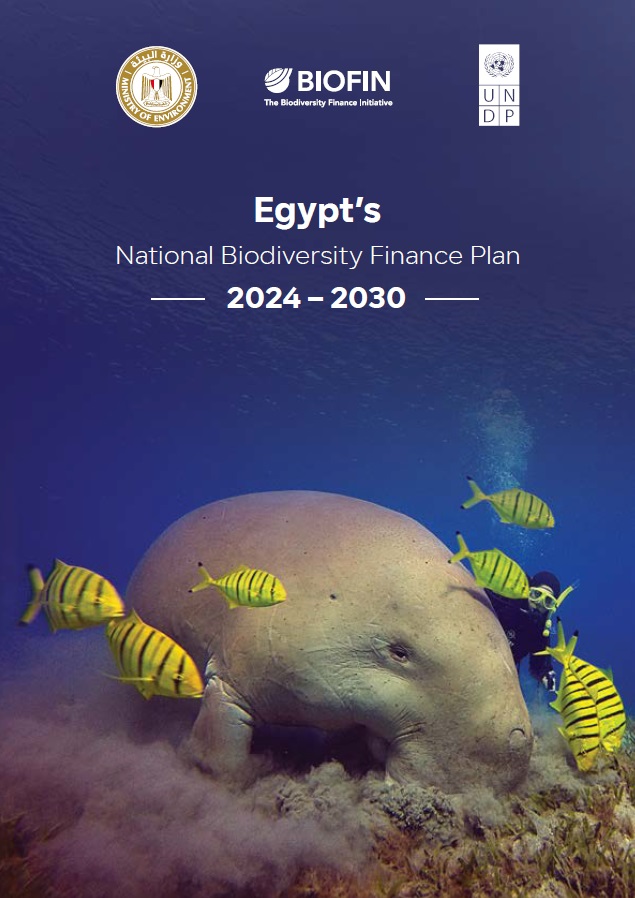
The Biodiversity Financial Needs Assessment (FNA) provides a systematic estimate of the financial resources required for Egypt to achieve its national biodiversity targets and compares these needs with projected biodiversity expenditures to identify the financing gap. Developed using the BIOFIN methodology and aligned with the Policy and Institutional Review (PIR), Biodiversity Expenditure Review (BER), and Egypt’s National Biodiversity Strategy and Action Plan (NBSAP), the FNA supports evidence-based prioritization of biodiversity actions. By assessing national strategies and plans related to biodiversity, climate, and sustainable development, the FNA highlights the scale of investment required to effectively implement biodiversity objectives and integrate them into broader development planning.

The assessment shows that current and projected biodiversity spending is insufficient to meet national conservation goals, pointing to a persistent financing gap that constrains effective implementation. Given increasing pressures from habitat degradation, pollution, climate change, and unsustainable resource use, closing this gap is critical to safeguarding Egypt’s ecosystems and natural capital. The FNA emphasizes the need for a diversified and strategic approach to biodiversity financing, including mobilizing additional public and private resources, improving the allocation and efficiency of existing expenditures, strengthening public–private partnerships, and reinforcing governance and policy frameworks to ensure long-term, sustainable financing for biodiversity conservation.
Publications

The Tiger Landscapes Investment Fund (TLIF) has been developed and is being operationalized in response to the urgent need to channel private sector investments into businesses that contribute to the protection, restoration, and sustainable management of tiger landscapes, while enhancing financial sustainability and delivering durable, positive biodiversity outcomes. 

The Tiger Landscapes Investment Fund aims to design and deploy an innovative, fit-for-purpose financing mechanism. Since the challenges and opportunities associated with the sustainable financing of biodiversity vary among countries, the mechanism should fit within each country’s context.

Guidelines

Discover how the Cali Fund offers a novel, fair, and transparent financing mechanism for biodiversity conservation. This short guide explains who should contribute, what counts as Digital Sequence Information (DSI), how contributions are determined, and why investing in the Cali Fund supports science, biodiversity, and communities.
Podcast

Eva Bortolotti, Programme Specialist for Nature Finance at UNDP, talks to Mauricio Gámez, Deputy Director for Climate Change and Nature at Grupo Financiero Banorte, Mexico’s leading financial group. Together, they explain how Banorte is integrating nature-related risks and opportunities into its core business, becoming the first Mexican early adopter of the Taskforce on Nature-related Financial Disclosures (TNFD) framework. 

Publications

National Biodiversity Offset Report was developed based on the inputs and lessons generated from BIOFIN implementation and lessons learnt by key national partners including Department of Forestry Fisheries and the Environment, South African National Biodiversity Institution and South African National Parks.

Podcast

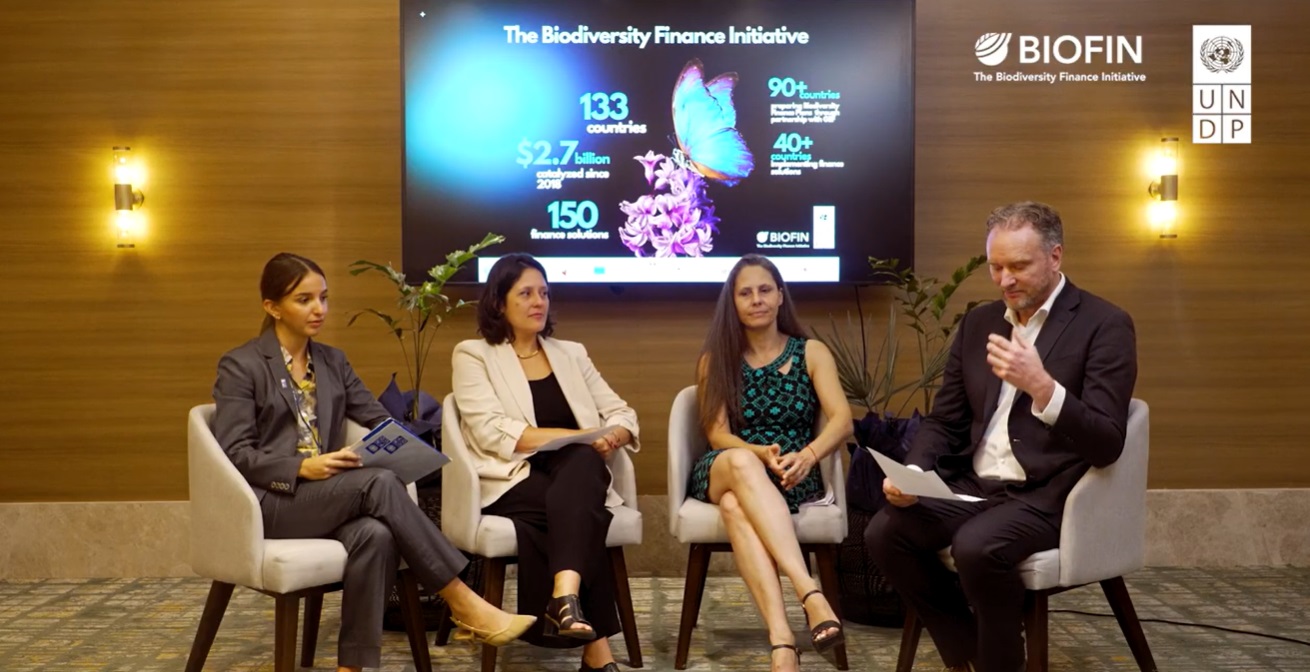
Filmed on location at the Global Biodiversity Finance Conference in Santiago, Chile, UNDP's top leadership in biodiversity finance discusses global trends affecting nature conservation. Onno van den Heuvel, UNDP Global Nature Finance lead; Martin Cadena, BIOFIN Programme Manager; and Mariana Bellot, Global Programme Manager at the GBFP, reflect on the future of biodiversity finance in an era of global uncertainty. In this conversation, the speakers share insights on the declining levels of global Official Development Assistance (ODA), the urgent need to mobilize diverse sources of finance for nature, and the progress countries are making in developing and implementing National Biodiversity Finance Plans (NBFPs).

At the UN Biodiversity Conference (COP16) in Colombia, countries adopted the long-awaited Resource Mobilization Strategy of the Convention on Biological Diversity. As Onno stressed, this milestone signals that finance must come from all sources—public and private, domestic and international, traditional and innovative. 

Publications

This policy brief presents a financial solution designed to enhance biodiversity conservation through improved community forest management in Nepal’s transboundary biological corridors. Despite managing over one-third of the country’s forest area, community forest user groups often face trade-offs between conservation and livelihoods, with limited financial resources and biodiversity integration in their management plans.

The finance solution aims to mainstream biodiversity into 50 community forest user groups by:

  • Revising operational and financial plans,
  • Training 200 individuals in sustainable forest and finance management,
  • Increasing biodiversity-related expenditure and investment,
  • Strengthening local capacities and stakeholder engagement.

Piloted in the Terai Arc Landscape, the approach prioritizes meaningful community participation, knowledge sharing, and the development of sustainable business culture in forest management. With lessons learned from this pilot, the model can be scaled across Nepal’s 23,000+ forest user groups—helping close the biodiversity finance gap and support both people and nature.

📄 Download the full publication

Publications

Insurance can play a crucial role in biodiversity conservation by providing financial protection against risks to natural assets, incentivizing sustainable practices, and securing key investments. This summary of a forthcoming report 'How Insurance Can Address Nature-related Risks: A Summary Guide' provides an overview of how insurance can contribute to biodiversity protection, highlighting key concepts, case studies, and recommendations for designing effective insurance solutions. The summary can be used by countries preparing their National Biodiversity Finance Plans, and by conservation agencies, community-based organizations, research institutions, nongovernmental organizations (NGOs), private sector investors and development partners involved in developing biodiversity conservation and restoration plans. 

Case Studies

Conscientes del rol estratégico del financiamiento para transformar el campo colombiano, el Fondo para el Financiamiento del Sector Agropecuario (FINAGRO) y el PNUD diseñaron una ruta para reverdecer los créditos agropecuarios. El objetivo es que el acceso al crédito no solo impulse la productividad, sino que también fortalezca la conservación de los ecosistemas.

Este propósito es la materialización del análisis de incentivos del sector agropecuario con impactos negativos sobre la biodiversidad en Colombia realizado por la Iniciativa de Finanzas para la Biodiversidad (BIOFIN), como apoyo al gobierno nacional en el diseño de soluciones financieras que permitan movilizar, redireccionar y optimizar recursos públicos y privados para la conservación de la biodiversidad.

En ese sentido, este documento presenta los avances que el país ha tenido en el análisis y reforma de incentivos financieros perjudiciales, con el propósito de alinear las políticas de desarrollo rural y financiero con los compromisos internacionales adquiridos por el país ante el Convenio sobre la Diversidad Biológica (CDB). De igual forma, se presenta la primera ruta de reforma de incentivos para Colombia que FINAGRO y PNUD BIOFIN están implementando para alinear el crédito agropecuario a los modelos de producción sostenibles, mediante una metodología que combina el enfoque ecosistémico con criterios técnicos, financieros y sociales. El proceso ha convocado a expertos del sector financiero, agropecuario y ambiental para trabajar inicialmente en seis cadenas productivas: ganadería bovina, arroz, cacao, café, yuca y productos no maderables del bosque, seleccionadas por su importancia territorial, nivel de organización y demanda de crédito.

Case Studies

Aware of the strategic role of financing in transforming the Colombian countryside, The Financial Fund for the Agriculture Sector - FINAGRO and UNDP have designed a roadmap to greening agricultural credit. The goal is for access to credit to not only boost productivity but also strengthen ecosystem conservation.

This objective represents the materialization of the analysis of agricultural sector incentives with negative impacts on biodiversity in Colombia, conducted by the Biodiversity Finance Initiative (BIOFIN). It supports the national government in designing financial solutions aimed at mobilizing, redirecting, and optimizing public and private resources for biodiversity conservation.
In this context, this document presents the progress Colombia has made in analyzing and reforming harmful financial incentives, with the aim of aligning rural development and financial policies with the international commitments undertaken by the country under the Convention on Biological Diversity (CBD). Likewise, it introduces the first incentive reform roadmap for Colombia, which FINAGRO and UNDP BIOFIN are implementing to align agricultural credit with sustainable production models, using a methodology that combines the ecosystem approach with technical, financial, and social criteria. The process has brought together experts from the financial, agricultural, and environmental sectors to initially work on six productive value chains: cattle ranching, rice, cocoa, coffee, cassava, and non-timber forest products, selected for their territorial importance, level of organization, and credit demand.

Case Studies

Conscientes del rol estratégico del financiamiento para transformar el campo colombiano, el Fondo para el Financiamiento del Sector Agropecuario (FINAGRO) y el PNUD diseñaron una ruta para reverdecer los créditos agropecuarios. El objetivo es que el acceso al crédito no solo impulse la productividad, sino que también fortalezca la conservación de los ecosistemas.

Este propósito es la materialización del análisis de incentivos del sector agropecuario con impactos negativos sobre la biodiversidad en Colombia realizado por la Iniciativa de Finanzas para la Biodiversidad (BIOFIN), como apoyo al gobierno nacional en el diseño de soluciones financieras que permitan movilizar, redireccionar y optimizar recursos públicos y privados para la conservación de la biodiversidad.

En ese sentido, este documento presenta los avances que el país ha tenido en el análisis y reforma de incentivos financieros perjudiciales, con el propósito de alinear las políticas de desarrollo rural y financiero con los compromisos internacionales adquiridos por el país ante el Convenio sobre la Diversidad Biológica (CDB). De igual forma, se presenta la primera ruta de reforma de incentivos para Colombia que FINAGRO y PNUD BIOFIN están implementando para alinear el crédito agropecuario a los modelos de producción sostenibles, mediante una metodología que combina el enfoque ecosistémico con criterios técnicos, financieros y sociales. El proceso ha convocado a expertos del sector financiero, agropecuario y ambiental para trabajar inicialmente en seis cadenas productivas: ganadería bovina, arroz, cacao, café, yuca y productos no maderables del bosque, seleccionadas por su importancia territorial, nivel de organización y demanda de crédito.

Case Studies

Aware of the strategic role of financing in transforming the Colombian countryside, The Financial Fund for the Agriculture Sector - FINAGRO and UNDP have designed a roadmap to greening agricultural credit. The goal is for access to credit to not only boost productivity but also strengthen ecosystem conservation.

This objective represents the materialization of the analysis of agricultural sector incentives with negative impacts on biodiversity in Colombia, conducted by the Biodiversity Finance Initiative (BIOFIN). It supports the national government in designing financial solutions aimed at mobilizing, redirecting, and optimizing public and private resources for biodiversity conservation.
In this context, this document presents the progress Colombia has made in analyzing and reforming harmful financial incentives, with the aim of aligning rural development and financial policies with the international commitments undertaken by the country under the Convention on Biological Diversity (CBD). Likewise, it introduces the first incentive reform roadmap for Colombia, which FINAGRO and UNDP BIOFIN are implementing to align agricultural credit with sustainable production models, using a methodology that combines the ecosystem approach with technical, financial, and social criteria. The process has brought together experts from the financial, agricultural, and environmental sectors to initially work on six productive value chains: cattle ranching, rice, cocoa, coffee, cassava, and non-timber forest products, selected for their territorial importance, level of organization, and credit demand.

Knowledge Partners

Biodiversity and Ecosystem Services Network logo
Biodiversity finance resources library and forum.
Sustainable Development Finance Platform logo
Guidance and detailed descriptions of finance solutions for sustainable development.
NBSAP logo
Support for action on National Biodiversity Strategy and Action Plans