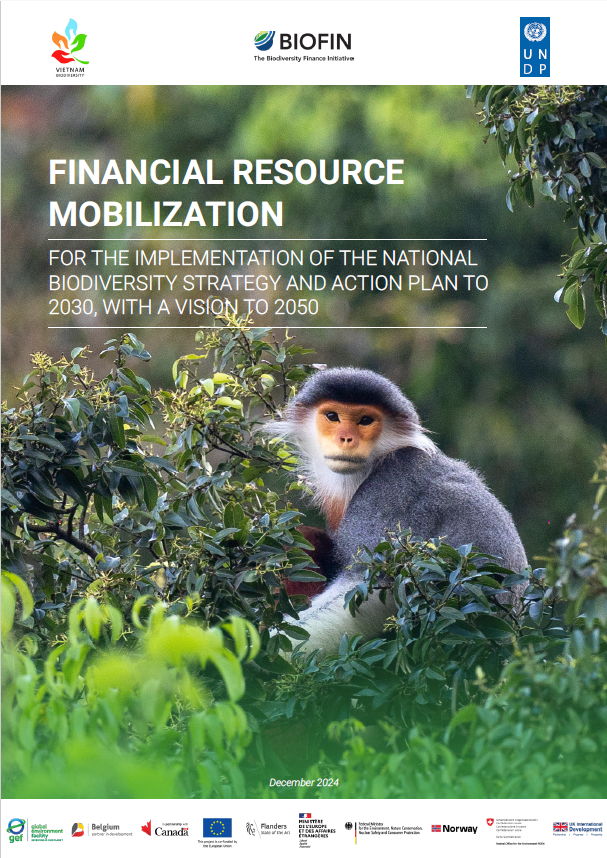
Viet Nam is recognized as one of the world’s important biodiversity centres, with diverse ecosystems, species and genetic resources that underpin livelihoods, economic development and human well-being. However, the country’s biodiversity continues to decline due to habitat loss, overexploitation of natural resources, pollution, invasive species and climate change. In response, the Government of Viet Nam approved the National Biodiversity Strategy to 2030, with a vision to 2050, establishing national priorities for conserving and restoring ecosystems, protecting threatened species and integrating biodiversity into sustainable development.
Effective implementation of the Strategy will require substantial and sustained financial resources. Developed under the Biodiversity Finance Initiative, this publication assesses Viet Nam’s capacity to mobilize finance for implementing the National Biodiversity Strategy and Action Plan. It builds on reviews of relevant policies, legal documents and previous BIOFIN assessments, complemented by stakeholder consultations and field research. The report examines existing and potential financing sources, evaluates the feasibility of proposed biodiversity-finance solutions and identifies priority actions for addressing the country’s biodiversity-finance gap.
The analysis draws from the estimates that implementing selected key biodiversity targets during 2024–2030 will require at least VND 114,718 billion, with an annual financing shortfall equivalent to approximately 17–33 per cent of total needs. To help close this gap, the publication explores opportunities to improve the allocation and effectiveness of public expenditure, mobilize private-sector and community investment, diversify revenues for protected areas, strengthen ecosystem-service payment mechanisms and prepare emerging instruments such as biodiversity offsets and biodiversity credits.
The report provides practical recommendations for government agencies, protected-area authorities, financial institutions, businesses, development partners and local communities. It emphasizes the importance of strengthening the enabling legal and institutional framework, improving biodiversity information systems, integrating biodiversity into public and private investment decisions, expanding green finance and promoting locally grounded models that connect conservation with sustainable livelihoods. In doing so, the publication offers a strategic foundation for mobilizing and directing finance towards Viet Nam’s biodiversity priorities through 2030 and beyond.