By Niran Nirannoot, Project manager for BIOFIN Thailand; Boonthida Ketsomboon, Expert for Implementation of BIOFIN Phetchaburi Finance Solution; Prasarn Sathansathit, Project Lead of Raks Thai Foundation
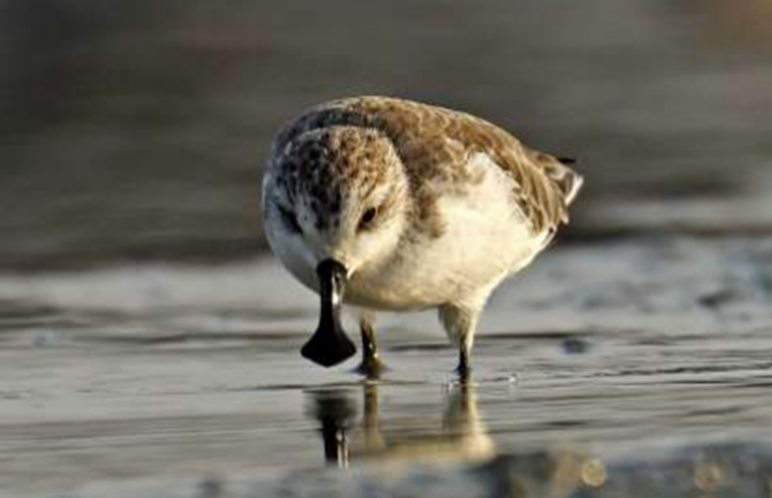
Pak Thale, Thailand – Every winter, thousands of migratory birds travel from the icy landscapes of Siberia to the sunlit salt flats of Pak Thale in Thailand’s Phetchaburi Province. Among them is the elusive and critically endangered Spoon-billed Sandpiper, an iconic species whose presence signals both ecological richness and urgent conservation needs.
Today, this small wetland community is becoming a national model for how biodiversity finance can protect critical habitats while creating lasting benefits for local communities. Through a BIOFIN-supported finance solution, Pak Thale is transforming seasonal tourism into a year-round, sustainable bioeconomy, proving that nature conservation and local development can thrive together.
The Challenge: Seasonal Tourism, Fragile Ecosystems
Despite Phetchaburi attracting up to 8 million tourists annually, only a small fraction – from 10,000 to 13,000 tourists - visit Pak Thale for its globally significant bird habitats. This under-recognized site, vital to the Spoon-billed Sandpiper and other migratory birds, faces growing pressure from climate change, habitat loss, and limited financial support for conservation.
Ecotourism in Pak Thale is seasonal, peaking from October to March during bird migration, and has historically lacked the mechanisms to generate steady, sustainable revenue for conservation efforts and community livelihoods.

Pak Thale is home to the globally rare Spoon-billed Sandpiper and other migratory birds, traveling thousands of kilometers from Siberia annually to the salt flats. Photo: Raks Thai Foundation
The Solution: A Community-Driven Biodiversity Finance Model
To address this challenge, the Sub-national Public-Private-People Partnership (PPP) in Phetchaburi, supported by BIOFIN, the Raks Thai Foundation (CARE Thailand), local governments, and Krungthai Bank, launched a pioneering biodiversity finance solution. The model draws inspiration from the successful Koh Tao Sustainable Tourism Finance Model, adapting it to wetlands, mangroves, and salt pan habitats.
At its core is a locally endorsed environmental user fee of THB 20 (approx. US$0.60) per tourist, collected at the Pak Thale Ecotourism Information Center. With an estimated 10,000 visitors annually, and additional income from product sales, the center is projected to generate approximately US$8,000 (THB 250,000) per year.

The entrance of the Pak Thale Ecotourism Information Center, showcasing the implementation of the environmental management charge. The revenue generated is strategically allocated to support knowledge management and habitat preservation.
The initiative promotes year-round, community-led tourism activities, including eco-boat sledging, traditional cuisine workshops, and artisanal salt product sales.
Women and local community members have received training to develop new income streams, such as sustainable honey production, bird-themed crafts, and salt-based cosmetics.

Photo: Local communities are also generating revenue through various training programs, empowering women and other members in skills such as crafting artisanal salt-based products, producing sustainable honey from mangrove forests, and designing wooden pins inspired by migratory birds.
The finance solution promotes a community-driven bioeconomy, where visitors become active contributors to nature protection. As Mr. Chaiwat Wanpol, Chief Executive of Pak Thale Sub-district Administration Organization, noted:
“Visitors become more than tourists, they are part of the solution, helping sustain this beautiful ecosystem.”

Photo: Mr. Chaiwat Wanpol, Chief Executive of Pak Thale Sub-district Administration Organization
To ensure long-term viability, the Sub-district Administration Organization has allocated US$6,350 (THB 200,000) from its annual budget to fund the festival and center operations. All investments were assessed for financial feasibility and environmental sustainability.
Conservation Meets Revenue: A Triple-Win Framework
Inspired by Koh Tao’s success, Pak Thale Sub-district has adopted an eco-tourism-based revenue model designed to fund vital conservation efforts. On 4 November 2025, the Sub-district passed a legal ordinance that formally introduced a THB 20 (approx. US$0.60) tourism fee per visitor.
 This landmark legal framework creates a sustainable funding mechanism, ensuring that tourism revenues are not only collected but also strategically reinvested in nature. All proceeds are systematically integrated into the fiscal budget of the Sub-district Administration Organization and earmarked for maintaining the Ecotourism Information Center and supporting broader conservation initiatives.
These initiatives include the restoration of migratory bird habitats, the preservation of biodiversity, and the development of infrastructure that balances tourism and environmental protection. By embedding the mechanism into law, the ordinance strengthens sub-national governance, fosters local accountability, and secures the long-term protection of Pak Thale’s ecological treasures.
Ordinance issued on 4 November 2025, announcing the implementation of a tourist user charge, effective starting 11 November 2025 by the Pak Thale Sub-district Administration Organization
Uniting Conservation, Community, and Climate Resilience
Beyond tourism, the finance solution is contributing to landscape-level conservation through mangrove and salt pan ecosystem restoration, critical habitats for migratory birds. In collaboration with the local community, the Pak Thale Sub-district Administration Organization, and the Department of Marine and Coastal Resources, a public hearing was successfully held to advance registration of the ‘Community Mangrove Forest’, spanning 48–80 hectares (300–500 rai).
The governance of this mangrove forest is built on equitable benefit-sharing, strengthening both environmental stewardship and community resilience. Revenue from the ecotourism center is strategically reinvested to support ongoing conservation efforts. With strong support from the Department of Marine and Coastal Resources, Pak Thale is working to secure its place as a global destination for nature-based tourism and wetland preservation.
Rooted in Inclusivity and Innovation
The PPP in Phetchaburi stands out for its gender-responsive, community-driven approach—ensuring that local people, especially women, are not only beneficiaries but leaders in shaping the region’s biodiversity economy:
- Gender-Inclusive Governance: Women are actively included in leadership roles guiding tourism revenue management, conservation decisions, and business development.
- Flexible Livelihood Opportunities: Training in eco-tourism, digital marketing, and artisanal salt product creation empowers women entrepreneurs and supports low-income families.
- Community Engagement in Planning: Participatory processes have enabled local stakeholders, including female leaders, to contribute directly to Thailand’s first Local Biodiversity Strategy and Action Plan (LBSAP).

A women’s group actively co-designed the Gender Plan of Action, which will be integrated into the LBSAP, ensuring inclusive conservation and sustainable development efforts.
Photo: Raks Thai Foundation
A Scalable Model with BIOFIN’s Long-term Partner – Krungthai Bank
Building on the principles of the Koh Tao Model, the Phetchaburi Sub-national PPP offers a scalable blueprint for combining biodiversity conservation with sustainable economic growth. This finance solution—co-developed by BIOFIN and the Raks Thai Foundation, with US$150,000 in support from Krungthai Bank—provides renewed hope for iconic species like the Spoon-billed Sandpiper.
It also showcases the transformative power of inclusive finance, local leadership, and innovative public-private-community partnerships in advancing the goals of the Global Biodiversity Framework, particularly Target 19.

Under the "Krungthai Loves Phetchaburi" initiative, BIOFIN Thailand mobilized impact investment of US$150,000 from Krungthai Bank to co-finance the Pak Thale Ecotourism Center and the Bang Inn Community Enterprise for Eco-tourism and Seafood Processing (Village 4) in Ban Laem District, Phetchaburi.
The initiative's key achievements include:
- Financial Literacy Training: Krungthai Bank conducted financial literacy training to equip local communities with essential financial management skills, enhancing their ability to manage the Community Biodiversity Conservation Fund. This initiative ensures financial transparency and accountability while empowering communities to plan effective off-season ecotourism activities. The training supports ecosystem restoration and sustainable tourism, helping communities strategically allocate revenues and develop off-season tourism initiatives.
- Community Conservation Funds: By establishing a local Biodiversity Conservation Fund, the project ensures dedicated and sustained financial resources to support community-led environmental initiatives.
- Mangrove and Migratory Bird Surveys: Co-financing a pilot survey, the project focuses on mapping mangrove ecosystems and key habitats for migratory birds, including the iconic Spoon-billed Sandpiper, ensuring targeted and informed conservation efforts.
- Tourist Safety Enhancements: Krungthai Bank co-financed vital safety activities, including water-based rescue training for local communities, as well as the provision of life jackets, first-aid kits, and signage to promote biodiversity conservation and improve visitor experiences.

By seamlessly integrating ecotourism with innovative biodiversity finance, this blended finance solution stands as a pioneering model for achieving both financial and ecological sustainability. Through the collaborative efforts of BIOFIN, Raks Thai Foundation, Krungthai Bank, and local stakeholders, communities are empowered to coexist in harmony with nature, fostering stewardship for biodiversity and ecosystems. This Public-Private-People finance model exemplifies how enduring partnerships can effectively scale biodiversity conservation and ecosystem preservation across Thailand, serving as an inspiring blueprint for global efforts to protect our planet's natural heritage.
A Blueprint for Replication
Pak Thale’s experience offers more than a conservation success story. It presents a practical, community-powered approach to financing biodiversity and building climate resilience. As Thailand continues to replicate this model in other regions, it sets a powerful precedent for how local action, grounded in inclusivity and innovation, can help protect the planet’s most precious ecosystems.
Categories
Archives
- août 2026 (1)
- juillet 2026 (11)
- juin 2026 (10)
- mai 2026 (4)
- avril 2026 (13)
- mars 2026 (6)
- février 2026 (3)
- janvier 2026 (3)
- décembre 2025 (2)
- novembre 2025 (5)