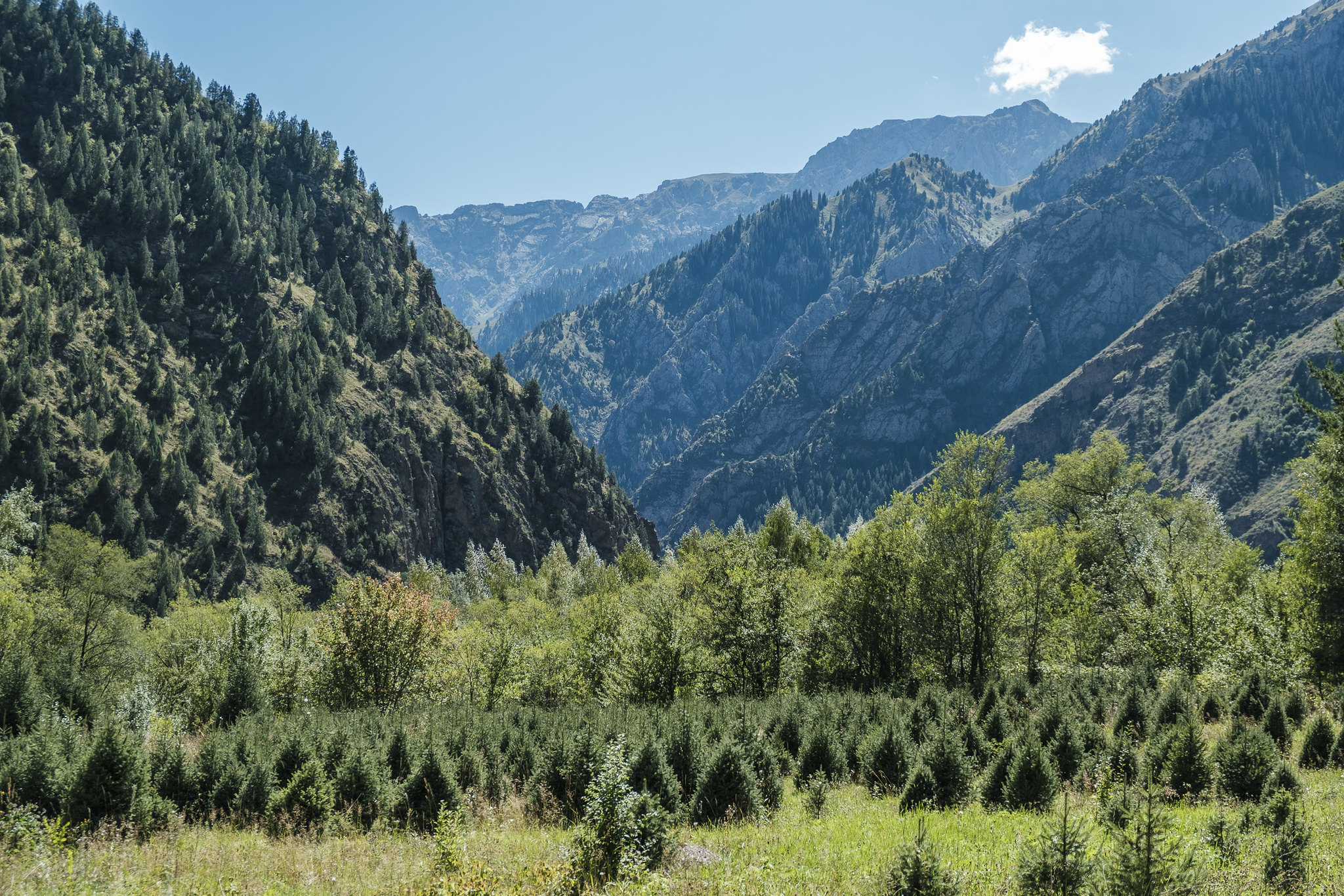
A modernized digital platform is making it easier to pay for forestry services, increasing government revenues, and creating a stronger financial foundation for protecting Kyrgyzstan's forests.
Protecting forests requires more than good policies—it also depends on reliable financing. Every payment collected for forest services can help fund the conservation and sustainable management of the ecosystems that support biodiversity, livelihoods, and climate resilience.
In Kyrgyzstan, a digital transformation is helping make that possible.
With support from the UNDP Biodiversity Finance Initiative (BIOFIN), the Forest Service under the Ministry of Emergency Situations of the Kyrgyz Republic has modernized its Forest Management Automated Information System (AIS), turning what was once a simple lease payment tool into a comprehensive digital platform that supports financial management across the forestry sector.
Modernization demonstrates how digital innovation can strengthen biodiversity finance by improving the way public revenues are collected, managed, and reinvested in nature.
Making forest services easier and more transparent
Previously, the system was used mainly to process forest lease payments. Today, it supports a much broader range of forestry services while simplifying the payment process for citizens and businesses.
Users can now pay for services through the national government payment gateway using automatically generated payment details and QR codes. The system also sends reminders before payment deadlines, making it easier to pay on time.
Behind the scenes, the upgraded platform connects with government payment systems and other public databases, improving data quality and reducing administrative work.
For the Forest Service, the benefits go even further.
A new reporting module provides detailed, real-time information on revenues, strengthening transparency, accountability, and financial oversight. With better financial data, forestry authorities can monitor income more effectively and make better-informed management decisions.
The modernization included the full implementation process—from system design and testing to pilot operation, staff training, and full deployment.
"The modernization of the AIS has significantly transformed the way forestry services are administered. It has made the payment process more convenient for users while providing the Forest Service with more effective tools to monitor revenues and make informed management decisions. This is an important step toward strengthening the financial sustainability of the forestry sector,” Nurgazy Chodoev, Director of the Forest Service under the Ministry of Emergency Situations of the Kyrgyz Republic
Digital systems delivering real financial results
The impact of modernization is already visible.
During less than one year of pilot operation, revenues administered through the system increased by 27 percent, rising from KGS 52.8 million in 2024 to KGS 66.9 million in 2025.
The increase reflects both more efficient payment administration and the expansion of forestry services delivered through the digital platform.
While digital tools alone do not finance conservation, they can significantly improve the way conservation funding is generated and managed. By reducing administrative barriers, improving payment compliance, and strengthening financial transparency, the upgraded system helps ensure that more resources can be directed toward sustainable forest management.

Photo: Capacity-building workshops on digital payments, UNDP Kyrgyzstan
Investing in systems that support nature
Around the world, countries are exploring new ways to close the biodiversity finance gap. While discussions often focus on innovative mechanisms such as biodiversity credits, conservation trust funds, or payments for ecosystem services, strengthening existing public finance systems can be just as important.
Kyrgyzstan's experience shows that investing in digital public finance infrastructure can improve the efficiency of government revenue collection while building a more reliable and transparent source of funding for biodiversity.
Every som collected transparently and efficiently represents an opportunity to reinvest in the forests that protect water resources, support wildlife, store carbon, and provide livelihoods for local communities.
By transforming routine administrative processes into a dependable source of conservation finance, Kyrgyzstan is demonstrating that digital innovation can play an important role in financing nature—and that sometimes, one of the most effective biodiversity finance solutions begins with improving the systems already in place.
Categories
Archives
- août 2026 (4)
- juillet 2026 (11)
- juin 2026 (10)
- mai 2026 (4)
- avril 2026 (13)
- mars 2026 (6)
- février 2026 (3)
- janvier 2026 (3)
- décembre 2025 (2)
- novembre 2025 (5)