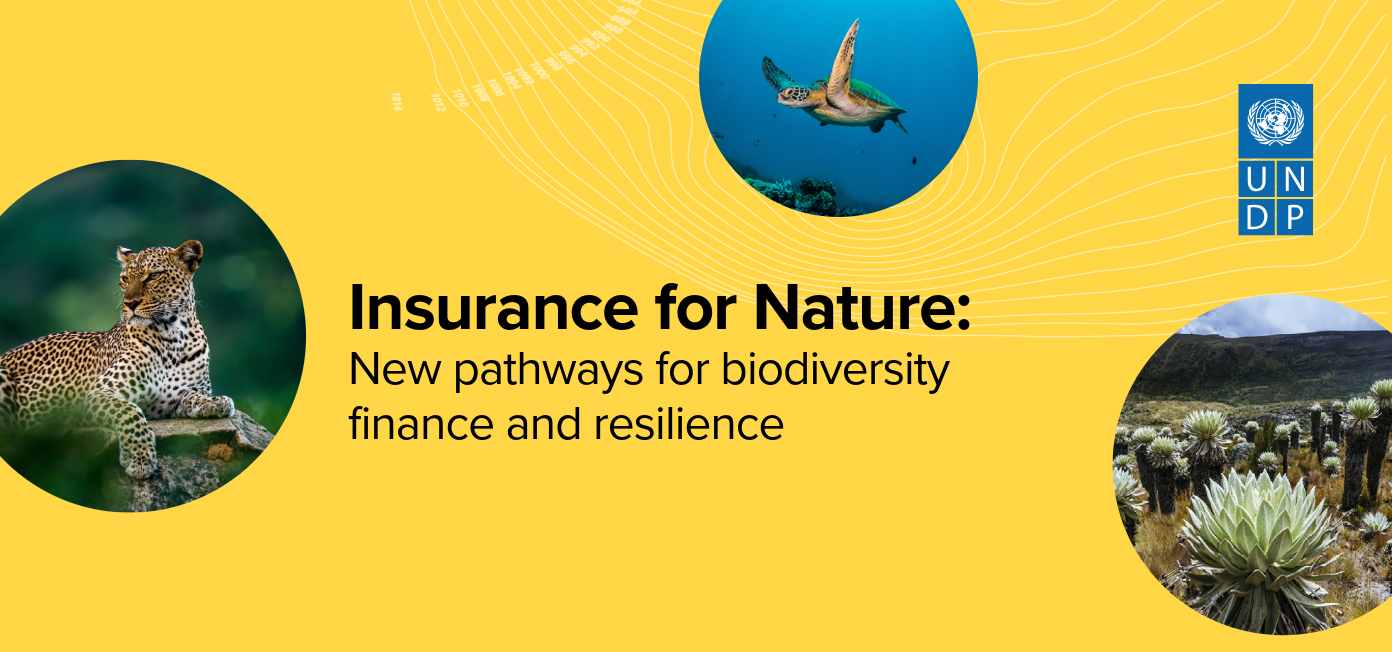
When a leopard kills livestock in rural Sri Lanka, the consequences extend far beyond the loss of a single animal. For many families, it means losing an important source of income. For wildlife, it can trigger retaliation against one of the country's most iconic species.
Traditional conservation approaches have often struggled to address this conflict. But an innovative livestock insurance scheme is helping change the equation. By compensating farmers for losses caused by leopard attacks, the programme is reducing financial hardship, improving community attitudes towards wildlife, and helping protect Sri Lanka's leopard population. Similar approaches are now emerging in Argentina, where insurance supports coexistence with jaguars, and in Nepal, where a new national insurance product is helping communities manage human-wildlife conflict across 18 different species.
These examples illustrate a broader shift in how governments and financial institutions are thinking about biodiversity finance. Insurance is no longer viewed solely as a mechanism for recovering after disasters—it is increasingly being recognized as a tool for reducing risks, encouraging investment in nature, and supporting biodiversity conservation.
To help countries explore this emerging field, the UNDP Biodiversity Finance Initiative (BIOFIN) has launched Designing Insurance for Nature: A Practical Guide, accompanied by a global webinar bringing together experts from government, the insurance industry, academia and conservation organizations to discuss how insurance can become part of the biodiversity finance toolkit.

Why biodiversity needs insurance
Nature provides services that economies depend on every day. Forests regulate rainfall, wetlands reduce flooding, coral reefs protect coastlines, and healthy ecosystems support agriculture, fisheries and tourism. Yet these natural assets are increasingly threatened by climate change, habitat degradation and unsustainable economic activities.
Professor Nicola Ranger of the London School of Economics and Political Science described nature as "critical infrastructure" that underpins economic resilience. As ecosystems deteriorate, disaster risks increase, financial losses become more severe, and insurance itself may become less affordable or even unavailable in some places.
But the relationship works both ways. Investing in nature reduces disaster risks and strengthens insurability, while insurance can encourage investment in ecosystem restoration and help protect natural assets before irreversible losses occur. Together, these interactions create what speakers described as a virtuous cycle between nature, resilience and finance.
A practical guide for governments
The new BIOFIN guide was developed to answer a question that many countries are beginning to ask: When is insurance the right biodiversity finance solution?
Rather than promoting insurance as a universal answer, the publication offers a practical framework to help governments assess whether insurance is appropriate for a particular biodiversity challenge. It guides practitioners through evaluating risks, available data, market conditions and financing options before designing insurance products tailored to national circumstances.
The guide also emphasizes an important principle: insurance should complement—not replace—investments in prevention. In some situations, stronger policies, ecosystem restoration or better enforcement may reduce risks more effectively than insurance alone.
Speaking at the launch, Midori Paxton, Global Head of Ecosystems and Biodiversity at UNDP, described the publication as a practical resource that helps countries understand where insurance fits within the broader biodiversity finance toolkit and how it can be designed to protect both nature and investments in nature.
Lessons from around the world
The webinar highlighted how countries are already testing different insurance models to address biodiversity challenges.
In Sri Lanka, livestock insurance is helping reduce retaliatory killings of leopards by compensating farmers when animals are lost to predator attacks.
In Argentina, the world's first insurance product designed specifically to support jaguar conservation now protects more than 100,000 people living alongside the species. Community trust has increased through faster claims, stronger engagement and preventive measures, while no retaliatory jaguar killings have been reported following verified livestock attacks since the programme began.

Photo: UNDP Argentina. Farmer in Comandante Andresito piloted the world’s first jaguar protection insurance to compensate for stock losses.
In Nepal, BIOFIN supported the development of what is believed to be the world's first comprehensive insurance product covering human-wildlife conflict across 18 wildlife species. The policy provides affordable protection against crop losses, livestock attacks, property damage, injuries and fatalities, helping shift from government compensation towards a more sustainable risk-sharing approach.
Beyond human-wildlife conflict, BIOFIN is also supporting the development of insurance solutions for coral reefs, mangroves and marine protected areas in countries including the Maldives, Indonesia, the Philippines and Mozambique.
Moving from pilot projects to mainstream finance
While the examples demonstrate significant potential, speakers agreed that scaling insurance for nature will require innovation beyond insurance products alone.
Experts from AXA Climate shared experiences using parametric insurance for coral reefs, mangroves and forests, while exploring innovative ways to finance insurance premiums through carbon markets, ecotourism revenues and other nature finance mechanisms. WWF highlighted the need for insurers not only to develop new products but also to integrate nature-related risks into underwriting, investment decisions and risk management across their portfolios.
A recurring message throughout the discussion was that insurance should become part of a broader system of incentives that includes public policy, conservation investments, biodiversity finance, climate adaptation and sustainable economic development.

Speakers of the webinar “Insurance for Nature”
Expanding the biodiversity finance toolbox
As countries prepare and implement National Biodiversity Finance Plans, innovative financial solutions are becoming increasingly important. Insurance will not solve biodiversity loss on its own, but it can help communities recover more quickly, encourage investments that reduce future risks, and create stronger incentives to protect the ecosystems that underpin economies and livelihoods.
The launch of Designing Insurance for Nature marks an important step in helping governments, insurers, investors and conservation practitioners understand how insurance can contribute to biodiversity conservation while strengthening resilience and mobilizing finance for nature.
Watch the webinar recording:
Categories
Archives
- septembre 2025 (2)
- août 2025 (10)
- juillet 2025 (9)
- juin 2025 (5)
- mai 2025 (8)
- avril 2025 (9)
- mars 2025 (8)
- février 2025 (2)
- janvier 2025 (5)
- décembre 2024 (4)