Knowledge base

Browse the Knowledge Platform

5 Results
Case Studies

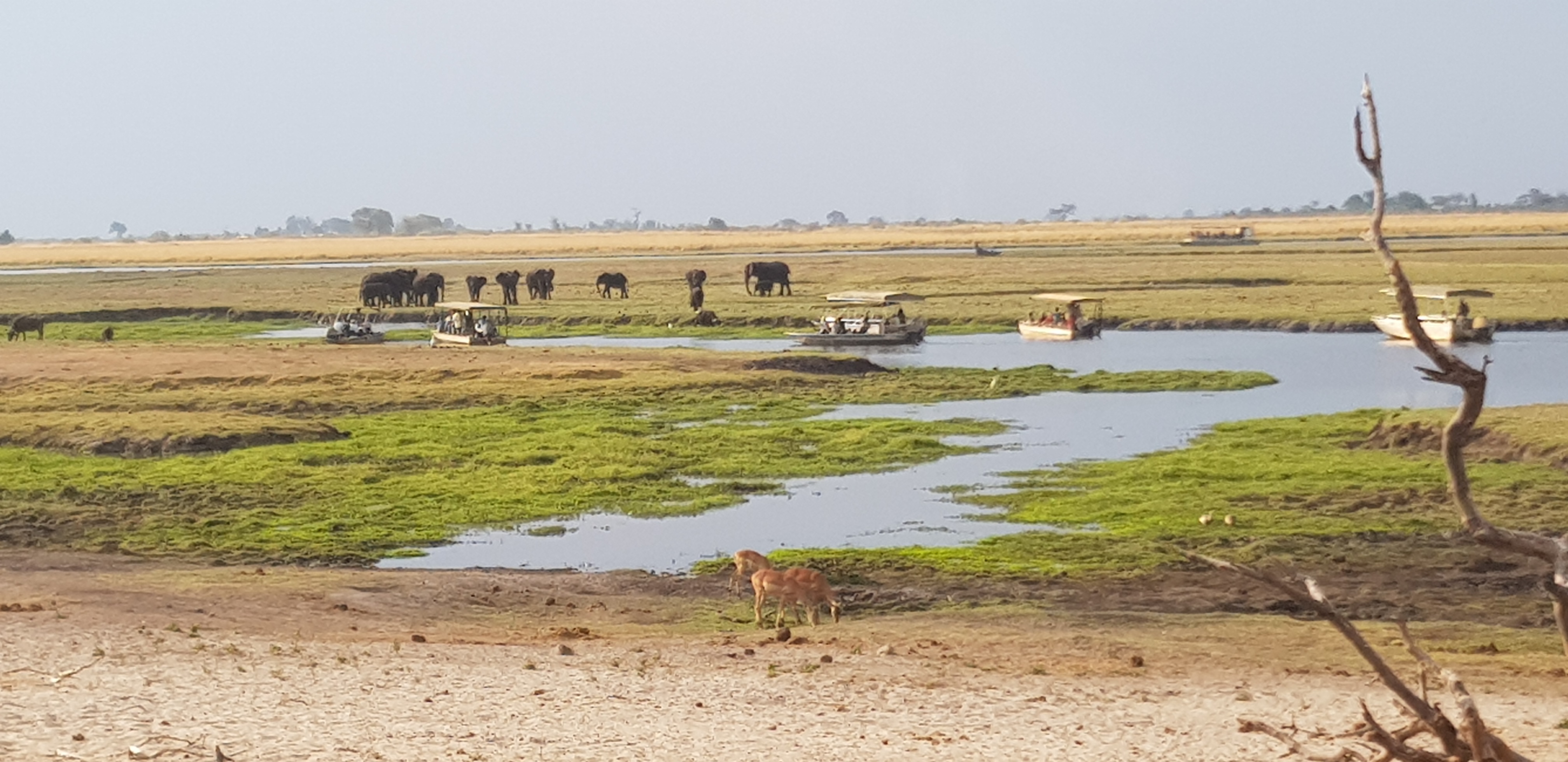
Aside from the inherent challenges associated with balancing numerous (sometimes competing, or even conflicting) objectives, PA managers often have limited guiding information at their disposal to set fees. This includes bench marking data on fees in similar attractions and in competing countries,  information about the PA offering, impression and expectations of visitors that determine their preferences and price points. Management authorities also increasingly relying on consumer research. Stated preference techniques (such as contingent valuation and choice experiments) as well as travel cost methods, which look at visitors’ willingness to pay (WTP), are particularly commonly used to inform PA pricing. Botswana had been no exception to the practice, this review combined most techniques appropriate to review and recommend new fees for Botswana protected areas. It also recommends revenue retention to support Botswana's efforts in responding to challenges such as its natural infrastructural maintenance and congestion along its wildlife hot spots areas. 

Case Studies
Case Studies

This Finance Needs Assessment (FNA) serves to estimate the “finance gap” associated with implementing Botswana’s National Biodiversity Strategy and Action Plan (NBSAP). It therefore quantifies the additional costs associated with the implementation of the NBSAP’s strategies and actions. A programme-based approach to costing the actions was adopted for this process and the BIOFIN methodology guided the assessment.

The results of the cost estimation process indicate that the additional funds required to implement the NBSAP would amount to approximately P833 million (US$79 million), including inflation, over the 10 years of the NBSAP, starting in 2016. This translates to an average of P83 million (US$8 million) per year, although funding needs vary substantially between years and are particularly high in the early years of implementation. Note that this amount excludes the salary costs for existing staff, some of whom would be responsible for the implementation of the NBSAP. The Biodiversity Finance Plan should therefore aim to lessen this funding/finance gap

Case Studies

Government Expenditure

The expenditure review focused on the priority sectors as identified through the Biodiversity Policy and Institutional Review (PIR), namely, water security, food security and sustainable tourism. These priorities are primarily the responsibility of the Ministries of Land Management, Water and Sanitation Services (MLWS), Agricultural Development and Food Security (MoA) and Environment, Natural Resources Conservation and Tourism (MENT). Historic expenditures for these government institutions starting in the 2012/13 fiscal year, and for key NGOs, were reviewed and biodiversity-related expenditures were identified and analysed. Sources of revenue linked to biodiversity were also assessed with a focus on MENT.

Total biodiversity expenditure was P 5.26 billion for 2012/2013 to 2018/2019, amounting to approximately 1.08% of total government expenditure. Average annual biodiversity expenditure for this period was P 751 million (see Table i). MENT is by far the largest spender on biodiversity, amounting to P 4 billion, which is equivalent to 67% of MENT’s total expenditure. MLWS spends the second-highest amount, P 780 million, which is equivalent to 5.6% of the ministry’s total expenditure, followed by MoA with biodiversity-related expenditure of P 489 million, equal to 3.6% of the ministry’s total expenditure.

The total projected future government expenditure on biodiversity management in Botswana between 2019/20 and 2025/26 is P 7.6 billion based on past expenditure by MENT, MoA, and MLWS, a ‘business-as-usual’ expenditure scenario, and a conservative budget growth scenario.

In terms of the six biodiversity management concerns, government biodiversity-related expenditure is projected to be split almost evenly between mainstreaming use (46%) and protection (54%).

Civil-society expenditure

Total expenditure, which can be attributed to six of Botswana’s largest NGOs were collected. In total, the NGO’s surveyed undertook P 210 million in biodiversity-related expenditure over the 2012/13 to 2018/19 period, with overall expenditure growing roughly in line with inflation.

Case Studies

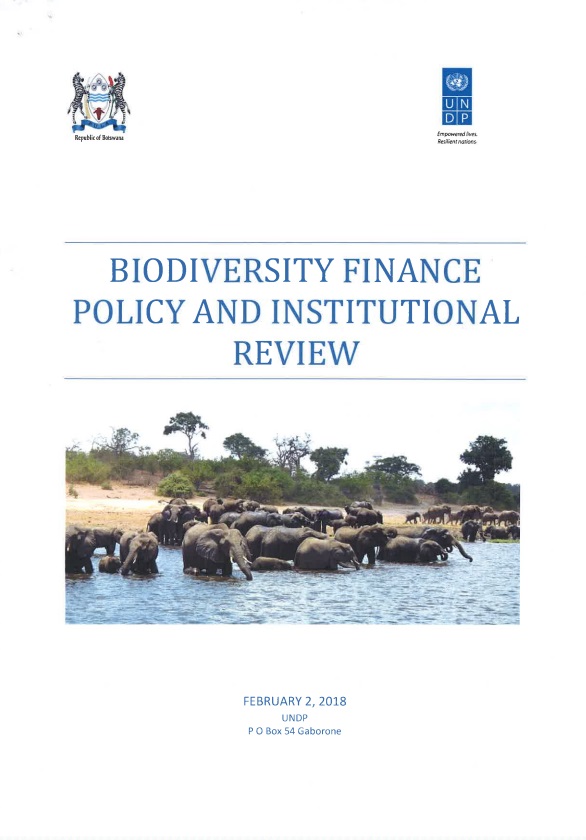
The PIR has been completed and is being readied for publishing. The process included a review of the policies, legal instruments and institutional set ups for biodiversity financing. Through the PIR, Botswana has been able to identify the priority sectors of focus for BIOFIN as well as recommendations of some of the finance solutions for consideration. Good policies and strategies are in place to guide the processes, however, weak institutional mechanisms to support implementation, fragmented responsibilities, and resource inadequacies, centralised decision making which also results in the resource burden on the side of government.

Knowledge Partners

Biodiversity and Ecosystem Services Network logo
Biodiversity finance resources library and forum.
Sustainable Development Finance Platform logo
Guidance and detailed descriptions of finance solutions for sustainable development.
NBSAP logo
Support for action on National Biodiversity Strategy and Action Plans