Knowledge base

Browse the Knowledge Platform

9 Results
Case Studies

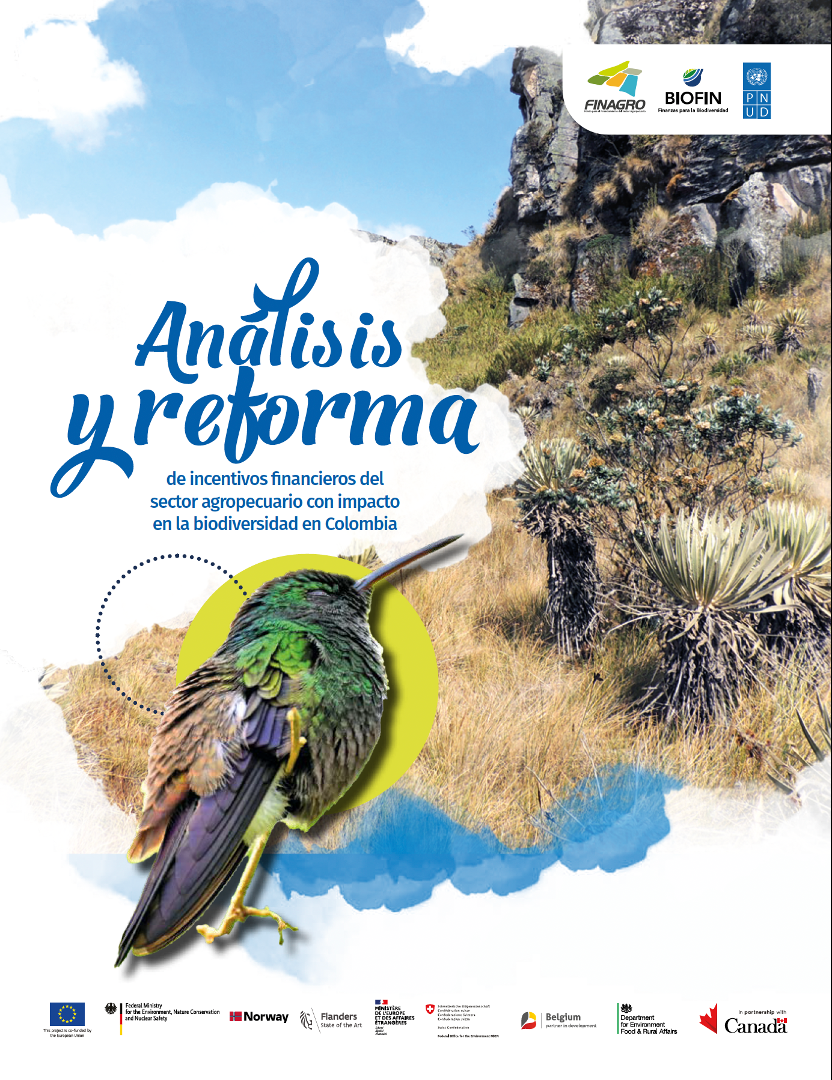
Conscientes del rol estratégico del financiamiento para transformar el campo colombiano, el Fondo para el Financiamiento del Sector Agropecuario (FINAGRO) y el PNUD diseñaron una ruta para reverdecer los créditos agropecuarios. El objetivo es que el acceso al crédito no solo impulse la productividad, sino que también fortalezca la conservación de los ecosistemas.

Este propósito es la materialización del análisis de incentivos del sector agropecuario con impactos negativos sobre la biodiversidad en Colombia realizado por la Iniciativa de Finanzas para la Biodiversidad (BIOFIN), como apoyo al gobierno nacional en el diseño de soluciones financieras que permitan movilizar, redireccionar y optimizar recursos públicos y privados para la conservación de la biodiversidad.

En ese sentido, este documento presenta los avances que el país ha tenido en el análisis y reforma de incentivos financieros perjudiciales, con el propósito de alinear las políticas de desarrollo rural y financiero con los compromisos internacionales adquiridos por el país ante el Convenio sobre la Diversidad Biológica (CDB). De igual forma, se presenta la primera ruta de reforma de incentivos para Colombia que FINAGRO y PNUD BIOFIN están implementando para alinear el crédito agropecuario a los modelos de producción sostenibles, mediante una metodología que combina el enfoque ecosistémico con criterios técnicos, financieros y sociales. El proceso ha convocado a expertos del sector financiero, agropecuario y ambiental para trabajar inicialmente en seis cadenas productivas: ganadería bovina, arroz, cacao, café, yuca y productos no maderables del bosque, seleccionadas por su importancia territorial, nivel de organización y demanda de crédito.

Case Studies

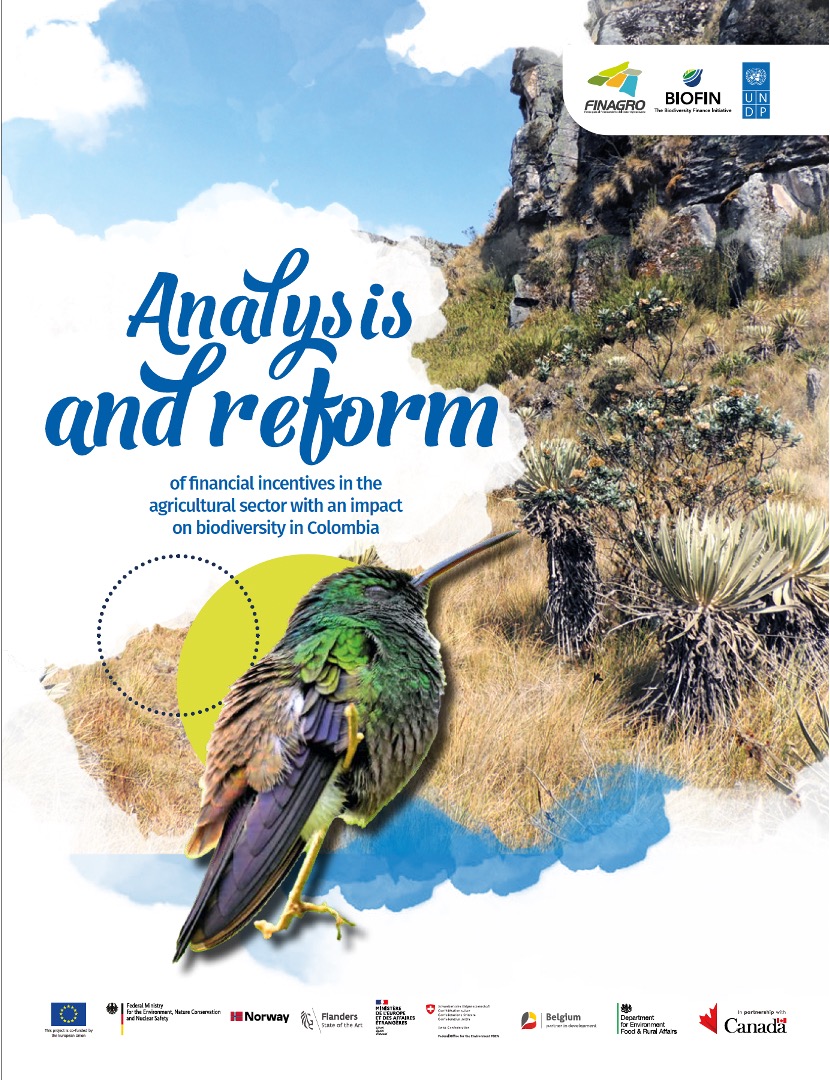
Aware of the strategic role of financing in transforming the Colombian countryside, The Financial Fund for the Agriculture Sector - FINAGRO and UNDP have designed a roadmap to greening agricultural credit. The goal is for access to credit to not only boost productivity but also strengthen ecosystem conservation.

This objective represents the materialization of the analysis of agricultural sector incentives with negative impacts on biodiversity in Colombia, conducted by the Biodiversity Finance Initiative (BIOFIN). It supports the national government in designing financial solutions aimed at mobilizing, redirecting, and optimizing public and private resources for biodiversity conservation.

In this context, this document presents the progress Colombia has made in analyzing and reforming harmful financial incentives, with the aim of aligning rural development and financial policies with the international commitments undertaken by the country under the Convention on Biological Diversity (CBD). Likewise, it introduces the first incentive reform roadmap for Colombia, which FINAGRO and UNDP BIOFIN are implementing to align agricultural credit with sustainable production models, using a methodology that combines the ecosystem approach with technical, financial, and social criteria. The process has brought together experts from the financial, agricultural, and environmental sectors to initially work on six productive value chains: cattle ranching, rice, cocoa, coffee, cassava, and non-timber forest products, selected for their territorial importance, level of organization, and credit demand.
Case Studies

Conscientes del rol estratégico del financiamiento para transformar el campo colombiano, el Fondo para el Financiamiento del Sector Agropecuario (FINAGRO) y el PNUD diseñaron una ruta para reverdecer los créditos agropecuarios. El objetivo es que el acceso al crédito no solo impulse la productividad, sino que también fortalezca la conservación de los ecosistemas.

Este propósito es la materialización del análisis de incentivos del sector agropecuario con impactos negativos sobre la biodiversidad en Colombia realizado por la Iniciativa de Finanzas para la Biodiversidad (BIOFIN), como apoyo al gobierno nacional en el diseño de soluciones financieras que permitan movilizar, redireccionar y optimizar recursos públicos y privados para la conservación de la biodiversidad.

En ese sentido, este documento presenta los avances que el país ha tenido en el análisis y reforma de incentivos financieros perjudiciales, con el propósito de alinear las políticas de desarrollo rural y financiero con los compromisos internacionales adquiridos por el país ante el Convenio sobre la Diversidad Biológica (CDB). De igual forma, se presenta la primera ruta de reforma de incentivos para Colombia que FINAGRO y PNUD BIOFIN están implementando para alinear el crédito agropecuario a los modelos de producción sostenibles, mediante una metodología que combina el enfoque ecosistémico con criterios técnicos, financieros y sociales. El proceso ha convocado a expertos del sector financiero, agropecuario y ambiental para trabajar inicialmente en seis cadenas productivas: ganadería bovina, arroz, cacao, café, yuca y productos no maderables del bosque, seleccionadas por su importancia territorial, nivel de organización y demanda de crédito.

Case Studies

Aware of the strategic role of financing in transforming the Colombian countryside, The Financial Fund for the Agriculture Sector - FINAGRO and UNDP have designed a roadmap to greening agricultural credit. The goal is for access to credit to not only boost productivity but also strengthen ecosystem conservation.

This objective represents the materialization of the analysis of agricultural sector incentives with negative impacts on biodiversity in Colombia, conducted by the Biodiversity Finance Initiative (BIOFIN). It supports the national government in designing financial solutions aimed at mobilizing, redirecting, and optimizing public and private resources for biodiversity conservation.

In this context, this document presents the progress Colombia has made in analyzing and reforming harmful financial incentives, with the aim of aligning rural development and financial policies with the international commitments undertaken by the country under the Convention on Biological Diversity (CBD). Likewise, it introduces the first incentive reform roadmap for Colombia, which FINAGRO and UNDP BIOFIN are implementing to align agricultural credit with sustainable production models, using a methodology that combines the ecosystem approach with technical, financial, and social criteria. The process has brought together experts from the financial, agricultural, and environmental sectors to initially work on six productive value chains: cattle ranching, rice, cocoa, coffee, cassava, and non-timber forest products, selected for their territorial importance, level of organization, and credit demand.
Case Studies

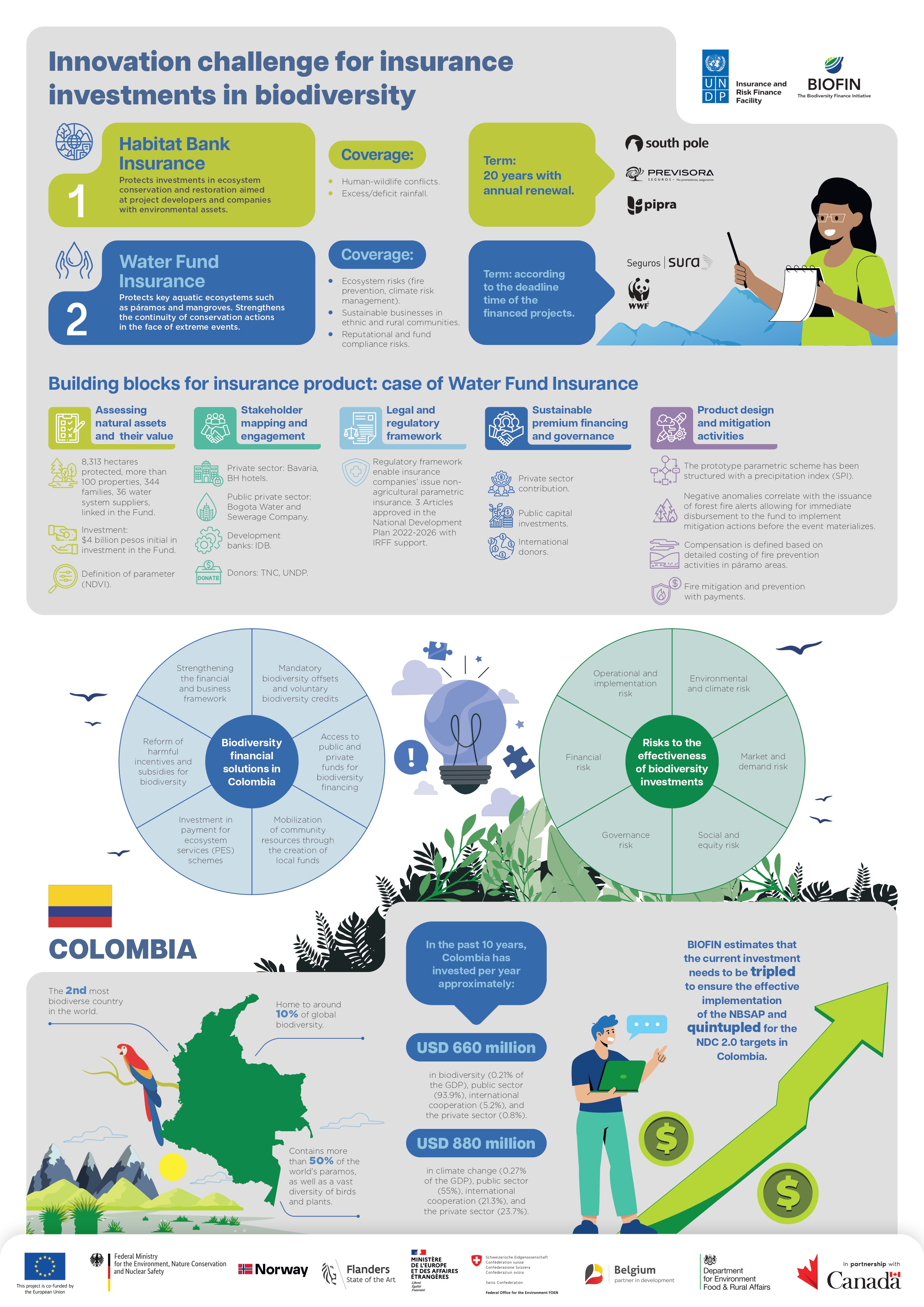
Colombia, one of the most biodiverse countries in the world, faces a significant financing gap to meet its biodiversity and climate commitments, despite allocating around USD 660 million annually. Since 2015, UNDP, through its BIOFIN initiative, has supported the promotion of innovative financial solutions such as payments for ecosystem services and access to public and private funding. In parallel, key risks affecting the effectiveness of biodiversity investments have been identified, including environmental, social, and financial risks. To mitigate these, UNDP—through BIOFIN and the Investment Risk Finance Facility (IRFF), in partnership with the Colombian Federation of Insurers and other partners such as Previsora, Suramericana, South Pole, WWF, and Pipra—has promoted the development of specialized insurance products. This insure instrument, implemented through mechanisms like Habitat Banks and the Water Fund, aim to protect investments against critical risks, foster nature-based investments, and ensure the sustainability of conservation efforts.

Case Studies

En los últimos años, la creciente conciencia sobre la interdependencia entre el desarrollo humano y la naturaleza ha resaltado la urgencia de abordar los impactos negativos en ecosistemas, biodiversidad y recursos naturales. En respuesta a esta crisis, el Convenio sobre la Diversidad Biológica - CBD, mediante el Marco Global de Biodiversidad Kunming-Montreal -MGBKM, ha instado a los sectores económicos a participar activamente en la implementación de los Planes Nacionales de Acción de Biodiversidad - NBSAP, por sus siglas en inglés.

En Colombia, el sector privado ha respondido a esta necesidad desarrollando una estrategia que se enfoca en dos áreas clave de acuerdo con las metas 15 y 19 del MGBKM: la gestión de riesgos ambientales y la movilización de recursos para la conservación y uso sostenible de la biodiversidad. Estas acciones incluyen la integración de estándares de sostenibilidad en sus operaciones y la identificación de la dependencia de la naturaleza en sus cadenas de valor.

Este documento, elaborado por la Asociación Nacional de Empresarios de Colombia - ANDI, el Centro Nacional del Agua y la Biodiversidad - CNAB, el Programa de las Naciones Unidas para el Desarrollo - PNUD, a través de su iniciativa BIOFIN, busca resaltar el rol del sector privado en la gestión de la biodiversidad en Colombia. Por medio de un análisis de la normativa nacional, la financiación actual y las necesidades futuras, se presenta la Hoja de Ruta de Biodiversidad y Empresa como un marco para promover las inversiones en biodiversidad y asegurar su sostenibilidad a largo plazo.

Case Studies

This document provides an initial analysis of harmful incentives affecting biodiversity in Colombia, laying the groundwork for discussions that support the country’s international environmental commitments.

The findings are presented in two phases:

  • National-Level Analysis: The first phase examines bibliographic, statistical, and cartographic data to identify incentives that may negatively impact biodiversity. It also offers recommendations for developing a reform roadmap.
  • Regional Case Study – La Mojana: The second phase assesses how these incentives affect ecosystem services in the La Mojana region. This analysis integrates technical, statistical, and cartographic information with fieldwork, including workshops and structured and semi-structured interviews with local communities, farmer associations, producers, and public institutions. The aim is to capture their perspectives on changes in the ecosystem services essential to their livelihoods.

This study was conducted by UNDP through its BIOFIN initiative in Colombia, with technical support from the Latin American Center for Rural Development - Rimisp, in strategic partnership with Colombia Rural Organization and the Research Center on Agri-Food Systems at Universidad de Los Andes. It also draws on technical analyses from the Mojana “Climate and Life” Program, which UNDP is implementing with funding from the Green Climate Fund and the Colombian government.

Case Studies

This document provides an initial analysis of harmful incentives affecting biodiversity in Colombia, laying the groundwork for discussions that support the country’s international environmental commitments.

The findings are presented in two phases:

  • National-Level Analysis: The first phase examines bibliographic, statistical, and cartographic data to identify incentives that may negatively impact biodiversity. It also offers recommendations for developing a reform roadmap.
  • Regional Case Study – La Mojana: The second phase assesses how these incentives affect ecosystem services in the La Mojana region. This analysis integrates technical, statistical, and cartographic information with fieldwork, including workshops and structured and semi-structured interviews with local communities, farmer associations, producers, and public institutions. The aim is to capture their perspectives on changes in the ecosystem services essential to their livelihoods.

This study was conducted by UNDP through its BIOFIN initiative in Colombia, with technical support from the Latin American Center for Rural Development - Rimisp, in strategic partnership with Colombia Rural Organization and the Research Center on Agri-Food Systems at Universidad de Los Andes. It also draws on technical analyses from the Mojana “Climate and Life” Program, which UNDP is implementing with funding from the Green Climate Fund and the Colombian government.

Case Studies

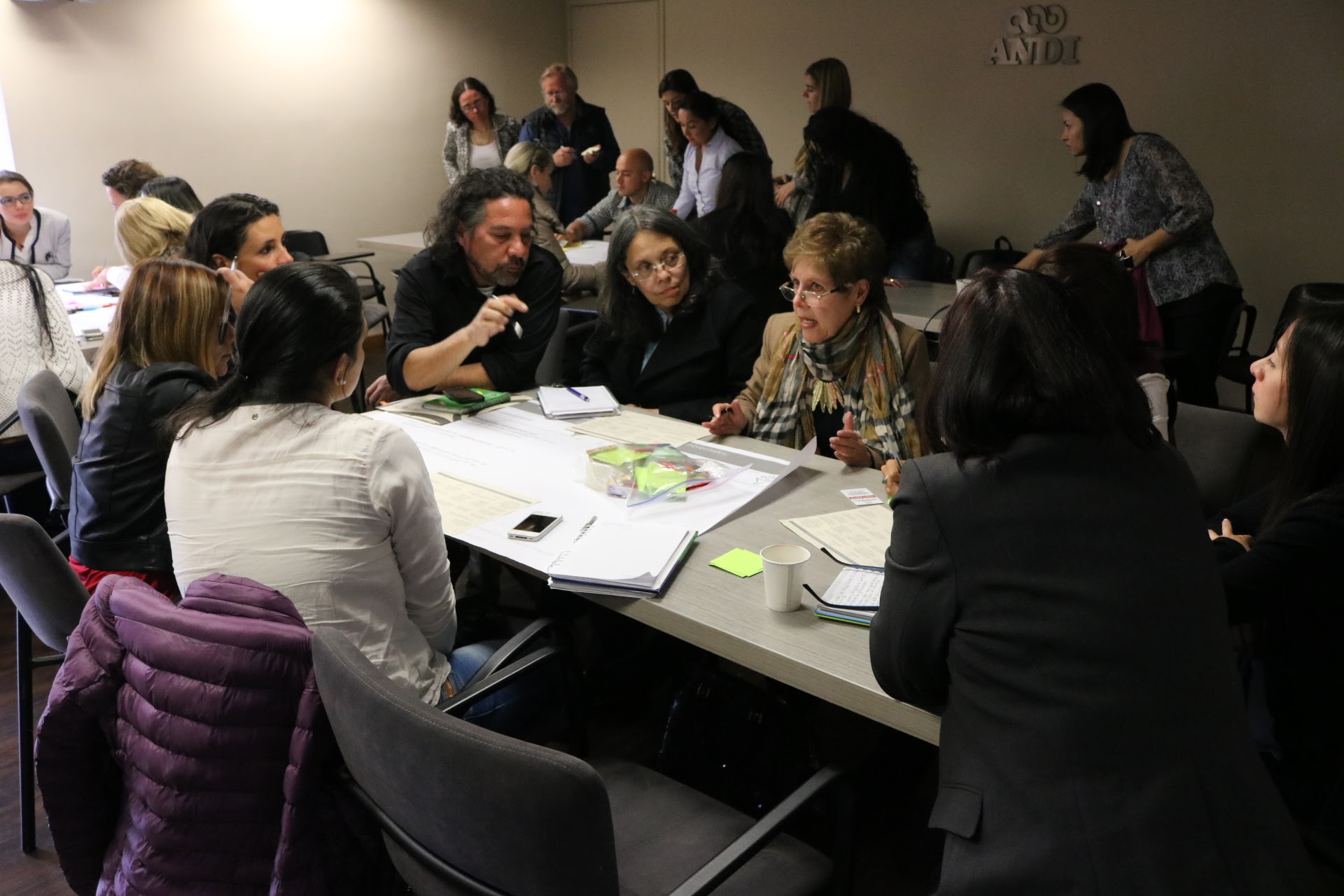
Este documento consolida las memorias del Taller "Compensaciones ambientales en proyectos lineales" realizado el 23 de agosto de 2017, organizado por la Alianza conformada por la Asociación Nacional de Empresarios de Colombia (ANDI), el Instituto Alexander Von Humboldt (IAvH), The Nature Conservancy (TNC), y el Programa de Naciones Unidas para el Desarrollo (PNUD) y su iniciativa para el financiamiento de la biodiversidad (BIOFIN).

En el taller participaron expertos del sector productivo, como autoridades y organizaciones ambientales, para identificar las principales barreras que afectan la implementación de las compensaciones en proyectos lineales, y las oportunidades existentes para dar solución a las mismas.

Este escenario de trabajo se realizó como aporte, en pro de contribuir al proceso que el Ministerio de Ambiente y Desarrollo Sostenible adelantaba en la actualización de la estrategia de compensaciones bióticas, así como al conjunto de desarrollos alrededor del manual de compensaciones, guías, protocolos y lineamientos, que facilitan y dan valor agregado a la estrategia.


A su vez se incorpora como Anexo 1 en la publicación resultado de la Alianza "Compensaciones bióticas en proyectos lineales: lineamientos para su gestión efectiva".

Knowledge Partners

Biodiversity and Ecosystem Services Network logo
Biodiversity finance resources library and forum.
Sustainable Development Finance Platform logo
Guidance and detailed descriptions of finance solutions for sustainable development.
NBSAP logo
Support for action on National Biodiversity Strategy and Action Plans