Knowledge base

Browse the Knowledge Platform

649 Results
Publications

The Biodiversity Finance Initiative (BIOFIN) activity in Thailand was officially approved on 24 October 2014 by UNDP under UNDP-GEF global BIOFIN. Thailand thus becomes part of the UNDP-managed Biodiversity Finance Initiative overseen by UNDP’s global and regional Ecosystems and Biodiversity team.   

The key institutions involved in the implementation of BIOFIN in Thailand include (i) BIOFIN Project Board (National Steer-ing Committee) represented by key partners, namely Office of the Prime Minister (OPM), Ministry of Natural Resources and Environment (MONRE), Ministry of Agriculture and Co-operatives (MOAC), Ministry of Science and Technology (MOST) and the Ministry of Public Health (MOPH); (ii) BIOFIN Secretariat Team consisting of (a) the Secretariat to Project Board; (b) NESDB officials; (c) ONEP officials (d) BIOFIN Technical Advisory team and (e) UNDP/BIOFIN Thailand; (iii) BIOFIN Working Group consisting of representatives from key government partners to work closely with the BIOFIN Tech-nical Advisory team; (iv) BIOFIN Technical Advisory team consisting of Environmental Economist and Team Leader, Policy and Institutional Expert and Public Finance Expert; and, finally (v) BIOFIN Project Management Unit housed in the UNDP Country Office for Thailand comprising the Project Coordinator and the Project Assistant, oversight by Inclusive Green Growth and Sustainable Development Unit at UNDP Thailand and Global BIOFIN.

Publications

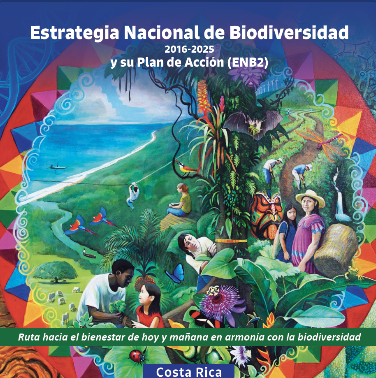
La Política Nacional de Biodiversidad (PNB) oficializada mediante el Decreto Ejecutivo No. 39118-MINAE publicado en La Gaceta No.178 del 11 de setiembre del 2015, es el resultado de un proceso participativo, en el cual diversos actores, representantes institucionales, de la sociedad civil y del sector privado aportaron sus conocimientos y sus experiencias de lo que debe ser la conservación y el uso sostenible de la biodiversidad; así como la distribución justa y equitativa de los beneficios que se deriven de su utilización.

Publications

Biodiversity has become a fundamental concept in the development of policies for sustainable social and economic development. With the State Great Khural ratifying the Convention on Biological Diversity in 1993, Mongolia became the 30th nation to officially join this international agreement. 

The Mongolian Government first passed the “National Strategic Action Plan for the Protection of Biodiversity” in 1996. The action plan comprises from 21 goals and 87 actions covering the research, protection, and sustainable use of biodiversity, together with goals for sector and cross-sectoral policy and regulation improvement. Two assessments have been made in the past concerning program implementation, with a study in 2010 concluding that 96% of the goals had been implemented, indicating that full implementation had been achieved (Batbold, Laurie 2002, Adiya et al., 2010). 

Publications

The National Biodiversity Strategy and Action Plan (NBSAP) is a requirement of contracting parties to the Convention on Biological Diversity (CBD). NBSAPs set out a strategy and plan for contracting parties to fulfil the objectives of the Convention. With the adoption of the CBD’s Strategic Plan for Biodiversity for 2011-2020, parties agreed to revise and align their NBSAPs to the Strategic Plan and the Aichi Targets.  

This document is South Africa’s revised NBSAP for the period 2015 – 2025. It identifies the priorities for biodiversity management in South Africa for this period, aligning these with the priorities and targets in the global agenda, as well as national development imperatives. 

South Africa is a country with a rich endowment of natural resources, which include its biodiversity and ecosystems. The diversity of these ecosystems delivers a range of services that are essential to people and the development and growth of the economy. The NBSAP outlines a path to ensure the management of biodiversity assets and ecological infrastructure continue to support South Africa’s development path and play an important role in underpinning the economy. 

Publications

The National Biodiversity Strategy and Action Plan (NBSAP) is a requirement of contracting parties to the Convention on Biological Diversity (CBD). NBSAPs set out a strategy and plan for contracting parties to fulfil the objectives of the Convention. With the adoption of the CBD’s Strategic Plan for Biodiversity for 2011-2020, parties agreed to revise and align their NBSAPs to the Strategic Plan and the Aichi Targets.  

This document is South Africa’s revised NBSAP for the period 2015 – 2025. It identifies the priorities for biodiversity management in South Africa for this period, aligning these with the priorities and targets in the global agenda, as well as national development imperatives. 

South Africa is a country with a rich endowment of natural resources, which include its biodiversity and ecosystems. The diversity of these ecosystems delivers a range of services that are essential to people and the development and growth of the economy. The NBSAP outlines a path to ensure the management of biodiversity assets and ecological infrastructure continue to support South Africa’s development path and play an important role in underpinning the economy. 

Publications

The National Biodiversity Strategy and Action Plan (NBSAP) is a requirement of contracting parties to the Convention on Biological Diversity (CBD). NBSAPs set out a strategy and plan for contracting parties to fulfil the objectives of the Convention. With the adoption of the CBD’s Strategic Plan for Biodiversity for 2011-2020, parties agreed to revise and align their NBSAPs to the Strategic Plan and the Aichi Targets.  

This document is South Africa’s revised NBSAP for the period 2015 – 2025. It identifies the priorities for biodiversity management in South Africa for this period, aligning these with the priorities and targets in the global agenda, as well as national development imperatives. 

South Africa is a country with a rich endowment of natural resources, which include its biodiversity and ecosystems. The diversity of these ecosystems delivers a range of services that are essential to people and the development and growth of the economy. The NBSAP outlines a path to ensure the management of biodiversity assets and ecological infrastructure continue to support South Africa’s development path and play an important role in underpinning the economy. 

Publications

This report is a supplement to the Policy and Institutional Review (PIR) Final Report (November 2014) of the Biodiversity Finance Initiative (BIOFIN) – Philippines. 

In general, the BIOFIN aims to implement comprehensive national resource mobilization strategies at national level by supporting governments in reviewing policies and institutions relevant for biodiversity finance, determining baseline investment and assessing the costs of implementing the National Biodiversity Strategies and Action Plans and quantifying the biodiversity finance gap.1 

The PIR component of the BIOFIN methodology concluded last year, serves to provide the review of context by identifying the biodiversity-related policies and institutions. The key results of the PIR are: 

(1) Policies that should be enhanced, improved, amended or modified to achieve positive and prevent negative biodiversity and ecosystem status and trends, 

(2) Policies/Recommendations for Resource Mobilisation.

Publications

The National Biodiversity Strategy and Action Plan (NBSAP) is a requirement of contracting parties to the Convention on Biological Diversity (CBD). NBSAPs set out a strategy and plan for contracting parties to fulfil the objectives of the Convention. With the adoption of the CBD’s Strategic Plan for Biodiversity for 2011-2020, parties agreed to revise and align their NBSAPs to the Strategic Plan and the Aichi Targets.  

This document is South Africa’s revised NBSAP for the period 2015 – 2025. It identifies the priorities for biodiversity management in South Africa for this period, aligning these with the priorities and targets in the global agenda, as well as national development imperatives. 

South Africa is a country with a rich endowment of natural resources, which include its biodiversity and ecosystems. The diversity of these ecosystems delivers a range of services that are essential to people and the development and growth of the economy. The NBSAP outlines a path to ensure the management of biodiversity assets and ecological infrastructure continue to support South Africa’s development path and play an important role in underpinning the economy. 

Publications

The National Biodiversity Strategy and Action Plan (NBSAP) is a requirement of contracting parties to the Convention on Biological Diversity (CBD). NBSAPs set out a strategy and plan for contracting parties to fulfil the objectives of the Convention. With the adoption of the CBD’s Strategic Plan for Biodiversity for 2011-2020, parties agreed to revise and align their NBSAPs to the Strategic Plan and the Aichi Targets.  

This document is South Africa’s revised NBSAP for the period 2015 – 2025. It identifies the priorities for biodiversity management in South Africa for this period, aligning these with the priorities and targets in the global agenda, as well as national development imperatives. 

South Africa is a country with a rich endowment of natural resources, which include its biodiversity and ecosystems. The diversity of these ecosystems delivers a range of services that are essential to people and the development and growth of the economy. The NBSAP outlines a path to ensure the management of biodiversity assets and ecological infrastructure continue to support South Africa’s development path and play an important role in underpinning the economy. 

Publications

These guidelines and action plans aim at establishing appropriate guidance to enable mobilization and proper use of financial resources for financing biodiversity conservation in Uganda. The guidelines and actions plan will address the significant financial barriers to effective implementation of the NBSAP and other national biodiversity conservation plans and programmes in the country. In Uganda’s National Development Plan (NDP), biodiversity is characterised as one of the components of the environment sector, an enabling component of the NDP.  Therefore, biodiversity conservation is an important driver than enhances the performance of primary and secondary sectors such as agriculture, forestry, tourism and industry.

Publications

The Philippines PIR version 1, published in November 2014. 

Publications

El V Informe Nacional de Cuba al Convenio sobre la Diversidad Biológica, constituye una revisión pormenorizada de la implementación de acciones por parte de múltiples entidades del Ministerio de Ciencia, Tecnología y Medio Ambiente y de otros Organismos de la Administracion Central del Estado, en ámbitos de política, gestión, cooperación, investigación y regulación en materia de biodiversidad.
 

Knowledge Partners

Biodiversity and Ecosystem Services Network logo
Biodiversity finance resources library and forum.
Sustainable Development Finance Platform logo
Guidance and detailed descriptions of finance solutions for sustainable development.

NBSAP logo
Support for action on National Biodiversity Strategy and Action Plans