Knowledge base

Browse the Knowledge Platform

636 Results
Publications

Biodiversity Credit Alliance (BCA) has published its Issue Paper #3 on the definition of a biodiversity credit.

The issue paper contributes to the clarification of concepts and language which are instrumental in the process of developing an inclusive and high-integrity market in biodiversity credits. In the rapidly emerging world of ecological units and markets, all stakeholders need to speak the same language. This issue paper brings together many perspectives to present an inclusive but clear definition that sets minimum standards for biodiversity credits and projects associated with them.

Publications

BIOFIN คืออะไร

โครงการความร่วมมือระดับโลกที่เรียกว่า ไบโอฟิน (BIOFIN: The Biodiversity Finance Initiative) ได้ถือ กำเนิดขึ้นเมื่อปี พศ 2555 จากการริเริ่มของโครงการพัฒนาแห่งสหประชาชาติ (UNDP: United Nations Development Programme) ในคราวการประชุมภาคีอนุสัญญาว่าด้วยความหลากหลายทางชีวภาพ

(Convention on Biological Diversity: CBD) โดยในช่วงเริ่มต้นมีสมาชิก 12 ประเทศที่นำระบบและ

วิธีการแบบใหม่มาทดลองใช้ในการแก้ไขปัญหาด้านการเงินและงบประมาณเพื่อการดูแลความหลากหลาย ทางชีวภาพ ซึ่งเป็นที่รู้จักกันในชื่อ BIOFIN methodology หรือกระบวนการไบโอฟิน ซึ่งปัจจุบันมีประเทศ ที่ร่วมโครงการจำนวนกว่า 30 ประเทศ ได้แก่ เบลิซ บราซิล บอตสวานา ภูฏาน ชิลี โคลอมเบีย คอสตาริกา คิวบา เอกวาดอร์ ฟิจิ จอร์เจีย กัวเตมาลา อินเดีย อินโดนีเซีย คาซักสถาน คีร์กีซสถาน มาเลเซีย เม็กซิโก มองโกเลีย โมซัมบิก นามิเบีย เปรู ฟิลิปปินส์ รวันดา เซเชลล์ แอฟริกาใต้ ศรีลังกา ไทย ยูกันดา เวียดนาม และแซมเบีย โดยประเทศไทยได้เริ่มดำเนินโครงการนี้ผ่านการเห็นชอบของรัฐบาลไทย นำโดยสำนักงาน คณะกรรมการพัฒนาการเศรษฐกิจและสังคมแห่งชาติ เมื่อวันที่ 4 มิถุนายน 2557

วัตถุประสงค์หลักของโครงการ BIOFIN คือ การสนับสนุนทางด้านวิชาการของโครงการพัฒนาแห่ง

สหประชาชาติ โดยนำกรอบความคิดและกระบวนการ BIOFIN methodology เป็นองค์ความรู้หลักในการ บริหารจัดการความหลากหลายทางชีวภาพได้อย่างยั่งยืน รวมทั้งสร้างองค์ความรู้ในฐานที่กว้างขึ้นผ่านความ ร่วมมือระหว่างประเทศ และระหว่างภูมิภาคในการระดมทรัพยากรเพื่อการอนุรักษ์ความหลากหลายทาง ชีวภาพ ดังนั้น โครงการการริเริ่มการเงินเพื่อความหลากหลายทางชีวภาพ หรือ BIOFIN จึงมุ่งหวังให้

ประเทศสมาชิกสามารถเรียนรู้วิธีการบริหารจัดการการเงิน บุคคลากร และทรัพยากรด้านอื่นๆ เพื่อดูแล รักษาความหลากหลายทางชีวภาพอย่างมีประสิทธิภาพ โดยคุณลักษณะสำคัญของ BIOFIN methodology คือ การพัฒนาแผนการระดมทุนเพื่ออนุรักษ์และฟื้นฟู ความหลากหลายทางชีวภาพ  และการจัดลำดับ

ความสำคัญของโครงการที่ควรได้รับการดูแลอย่างถูกที่ถูกเวลา ซึ่งเงินทุนควรจะมาจากแหล่งต่างๆ ไม่ว่าจะ เป็นระดับชาติหรือระดับนานาชาติ ทั้งภาครัฐและเอกชน ในรูปแบบดั้งเดิมและเป็นนวัตกรรมใหม่ๆ เพื่อหา แนวทางผสมผสานทางการลงทุนเพื่อความหลากหลายทางชีวภาพที่เหมาะสมของ   แต่ละประเทศ เพื่อ สร้างผลลัพท์ทางการเงิน 4 ประการ คือ (1) สร้างรายได้จากการบริหารจัดการความหลากหลายทาง ชีวภาพ (Generate revenue) (2) วางกรอบงบประมาณที่เกี่ยวกับความหลากหลายทางชีวภาพอย่าง เหมาะสม (Realign current expenditure) (3) หลีกเลี่ยงค่าใช้จ่ายที่ต้องใช้ฟื้นฟูทรัพยากรความ หลากหลายทางชีวภาพ (Avoid the need for future biodiversity expenditures) และ (4) เกิด การลงทุนด้านความหลากหลายทางชีวภาพที่มีประสิทธิภาพและประสิทธิผลมากขึ้น (Deliver financial resources more effectively and efficiently)   

Publications

The report delves into several areas. Firstly, a synopsis of the prevailing environmental policy, legislation, and institutional arrangements which directly or indirectly affect biodiversity conservation, environmental safeguarding, and related legal enforcement. Secondly, it looks at Uzbekistan’s execution of obligations under the CBD and other international biodiversity conservation treaties, and its efforts to expand ecosystem services. Thirdly, the report inspects state subsidies to various sectors and their consequent impact on biodiversity and ecosystem service development. Finally, the report provides for an assessment of the status and trajectories of biodiversity, pinpointing primary adverse trend drivers and proposing mitigation measures.

Publications

The report examines Uzbekistan’s public biodiversity funding from 2020 to 2022 and forecasts spending for 2024 to 2028. Environmental and biodiversity expenditures are notably low, at 1.62% and 0.5% respectively. It underscores the need for a budget tagging system to align spending with biodiversity commitments, which would enhance data tracking and analysis. The report also outlines three future spending scenarios and offers recommendations for biodiversity conservation.

Publications

Biodiversity Credit Alliance's (BCA) Latest Issue Paper on Biodiversity Credit Market Integrity surveyed comparable review mechanisms to inform the key review steps and overall approach to ensure quality and integrity. Review processes typically include five key steps, from application to the final written assessment. A review should be based on clear principles, guidelines, and criteria. Such criteria must include considerations related to the role of Indigenous Peoples and Local Communities as rights holders and custodians of a majority of the world’s biodiversity. This issue paper represents one part of the BCA's work towards achieving quality and integrity in the biodiversity credit market. 

Guidelines

Since 2014, more than 40 countries have developed national Biodiversity Finance Plans (BFPs) and more than 85 countries have started to design Integrated National Financing Frameworks (INFFs) in recent years. Both processes are currently being significantly expanded. In line with UNDP's vision, financing for sustainable development should drive progress towards the 2030 Agenda, the Paris Agreement and the global biodiversity framework in an integrated manner.

This brief note aims to explore the optimal integration of INFFs and BFPs at the national level and provide guidance to country offices and national stakeholders.

DOWNLOAD

Publications

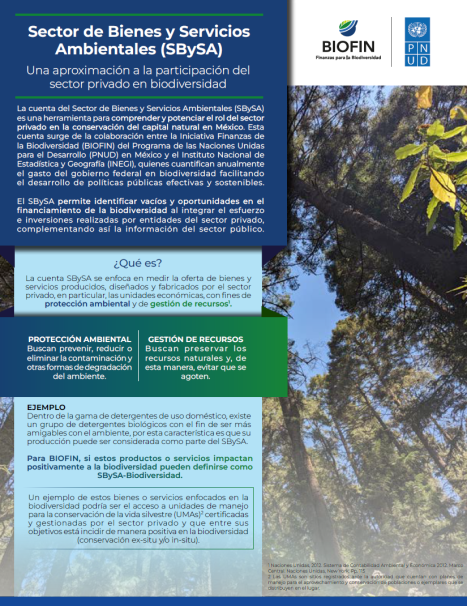
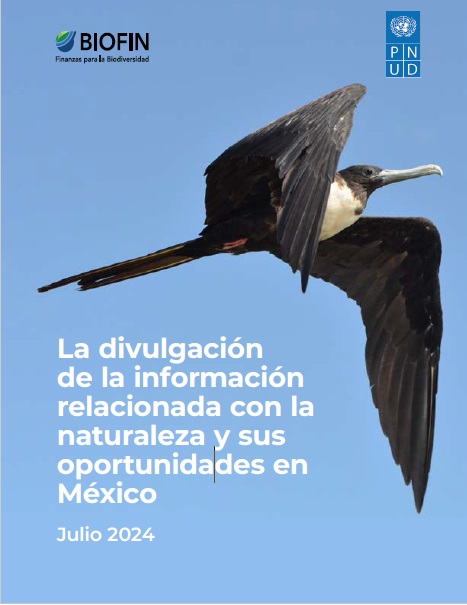
The new BIOFIN Mexico brochure presents a comprehensive overview of the initiative, providing detailed information about its work, objectives, and financing solutions. This material offers an accessible and clear look at the activities carried out and the strategies implemented for biodiversity conservation. Additionally, the brochure highlights the team's commitment and their contribution to sustainable development, while also showcasing the achievements to date. It is a valuable tool that informs about the initiative's work and its impact on biodiversity protection.

Publications

El nuevo folleto de BIOFIN México presenta una visión completa de la iniciativa, proporcionando información detallada sobre su trabajo, objetivos y soluciones de financiamiento. Este material ofrece una mirada accesible y clara a las actividades realizadas y las estrategias implementadas para la conservación de la biodiversidad. Además, el folleto destaca el compromiso del equipo y su contribución al desarrollo sostenible, sin dejar de lado los logros obtenidos hasta la fecha. Es una herramienta valiosa que informa sobre el trabajo de la Iniciativa y su impacto en la protección de la biodiversidad.

Publications

In the COP15, countries agreed to a Global Biodiversity Framework which sets targets to protect 30% of the earth’s land, inland waters, oceans and coastal areas by 2030 with emphasis on areas important for biodiversity and ecosystem services. Expanding restricted spaces for conservation may present transition risks to mining, agriculture and tourism sectors if applied in the Philippines.  The Philippines has sound strategies and comprehensive environmental laws and policies, but some penalties need updating.  Taxes, subsidies, fines, and penalties if set high enough, are effective mechanisms to discourage pollutive activities and promote green practices. Policies to attract green investments using incentives are found in the Green Jobs Act and AFRD or the Agriculture, Fisheries and Rural Development Financing Enhancement Act. These recent laws refer to “green” activities, but the term will need further definition.

Biodiversity financing requires significant investments, but public budgets are inadequate. The BIOFIN public and private biodiversity expenditure study shows scenarios where better alignment of public budgets can augment spending for biodiversity in the ENR sectors. Private finance will be needed to augment financing for “green” activities with nature-positive outcomes and climate change adaptation. The Philippines recently published a Sustainable Finance Road map which outlines plans to raise finance through a mix of tools, including better disclosures and the adoption of a green taxonomy. The Philippine Financial System holds substantial assets where a large part is held by banks. The larger banks lend more to the capital-intensive sectors, whereas the smaller banks lend to agriculture and retail consumers, mostly MSMEs. Regardless of size, bank portfolios are exposed to climate and nature risks.

This technical brief highlights the findings and recommendations of the study conducted by BIOFIN Philippines on the country’s readiness for nature-related finance disclosures. The study assessed Philippines’ institutional, policy and regulatory readiness for disclosure of nature-related finance and risks. It also assessed the institutional arrangements readiness and capacities of national and local associations of economic agents and put forward a set of entry points and recommendations moving forward.

NAT00732.jpg

Photo credit: Photo by Department of Tourism and Department of Environment and Natural Resources in the Philippines

DOWNLOAD

Publications

At the Conference of the Parties to the Convention on Biological Diversity 15 (CBD COP 15) in 2022, countries agreed to review and update their National Biodiversity Strategy and Action Plans (NBSAPs) and to develop, update and implement national Biodiversity Finance Plans (BFPs).

The NBSAPs serve as the basic policy framework for the implementation of the CBD at the national level and BFPs aim to close the biodiversity financing gap and support efforts to achieve the NBSAP targets.

This report provides a brief overview of the two policy mechanisms, emphasizes their complementarity and guides their joint development to deepen their impact.

ENGLISH

FRENCH

RUSSIAN


Publications

This publication was produced within the framework of the Biodiversity Finance Initiative (BIOFIN) Argentina project. The analysis and conclusions expressed herein do not necessarily reflect the views of the United Nations Development Programme, its Executive Board, or its Member States.

UNDP builds partnerships at all levels of society to help nations withstand crises and promotes and sustains growth that improves the quality of life for all. Present on the ground in nearly 170 countries and territories, we offer a global perspective and local knowledge in service of people and nations.

Publications

This publication was produced within the framework of the Biodiversity Finance Initiative (BIOFIN) Argentina project. The analysis and conclusions expressed herein do not necessarily reflect the views of the United Nations Development Programme, its Executive Board, or its Member States.

UNDP builds partnerships at all levels of society to help nations withstand crises and drive and sustain the kind of growth that improves the quality of life for everyone. Present in nearly 170 countries and territories, we offer a global perspective and local insight to empower people and nations.

Knowledge Partners

Biodiversity and Ecosystem Services Network logo
Biodiversity finance resources library and forum.
Sustainable Development Finance Platform logo
Guidance and detailed descriptions of finance solutions for sustainable development.

NBSAP logo
Support for action on National Biodiversity Strategy and Action Plans