

Knowledge Base

KNOWLEDGE HUB

Knowledge Hub

Access BIOFIN's library of resources, including flagship publications, country reports, finance solution case studies, webinars, explainer videos, podcasts, and more.

Key Publications

Publications

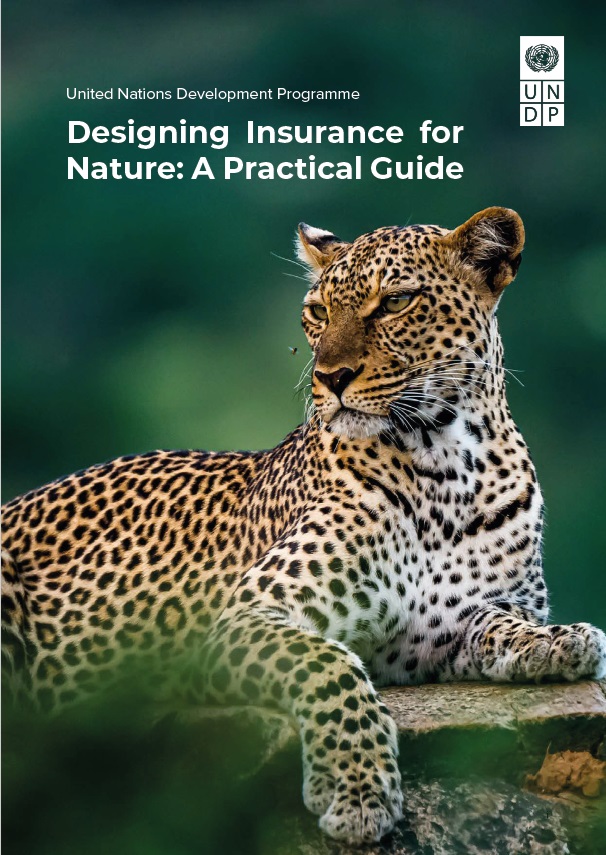
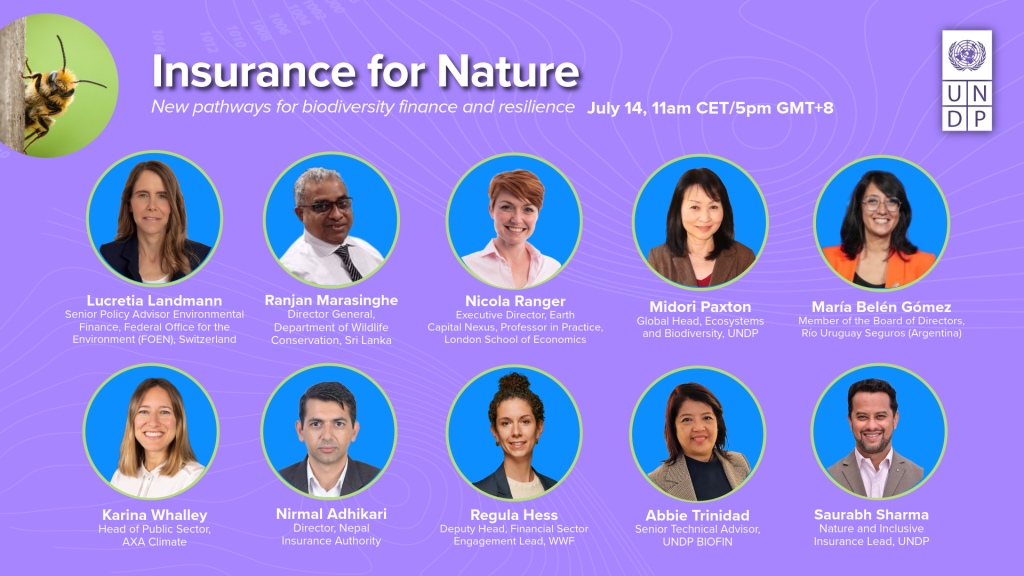
Insurance can play a crucial role in biodiversity conservation by providing financial protection against risks to natural assets, incentivizing sustainable practices, and securing key investments.

Publications

In 2022, countries adopted new global biodiversity targets under the Kunming-Montreal Global Biodiversity Framework (GBF), revisiting many goals that had gone unachieved or underachieved over the past decade.

Publications

Global Biodiversity Expenditure (GLOBE) is a taxonomy that categorizes all potential public expenditures for biodiversity.

The taxonomy consists of two components:

Publications

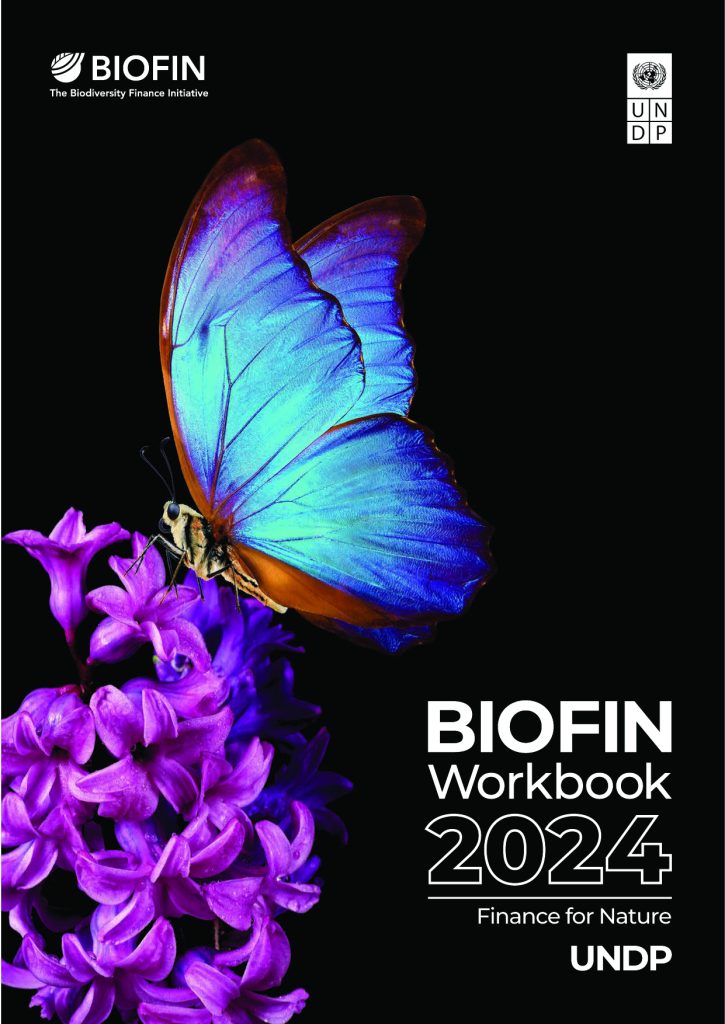
The BIOFIN Workbook 2024 provides detailed guidance to design and implement national biodiversity finance plans.  These are not mere plans. They set out a process to engage a coalition of actors around the issue of biodiversity finance for an extended time.

Publications

At the Conference of the Parties to the Convention on Biological Diversity 15 (CBD COP 15) in 2022, countries agreed to review and update their National Biodiversity Strategy and Action Plans

Publications

Well-intentioned subsidies aimed at socio-economic goals can have unintended negative impacts on the environment, including biodiversity. The BIOFIN team has developed a step-by-step guide to repurpose such subsidies and improve their positive impacts on people and nature.

Publications

The Kunming-Montreal Global Biodiversity Framework (GBF) calls for a whole-of-society approach to halting and reversing nature loss.

Publications


The Little Book of Investing in Nature provides an essential overview of the area of biodiversity finance at a time when governments and international negotiators are urgently seeking pragmatic solutions for the twin crises of climate change and the loss of nature.

E-LEARNING

Learning for nature: our free biodiversity finance certified e-learning course

Take our free biodiversity finance certified e-learning course. Master the methodology, connect with experts, and gain certification.

Start E-Learning

Browse the Knowledge Platform

16 Results
Publications

National Biodiversity Offset Report was developed based on the inputs and lessons generated from BIOFIN implementation and lessons learnt by key national partners including Department of Forestry Fisheries and the Environment, South African National Biodiversity Institution and South African National Parks.

Publications

This Summary Findings and Policy Brief Report provides a summary of the programme of work on fees for permits and licences.

Publications

South Africa is home to some of the world's most diverse ecosystems, boasting a rich natural heritage that is crucial for both global biodiversity and the nation's socio-economic well-being. However, the country is facing a growing biodiversity funding gap that threatens its conservation efforts. The gap, initially highlighted by BIOFIN in 2018, has widened significantly due to escalating fiscal constraints. 

In this context, South Africa’s successful biodiversity stewardship model, which has played a pivotal role in conserving vital ecosystems, is now under severe financial pressure. There is, therefore, a need to rethink the financing model, by incorporating innovative financing mechanisms and increased private sector involvement.

Publications

In December 2022, the International Finance Corporation (IFC), United Nations Development Program (UNDP) and South African National Parks (SANParks) commissioned the development of a financing strategy for the Greater Kruger Strategic Development Programme (GKSDP). This publication – Unlocking finance for Greater Kruger – tables the results, findings and recommendations of this assignment, which was carried out over a period of six months by a consortium of partners: Conservation South Africa, Endangered Wildlife Trust, ENS Africa and Rand Merchant Bank. The United Nations Convention on Biological Diversity recognizes that there is a significant gap in funding for biodiversity conservation across land uses – from formal protected areas to area-based conservation measures implemented to secure ecological connectivity and habitat integrity in rapidly changing landscapes. As the world aims for the ambitious target known as ‘30 x 30’ adopted in 2022 – to protect or conserve 30% of land and oceans by 2030 – the funding gap continues to widen. It is up to the conservation sector to address this chasm, which demands new ways of mobilising investment in the absence of effective traditional conservation financing mechanisms. The Greater Kruger Finance Strategy responds to this challenge with a holistic approach to landscape-level finance that incorporates core conservation areas as well as the interconnected ecological areas that surround and support them. The strategy makes a bold attempt not only to address existing financing needs but also to address human development needs in a nature-positive way that will attract finance to the landscape as a whole. The strategy is a first attempt to work at this scale from a financing perspective; although it will require ongoing refinement and realignment as practical lessons are learnt, it constitutes a strong foundation upon which to shift to more ambitious financing goals to support even greater protection. The approach puts people and protected areas at the heart of landscape-level conservation financing efforts to ensure long-term integrity of the National Park as well as the communities and species that depend on its sustainability as a wholly functional, nature-positive landscape. The strategy recognizes the importance of inclusivity. It follows, therefore, that this report is intended for a broad audience – from potential interested funders, through to project participants, decision-makers and beneficiaries. The report includes high-level due diligence of Greater Kruger and its investment landscape (via a top-down–bottom-up approach), identification and application of eight mechanisms (in various stages of development),1 and a suggested prioritization and phased implementation plan, with recommendations of tools and resources to drive and sustain this plan. The research conducted for this strategy strongly supports the use of nature-positive landscape investment to finance diverse activities that enhance natural capital and in so doing underlines the ways in which nature improves lives. This aligns very cleanly with the two core strategic objectives of the GKSDP: securing the natural capital base of the Greater Kruger landscape and, increasing employment and sustaining livelihoods – objectives that are not only nature-positive but also pursue a positive socioeconomic outlook.

Publications

More than 50% of the global economy relies on biodiversity, and about USD 44 trillion, is moderately or highly dependent on nature and its services. The Global Futures Initiative estimates that a business-as-usual scenario will see biodiversity loss cause financial losses of USD 10 trillion between 2011 and 2050.  Over the last three to five years there has been a rapidly emerging narrative around the materiality of nature-related risks and impacts globally. There is a realization amongst key actors that the private sector has a key role to play in biodiversity conservation and how nature poses double materiality which will ultimately affect the private sector bottom lines. For the financial community, nature finance is about both crystallizing and taking account of nature related financial risks and valuing the place of natural capital and ecosystem services in investment. 

Objectives:

  • Profile the current pre-investment and seed funding ready biodiversity investment opportunities in South Africa and other BIOFIN countries
  • Sharing of emerging BIOFIN finance solutions such as disclosure frameworks, repurposing harmful subsidies, insurance, and risk management  
  • Facilitate experience sharing and technical discussions around using private sector finance to bridge the biodiversity funding gap. 
  • Improved BIOFIN countries' network    
Publications

This report provides a perspective of the general institutional readiness of the South African financial sector in responding voluntarily, or mandatory, to the emerging nature risk narrative.

Over the last three to five years there has been a rapidly emerging narrative around the materiality of nature-related risks and impacts globally. In support of this narrative, which together with climate change, is seen as ‘two-sides of the same coin’, robust nature-related risk management and disclosure frameworks such as the Taskforce on Nature-related Financial Disclosures (TNFD) have been launched to support a shift towards more nature-positive business practices and outcomes (TNFD, 2022). Such frameworks are intended to provide a practical guideline that can be applied broadly in a variety of sectors and business activities.

This report provides a perspective of the general institutional readiness of the South African financial sector in responding voluntarily, or mandatory, to the emerging nature risk narrative.

The report includes:

  • An assessment of institutional, policy and regulatory gaps and opportunities for readiness of disclosure of nature-related financial disclosures in South Africa.
  • An assessment of the institutional arrangements and readiness, capacity, and competency of national and local economic agents for nature-related reporting; and
  • Recommendations on nature-related reporting integration into the South African finance sector.
Publications


Biodiversity finance solutions have the potential to unlock a better future for people and the planet, but they can only work when partners from all levels come together. This collection of 11 stories demonstrates the power and sheer variety of biodiversity finance solutions being implemented across the world. 

Each story, authored by a partner working alongside UNDP-BIOFIN, offers an insight into how biodiversity finance solutions help put us on a path to a nature-positive future. From community leaders to mayors, from national park Directors to government partners, the authors speak to the power of biodiversity finance solutions and how they are protect and restore nature while also boosting economies more sustainably.  

Screenshot 2022-12-07 at 10.18.19.png

Publications
Publications

The FNA aimed to provide a cost estimate for implementing the recently revised NBSAP, and attempted to estimate the finance gap for biodiversity in the sector. The FNA indicated that major areas needing finance solutions were ecosystem restoration and protected area expansion and management. 

Publications

The BER seeks to understand primarily public sector expenditure on biodiversity across South Africa. This included all three spheres of government and considered expenditures within the environmental sector and expenditures on biodiversity flowing from other sectors, such as agriculture and forestry. Some private sector expenditures, particularly from NGOs and private protected areas, were also analyzed. 

Publications

The PIR saw the review of the policy and practice drivers of biodiversity and ecosystem change, and the analysis of the key actors and institutions, and their relationship to biodiversity drivers and biodiversity finance. 

Publications

The National Biodiversity Strategy and Action Plan (NBSAP) is a requirement of contracting parties to the Convention on Biological Diversity (CBD). NBSAPs set out a strategy and plan for contracting parties to fulfil the objectives of the Convention. With the adoption of the CBD’s Strategic Plan for Biodiversity for 2011-2020, parties agreed to revise and align their NBSAPs to the Strategic Plan and the Aichi Targets.  

This document is South Africa’s revised NBSAP for the period 2015 – 2025. It identifies the priorities for biodiversity management in South Africa for this period, aligning these with the priorities and targets in the global agenda, as well as national development imperatives. 

South Africa is a country with a rich endowment of natural resources, which include its biodiversity and ecosystems. The diversity of these ecosystems delivers a range of services that are essential to people and the development and growth of the economy. The NBSAP outlines a path to ensure the management of biodiversity assets and ecological infrastructure continue to support South Africa’s development path and play an important role in underpinning the economy.