
Knowledge Base

Knowledge Hub

Access BIOFIN's library of resources, including flagship publications, country reports, finance solution case studies, webinars, explainer videos, podcasts, and more.

Key Publications

Publications

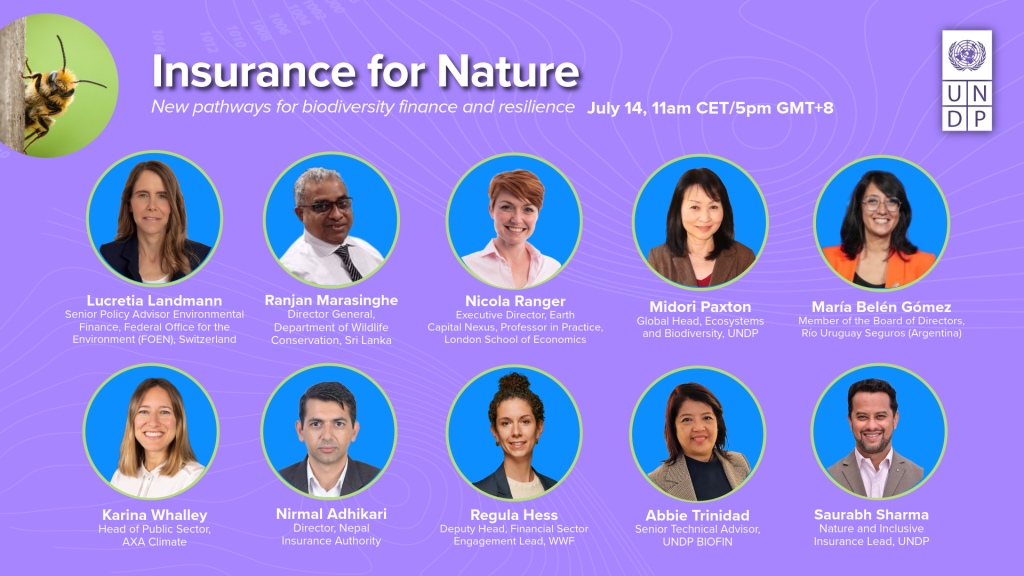
Insurance can play a crucial role in biodiversity conservation by providing financial protection against risks to natural assets, incentivizing sustainable practices, and securing key investments.

Publications

In 2022, countries adopted new global biodiversity targets under the Kunming-Montreal Global Biodiversity Framework (GBF), revisiting many goals that had gone unachieved or underachieved over the past decade.

Publications

Global Biodiversity Expenditure (GLOBE) is a taxonomy that categorizes all potential public expenditures for biodiversity.

The taxonomy consists of two components:

Publications

The BIOFIN Workbook 2024 provides detailed guidance to design and implement national biodiversity finance plans.  These are not mere plans. They set out a process to engage a coalition of actors around the issue of biodiversity finance for an extended time.

Publications

At the Conference of the Parties to the Convention on Biological Diversity 15 (CBD COP 15) in 2022, countries agreed to review and update their National Biodiversity Strategy and Action Plans

Publications

Well-intentioned subsidies aimed at socio-economic goals can have unintended negative impacts on the environment, including biodiversity. The BIOFIN team has developed a step-by-step guide to repurpose such subsidies and improve their positive impacts on people and nature.

Publications

The Kunming-Montreal Global Biodiversity Framework (GBF) calls for a whole-of-society approach to halting and reversing nature loss.

Publications

The Little Book of Investing in Nature provides an essential overview of the area of biodiversity finance at a time when governments and international negotiators are urgently seeking pragmatic solutions for the twin crises of climate change and the loss of nature.

E-LEARNING

Learning for nature: our free biodiversity finance certified e-learning course

Take our free biodiversity finance certified e-learning course. Master the methodology, connect with experts, and gain certification.

Start E-Learning

Browse the Knowledge Platform

645 Results
Publications

Evaluación de necesidades para la financiación de la biodiversidad en Colombia: presupuesto estimado para el Plan de Acción de Biodiversidad de Colombia al 2030.

Este documento presenta la estimación de las necesidades financieras para implementar el Plan de Acción de Biodiversidad de Colombia (PAB) al 2030, elaborada por el Programa de las Naciones Unidas para el Desarrollo (PNUD) a través de la Iniciativa BIOFIN, en articulación con el Ministerio de Ambiente y Desarrollo Sostenible y entidades del Sistema Nacional Ambiental.

El análisis se desarrolló siguiendo la metodología BIOFIN, que incluye la revisión de políticas e instituciones, el análisis del gasto actual en biodiversidad, la estimación de las necesidades financieras y la identificación de soluciones para cerrar la brecha de financiamiento.

Los resultados indican que Colombia requerirá aproximadamente COP 98,95 billones (USD 24.150 millones) entre 2025 y 2030 para cumplir las seis metas nacionales del PAB, lo que equivale a una inversión anual cercana a COP 16,5 billones.

El estudio también evidencia una brecha de financiamiento cercana al 82%, lo que implica que el país deberá incrementar significativamente la movilización de recursos para la biodiversidad.

Estos resultados constituyen un insumo clave para el diseño de la Estrategia de Financiamiento de la Biodiversidad, orientada a movilizar recursos públicos, privados y de cooperación internacional que permitan asegurar la implementación efectiva del PAB y el cumplimiento de los compromisos nacionales e internacionales en biodiversidad.

Podcast

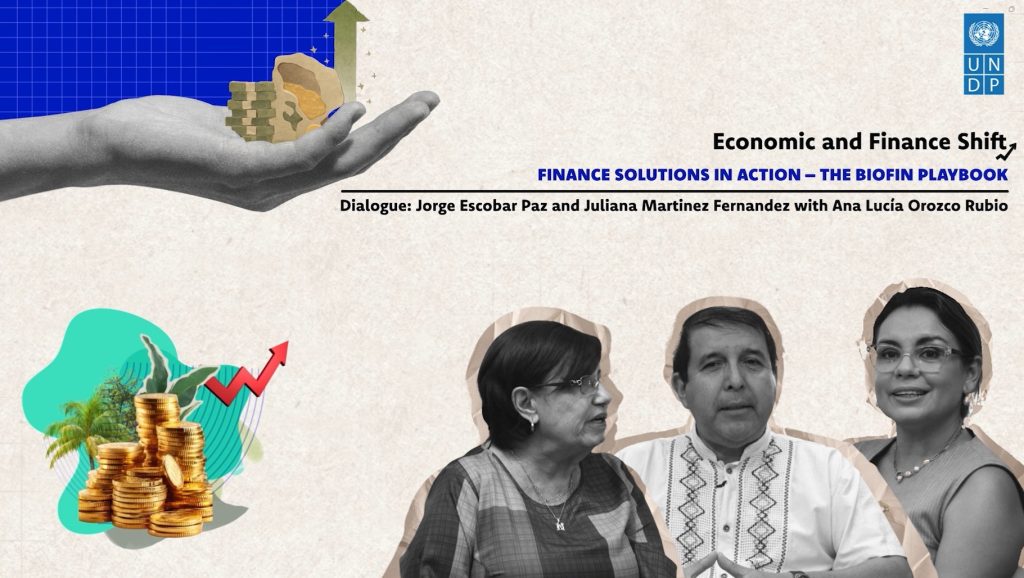
In this video podcast edition, explore how financial systems can help close the global biodiversity finance gap.

Hosted by Ana Orozco, Environmental Finance Specialist at UNDP BIOFIN, the conversation brings together two experts working at the intersection of finance and sustainability:

  • Juliana Maritza Martínez Fernández, Advisor to the President of the Central Bank of Cuba
  • Jorge Guillermo Escobar Paz, Director of Planning at the Ministry of Public Finance of Guatemala

Their insights highlight an important shift: nature is increasingly being recognized as a financial issue — not just an environmental one.

Central banks play a critical regulatory role. By integrating environmental and social risks into financial policies and supervision, they can help ensure that financial systems are prepared for risks linked to biodiversity loss and climate change. In Cuba, collaboration with UNDP’s Biodiversity Finance Initiative (BIOFIN) has helped strengthen the national banking system’s capacity to develop green financial products and increase awareness of biodiversity finance across the country.

Finance ministries also play a pivotal coordinating role. From fiscal policy and budgeting to innovative financial instruments, they help align national economic planning with environmental priorities. In Guatemala, the Ministry of Finance has introduced an environmental fiscal strategy, explored instruments such as green bonds, parametric insurance, and environmental taxes, and strengthened systems for tracking biodiversity-related expenditures.

Together, these efforts demonstrate why biodiversity finance requires leadership from both environmental institutions and financial authorities.

As highlighted in the discussion: half of global GDP depends on nature, making the integration of biodiversity into financial decision-making essential for long-term economic stability. 

Podcast

How can businesses support nature?

Ana Orozco, Environmental Finance Specialist at UNDP BIOFIN, explores these questions with two experts:
🔹Dora Moncada, Director of the Water and Biodiversity Center at the National Association of Businesspeople of Colombia (ANDI)
🔹Natalia Mesa Ramírez, National Coordinator of the Biodiversity Finance Initiative in Costa Rica

For decades, economic growth and nature conservation were treated as separate worlds. Yet economies depend on healthy ecosystems, and biodiversity loss poses real risks for businesses, financial systems, and societies.

From supporting nature-positive value chains to building partnerships between businesses, governments, and the financial sector, the conversation highlights how private sector engagement is essential to closing the biodiversity finance gap.

Watch the video interview and learn:
🔹 How businesses depend on ecosystem services such as water, soil health, and pollination
🔹 Why understanding nature-related risks, impacts, and dependencies is becoming essential for companies
🔹 How business associations and national initiatives are working with BIOFIN to engage the private sector
🔹Practical examples from Colombia and Costa Rica on mobilizing private investment for nature

Podcast

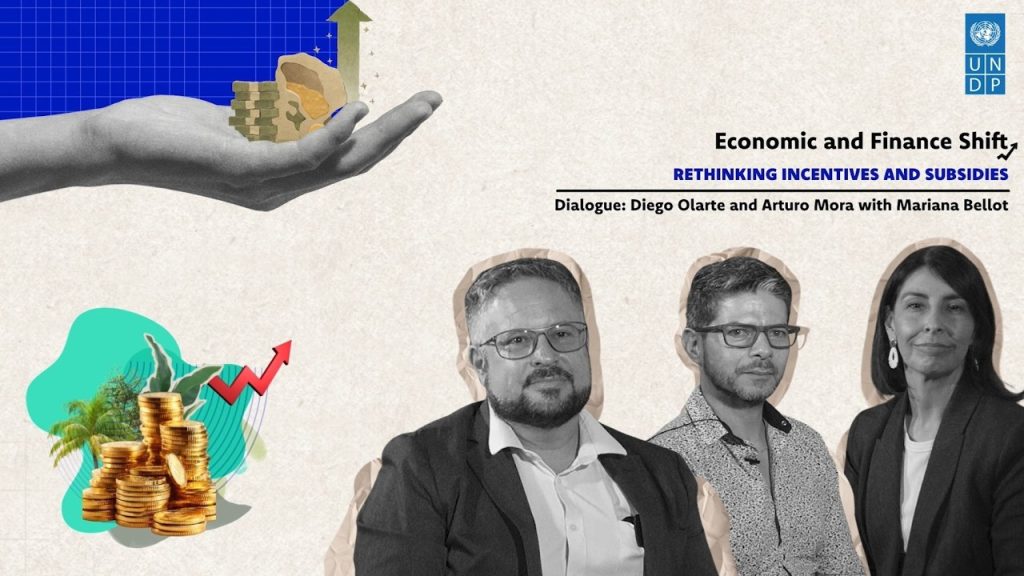
Agriculture depends on nature, and the way we finance agriculture can either protect biodiversity or put it at risk.

Across many countries, governments are beginning to rethink subsidies and incentives that unintentionally harm biodiversity and instead support sustainable agricultural practices that benefit both farmers and ecosystems.

In Colombia, UNDP BIOFIN is working with the agricultural development bank FINAGRO to help redirect credit lines toward nature-positive production practices in sectors such as livestock, coffee, cocoa, cassava, forest products, and rice. By aligning financial incentives with sustainable production, the country is exploring ways to mobilize significant resources while supporting farmers’ livelihoods.

In Ecuador, efforts to reform fuel and agricultural subsidies are being paired with green credit and microfinance solutions, helping ensure that reducing harmful incentives goes hand-in-hand with increasing investment in sustainable production.

These experiences show that shifting from harmful subsidies to nature-positive finance solutions is not only possible — it is already happening.

Watch the full conversation moderated by Mariana Bellot, Global Coordinator of BIOFIN’s Biodiversity Finance Plans programme, with Diego Daniel Olarte Suárez (BIOFIN Colombia) and Arturo Mora (BIOFIN Ecuador) to learn how countries are turning policy challenges into opportunities for sustainable agriculture and biodiversity finance. 

Podcast

Private finance for nature is rapidly moving into the mainstream. Over the past few years, we’ve seen a surge in innovative mechanisms such as biodiversity credits, green bonds, and blended finance models.

In this video interview, Ingrid Barbosa Fang (Lead Biodiversity Coordinator at Natura, Brazil) and Carola Moreno (Coordinator for Finance and International Affairs, Ministry of Finance of Chile) share practical insights on what it takes to catalyze private investment for biodiversity. Watch the video and hear directly from the experts to explore the challenges, opportunities, and what needs to happen next to scale finance for nature.

Publications

Egypt’s National Biodiversity Finance Plan (BFP) 2024–2030 sets out a comprehensive, evidence-based framework to mobilize sustainable financing for biodiversity conservation, recognizing biodiversity as a cornerstone of economic growth, social equity, and environmental resilience. Aligned with Egypt Vision 2030, the Global Biodiversity Framework (GBF), and the National Biodiversity Strategy and Action Plan (NBSAP), the BFP was developed using the BIOFIN methodology and is underpinned by the Policy and Institutional Review (PIR), Biodiversity Expenditure Review (BER), and Financial Needs Assessment (FNA). These assessments identified a biodiversity financing gap of USD 291.9 million for 2024–2030, guiding the prioritization of nine high-impact and feasible finance solutions through an inclusive, multi-stakeholder process that balances biodiversity impact, financial potential, and likelihood of success.

The Plan proposes a diversified mix of government-led, market-based, private sector, and community-driven solutions that operationalize the shift from traditional funding to sustainable financing, in line with Egypt’s Integrated National Financing Strategy (E-INFS). Key interventions include reforms to protected area fees and concessions, performance-based budgeting, biodiversity-positive carbon credits, insurance schemes, biodiversity offsets, public–private partnerships, corporate social responsibility funding, and mobilization of international finance. Together, these measures aim to integrate biodiversity into national planning and financial systems, strengthen accountability and transparency, promote gender equality and community participation, and ensure adaptive implementation. As a living document, the BFP provides a practical roadmap to close the financing gap, scale conservation impact, and support Egypt’s long-term goals for sustainable development and biodiversity conservation.

Guidelines

La consolidación de la naturaleza como una prioridad estratégica para el sector productivo colombiano ha impulsado una mayor alineación con los objetivos del Plan de Acción de Biodiversidad – PAB a 2030. En respuesta a esta evolución, el Programa de las Naciones Unidas para el Desarrollo – PNUD y su Iniciativa de Finanzas para la Biodiversidad – BIOFIN en Colombia presentan la propuesta de “Ruta metodológica para identificar el nivel de ambición de reporte de una empresa conforme el marco TNFD”, el cual desarrolla dos componentes principales:

  1. un análisis técnico sobre los requerimientos de información ambiental, financiera y empresarial necesarios para la implementación de la arquitectura de métricas del marco TNFD;
  2. la formulación de una herramienta para orientar de manera gradual el uso de métricas que cuenten con fuentes de información compatibles con los estándares del TNFD.

Este documento aporta elementos clave para fortalecer la capacidad del sector privado en la gestión, evaluación y divulgación de asuntos relacionados con naturaleza y biodiversidad.

Podcast

From Koh Tao’s tourist user fee, which supports coral reef protection and waste management, to results-based budgeting and the removal of harmful subsidies in Phetchaburi, Thailand is demonstrating what practical, sustainable biodiversity finance looks like in action.

These initiatives show how local governments, communities, and the private sector can work together to create long-term funding mechanisms that protect ecosystems while strengthening local economies. Watch the video to learn Thailand’s experience in implementing biodiversity finance solutions. 

Publications


El PNUD, a través de su iniciativa BIOFIN, avanza en la construcción del Plan Financiero para la gestión de la biodiversidad en Colombia, una estrategia que busca cerrar la brecha de financiamiento movilizando recursos hacia la conservación y el uso sostenible de la biodiversidad.

Descubre los nuevos insumos técnicos que aportan a esta meta:

  1. Lineamientos técnicos del Plan Financiero
  2. Diagrama interactivo de flujo del financiamiento de la biodiversidad en Colombia

Explora la herramienta en el siguiente link y el documento a continuación.

Podcast

Sri Lanka is one of the world’s most biodiversity-rich countries and it’s finding ways to balance rapid tourism growth with nature protection. Through UNDP’s Biodiversity Finance Initiative (BIOFIN), Sri Lanka is advancing biodiversity finance with practical tools: a national tourism certification programme, support for 200+ SMEs, and a sustainable finance roadmap led by the Central Bank.

Watch how these solutions, from leopard insurance to green banking, are helping Sri Lanka turn ideas into impact in this conversation with Abbie Trinidad, Senior Technical Advisor, BIOFIN Global, and Ramitha Wijethunga, National Project Coordinator, BIOFIN Sri Lanka. 

Publications

This full Policy and Institutional Review (PIR) provides a comprehensive assessment of Kazakhstan’s biodiversity governance system, examining policies, institutions, and financial mechanisms that shape conservation outcomes. It highlights progress in environmental legislation and rising awareness but identifies persistent gaps in integrating biodiversity into national planning, enforcing regulations, and ensuring stable financing.

Publications

This full Biodiversity Expenditure Review, prepared under BIOFIN, provides a comprehensive analysis of how public, private, and civil society resources are allocated to biodiversity conservation in Kazakhstan. It covers both direct and indirect expenditures contributing to the protection of ecosystems, forests, water, and wildlife. The report shows that public funding remains the primary source of biodiversity finance, while private sector and NGO involvement is still limited, highlighting the need to diversify and expand investments to achieve national biodiversity goals.

BIOFIN Videos
SEE ALL