BIOFIN started in the Philippines in 2014, implemented by the United Nations Development Programme (UNDP) in partnership with the Biodiversity Management Bureau (BMB) of the Department of Environment and Natural Resources (DENR). Under the project, the financial needs for implementing the Philippine Biodiversity Strategy and Action Plan (PBSAP) were assessed for the period through 2028.
Currently, the Philippines is implementing several biodiversity finance solutions involving national agencies, local government units, the private sector, civil society organizations, and citizens to mobilize resources for the PBSAP.
The Philippines is one of the world’s 17 megadiverse countries, with 228 recognized Key Biodiversity Areas that are home to 855 globally important species of flora and fauna. The benefits and ecosystem services provided by biodiversity are critical, as many Filipinos depend directly on them for their livelihoods and well-being. It is therefore imperative to implement strong conservation measures, which is the aim of the PBSAP 2015–2028.
To implement the PBSAP, approximately US$530 million is required annually. However, current spending on biodiversity is only about US$100 million per year, leaving an 80% financing gap. BIOFIN helps identify, access, combine, and sequence diverse sources of biodiversity funding to meet national priorities and targets.
80%
Finance Gap
UNDP BIOFIN is helping close the country's biodiversity financing gap.
107
Protected Areas
Received additional financing through BIOFIN-supported policy reforms.
4M
Trees Planted
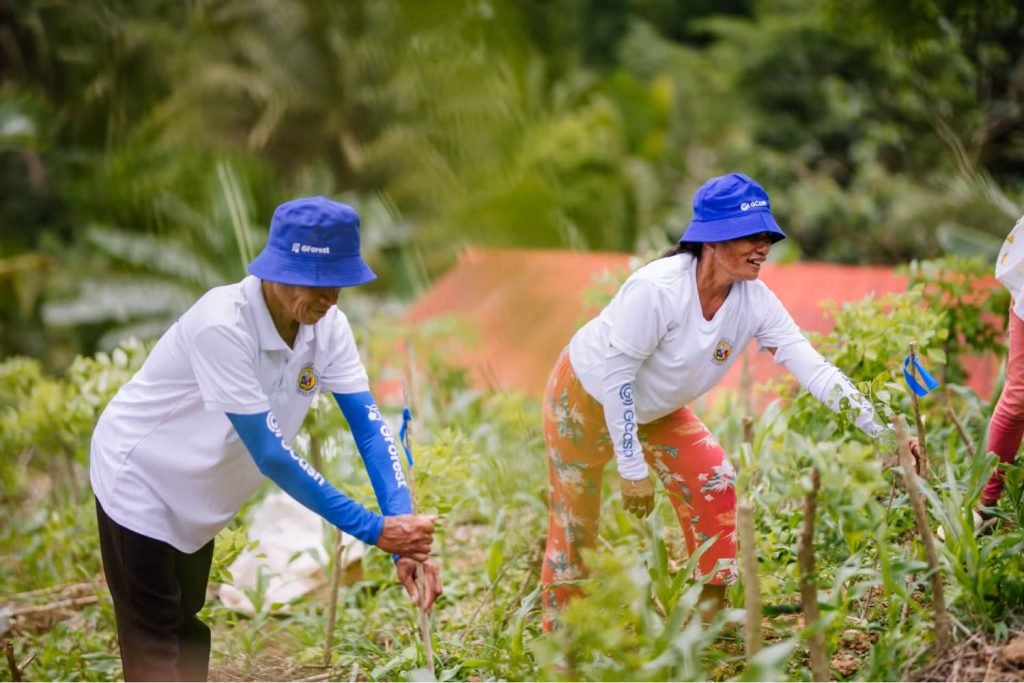
Through the GForest digital finance initiative
$10M
Protected Areas
Mobilized for 107 legislated protected areas through increased public financing
1. Improved biodiversity expenditure reporting at the Department of Environment and Natural Resources (DENR)
The DENR and its bureaus are mandated to protect the country’s biological diversity and, according to the BD Expenditure Review, accounts for one fourth of the country’s spending on biodiversity. This solution focuses on creating an improved system for attribution of biodiversity expenditures that will reflect a better understanding of biodiversity within the DENR and result to accurate reporting and focused programming.
2. Improved biodiversity expenditure reporting among other national government agencies
There are more than 30 national agencies indirectly supporting biodiversity but are unaware or are not reporting as such. This solution focuses on building the knowledge and capacities of other national agencies such as the Department of Agriculture (DA) and the Department of Interior and Local Government (DILG), to better mainstream biodiversity in the agencies’ plans and programs as mandated by the General Appropriations Act.
3. Alignment of environmental trust funds with the Philippine Biodiversity Strategy and Action Plan or PBSAP (completed)
This finance solution seeks better alignment between PBSAP priority actions with the grant criteria applied by two environmental trust funds in the country i.e., the Foundation for the Philippine Environment (FPE) and the Philippine Tropical Forest Conservation Foundation (PTFCF, also now known as the Forest Foundation Philippines). In 2019, BIOFIN completed this and has made recommendations to the two organizations based on the results of the alignment exercise and shared the same results to DENR-BMB.
Mainstreaming Biodiversity in DENR regional programs
4. Budgets for DENR regional biodiversity programs
This solution aims to boost funding for DENR Regional Offices by realigning spending towards biodiversity. BIOFIN created guidelines for DENR field offices, provincial and municipal governments and stakeholders to create a standardized procedure for the development of local biodiversity strategy and action plans (BSAPs) with finance and investment plans to ultimately unlock finance for nature.
Finance solutions involving the citizenry
5. Resources mobilized from individual donors for biodiversity programs and projects (Crowdfunding)
Crowdfunding can be a powerful way to raise funds for nature and increase public knowledge around critical biodiversity-related issues. This finance solution has two tracks: 1) implementation of crowdfunding schemes and 2) capacity building of civil society partners, local governments, and relevant staff of DENR and other national agencies on crowdfunding techniques. BIOFIN launched “Together for Tamaraws” crowdfunding campaign to raise funds to cover six months’ salaries (July – December 2020) and food packs for 33 furloughed tamaraw frontliners due to Mts. Iglit-Baco Natural Park’s closure in March 2020 because of COVID-19 pandemic and to immediately disburse proceeds to beneficiaries. The campaign was able to raise funds equivalent to 139% of its target.
6. Funds mobilized from gaming applications and peripherals
Gaming applications pose large opportunities for financial revenues and can be designed focusing on biodiversity. The objective of this finance solution is to generate resources through in-app purchases and ads that will be directed to biodiversity conservation projects included in the PBSAP. BIOFIN developed a game application named Animal Town which utilized information about Philippine endangered species while at the same aiming to generate funds through sales receipts. It is a simple, casual, simulation game where the user plays as a new recruit in a biodiversity advocates team to help a group of talking animals manage town/company to efficiently preserve biodiversity. The game app will be launched upon development of the fund management mechanism.
Mainstreaming Biodiversity in LGUs
7. Increased LGU budgets for biodiversity conservation
The Negros Island Biodiversity Strategy and Action Plan (NIBSAP) is the central document that guides biodiversity conservation efforts of Negros Occidental and Negros Oriental provinces. The finance solution seeks to continue this trend of budgeting for biodiversity conservation by doing budget advocacy between and among the relevant provincial offices and local committees. It will also take advantage of the implementation of the Mandanas-Garcia Ruling which will effectively allocate more resources to local government units (LGU).
8. Access and synergy with national government agencies (NGAs)
The finance solution will align priority provincial programs and/or projects on biodiversity conservation with national government agency programs that can finance these.
9. Proposed environmental fee system for LGUs (Tourism Ecological Fee)
The province of Negros Oriental was chosen by the Department of Tourism as a Tourism Development Area and has identified sustainable tourism as one of its priorities. As one of the most visited destinations in the country, the economic benefits of tourism are directly attributed to nature. The proposed Tourism Ecological Fee complements its Environment Code and will mobilize resources to conserve biodiversity to sustain its ecotourism activities.
10. Programs submitted for Energy Regulation ER 1-94
The trust fund created under Energy Regulation (ER) 1-94, as amended, requires the generation company and/or energy resource developer to set aside one centavo per kilowatt hour (Php 0.01/kWh) of the total electricity sales as financial benefits to host communities. The P0.01/kWh is monitored through trust accounts established specific for EF (Electrification Fund), DLF (Development and Livelihood Fund) and RWMHEEF (Reforestation, Watershed Management, Health and/or Environmental Enhancement Fund) in the name of Department of Energy (DOE) and the generation company.
The finance solution seeks to identify projects eligible for support from financial benefits of the trust fund.
11. Development and roll-out of biodiversity indicators for the “Seal of Good Local Governance”
This finance solution looked at the feasibility of mainstreaming a biodiversity component in the existing SGLG criteria of the Department of the Interior and Local Government for LGUs. The Seal of Good Local Governance (SGLG), being a progressive assessment system that gives distinction to remarkable local government performance across several areas, highlights integrity and good performance to institutionalize local governance reforms in the continuing pursuit for meaningful local autonomy and development. Through BIOFIN, the DENR proposed the following indicators for inclusion in the SGLG for 2023 roll-out: 1) conservation of inland wetlands; 2) enhancement programs for public parks and green spaces; and 3) strengthened enforcement of illegal wildlife trade law.
Increasing investments in the Protected Areas
12. Development of an investment program for Protected Areas (PAs)
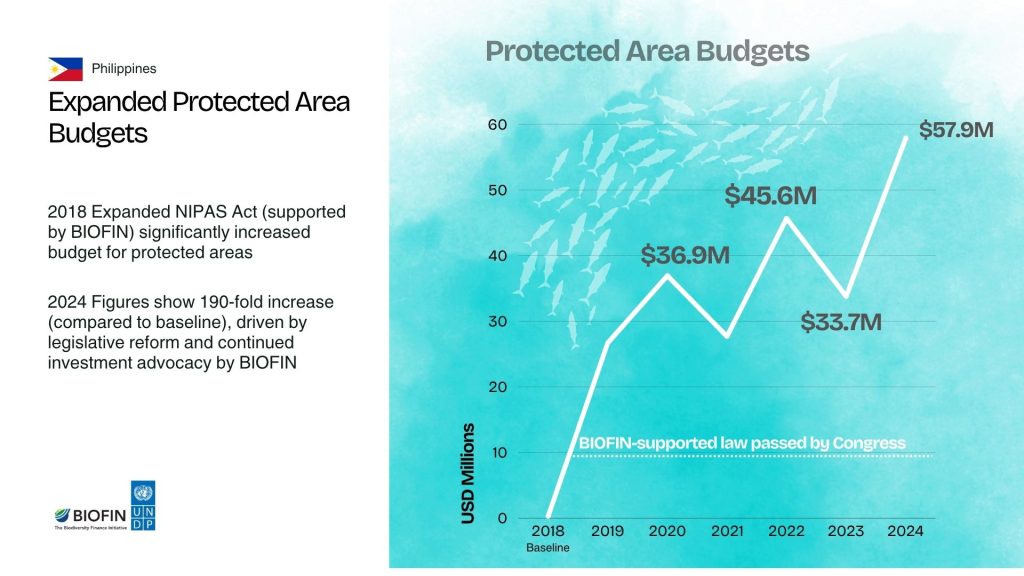
This solution aims to increase investments in protected areas. The long-term outcome of this solution is for “all protected areas to receive sufficient funding from government budget for recurrent and capital expenses based on a long-term management plan”. BIOFIN assisted in the crafting of the implementing rules and regulations of The Expanded National Integrated Protected Areas System (ENIPAS) Act of 2018 which in 2020 received a total of Php 2 billion (or about US$0.6 million) for its implementation. Funding for 107 legislated protected areas was assured by the inclusion of a Php 1.44 billion (US$28 million) budget in the National Expenditure Program, and an additional Php 500 million (US$10 million) allocation advocated by the House of Representatives led by BMB-DENR and BIOFIN legislative champion Congresswoman Josephine Ramirez-Sato of Mindoro Occidental. BIOFIN also provides technical assistance selected protected areas in identifying activities/budget items in their management plans that will require additional funding over regular government budget and identify potential private sector partners.
13. Year of Protected Areas (YoPA) Campaign
This finance solution is closely partnered with the finance solution on developing an investment program for PAs. This solution is an information campaign led by the DENR, DoT, and the DILG seeking to increase awareness on the value of protected areas, instill an appreciation among the new generation of Filipinos on the beauty and heritage therein, establish partnerships with the private sector for the benefit of the PAs and result to increased visitation rates and the PAs’ revenues from visitors. BIOFIN has laid down the groundwork for the scheduled YoPA Campaign launch in April 2022 including the campaign branding, line up of promotional activities online and utilizing the tri-media, engaged celebrity ambassadors, and is working on having a proposed Presidential Proclamation signed soon to declare 2022 as Year of the PAs and June of each year as month of the PAs.
Finance solutions involving the private sector
14. Report on private sector investment (CSR)
CSR is envisaged to be a main contributor to the five PBSAP Priority Programs with actions focusing on aligning funds and forging strategic partnerships. Attracting more CSR funds to biodiversity and matching available funds to PBSAP priority actions can contribute to overall biodiversity finance needs. BIOFIN is continuously facilitating CSR programs for NGOs and PAs. Resources mobilized by BIOFIN from this finance solution is estimated at Php 3,840, 454 or US$77,809 (mobilized) and Php 156,971, 177 or US$3,139,424 (tagged) to date.
15. Use of digital platforms for market access of biodiversity-friendly enterprises (BDFEs) and protected area
This finance solution seeks to leverage a digital platform for market access of biodiversity-friendly enterprises (BDFEs) and protected areas to mobilize resources for biodiversity conservation.
16. Harness public-private partnership collaboration in the protected areas sector through policy development
This finance solution seeks to tap investments by the private sector in specific protected areas using the PPP modality. This finance solution is to be read in tandem with solution 1.1., “developing an investment program for protected areas” which aims to increase government funding (both operational expenses and capital outlay) in protected areas. This finance solution aims to develop a PPP policy for protected areas to spell out the procedures and allowable modalities of utilization. To date, a Memorandum of Agreement or MOA has been signed between BMB-DENR and the PPP Center of the Philippines to provide a framework for cooperation and coordination to: (1) develop a robust pipeline of PPP projects in selected protected areas; (2) conduct policy enhancements and capacity building to DENR, Protected Area Management Boards (PAMBs) and Local Implementing Agencies (LGUs included) as well as community organizations, on how PPPs in protected areas can be structured and designed sustainably and responsibly.
17. Development of a financial product for the Development Bank of the Philippines
In 2021, BIOFIN completed a scoping study entitled “Nature-positive Impact Investing for Nature-based Solutions and Nature-based Enterprises” for the Development Bank of the Philippines (DBP). Currently, the DENR-BMB has a database of more than 320 people’s organizations (PO) with biodiversity-friendly enterprises or BDFEs across the country. Given that government support is limited and the possibility of scaling up these enterprises, assistance from financial institutions may be needed to expand these enterprises. Given this information and taking into account the varying levels of capacity of these POs, this solution will examine the current portfolio of the DBP to see if there are opportunities to shape these products to support BDFEs. Otherwise, an appropriate financial product shall be developed. Once the DBP approves the proposed financial product, BIOFIN can help promote awareness on its availability among BMB’s eligible POs.
Feasibility Studies
18. Feasibility study on creation of a new conservation trust fund or utilization/adjustments made to current trust funds (completed)
An environmental trust fund can be a vehicle to mobilize additional resources from donors, national governments, the private sector as well as private citizens by providing assurance about the effective allocation of resources and if well-designed and capitalized, they become a driver for improving the effectiveness and scale of environmental and climate projects. Anticipating revenues from crowdfunding activities and sales of gaming apps and peripherals, BIOFIN conducted a feasibility study to assess efficiencies in creating a new biodiversity fund or a sub-fund managed by a third-party organization.
19. Scoping study on impact investment (completed)
This finance solution is about providing capitalization for biodiversity businesses and social enterprises and prove that market/above-market return can be attained. An outcome of this finance solution is a set of recommendations to enable a continuous stream of impact investment funds flowing into biodiversity businesses over the full duration of PBSAP implementation. The scoping study is in partnership with the Development Bank of the Philippines (DBP) and the BMB-DENR to develop finance mechanisms that will enable more investments in biodiversity in the country.
20. The Philippine Mining Industry: Leveraging Resources to Improve the Outcome of Biodiversity Objectives in the Country
21. Development of a framework for strengthening the conservation, sustainable use, and overall governance of agrobiodiversity (ABD) resources and promotion of biodiversity-friendly agriculture recommendations
22. Development of a shared language for SDGs 14 and 15
23. Study on Nature Financial Disclosure Readiness Policy and Institutional Review
Support to policy
BIOFIN has been supporting policies which when enacted will contribute to increased biodiversity financing. The following are the policies being supported by BIOFIN:
24. Policy on integrating biodiversity conservation in mining and other mandated funds
DENR Administrative Order on Enhancing Biodiversity Conservation and Protection in Mining Operations
25. Policy on engagement of private sector business organization in the implementation of DENR biodiversity conservation programs
Proposed DENR AO on Guidelines on the Engagement of Private Sector Business Organizations in the Implementation of DENR Biodiversity Conservation Programs
26. Policy on the institutionalization of the Tamaraw Conservation Program
House Bill 8299 or An Act to Institutionalize the Tamaraw Conservation Program, creating its Administrative and Implementation Mechanism, Providing Funds Therefore and for Other Purposes
27. Integration of gender in finance solutions
Key results
UNDP BIOFIN has mobilized:
US$10 million for 107 legislated protected areas by advocating for increased financing at the House of Representatives
US$300,000 for reforestation by partnering with Mynt, creator of GCash and the biggest mobile wallet in the country, through its GCash Forest app and the Corporate Social Responsibility program of partners such as the World Wildlife Fund (WWF)
Php 1.6 million (US$32,000) through the Together for Tamaraws Crowdfunding Campaign for conservation communities affected by the COVID-19 pandemic
US$60,000 allocation at the Provincial Development and Physical Framework Plan 2020-2022 for Negros Oriental’s proposed priority biodiversity programs and activities
Php 20 million (US$400,000) from 2020-2022 for Negros Occidental province’s Southwestern Negros Key Biodiversity Area (KBA)
BIOFIN had the following policies officially adopted:
Biodiversity Management Bureau Technical Bulletin 2021-05 Guide in the Formulation of Local Biodiversity Strategy and Action Plan
Department of Environment and Natural Resources Administrative Order 2022-04 Enhancing Biodiversity Conservation and Protection in Mining Operations
Joint Declaration among the Department of Environment and Natural Resources, Department of Tourism and Department of the Interior and Local Government in support of the celebration of the Year of the Protected Areas campaign
BIOFIN also worked on the following:
Three biodiversity indicators proposed for inclusion in the Department of Interior and Local Government (DILG)’s criteria for the Seal of Good Local Governance, a local governance performance metrics. This means that LGUs will have to include biodiversity activities in their regular programs to be able to qualify as recipients of the Seal
Four (4) tourism products for marine protected areas in Mindoro Oriental and 3 tourism products for Sibalom Natural Park
Capacity-building training for NGO partners in engaging the private sector and for protected area staff that yielded favorable results i.e., firm commitments from several private sector representatives and Protected Areas Finance Plans (PAFP) with corresponding Investment Programs. The BMB-DENR further committed to including the PAFP development module in their PA Academy curriculum and using it to improve the existing PA management plan preparation process
Key documents
Results of the PIR showed that while Philippines has several laws and policies in place for biodiversity, there is still a need to address those with negative impact and promote those with positive impact on biodiversity conservation and restoration. Resource mobilisation opportunities from selected policies such as the Energy Regulation 1-94 as amended; Malampaya Fund; Motor Vehicle User’s Charge; Mining Taxes & Royalties and Fees from Mining were examined.
From 2008-2013, the baseline financing for biodiversity was estimated at Php 5B (US$110 million) among national agencies contributing to the 20 Aichi Targets, non-core agencies, and local governments. This represents 0.08% of GDP and 0.31% of the national budget for this period of analysis. Within this period, the budget of the Department of Environment and Natural Resources (DENR) was observed to be increasing at the rate of 23% per year. The biodiversity budget has been increasing at a faster rate of 34% per year for the same period, although its contribution to total budget is less than 20% of the total. Increase in funding can be realised by realignment of budgets coupled with effective mainstreaming among core and non-core biodiversity agencies. Comprising an average of 4% of the 20% development fund representing share of national taxes, local governments contribute Php 0.5B (US$13 million) based on protected areas expenditures alone.
The total estimated cost of implementing the PBSAP from 2015-2028 ranged from PhP334 billion or US$7.4 billion (low) to PhP388 billion or US$8.6 billion (high) with an annual requirement of Php 23.9 billion (US$530 million). The projected appropriations of the government agencies for this period is only US$1.5 billion versus the US$4 billion estimated cost of activities identified in the PBSAP.
BIOFIN’s Finance Plan is targeting to raise PhP20 billion by 2020 by implementing the following solutions: a) consolidation, mainstreaming, and formalising the PPBER process through biodiversity tagging; b) increasing funding of local governments through realignment, increased access to earmark funds, or generation of revenues on site; and c) private sector engagement.
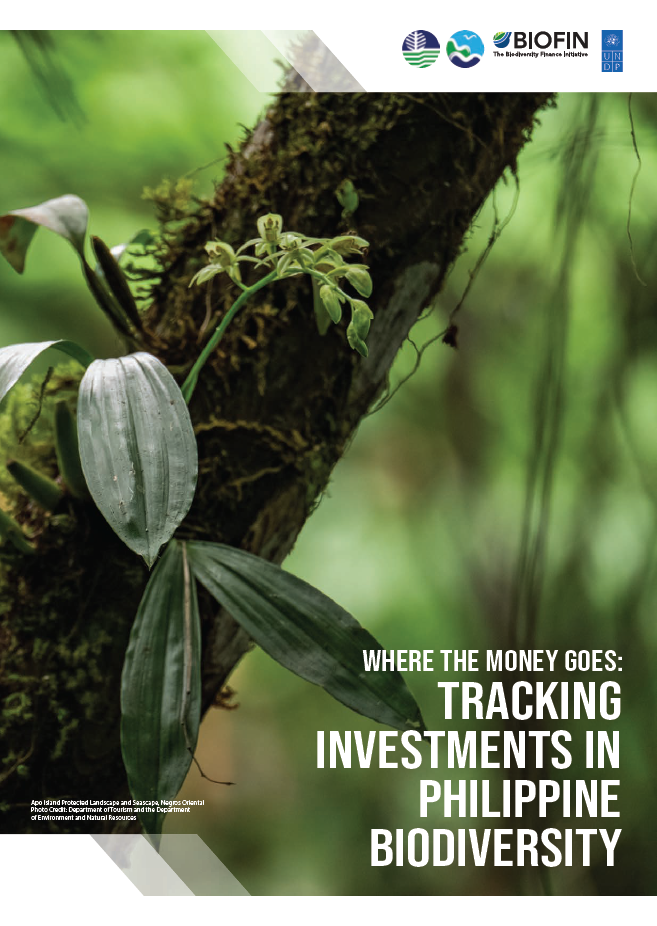
Where the Money Goes: Tracking Investments in Philippine Biodiversity
Biodiversity-related expenditures in the 2024 Philippines General Appropriations Act (GAA) reached approximately PhP 11.77 billion, while 134 programs, projects, and activities (PPAs) in the Public Investment Program (PIP) demonstrated direct…
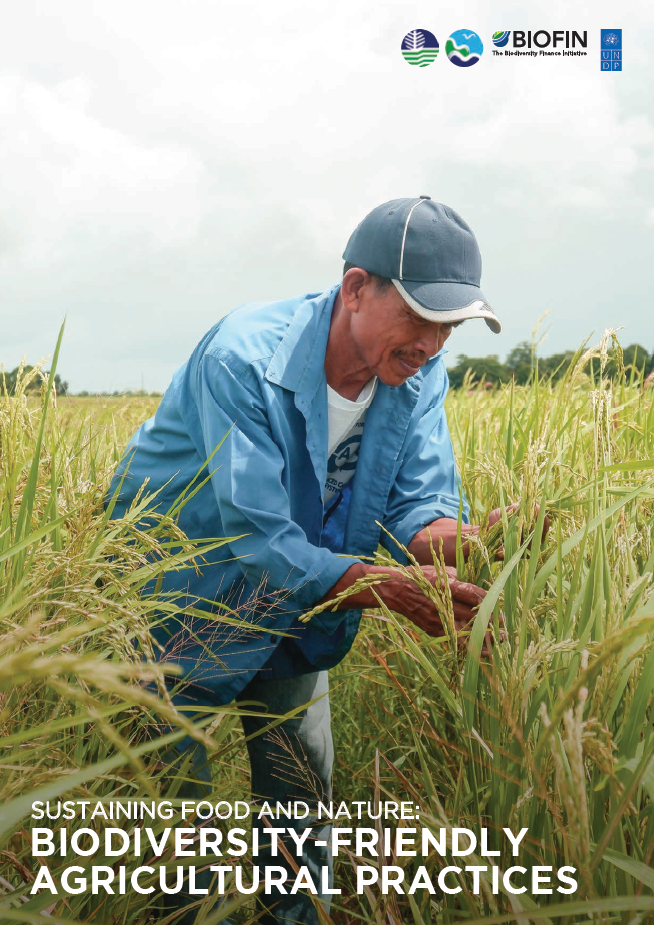
Sustaining Food and Nature: Biodiversity-Friendly Agricultural Practices
Agricultural practices in ecologically sensitive hilly and upland areas of the Philippines can generate unintended harmful environmental footprints that adversely affect biodiversity and ecosystem resilience, highlighting…
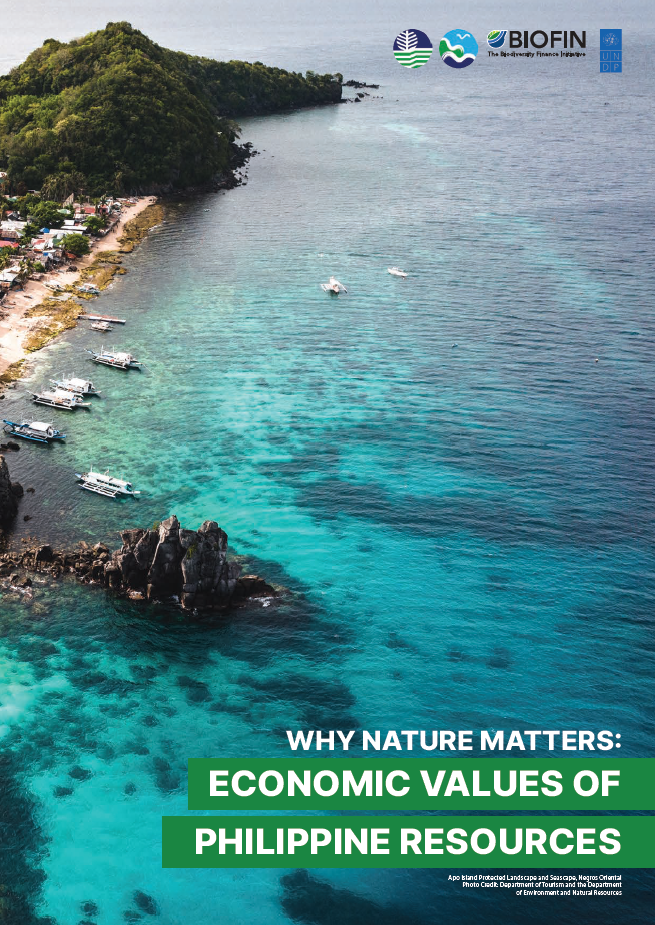
Why Nature Matters: Economic Values of Philippine Resources
The Philippines’ biodiversity and ecosystems make significant contributions to nation building and human well being, with forests, coastal and marine areas, caves, agricultural landscapes, and urban…