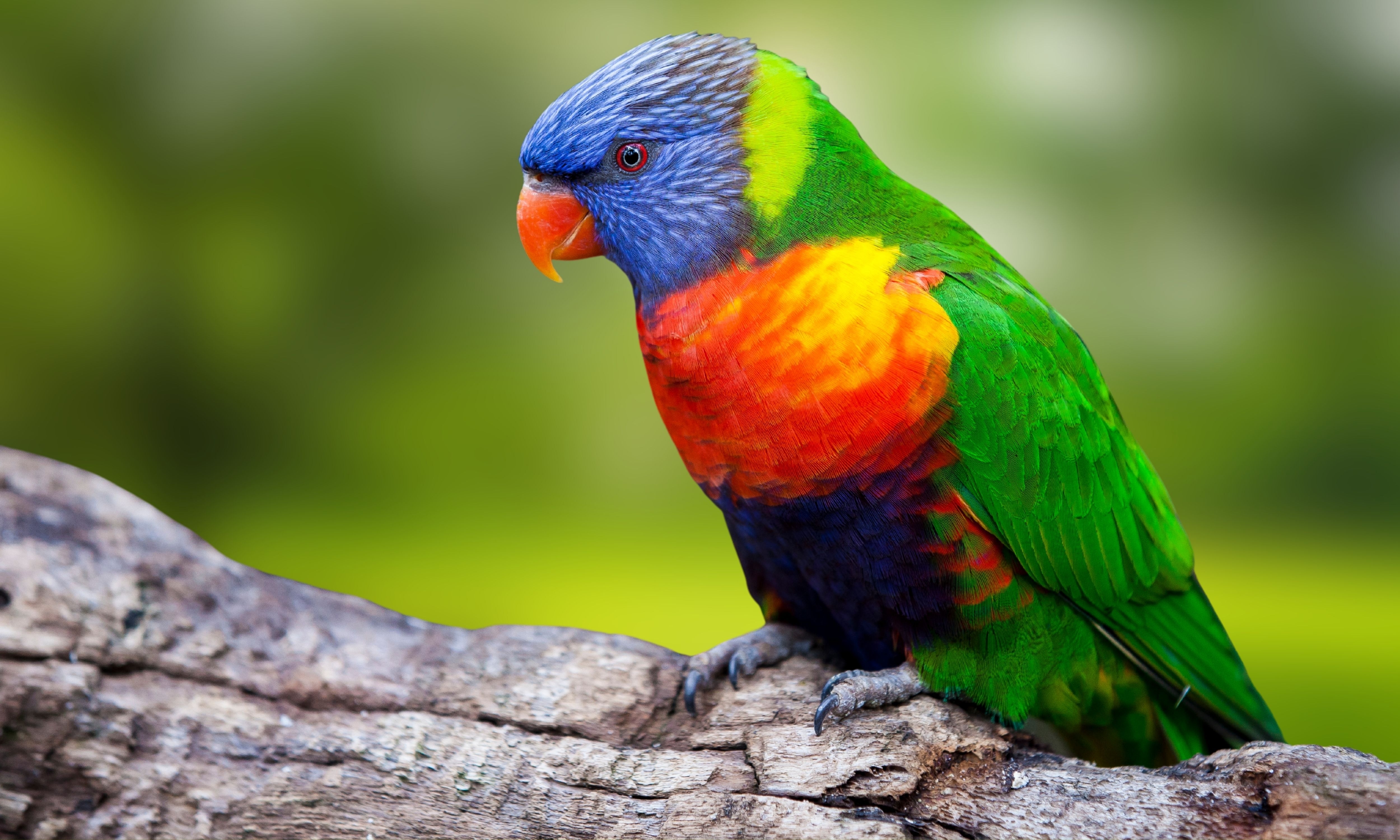
Closing the biodiversity finance gap will require private capital on a scale. Across more than 130 countries, UNDP’s Biodiversity Finance Initiative (UNDP BIOIFN) is supporting countries to tap innovative private finance for nature.
The world needs US$700 billion every year to halt and reverse biodiversity loss, and it’s a gap that public budgets alone have no realistic prospect of closing.
Yet the same figure, viewed through the lens of global capital markets, tells a more hopeful story. That amount is roughly one percent of all new or reinvested private capital annually - the flows moving through pension funds, insurance companies, and institutional investors every year. The money exists. What has been missing are the instruments, the incentives, and the enabling conditions to direct it toward nature.
Since 2018, UNDP BIOFIN has helped 41 countries mobilize more than US$2.7 billion in finance for nature.
Private capital is still far below what is needed, but the frameworks, instruments, and incentives to change are moving in a positive direction.
Here are the ways UNDP BIOFIN is supporting countries tap private capital for nature:
Unlocking Green Bond Markets: Zambia
UNDP BIOFIN supported the development of Zambia's first-ever Green Bond Framework, laying the policy and market foundation to attract private capital for nature. Building on this groundwork, the Copperbelt Energy Corporation issued the country's first green bond, raising US$150 million across two issuances till the end of 2025, with a target of US$200 million for renewable energy investments. It is a model that demonstrates how national frameworks, with the right support, can open entirely new private finance channels.
Greening Mainstream Loans: Ecuador
Not all private sector impact comes from headline investment products. In Ecuador, BIOFIN worked with CONAFIPS, the country's public development bank, to screen more than US$1 billion in subsidized loans to small and medium-sized enterprises against biodiversity-relevant exclusion criteria and sustainability standards. More than half of the beneficiaries are women-led businesses, and a quarter are under 25. Embedding nature into everyday finance at this scale is key to the Economics and Finance Shift we are driving through UNDP’s Nature Pledge.

Photo: Jessica Guatatuca, Bio Warmi-Beneficiaria CACPE Pastaza - beneficiary of the green credit line in Ecuador
Nature-Based Insurance: Argentina, Sri Lanka
In Argentina's Misiones province, UNDP’s BIOFIN and Insurance and Risk Finance Facility co-designed the world's first jaguar-protection insurance product. The scheme compensates rural communities for verified livestock losses caused by jaguar predation, reducing the economic incentive for “revenge killings” – one of the leading causes of jaguar deaths in the region. The insurance now reaches more than 100,000 people - a striking example of how the insurance sector can be a vehicle for conservation of biodiversity while managing real financial risk.
In 2025, UNDP BIOFIN replicated and refined the model on the other side of the world. In partnership with the Wildlife and Nature Protection Society (WNPS) and private insurer LOLC Holdings, BIOFIN Sri Lanka supported the country's first livestock insurance scheme to address human-leopard conflict. The Sri Lankan Leopard (Panthera pardus kotiya), endemic to the island and with fewer than 1,000 mature individuals remaining in the wild, faces a precarious future from habitat loss, prey depletion, snares, and retaliatory killings.

Photo: Sri Lankan Leopard (Panthera pardus kotiya) by Amila Weerasinghe
Islamic Finance for Conservation: Indonesia
In Indonesia, BIOFIN helped secure US$2.8 million in sukuk (Islamic bond) funding for a bird conservation centre in Maluku. Between 2023 and 2024, the Maluku Parrot Conservation Centre saved more than 1,500 birds and animals. This example illustrates how BIOFIN is exploring non-traditional finance instruments and aligning faith-based financial communities with market signals on ESG investing to open new sources of conservation capital.
Boosting SME Income Through Sustainable Tourism Certification: Sri Lanka
In Sri Lanka, BIOFIN supported the National Sustainable Tourism Certification scheme to enable businesses anchored in nature-positive tourism to receive training on sustainability and be certified. More than 200 certified businesses experienced a 15–20% increase in income following certification, demonstrating that connecting private sector actors to sustainability standards can deliver tangible financial returns alongside conservation benefits.

Photo: Ms. N. B. Shama Geethika, Proprietor of Mango Villas Arugambay Panama, holds the Sustainable Tourism Certificate
Indigenous and Nature-Based Business Incubators: Costa Rica
In Costa Rica, the RAICES Indigenous Tourism incubator, supported by BIOFIN, completed its second edition in 2024, mobilizing and catalyzing US$1.5 million. By investing in indigenous-led tourism enterprises that depend on and protect biodiversity, UNDP BIOFIN has enabled Costa Rica to reinvent the playbook on eco-tourism.
Restoring forests using fintech in the Philippines
GCash, the Philippines’ leading digital finance app and largest cashless ecosystem, launched GForest, an in-app platform that enables users to contribute to environmental initiatives with just a few taps on their phones. GForest now has over 24 million users who have helped plant 4 million trees across 14,300 hectares of land. More than 11,300 farmers nationwide, along with their families, have earned additional income through tree-planting activities supported by GForest.
Turning tourism into a tool for conservation in Thailand
In Thailand, Pak Thale - a coastal wetland ecosystem dominated by salt pans and mudflats - is transforming tourism into a driver of conservation. Inspired by Koh Tao’s success, the Pak Thale Sub-district has adopted an eco-tourism-based revenue model designed to fund critical conservation efforts. In November 2025, the Sub-district passed a legal ordinance formally introducing a tourism fee of THB 20 (approximately US$0.60) per visitor. The revenue generated will be allocated to conserving the coastal wetland ecosystem, including protecting iconic species such as the Spoon-billed Sandpiper.
A similar tourist entry fee previously introduced on Koh Tao Island has generated approximately US$300,000 in annual revenue, demonstrating the potential of this model to sustainably finance conservation efforts.
Crowdfunding for Conservation: Small Donations, Big Impact
One of BIOFIN's most creative contributions to biodiversity finance has been demonstrating that conservation can tap into the same digital platforms and public generosity that fuel everyday crowdfunding.
Across three very different contexts, BIOFIN has helped design and launch campaigns that mobilize real money, build public connection to nature, and create green jobs in the process. In Costa Rica, the "Huella del Futuro" (Footprints for our Future) reforestation campaign has raised more than US$1.8 million, enabling the planting of more than 250,000 trees in a region severely affected by climate change.
In Georgia, BIOFIN helped the National Forestry Agency launch "Forest Friend," a platform inviting private companies and individuals to contribute to reforestation with a real-time impact tracker. In Cuba, the "See You in a While, Crocodile" campaign funds satellite tags to track Cuban crocodile movements in the Zapata Swamp, one of the Caribbean's most biodiverse wetlands, helping scientists identify the best sites for releasing captive-bred individuals back into the wild.
These three campaigns span continents, species, and donor communities, but they share a common logic. Crowdfunding is not a marginal or supplementary tool for conservation finance. It is a replicable, low-barrier mechanism for engaging private citizens and companies as active investors in nature, generating on-the-ground results that public budgets alone cannot deliver, and building the kind of public constituency for biodiversity that makes larger-scale private and political commitment more likely to follow.

Crowdfunding campaign for forest restoration, Costa Rica.
Supporting Nature-Related Financial Disclosure
One of the most consequential shifts underway in global finance is the move toward mandatory disclosure of nature-related risks, and BIOFIN has been working to ensure that developing countries are not left behind as that transition accelerates. Through a partnership with the Taskforce on Nature-related Financial Disclosures (TNFD), BIOFIN has conducted baseline assessments for nature-related financial disclosures across Colombia, Costa Rica, Ecuador, Peru, and Mexico, equipping both businesses and financial institutions with the tools to understand, measure, and report on their dependencies and impacts on nature. The logic is straightforward: capital flows to where risks and opportunities are understood. By helping governments, regulators, and the private sector build the foundations for credible nature disclosure, BIOFIN is working to ensure that when private finance does move toward nature, it does so with the accountability the biodiversity crisis demands.
Connecting our work to the KMGBF Targets
The examples gathered here: insurance schemes that make coexistence with big cats economically rational, green bonds that open new capital markets, lending portfolios screened for biodiversity risk, disclosure frameworks that bring corporations into accountability, are not isolated experiments. They are proof points in a broader argument: that the private sector can, and must, be a central actor in delivering the Kunming-Montreal Global Biodiversity Framework.
Target 15 calls on governments to encourage and enable businesses to assess and disclose their dependencies and impacts on biodiversity. Target 14 requires the integration of biodiversity values into financial systems and regulatory frameworks across the economy. Target 19, perhaps the most ambitious of all, calls for the mobilization of at least $200 billion per year for biodiversity from all sources by 2030, with private finance explicitly named as a key contributor.
Categories
Archives
- July 2026 (11)
- June 2026 (10)
- May 2026 (4)
- April 2026 (13)
- March 2026 (6)
- February 2026 (3)
- January 2026 (3)
- December 2025 (2)
- November 2025 (5)
- October 2025 (5)