Knowledge Base

KNOWLEDGE HUB

Knowledge Hub

Access BIOFIN's library of resources, including flagship publications, country reports, finance solution case studies, webinars, explainer videos, podcasts, and more.

Key Publications
Publications

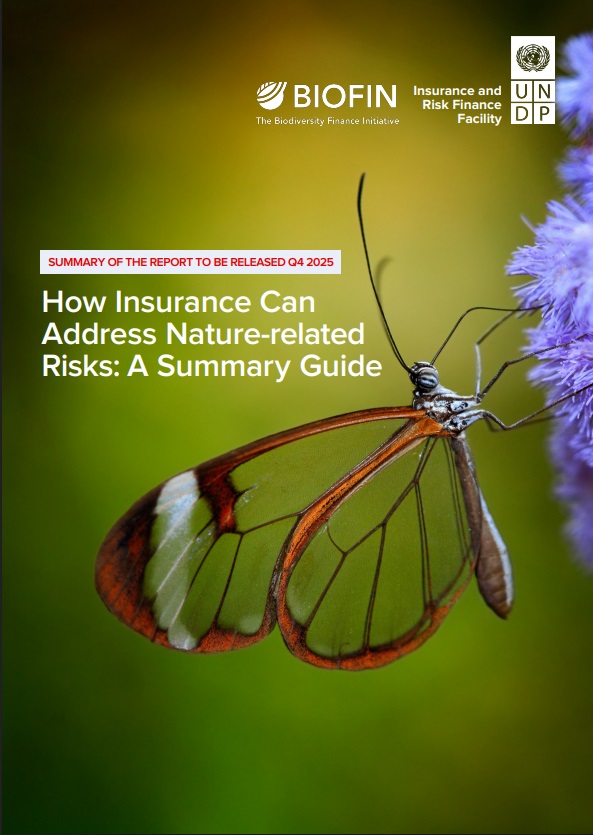
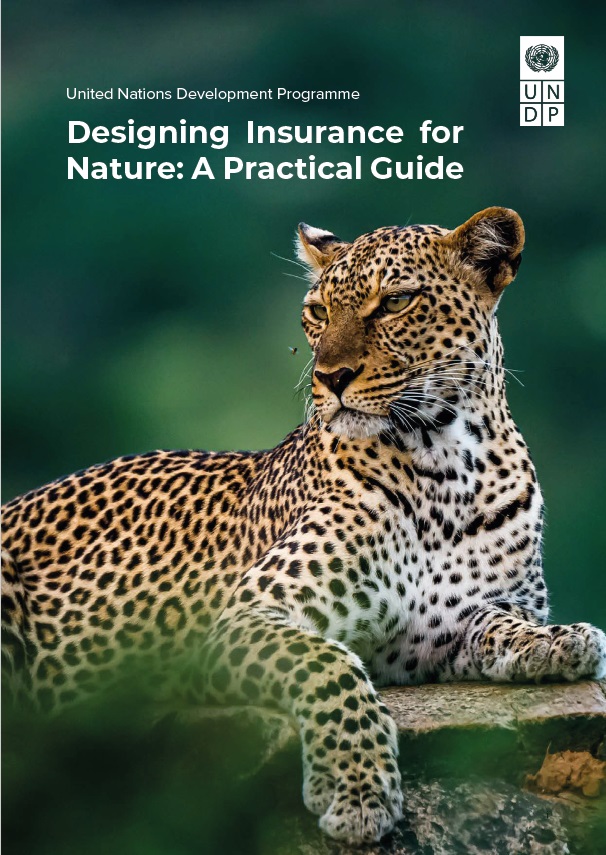
Insurance can play a crucial role in biodiversity conservation by providing financial protection against risks to natural assets, incentivizing sustainable practices, and securing key investments.
Publications

In 2022, countries adopted new global biodiversity targets under the Kunming-Montreal Global Biodiversity Framework (GBF), revisiting many goals that had gone unachieved or underachieved over the past decade.
Publications

Global Biodiversity Expenditure (GLOBE) is a taxonomy that categorizes all potential public expenditures for biodiversity.

The taxonomy consists of two components:
Publications

The BIOFIN Workbook 2024 provides detailed guidance to design and implement national biodiversity finance plans.  These are not mere plans. They set out a process to engage a coalition of actors around the issue of biodiversity finance for an extended time.
Publications

At the Conference of the Parties to the Convention on Biological Diversity 15 (CBD COP 15) in 2022, countries agreed to review and update their National Biodiversity Strategy and Action Plans
Publications

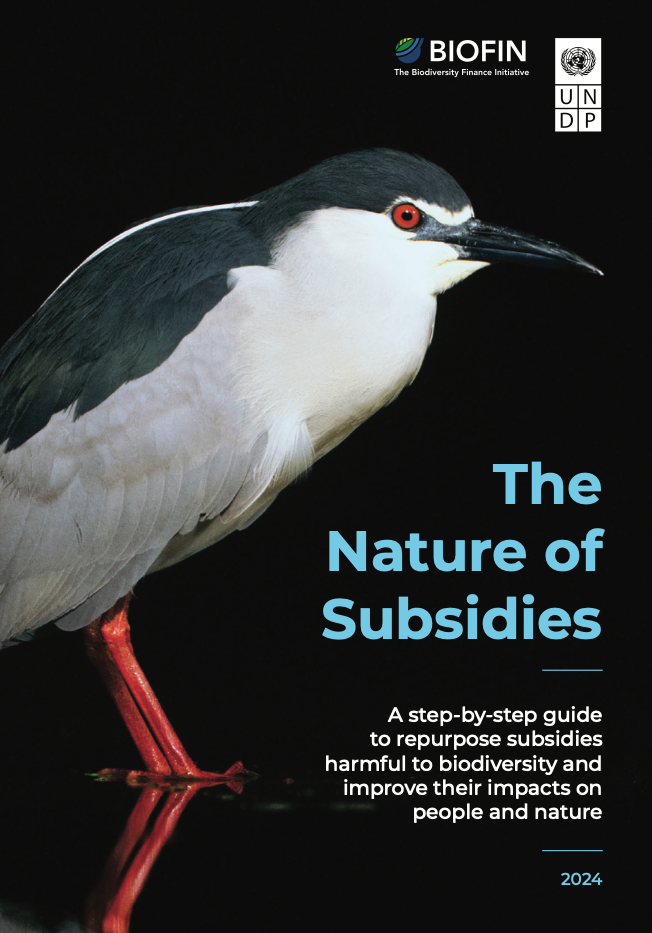
Well-intentioned subsidies aimed at socio-economic goals can have unintended negative impacts on the environment, including biodiversity. The BIOFIN team has developed a step-by-step guide to repurpose such subsidies and improve their positive impacts on people and nature.
Publications

The Kunming-Montreal Global Biodiversity Framework (GBF) calls for a whole-of-society approach to halting and reversing nature loss.

Publications


The Little Book of Investing in Nature provides an essential overview of the area of biodiversity finance at a time when governments and international negotiators are urgently seeking pragmatic solutions for the twin crises of climate change and the loss of nature.

E-LEARNING

Learning for nature: our free biodiversity finance certified e-learning course

Take our free biodiversity finance certified e-learning course. Master the methodology, connect with experts, and gain certification.

Start E-Learning
Browse the Knowledge Platform
8 Results
Publications
Publications

Due to its wealth of biodiversity, Viet Nam has been acknowledged as one of the most prioritized countries for global conservation, which has been reflected in its three main values: maintaining ecological functions (environmental protection), delivering economic supplies (direct use), and providing for socio-cultural engagement (Ministry of Natural Resources and Environment, 2008).

A number of Protected Areas (PAs) in Viet Nam today are globally and regionally recognized, including 8 Ramsar sites, 9 World Biosphere Reserves, 2 World Natural Heritage Sites, 1 World Cultural and Natural Heritage Site, and 5 ASEAN Heritage Parks. Furthermore, there are currently 63 Important Bird and Biodiversity Areas (IBAs) in Viet Nam.

In Viet Nam, biodiversity brings direct and indirect benefits to humans, contributing substantially to the national economy, especially for sectors such as agriculture, forestry, and fisheries; ensuring food security; maintaining genetic resources for farming animals and crops; and providing construction materials, pharmaceutical materials, and food. In addition, ecosystems play an important role in climate regulation and environmental protection. Biodiversity has also been a cultural and artistic inspiration to humanity for millennia (MoNRE, 2013).

According to the Policy and Institutional Review (PIR) (UNDP, 2018), economically, biodiversity contributes directly or indirectly to many sectors, households, and firms. In the agricultural sector,3 about 20 million people rely on fisheries, exploiting more than 300 marine species and more than 50 species of economically valuable freshwater fish, while 25 million people living in or near the forests earn 20-50% of their income from harvesting non-timber forest products (NTFPs), including medicinal plants and rubber. As such, there is a great reliance on products and services provided by biodiversity and ecosystems.

As also stated in the PIR Report, the beautiful biodiversity and terrestrial and coastal landscapes and islands are the foundation for Viet Nam's rapidly expanding tourism industry. Ecotourism is becoming more popular in Nature Reserves (NRs), encouraging education on natural protection and benefiting local people who provide tourism services. About 70% of Viet Nam's rapid tourism growth is occurring in coastal areas and areas with natural ecosystems characterized by high biodiversity. From 2010 to 2016, domestic tourists increased from 28 million to 62 million, and foreign tourists increased from 5 to 10 million. Tourists spend between VND 96,000 billion and VND 400,000 billion. It is estimated that high biodiversity value areas, including National Parks (NPs), PAs, and Landscape PAs, attract 40%-60% of tourists and have earned 20% of their spending.

Publications
Publications

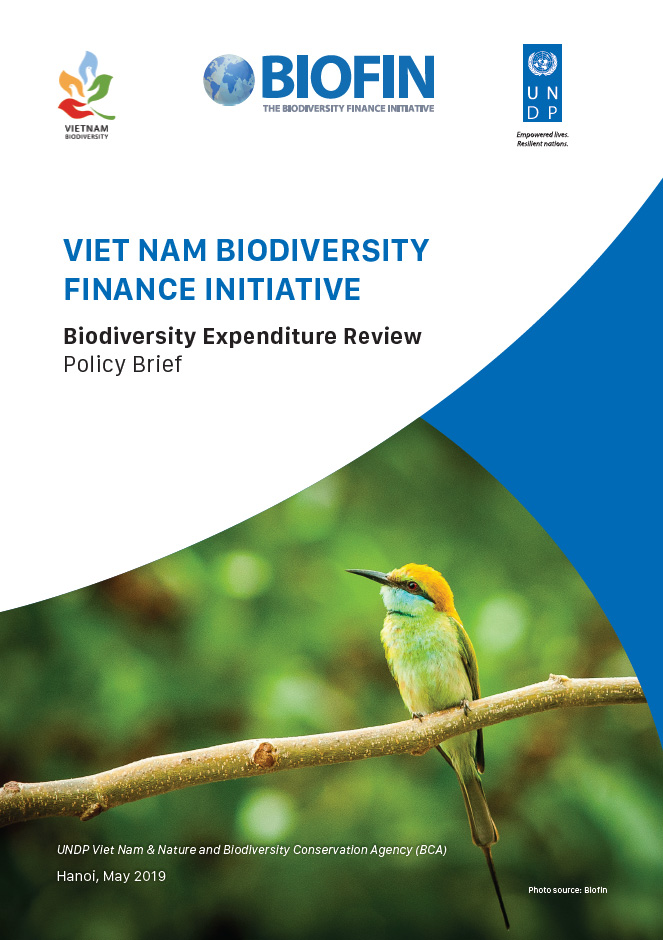
The Viet Nam Biodiversity Expenditure Review (BER) was undertaken as part of the Global Biodiversity Finance Initiative (BIOFIN) project, managed by UNDP in partnership with the European Commission (EU) and the governments of Germany, Switzerland, Norway and Flanders. The overall goal of the project is to explore national and subnational level biodiversity expenditures by different government organizations, agencies, ministries, NGOs and private sector actors, providing inputs for the better implementation of actions to reach national biodiversity targets both technically and financially.

The Viet Nam BER follows guidance provided by the BIOFIN global team, embedding a number of adjustments to ensure alignment with the specific contextual conditions of the country. The BER was completed with inputs from various sources at both the national and provincial level, such as: the Ministry of Agriculture and Rural Development (MARD), the Ministry of Natural Resources and Environment (MONRE), the Ministry of Science and Technology (MOST), Provincial Departments of Agriculture and Rural Development (DARDs), Provincial Departments of Natural Resources and Environment (DONREs), National Parks (NPs), Nature Reserves (NRs), etc. All collected data and information was analyzed following the guidance provided in the BIOFIN Workbook (2016). Two consultation workshops were also organized, to collect comments and feedback from relevant stakeholders and interested parties, which were used to frame this final report and its recommendations.

Publications

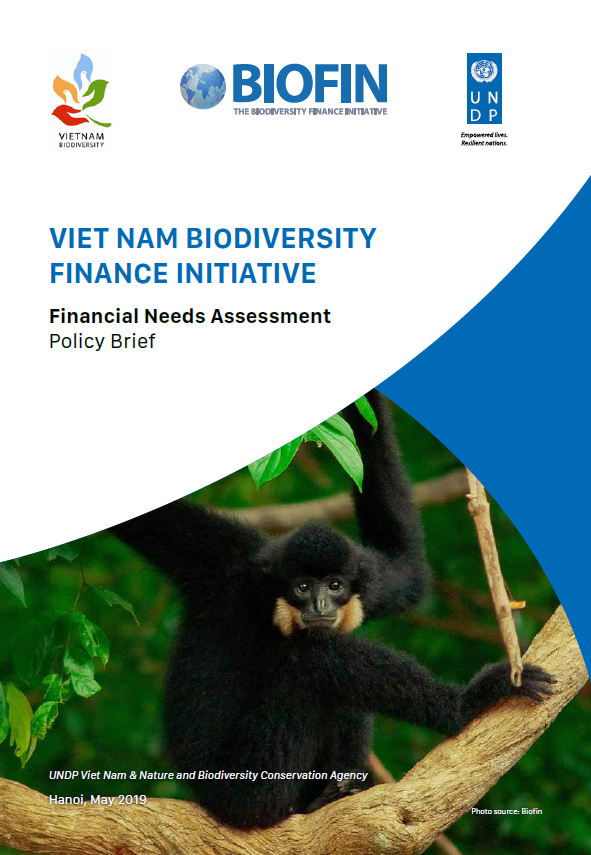
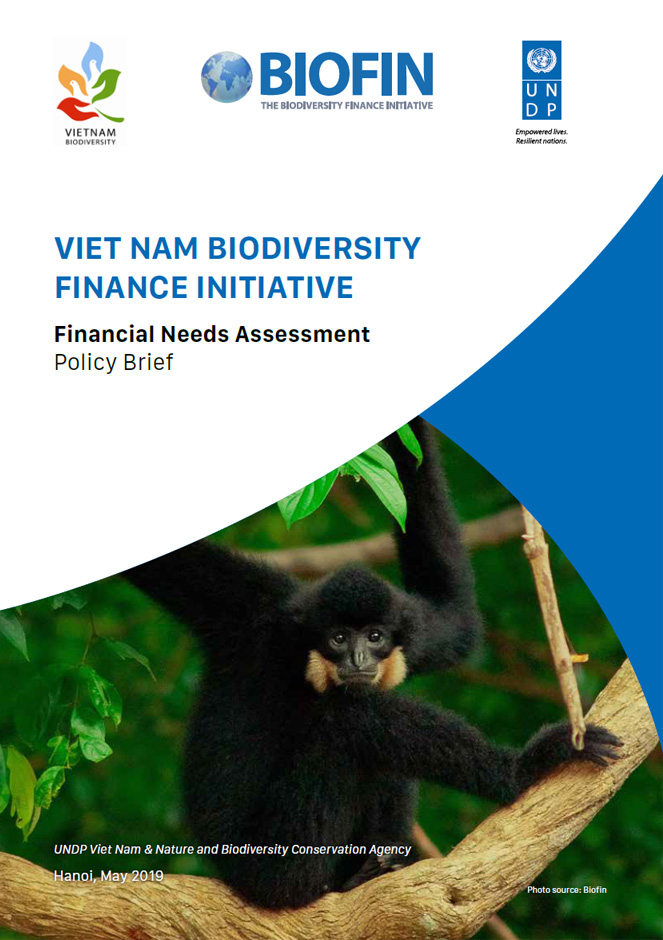
The Viet Nam FNA follows guidance provided by the BIOFIN global team, with a number of adjustments to ensure alignment with the specific contextual conditions of the country. The FNA was completed with inputs from various sources at both the national and provincial level, including the Ministry of Agriculture and Rural Development (MARD), the Ministry of Natural Resources and Environment (MONRE), the Ministry of Science and Technology (MOST), relevant subordinate ministerial Administrations, Agencies and Departments, Provincial Departments of Agriculture and Rural Development (DARDs), Provincial Departments of Natural Resources and Environment (DONREs), National Parks (NPs), Nature Reserves (NRs), etc. All collected data and information were analyzed following the guidance provided in the BIOFIN Workbook (UNDP, 2016). Two consultation workshops were organized, to collect comments and feedback from relevant stakeholders and interested parties, which were used to frame this final report and its recommendations.

The FNA is the BIOFIN report estimating the anticipated financial needs to achieve the specific targets as formulated in the Viet Nam National Biodiversity Strategy (VN NBS) to 2020, vision to 2030. The FNA adopted Decision 45/QD-TTg, dated 08 January 2014 on Approval for Master Plan of Nation-Wide Biodiversity Conservation by 2020, with a vision to 2030 as quantitative guidance for the anticipated expanding Viet Nam’s Terrestrial Protected Area (TPA) and Wetland PA (WPA) systems, and Decision 742/QD-TTg, dated 26 May 2010, approving the Plan on the system of Viet Nam’s marine conservation zones through 2020 as quantitative guidance for Viet Nam’s expanding Marine PA (MPA) network. Specific targets related to forest cover, mangroves, sea grass beds and coral reefs as well as degraded critical ecosystems are also assumed to be achieved through managing an expanding PA system. In addition, the FNA assumed that the poorly to not-quantifiable specific targets of the VN NBS, on endangered, rare and precious species, avoidance of species extinction and genetic resources, can be represented by the proxy target of “administration expenditures for biodiversity conservation management at provincial level and central level”.

The FNA estimated the finance needs for optimal management1 of biodiversity conservation in Viet Nam’s existing and planned PAs, using a bottom-up Activity Based Costing (ABC) approach to obtain a unit-cost-per-hectare for different PA types based on quantitative information provided by sample PAs for 8 cost categories (e.g. salaries, annual operational and maintenance costs, costs for biodiversity conservation activities), as well as one-time investment costs for infrastructure and facilities in new PAs. The administrative expenditures for biodiversity conservation management at the provincial and central levels were costed using an Incremental Budgeting Approach (IBA), based on actual expenditures for 2015 obtained from the BIOFIN Viet Nam Biodiversity Expenditure Review (BER). Both estimates were summed to obtain the total finance needs to achieve the targets of the VN NBS, and compared with the actual biodiversity expenditures as forecasted in the BER report, to obtain the quantified financial gap for achieving the Viet Nam NBS.

The FNA assessed the finance needs for the optimal management of biodiversity in Viet Nam to 2030 against 2 scenarios: (i) Finance needs for optimal biodiversity management in Viet Nam to 2030 based on the PA network established prior to 2018; and (ii) Finance needs for optimal biodiversity management in Viet Nam to 2030 based on an annually expanding PA network. Scenario 1 is “lower-optimum” scenario, estimating financing needs for optimal biodiversity management only for PAs existing in 2018, equal to 7.5% of the country’s surface area. Scenario 2 is the “optimum” scenario, estimating finance needs for optimal biodiversity management including for a PA network expanded in line with adopted government policies, to achieve a PA coverage in 2030 equal to 9.6% of the country as stipulated in the VN NBS.


Publications

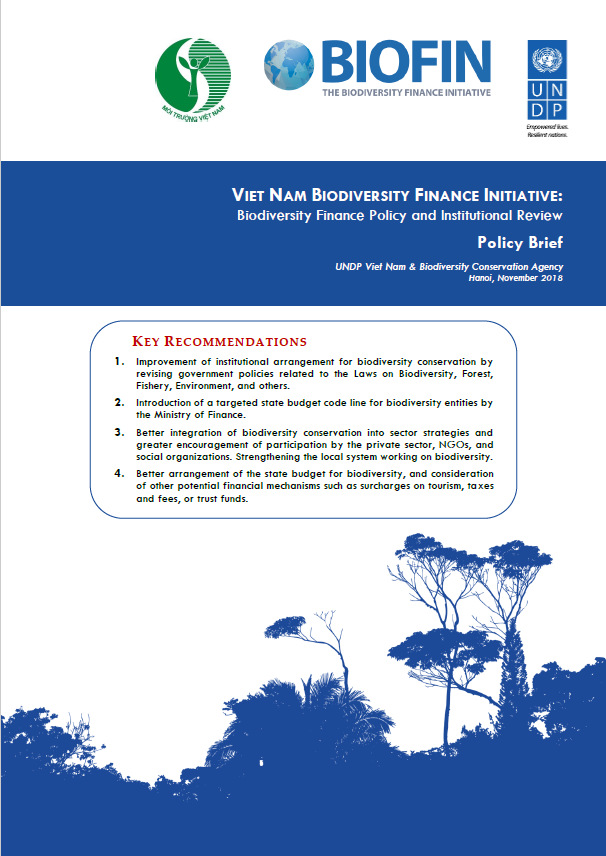
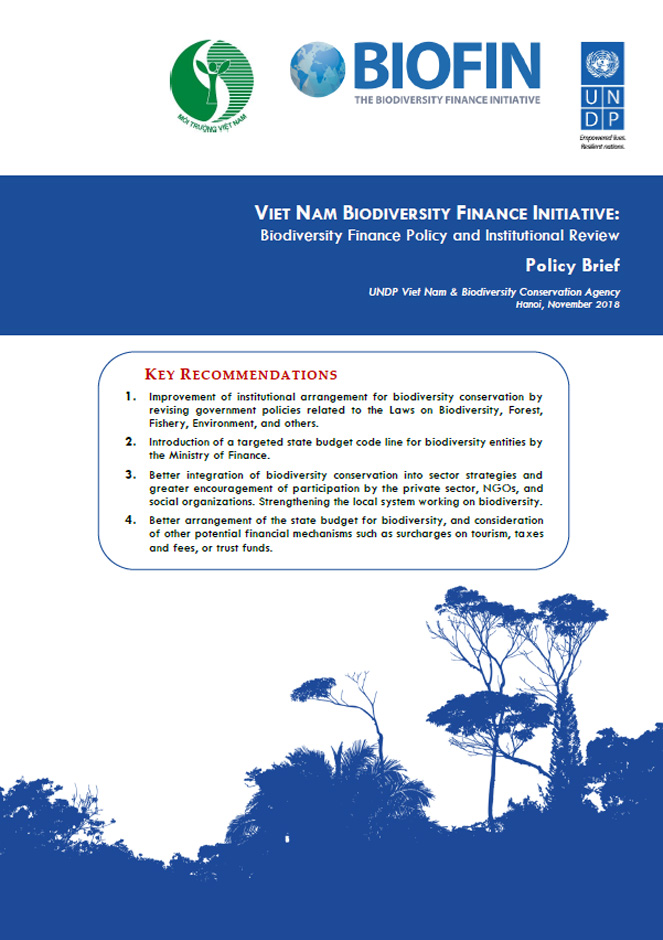
The Biodiversity Finance Policy and Institutional Review (PIR) in Viet Nam (VN) has been conducted by independent consultant from May 2017 to February 2018. The PIR report focuses on analyzing the status and progress of the National Biodiversity Strategy (NBS) of Viet Nam, presented in 6 chapters including introduction and recommendations as well as references and annexes.

In recent decades, the status of biodiversity (BD) in Viet Nam is worsening against a high annual economic growth (6-8% on average), which has strong impact on dependency sectors like agriculture, fishery and forestry in which most people with low incomes earn their living. Recent studies on BD valuation show that investment in BD conservation is significantly less than its contribution to economic development in provinces and the country, in general. A supplementary study on the Biodiversity Expenditure Review provides more information in this regard.

To improve biodiversity conservation, in recent years the legal framework has been strengthened, including the National Constitution (2013), the Law on Biodiversity (2008), the Law on Environment Protection (2005), the Law on Forestry (2004, revised in 2017), the Law on Fishery (2003, revised in 2017), all supported by a variety of government policies and regulations providing guidance to the implementation of legislation on BD conservation. The VN NBS is the most important policy to accelerate BD conservation in VN.

Publications

This Inception Report presents the results of Inception Phase of the Biodiversity Finance Initiative (BIOFIN) project in Viet Nam. The report summarizes (i) the need for biodiversity financing under the global framework of the United Nations Convention on Biological Diversity (CBD) and the general approach of the global BIOFIN initiative (chapter 1); (ii) the rationale for the BIOFIN project in Viet Nam, summary of its planned activities, implementation arrangements and detailed work plan (chapter 2); (iii) the Inception Workshop, specifically presentations on BIOFIN globally, regional experiences and Viet Nam initiative as well as the technical studies committed - Policy and Institutional Review (PIR), Biodiversity Expenditure Review (BER), and Financial Needs Assessment (FNA) – and initial findings, comments and recommendations on project implementation received (chapter 3).