Knowledge Base

KNOWLEDGE HUB

Knowledge Hub

Access BIOFIN's library of resources, including flagship publications, country reports, finance solution case studies, webinars, explainer videos, podcasts, and more.

Key Publications
Publications

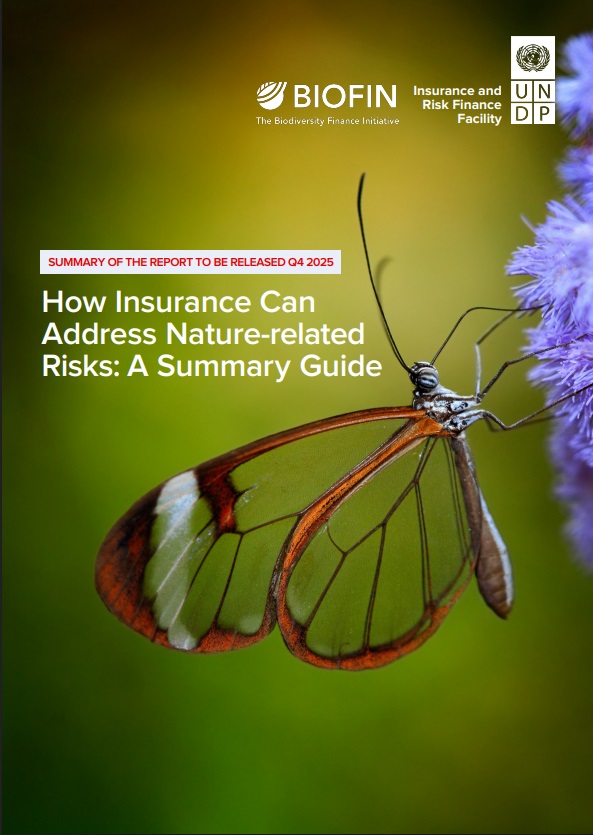
Insurance can play a crucial role in biodiversity conservation by providing financial protection against risks to natural assets, incentivizing sustainable practices, and securing key investments.
Publications

In 2022, countries adopted new global biodiversity targets under the Kunming-Montreal Global Biodiversity Framework (GBF), revisiting many goals that had gone unachieved or underachieved over the past decade.
Publications

Global Biodiversity Expenditure (GLOBE) is a taxonomy that categorizes all potential public expenditures for biodiversity.

The taxonomy consists of two components:
Publications

The BIOFIN Workbook 2024 provides detailed guidance to design and implement national biodiversity finance plans.  These are not mere plans. They set out a process to engage a coalition of actors around the issue of biodiversity finance for an extended time.
Publications

At the Conference of the Parties to the Convention on Biological Diversity 15 (CBD COP 15) in 2022, countries agreed to review and update their National Biodiversity Strategy and Action Plans
Publications

Well-intentioned subsidies aimed at socio-economic goals can have unintended negative impacts on the environment, including biodiversity. The BIOFIN team has developed a step-by-step guide to repurpose such subsidies and improve their positive impacts on people and nature.
Publications

The Kunming-Montreal Global Biodiversity Framework (GBF) calls for a whole-of-society approach to halting and reversing nature loss.

Publications


The Little Book of Investing in Nature provides an essential overview of the area of biodiversity finance at a time when governments and international negotiators are urgently seeking pragmatic solutions for the twin crises of climate change and the loss of nature.

E-LEARNING

Learning for nature: our free biodiversity finance certified e-learning course

Take our free biodiversity finance certified e-learning course. Master the methodology, connect with experts, and gain certification.

Start E-Learning
Browse the Knowledge Platform
636 Results
Publications

Le Petit Livre de l’Investissement pour la Nature donne un état des lieux complet du financement de la biodiversité au moment même où les gouvernements et les négociateurs internationaux recherchent de toute urgence des solutions pragmatiques à la double crise du changement climatique et de la dégradation de la nature.

Le financement de la protection de notre biodiversité est un défi que les gouvernements du monde entier ont du mal à relever. Les estimations actuelles montrent que le déficit mondial s’élèverait à environ 824 milliards USD. Cependant, Le Petit Livre de l’Investissement pour la Nature fournit un guide pratique à l’usage des décideurs politiques et des investisseurs sur la manière de combler ce déficit.

Publications


The Little Book of Investing in Nature provides an essential overview of the area of biodiversity finance at a time when governments and international negotiators are urgently seeking pragmatic solutions for the twin crises of climate change and the loss of nature.

Financing the protection for our natural world is a challenge that governments around the world have struggled to meet. Current estimates suggest there is a global shortfall of USD 824 billion. But The Little Book of Investing in Nature provides a simple guide for policy makers and investors as to how this shortfall can be overcome.

The Little Book identifies clear steps towards generating, delivering and realigning this finance for biodiversity, as well as highlighting the need to avoid investments in activities that damage the natural resources we depend on. It features more than 40 mechanisms and 25 case studies illustrating how governments, banks and NGOs – and sometimes combinations of all three – are driving transformation, reflecting the recent growth in the technical expertise and energy that is being directed towards efforts to value nature appropriately and pay for its conservation.

Ultimately, The Little Book makes a convincing case that resetting the global economy in such a way as to protect life on Earth is not only possible but critical.

Vous pouvez télécharger la version française ici

Puedes descargar la versión en español aqui

Anda dapat mengunduh versi Bahasa di sini.

你可以在这里下载中文版


Publications


The Little Book of Investing in Nature provides an essential overview of the area of biodiversity finance at a time when governments and international negotiators are urgently seeking pragmatic solutions for the twin crises of climate change and the loss of nature.

Financing the protection for our natural world is a challenge that governments around the world have struggled to meet. Current estimates suggest there is a global shortfall of USD 824 billion. But The Little Book of Investing in Nature provides a simple guide for policy makers and investors as to how this shortfall can be overcome.

The Little Book identifies clear steps towards generating, delivering and realigning this finance for biodiversity, as well as highlighting the need to avoid investments in activities that damage the natural resources we depend on. It features more than 40 mechanisms and 25 case studies illustrating how governments, banks and NGOs – and sometimes combinations of all three – are driving transformation, reflecting the recent growth in the technical expertise and energy that is being directed towards efforts to value nature appropriately and pay for its conservation.

Ultimately, The Little Book makes a convincing case that resetting the global economy in such a way as to protect life on Earth is not only possible but critical.

Vous pouvez télécharger la version française ici

Puedes descargar la versión en español aqui

Anda dapat mengunduh versi Bahasa di sini.

你可以在这里下载中文版


Publications

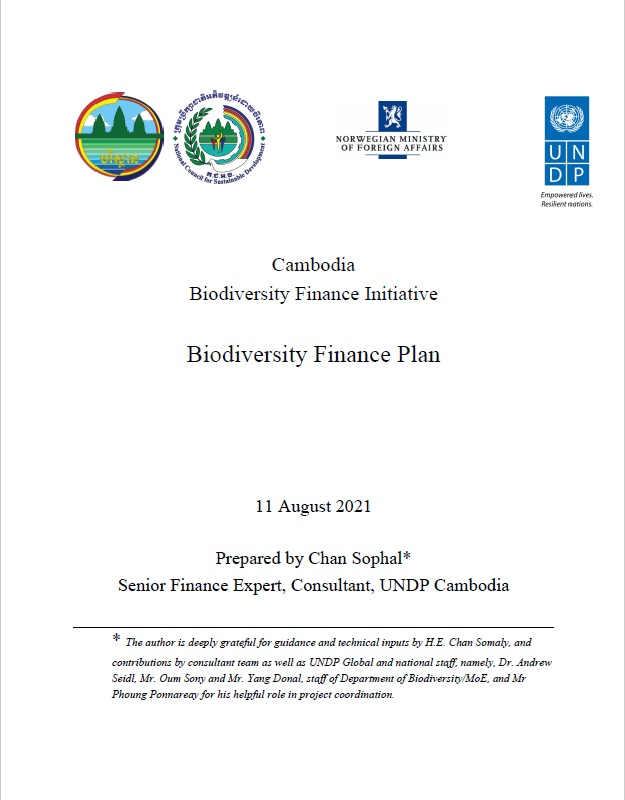
The Policy and Institutional Review (PIR) for Cambodia assesses past and present institutional arrangements and finance policies for biodiversity, and pinpoints practical finance solutions for effective conservation and management. Guided by the BIOFIN Workbook (2018), the PIR blends (1) a desk review of biodiversity-related laws, policies and strategies with (2) consultative workshops across key sectors. The National Biodiversity Strategy and Action Plan (NBSAP)—with 498 actions across 24 themes, implemented by an inter-ministerial working group —anchors the analysis and aligns with Aichi Targets (2015–2020). As the NBSAP is not costed, the PIR informs BIOFIN’s feasible finance mechanisms, project proposals, and finance plans to mobilize resources for Cambodia’s biodiversity.

Publications

El documento expone una propuesta para implementar un sistema de administración de riesgos ambientales y sociales para entidades financieras de la economía popular y solidaria. Esta se ha estructurado considerando fuentes secundarias de instituciones internacionales referentes y además,  información primaria recuperada mediante encuestas, entrevistas y talleres con representantes de las cooperativas de ahorro y crédito asociadas a la Corporación Nacional de Finanzas Populares y Solidarias de Ecuador. 

Publications

En este documento se describe con un enfoque de oferta, la situación del crédito verde en las entidades financieras de primer piso, asociadas a la Corporación Nacional de Finanzas Populares y Solidarias. Se establece además, la forma en que estas organizaciones aplican y/o perciben la gestión de riesgos ambientales y sociales en las operaciones de crédito.

Publications

Este informe describe el marco institucional así como la normativa vigente y sugerida para facilitar el escalamiento del crédito verde y la gestión de riesgos ambientales y sociales en el sector financiero popular y solidario ecuatoriano.

Publications

Para apoyar la economía y su meta de proveer bienestar humano, se requiere cuatro tipos de captial: el capital natural, el capital social, el capital humano, el conocimiento y el capital construido. El capital natural (i.e. los ecosistemas) no puede proveer beneficios a las personas sin interactuar con los otros tres tipos de capital. Los servicios ecosistémicos no fluyen directamente del capital natural al bienestar humano. Por lo tanto, “los servicios ecosistémicos son la contribución relativa del capital natural a la producción de varios beneficios humanos, en combinación con las otras tres formas de capital” (Costanza, 2012).

Publications
Publications

La conservación de la biodiversidad ha demostrado que se requiere un trabajo articulado del sector público, privado y la sociedad civil, de lo contrario cada vez se hará más difícil mantener el planeta habitable. La relación entre el bienestar humano y los servicios ecosistémicos es innegable, sin embargo, el reto está en preservar el capital natural y satisfacer las necesidades de consumo sin impactar desmedidamente los recursos. Los mercados de biodiversidad actualmente aportan a este reto al conectar proveedores (dueños de áreas) que ofertan servicios ecosistémicos con un comprador (empresas, personas) dispuesto a pagar para mantener los atributos de los ecosistemas. Este documento presenta las bases conceptuales y principales desafíos sobre las Compensaciones por Pérdida de Biodiversidad (a nivel global y para Colombia), para luego introducir los Sistemas de Créditos de Biodiversidad como uno de los mecanismos que se implementa actualmente alrededor del mundo para compensar impactos, principalmente en bancos de hábitat. Aquí se describen diferentes casos de estudio (de América, Europa y Australia), siendo Estados Unidos el más antiguo y exitoso, con cerca de 1500 bancos. En Colombia, se propone cómo los Sistemas de Créditos de Biodiversidad representan una oportunidad y cuáles son los principales retos para integrar el mercado tanto obligatorio como voluntario, donde interactúen múltiples instrumentos de conservación, con un enfoque de paisaje integral.