Knowledge Base

Knowledge Hub

Access BIOFIN's library of resources, including flagship publications, country reports, finance solution case studies, webinars, explainer videos, podcasts, and more.

Key Publications

Publications

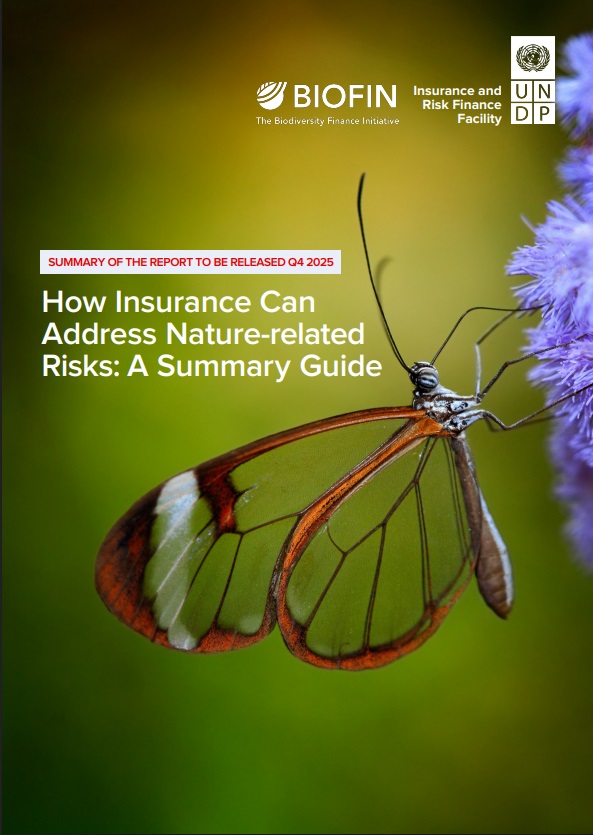
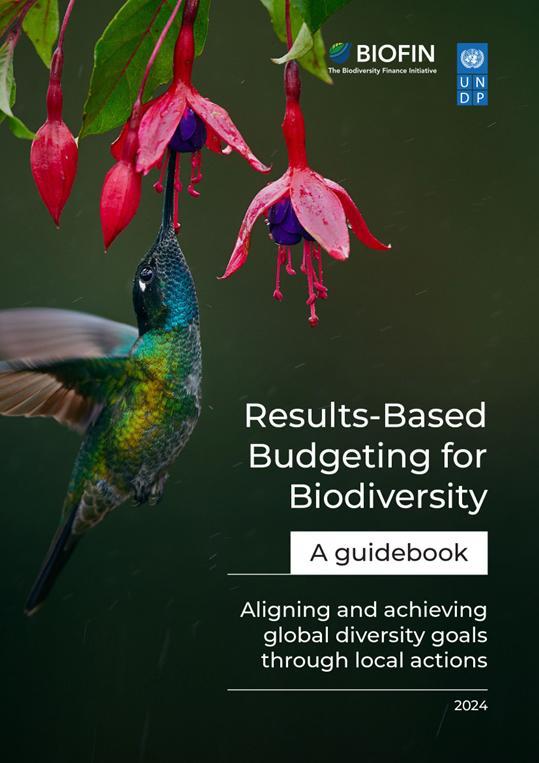
Insurance can play a crucial role in biodiversity conservation by providing financial protection against risks to natural assets, incentivizing sustainable practices, and securing key investments.
Publications

In 2022, countries adopted new global biodiversity targets under the Kunming-Montreal Global Biodiversity Framework (GBF), revisiting many goals that had gone unachieved or underachieved over the past decade.
Publications

Global Biodiversity Expenditure (GLOBE) is a taxonomy that categorizes all potential public expenditures for biodiversity.

The taxonomy consists of two components:
Publications

The BIOFIN Workbook 2024 provides detailed guidance to design and implement national biodiversity finance plans.  These are not mere plans. They set out a process to engage a coalition of actors around the issue of biodiversity finance for an extended time.
Publications

At the Conference of the Parties to the Convention on Biological Diversity 15 (CBD COP 15) in 2022, countries agreed to review and update their National Biodiversity Strategy and Action Plans
Publications

Well-intentioned subsidies aimed at socio-economic goals can have unintended negative impacts on the environment, including biodiversity. The BIOFIN team has developed a step-by-step guide to repurpose such subsidies and improve their positive impacts on people and nature.
Publications

The Kunming-Montreal Global Biodiversity Framework (GBF) calls for a whole-of-society approach to halting and reversing nature loss.

Publications

The Little Book of Investing in Nature provides an essential overview of the area of biodiversity finance at a time when governments and international negotiators are urgently seeking pragmatic solutions for the twin crises of climate change and the loss of nature.

E-LEARNING

Learning for nature: our free biodiversity finance certified e-learning course

Take our free biodiversity finance certified e-learning course. Master the methodology, connect with experts, and gain certification.

Start E-Learning
Browse the Knowledge Platform
645 Results
Publications

El documento expone a manera de resumen los principales elementos que caracterizan el FRSS, Fondo creado por la Consorcio Ecuatoriano de Responsabilidad Social y Sostenibilidad para apoyar desde el sector productivo privado, las estrategias nacionales de conservación de biodiversidad y lucha contra el cambio climático en el Ecuador.

Publications

El documento analiza los sectores productivos privados autorizados para el uso y aprovechamiento de agua cruda en el Ecuador. El objetivo radica en priorizar aquellos sectores donde el ajuste de factores diferenciadores otorga la mayor oportunidad de incrementar la recaudación tarifaria para movilizar financiamiento hacia la conservación de recursos hídricos.

Publications
Publications

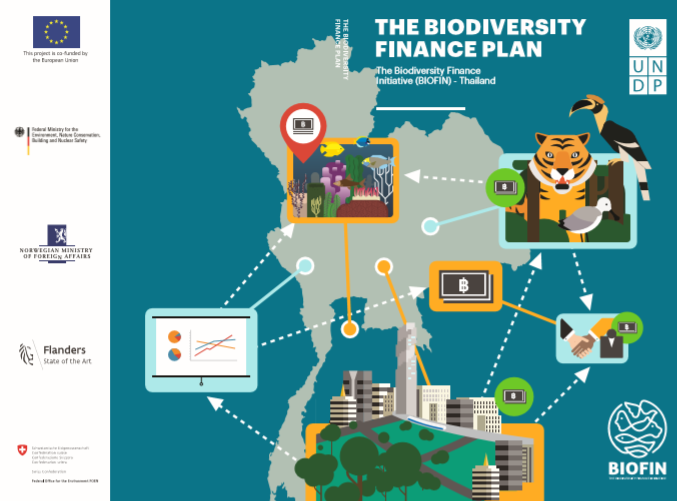
This Synthesis Report compiles the findings from three assessments conducted as part of the national Biodiversity Finance Initiative (BIOFIN) process in Thailand. The three assessments discussed include the policy and institutional review (PIR), the budget and expenditure review (BER), and the financial needs assessment (FNA). The PIR analyzes the policy and institutional context, identifies the biodiversity targets to be achieved, and lays out the context for the intended change in financing. The BER analyzes public and private expenditures for biodiversity and establishes past and projected expenditures on biodiversity. The FNA provides an estimation of the financing required to achieve identified biodiversity targets. The FNA also assesses the financing gap between the status quo of projected expenses and the estimated budget to meet biodiversity goals. Findings from these three assessments feed into the formulation of the countrys Biodiversity Finance Plan (BFP) and are used to develop prioritized finance solutions that are then taken into the implementation phase of the BIOFIN process

As the first phase of the national BIOFIN process in Thailand was completed in 2018, several lessons can be drawn. First, the large financing gap required to achieve national biodiversity targets requires increased contributions from all stakeholders including the private sector and citizens. Second, efforts to conserve and enhance biodiversity resources require the participation of all stakeholders, especially local governments and communities. The ideas embodied in the BIOFIN process could be utilized at the local level in order to have informed decision-making regarding budgeting for biodiversity. Third, data on biodiversity should be collected and a holistic database for biodiversity created. Data could be gathered by different agencies, with one central agency responsible for gathering all data into a single database. Finally, increasing the awareness of the importance of biodiversity in the younger generation is crucial to sustaining biodiversity resources into the future. Thus, activities towards this end should be encouraged.

Publications

Letter of Understanding (LoU) between the Centre of Marine Studies and Aquaculture -CEMA- of the University of San Carlos de Guatemala -USAC- and the Sport and Recreational Fishermen Association –EPESTURDE–.

To promote the sustainable use and conservation of Costal-Marine Biodiversity in the Guatemalan Pacific Shoreline, the collaborative strategic alliance was consolidated through a Letter of Understanding (LoU) between the Centre of Marine Studies and Aquaculture -CEMA- of the University of San Carlos de Guatemala -USAC- and the Sport and Recreational Fishermen Association –EPESTURDE–. This LoU sets out the governance system to implement the financial mechanism called: Socio-Environmental Fund for Sailfish Conservation and Artisanal Fishing Sustainable development which will raise funds from voluntary contributions derived from environmental service of tourist sport sailfish anglers.

The Socio-Environmental Fund will invest in the following priorities: i) Development of value chains in artisanal fishing, ii) Support in applied research, iii) Promotion of tourism, iv) Promotion of Sustainable infrastructure, and v) Strengthening institutional capacities. These priorities are focused on the promotion of sustainable development of artisanal fishing and the conservation of Sailfish.

Publications

This Synthesis Report compiles the findings from three assessments conducted as part of the national Biodiversity Finance Initiative (BIOFIN) process in Thailand. The three assessments discussed include the policy and institutional review (PIR), the budget and expenditure review (BER), and the financial needs assessment (FNA). The PIR analyzes the policy and institutional context, identifies the biodiversity targets to be achieved, and lays out the context for the intended change in financing. The BER analyzes public and private expenditures for biodiversity and establishes past and projected expenditures on biodiversity. The FNA provides an estimation of the financing required to achieve identified biodiversity targets. The FNA also assesses the financing gap between the status quo of projected expenses and the estimated budget to meet biodiversity goals. Findings from these three assessments feed into the formulation of the countrys Biodiversity Finance Plan (BFP) and are used to develop prioritized finance solutions that are then taken into the implementation phase of the BIOFIN process

As the first phase of the national BIOFIN process in Thailand was completed in 2018, several lessons can be drawn. First, the large financing gap required to achieve national biodiversity targets requires increased contributions from all stakeholders including the private sector and citizens. Second, efforts to conserve and enhance biodiversity resources require the participation of all stakeholders, especially local governments and communities. The ideas embodied in the BIOFIN process could be utilized at the local level in order to have informed decision-making regarding budgeting for biodiversity. Third, data on biodiversity should be collected and a holistic database for biodiversity created. Data could be gathered by different agencies, with one central agency responsible for gathering all data into a single database. Finally, increasing the awareness of the importance of biodiversity in the younger generation is crucial to sustaining biodiversity resources into the future. Thus, activities towards this end should be encouraged.

Publications

This Synthesis Report compiles the findings from three assessments conducted as part of the national Biodiversity Finance Initiative (BIOFIN) process in Thailand. The three assessments discussed include the policy and institutional review (PIR), the budget and expenditure review (BER), and the financial needs assessment (FNA). The PIR analyzes the policy and institutional context, identifies the biodiversity targets to be achieved, and lays out the context for the intended change in financing. The BER analyzes public and private expenditures for biodiversity and establishes past and projected expenditures on biodiversity. The FNA provides an estimation of the financing required to achieve identified biodiversity targets. The FNA also assesses the financing gap between the status quo of projected expenses and the estimated budget to meet biodiversity goals. Findings from these three assessments feed into the formulation of the countrys Biodiversity Finance Plan (BFP) and are used to develop prioritized finance solutions that are then taken into the implementation phase of the BIOFIN process

As the first phase of the national BIOFIN process in Thailand was completed in 2018, several lessons can be drawn. First, the large financing gap required to achieve national biodiversity targets requires increased contributions from all stakeholders including the private sector and citizens. Second, efforts to conserve and enhance biodiversity resources require the participation of all stakeholders, especially local governments and communities. The ideas embodied in the BIOFIN process could be utilized at the local level in order to have informed decision-making regarding budgeting for biodiversity. Third, data on biodiversity should be collected and a holistic database for biodiversity created. Data could be gathered by different agencies, with one central agency responsible for gathering all data into a single database. Finally, increasing the awareness of the importance of biodiversity in the younger generation is crucial to sustaining biodiversity resources into the future. Thus, activities towards this end should be encouraged.

Publications

Biodiversity Expenditure Review (BER) was conducted within the framework of the Biodiversity Finance Initiative (BIOFIN) project in Mongolia. The review covered biodiversity expenditure from 2008-2018 incorporating political and economic impacts. BER analysis was conducted according to the BIOFIN Workbook methodology and included the annual expenditures by state and local budgets as well as the funds by the donor and international organizations. The economic status of Mongolia during this review period can be divided into two periods: (i) a period of regional and local economic crisis (2008-2010, 2013-2015); and (ii) a period of economic growth (2011-2012, 2016-2018).

During the crisis period,    the fiscal policy focused on    “reducing the budget and cutting out tolerable expenditures”, while the growth period aimed at    “increasing the salaries of civil servants and pension funds step-by-step in accordance with the global economic growth and mineral prices”. In addition to reviewing the public budget expenditures on conservation-related activities, expenditures related to the projects on sustainable use of biodiversity, improvement of legal and regulatory frameworks, funded various donors or international organizations, were also analyzed.  The consulting team has identified biodiversity relevant activities and stakeholders that contribute to achieving the goals and objectives of the National Biodiversity    Program.    Based on the stakeholders’    identification,    the information was collected from 90 projects, of which 71 were implemented by 11 different organizations and the remaining 19 were by government agencies.  

It was estimated that the total biodiversity expenditure during 2008-2018 was 207.7 million USD, which amounts to 0.35%-0.79% of total State budget expenditure and 0.15%-0.25% of the total GDP; and the average annual biodiversity expenditure was 13.3-25.5 million USD. Analysis of the annual expenditures showed that the most significant decrease of    12%    and    21%    was observed in 2012 and 2016, respectively, which can be attributed to the 15.3% and 42% decrease of the state budget. Although the total State budget expenditures increased by 21% and 7% in the respective years, the expenditure on deforestation was reduced by 3 folds in 2012 as compared to the previous year, while the specially protected areas (SPAs) expenditure was reduced by 21% in 2016. Both 2012 and 2016 were the quadrennial election years, thus suggesting that political activities affect the expenditures on biodiversity and conservation.

The most significant periods of growth in biodiversity expenditures were observed in 2013 and 2017, immediately after the decline from the previous election years. It can be explained by the direct increase of funding from the State budget, as it was normalized back to the pre-election period. The increased expenditure can also be attributed to the approval of a higher number of projects by donors and international organizations. Financing from State and local budgets account for 44.4% of the total funding for biodiversity expenditures, with the remaining 55.6% were provided by donors and international organizations.

The total biodiversity budget and expenditures largely depend on the revenue generation of the State budget. The public budget allocation related to biodiversity was categorized according to the strategic areas, goals, and objectives of the National Biodiversity Program and the Aichi targets. To reflect the impacts of the inflation rate in the biodiversity expenditure, actual exchange rates of each particular year was applied. Appendix 1 shows the detailed estimation of expenditures for 2008-2018 according to the goals and objectives

Publications


This report aims at identifying the required financing needs for the implementation of the Medium-term Action Plan /hereafter referred to as medium-term plan/ of the National Biodiversity Program (NBP) Mongolia. The financing needs have been defined by the identified activities, yearly needs and by NBP strategic areas. The financing gap for the implementation of the medium-term plan is estimated at 136.6 million MNT or 51.8 million USD.

It was estimated that 74.7-84.3% of the total required funding of the strategic areas #1 and #2 are deficient, which amounts to 95.7% of the total NBP financing gap. In contrast, the financing gap for strategic areas #3 and #4 is relatively small. Nevertheless, funding the financing gaps of the strategic areas 3 and 4 should be prioritized by establishing the legal frameworks for economic incentives and ecosystem payments. It would further rationalize the use and conservation by increasing private sector participation and find solutions for future financing needs and/or reducing the future costs from environmental damages and degradation. The relevant data from six ministries and one government agency, which was used for this report, were collected through the Ministry of Environment and Tourism (MET), whereas the data from international organizations were collected through the respective project coordinators. An official letter, signed by the State Secretary of MET, requesting the implementation status of the medium-term plan during 2016-2018, and the planned activities for 2019-2021 was sent to the six ministries, GASI, NSO, and MOF on 9 March 2019.

As of 1 May 2019, a response was received from the MCUD, MOE, and MMHI, however, these ministries notified that they did not receive any official information regarding measures/activities of the medium-term plan that they should be in charge of. Therefore, no expenditures occurred, or no funding was budgeted for the NBP activities. A response from the ministries other than MET was not received, and the 2020 Fiscal Framework has not been formally approved; thus, related information was not included in this report. The assessment of data and information on 9 donor projects and 36 projects funded by international organizations was carried out. The report included information on 25 projects that are relevant to the respective goals of the program.

Publications

Mongolia’s Biodiversity Finance Plan (BFP) outlines a comprehensive strategy to secure sustainable financing for the conservation and sustainable use of biodiversity, recognizing ecosystem services as essential and irreplaceable for human well-being.

Developed under the United Nations Development Programme’s BIOFIN Initiative, the plan builds on Mongolia’s long-standing commitment to the Convention on Biological Diversity, including the National Program on Biodiversity and its alignment with global targets such as the Aichi Biodiversity Targets.

The BFP assesses current biodiversity status, financing gaps, and future needs, and proposes practical solutions to mobilize resources. It emphasizes strengthening institutional frameworks, improving cost-efficiency, reforming harmful subsidies, and leveraging both domestic and international funding sources.

Structured across four sections, the plan provides a roadmap for addressing biodiversity pressures, scaling up financing, and ensuring effective implementation of Mongolia’s national biodiversity priorities in the face of fiscal constraints.

BIOFIN Videos
SEE ALL