

ENGLISH
Four countries pioneering measures to tackle harmful subsidies
Under Target 18 of the Kunming–Montreal Global Biodiversity Framework (KMGBF), governments committed to identifying, eliminating or redesigning incentives, including subsidies…




The BIOFIN project began activities in Colombia in March 2015, joining a group of approximately forty beneficiary countries for this initiative. Within this group, eleven countries belong to the Latin America group.
Colombia is the most biodiverse country per square kilometer in the world. Biodiversity management affects the social and economic development of a large portion of the population. Nevertheless, biodiversity is a matter of interest for the national economic policy due to its impact.
These efforts aim to identify trends, financing gaps, and opportunities to meet the country's biodiversity goals set during the meetings of the parties to the Convention on Biological Diversity. Through financial solutions, the goal is to increase and redirect investments from the public sector, private sector, and international cooperation to benefit threatened ecosystems and their communities.
As an essential part of the National Biodiversity Strategy and Action Plan in Colombia, BIOFIN in Colombia promotes financial mechanisms that contribute to closing the financial gap for biodiversity management. It does so through the strengthening of national and local planning processes for biodiversity management and the formulation and implementation of financial solutions to increase or redirect investment for biodiversity management.
Our strategy includes the following objectives:
Mandatory biodiversity offsets and voluntary biodiversity credits in Colombia
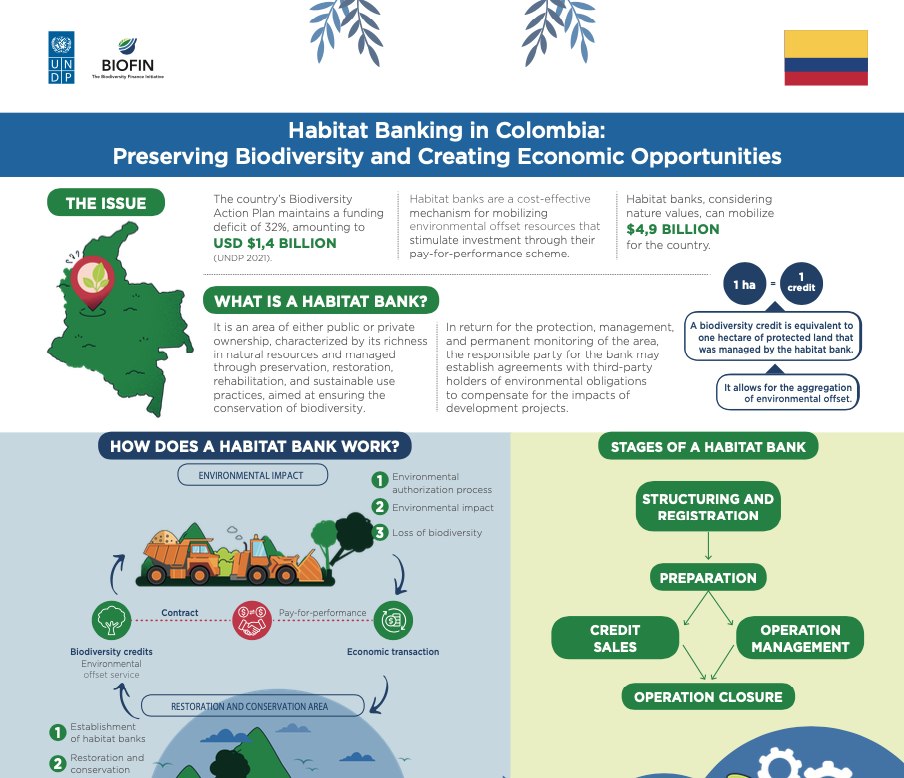
BIOFIN in Colombia supports the national government's efforts to develop financial mechanisms aimed at increasing private sector investments in biodiversity. The country has both mandatory and voluntary financial instruments to mobilize resources for biodiversity conservation through environmental offsets, habitat banks, and biodiversity credits.
Despite having regulations for these mechanisms, Colombia faces barriers that hinder their effective implementation. These include limited awareness of such initiatives, a shortage of suitable areas, and an insufficient project portfolio, leading to a significant backlog of unexecuted offsets.
To address these challenges, BIOFIN in Colombia has conducted various analyses to provide recommendations and strengthen capacities for implementing these mechanisms, drawing on lessons learned from other financial instruments, such as the carbon market.
Facilitate and access public and private funds for the financing of biodiversity management.
BIOFIN in Colombia promote the facilitation and access to public resources channeled through different mechanism like: Fund for Life and Biodiversity (FVB), the National Environmental Fund (FONAM), or the environmental allocations of the General System of Royalties (SGR). Also, will supports for different stakeholders involved in the approval project process, to ensure the effective mobilization of resources to meet the financing needs for biodiversity management, identified by environmental authorities and communities from the territories.
Additionally, BIOFIN also advances in reducing access barriers for small and medium-sized producers interested to access in financial sector instruments (commercial banks and national development banks) that finance environmentally sustainable actions or productive practices.
Mobilize the resources of local communities for biodiversity financing through the establishment of community funds.
BIOFIN in Colombia provide technical support to structure funds as financial vehicles to increase resources for biodiversity. These funds have the potential to mobilize resources from public, private, community, and international cooperation resources.
The main priority of this financial solution is to catalyze community-owned resources (private resources) through the inclusion and access to financial services for local communities in remote areas of Colombia. This will do through the implementation of the "Savings and credit groups" methodology, used by the UNDP in Colombia and is support by current enabling Colombian legal frameworks. Also, this strategy aims to reach areas with no financial system coverage, where communities need to develop savings and credit strategies as financial mechanisms to support sustainable environmental activities.
This financial solution has been contributed to both peace consolidation, environmental protection and productive reconversion while promoting economically sustainable local markets.
Increase public and private investment through payment for environmental services in Colombia.
BIOFIN in Colombia contribute to the mobilization of public and private resources for the conservation and sustainable use of strategic ecosystems services through the implementation of Payment for Ecosystem Services - PES schemes.
PES was conceived in Colombian regulations as a complementary financial mechanism for the conservation of strategic areas and ecosystems on public and private properties at risk of degradation, which simultaneously contribute to the well-being and development of communities.
In this regard, the Colombian General Environmental Law established the obligation to territorial entities (departments, districts, and municipalities) to invest a percentage of no less than 1% of their current discretionary income for the acquisition or maintenance of such strategic areas. Thus, in compliance with this obligation, territorial authorities implement PES in various regions of Colombia.
However, not all territorial entities in Colombia does not have with technical and financial capacities for the implementation of PES schemes. It is important to note that there are other financing alternatives for PSAs from the private sector, such as: Work for tax programs; Environmental compensations for biodiversity loss; and Compulsory investment of no less than 1% in environmental projects; derived from the environmental licensing process in sectors such as hydrocarbons, infrastructure, mining, and energy; however, they present technical and legal deficiencies to guarantee compliance with a pending obligation by the private sector, which still needs to be regulated by the national government.
Redesigning harmful incentives and subsidies for biodiversity in priority productive sectors of Colombia.
BIOFIN in Colombia has been working in the analysis, formulation, and implementation of a reform route of incentives and harmful sectoral subsidies on biodiversity through a study of the drivers of transformation and loss of biodiversity identified at the national scale developed under the National Policy for the Integrated Management of Biodiversity and its Ecosystem Services (PNGIBSE, for its acronym in Spanish, 2017). This first national study of harmful incentives was developed between 2021 and 2022 with support of UNPD BIOFIN and focused in the agricultural and rural development sector; it also signaled possible reform routes for four sectorial instruments.
In 2024, UNDP BIOFIN liased with Finagro, the entity in charge of one of the prioritized financial instruments, to consolidate a route for the greening of its credit lines. In Colombia, the process on reform harmful incentives has conceive from the need to align the practices financed by Finagro's instruments with the goals to stop biodiversity loss outlined in the Kunming-Montreal Global Framework.
This financial solution seeks to influence government entities and sectoral authorities to adopt a national strategy to identify, characterize, evaluate, and reform harmful incentives and subsidies on biodiversity for priority productive sectors in Colombia, in case of UNDP BIOFIN, in the agricultural and rural development sector and energy and hydrocarbon sector.
Strengthening the enabling framework for the financial and business sector.
BIOFIN in Colombia designed and is implementing a roadmap with private and public entities from financial and business sector on getting over technical, financial, and institutional capacities for the implementation of environmental standards that allow the identification of investment risks in the business and financial sectors; specifically, through the implementation of the TNFD framework in Colombia and the “LEAP” methodology.
In Colombia, the financial sector has been stablished instruments and guidelines for the implementation of framework of Task Force on Climate-Related Financial Disclosures – TCFD, trough updated the legal framework and issued instructions to adopt high standards for the disclosure of information aimed at stakeholders for informed decision-making. COP 16 strengthen the mandate and interest from financial sector to integrate biodiversity into their operations, including risks and impact assessments. However, it is important to overcome three barriers:
Enabling national framework for biodiversity finance.
In 2017, the Ministry of Environment, with support from UNDP BIOFIN, developed and published the National Biodiversity Strategy and Action Plan - NBSAP. This plan integrated the Aichi Targets for Biodiversity (2010–2020) and Colombia’s National Policy for Biodiversity and Ecosystem Services - PNGIBSE. The NBSAP set the roadmap for mobilizing resources to address the biodiversity finance gap, estimated at US$1.4 billion by 2030, based on the BIOFIN methodology and the national biodiversity finance plan.
Colombia’s NBSAP was updated to align the actions and different sectors with the commitments made at COP 15, according with the Kunming-Montreal GBF and its 23 targets. This updated NBSAP was launched during COP 16 in Cali, Colombia, in October 2024. The revised strategy incorporates the Colombian government’s current environmental policy priorities and was developed with support from UNDP, TNC, WWF, ANDI, and other partners.
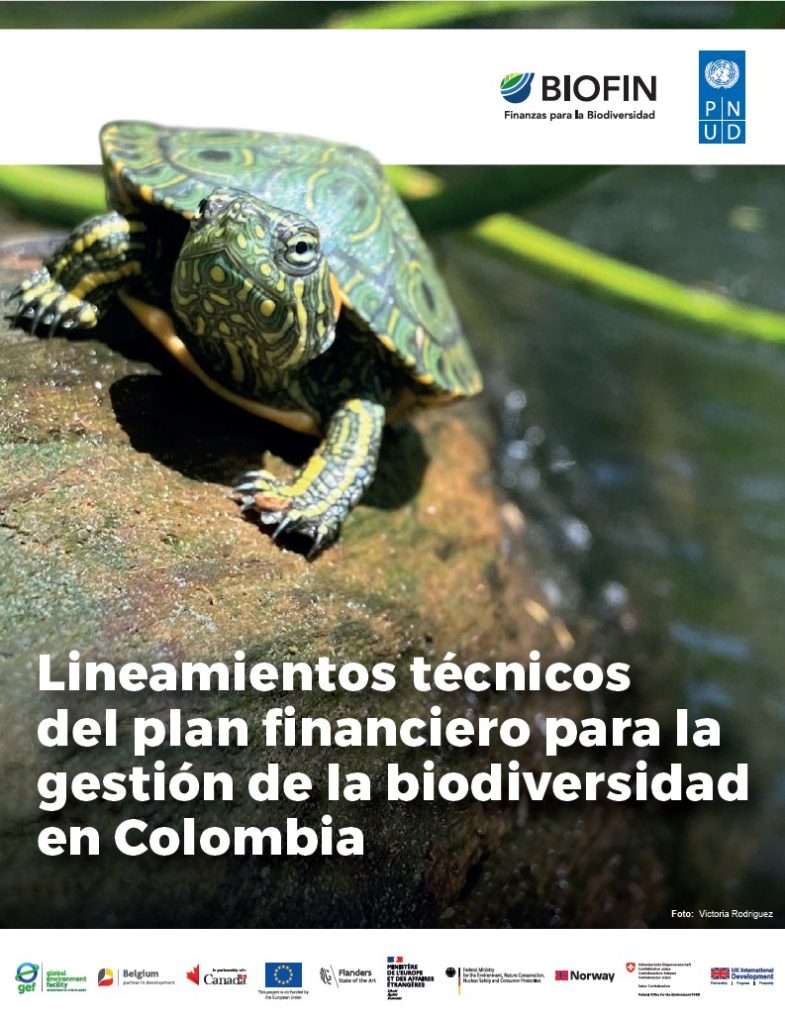
Through the application of the BIOFIN methodology, BIOFIN in Colombia has been developing financial mechanisms that identify opportunities and challenges for mobilizing resources to reduce the biodiversity finance gap, both at the national and subnational levels.
Territorial strategies for biodiversity financing.
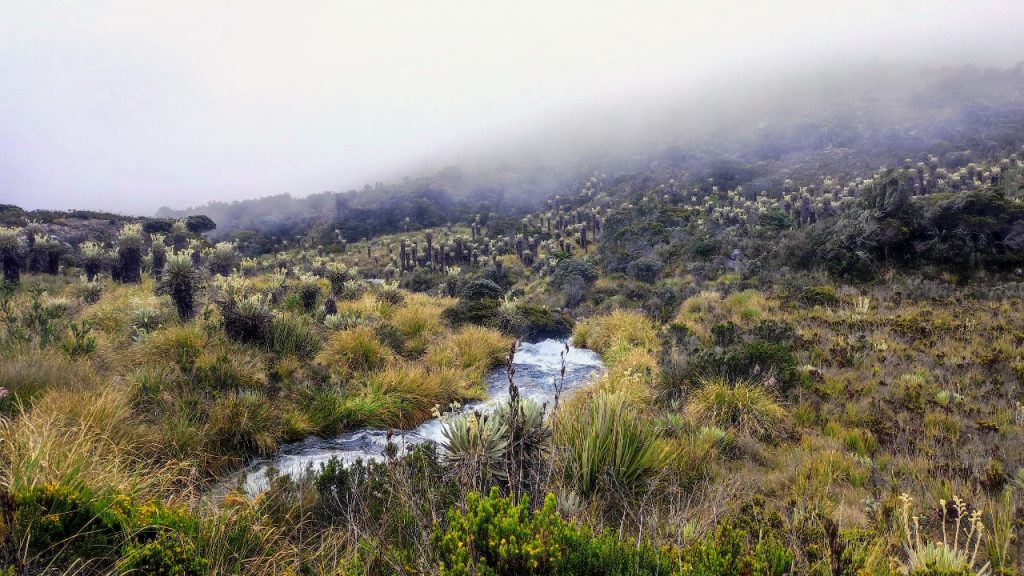
Colombia has prioritized the implementation of the UNDP BIOFIN methodology at the subnational level, focusing on three strategic ecosystems: wetlands, páramos, and protected areas. Two of these ecosystems, the La Mojana region and the páramos of Santurbán, Pisba, and Sumapaz, are recognized as part of the 13 ecoregions prioritized by the National Development Plan 2022–2026, “Colombia: Power of Life.”
Through the application of the BIOFIN methodology, BIOFIN Colombia has been developing financial strategies to mobilize or redirect financial resources within territorial strategies to address biodiversity financing needs and reduce the biodiversity finance gap.”
Resource Mobilization:
BIOFIN has successfully mobilized USD 14.2 million and catalyzed USD 547 million to address the biodiversity finance gap through six financial solutions and two main strategies. These efforts contribute to strengthening the enabling environment for biodiversity finance in Colombia.
Private Sector Alignment:
Collaboration with the National Association of Industrialists of Colombia (ANDI) has facilitated the implementation of the Taskforce on Nature-related Financial Disclosures (TNFD) framework in Colombia. The initiative has also identified opportunities to mobilize private-sector resources through work for taxes, environmental compensation mechanisms, habitat banks, and biodiversity credits, contributing to the achievement of Global Biodiversity Framework (GBF) Targets 15 and 19.
Innovation in Financial Products:
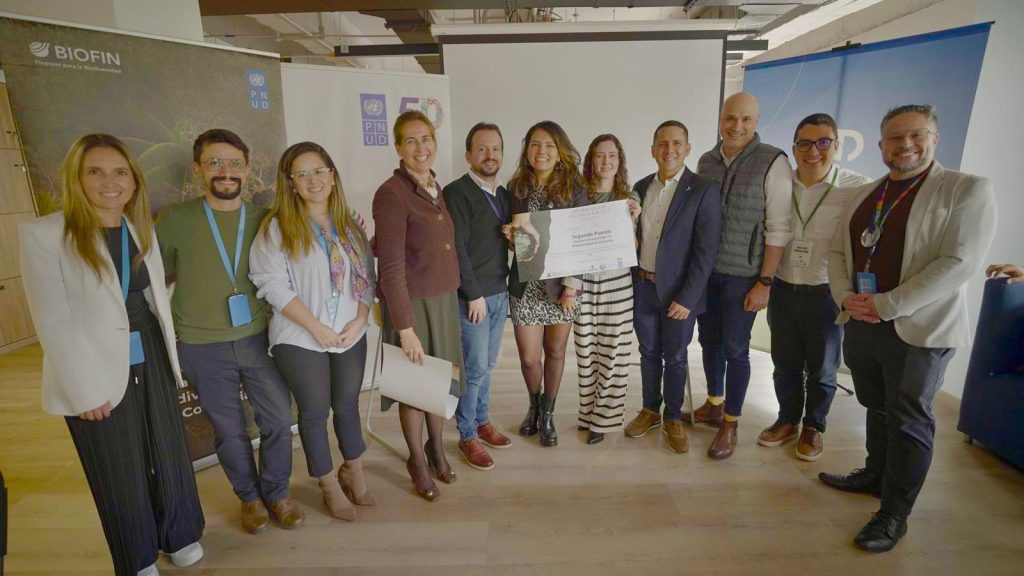
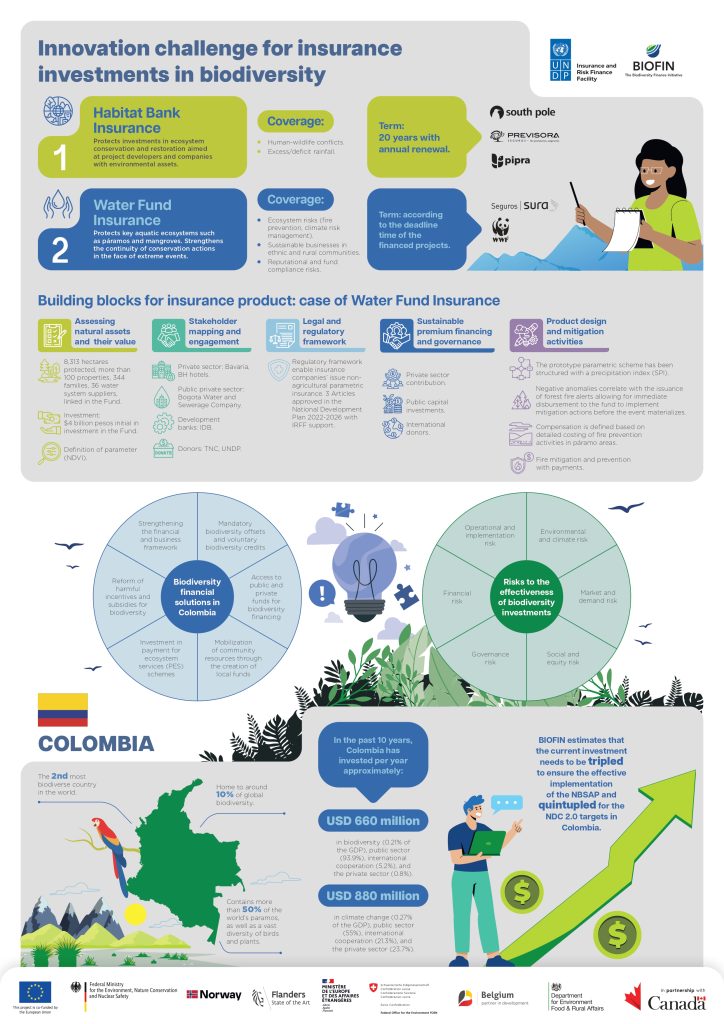
BIOFIN launched its first innovation challenge to design insurance products that protect investments in biodiversity conservation. Developed in partnership with the Federation of Colombian Insurers (Fasecolda) and the Insurance and Risk Finance Facility (IRFF), the initiative focuses on investments aimed at conserving páramo and water ecosystems and protecting umbrella species such as the Andean Bear.
Financial Needs Assessment:
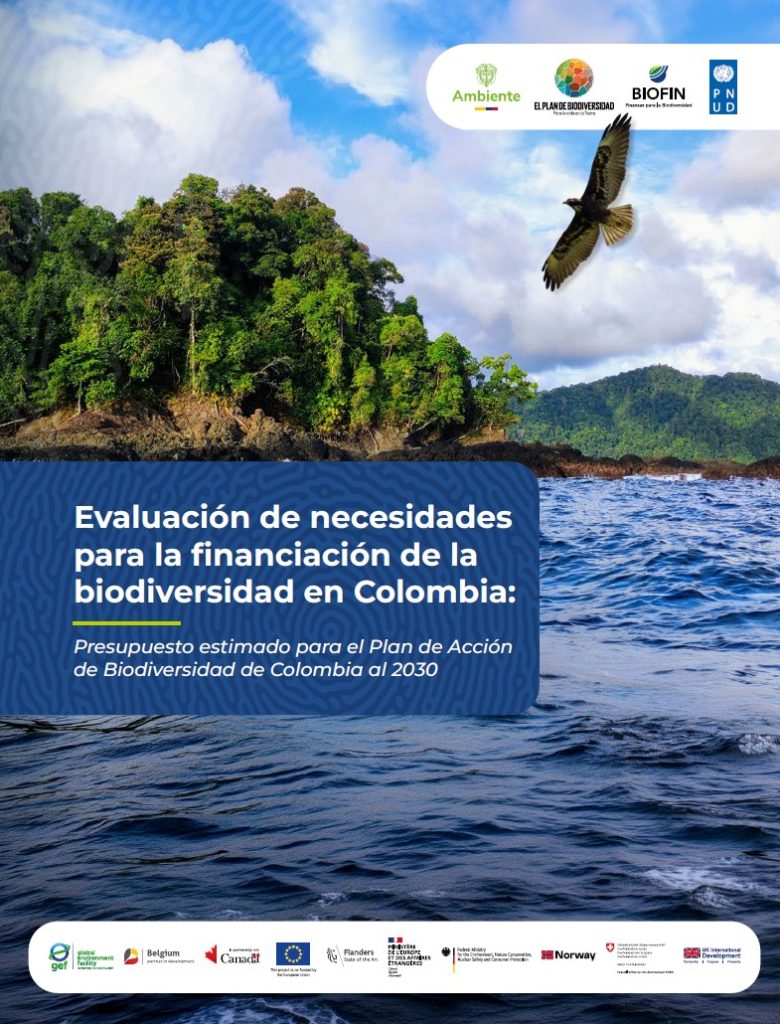
BIOFIN has been providing technical support to estimate Colombia’s biodiversity financing gap and assess the resources required to meet the country’s commitments by 2030. The analysis estimates a financing gap of 82%, highlighting the need for the national government to mobilize and catalyze additional resources equivalent to four to five times the current level of annual biodiversity spending in order to meet the 2030 commitments.