By Eva Bortolotti and Rejoyce Shozi
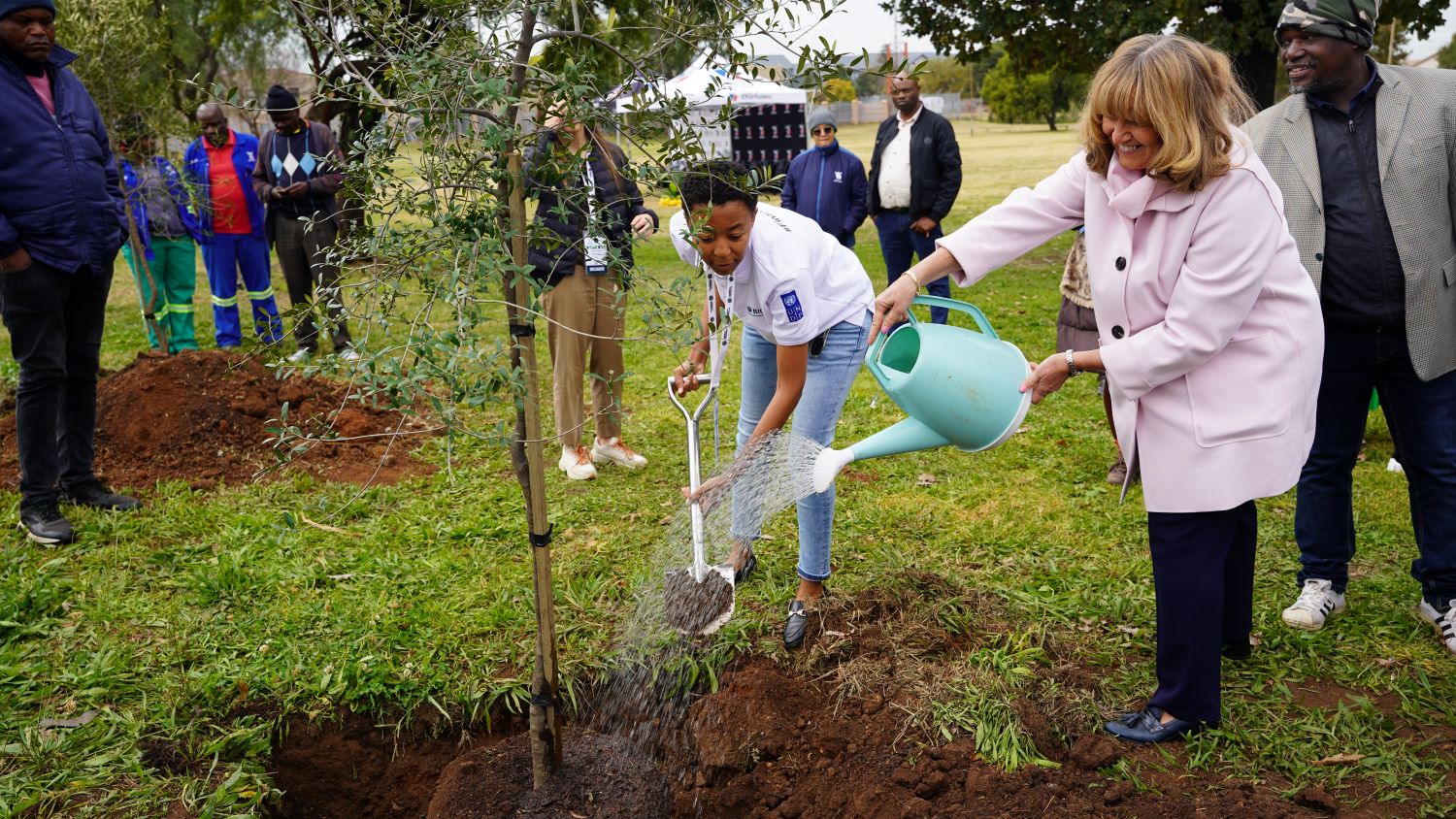
On 22 May 2026, South Africa hosts the International Day for Biological Diversity under the theme “Acting Locally for Global Impact.” The message could not be more relevant: protecting nature starts with local action: in communities, landscapes, and ecosystems where people and biodiversity are deeply connected.
As stated during the event by Ms. Astrid Schomaker, Executive Secretary of the Secretariat of the Convention on Biological Diversity (CBD), “Protecting biodiversity is about protecting nature, livelihoods, well-being, food security, and the impacts of climate change. The International Day for Biological Diversity is your day: it’s everyone’s day”.
As one of the world’s most biodiverse countries, South Africa’s unique ecosystems, including our wetlands, coastlines, and marine environments, support both extraordinary wildlife and millions of livelihoods. From rural communities managing natural resources to protected areas supporting tourism and jobs, biodiversity is not only an environmental asset - it is part of the country’s social and economic fabric.
At the center of this effort is South Africa’s revised National Biodiversity Strategy and Action Plan (NBSAP) for 2026–2036, currently being developed through a whole-of-society approach involving government, local communities, civil societies, businesses, and development partners.

Local action, shared responsibility
Ahead of the global Biodiversity Day event, stakeholders gathered at the NBSAP National Consultative Conference to align around South Africa’s biodiversity priorities and implementation roadmap.
The consultations highlighted an important principle: biodiversity goals can only succeed when local actors are part of the solution. Communities living closest to nature are often the first stewards of ecosystems and among the most vulnerable to biodiversity loss and climate impacts. Ensuring they are included in planning, financing, and implementation is essential for long-term success and building resilience.
UNDP supported consultations on South Africa’s new Biodiversity Finance Plan (BFP), alongside partners including the Department of Forestry, Fisheries and the Environment (DFFE), South African National Biodiversity Institute (SANBI), SANParks, iSimangaliso and Wetland Park Authority. These discussions built on earlier engagements held in Cape Town and Pretoria under the Global Biodiversity Framework (GBF) Early Action Support programme.

Photo: Delegates, including governments, communities, and development partners, attending the NBSAP consultations ahead of the International Day for Biological Diversity
Rethinking the role of finance in biodiversity
Importantly, the biodiversity finance agenda is also helping bring new actors and partnerships into the biodiversity space. Institutions such as the Development Bank of Southern Africa (DBSA), traditionally focused on broader development financing, are increasingly engaging in nature-related investments and solutions. This reflects a growing recognition that biodiversity underpins economic resilience, water security, climate adaptation, and sustainable development.
Through the Biodiversity Finance Initiative (BIOFIN), UNDP helps countries translate biodiversity commitments under the NBSAP into practical financial solutions. In South Africa, the new Biodiversity Finance Plan builds on the country’s first plan, adopted in 2018, and uses the BIOFIN methodology to assess finance needs, identify funding gaps, and design realistic solutions. In South Africa, initial findings show that while the policy and institutional framework is strong, current funding remains insufficient to meet growing needs. Inflation has also reduced the real value of available resources, widening the investment gap further.
The draft Biodiversity Finance Plan proposes tools such as blended finance, thematic bonds, conservation trust funds, and biodiversity budget tagging to help mobilize new investment for nature to close the biodiversity finance gap. These instruments reflect an important reality: public finance alone will not be enough. Closing the biodiversity finance gap will require stronger incentives, better policy alignment, and greater private sector participation.

Categories
Countries
Archives
- November 2024 (5)
- October 2024 (14)
- September 2024 (6)
- August 2024 (9)
- July 2024 (7)
- June 2024 (3)
- May 2024 (6)
- April 2024 (5)
- March 2024 (3)
- February 2024 (6)