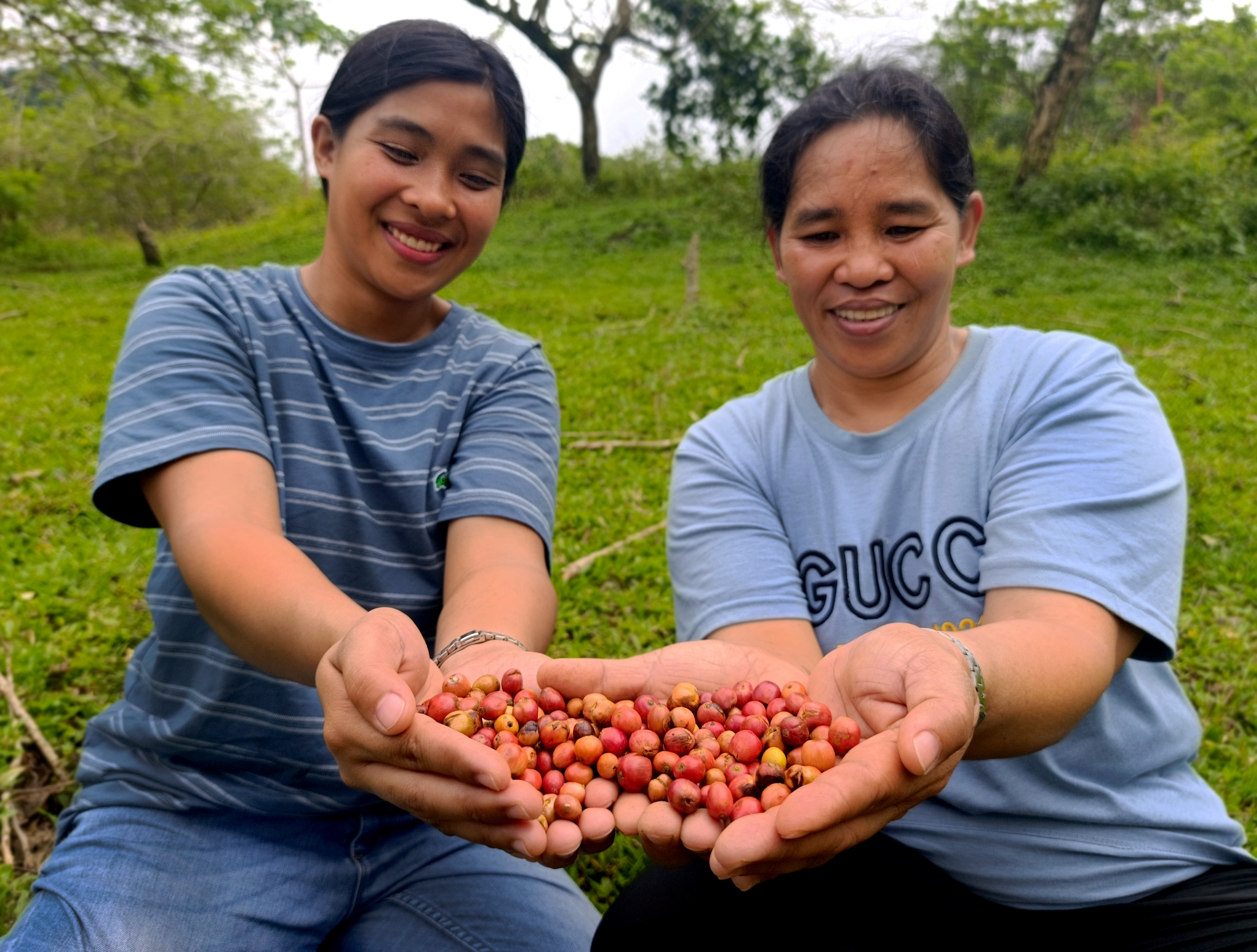
In the misty uplands of Negros Occidental in the Philippines, women farmers carefully harvest ripe coffee cherries. Along the coast, women oyster growers tend to thrive in shellfish beds beneath bamboo rafts.
Though separated by landscape, these communities share a common thread: they are demonstrating how gender-responsive finance can support both livelihoods and biodiversity conservation.
At the center of this transformation is an often-overlooked financing mechanism, the Philippines’ Gender and Development (GAD) budget.
Unlocking an Untapped Source of Finance
Under national law, all government agencies in the Philippines are required to allocate at least 5 percent of their annual budgets to Gender and Development (GAD). In Negros Occidental alone, this represents approximately PHP 340 million in 2026.
Yet despite its scale, GAD funding has historically remained underutilized for environmental objectives.
Through collaboration between local government units (LGUs), the Department of Environment and Natural Resources (DENR), and UNDP’s Biodiversity Finance Initiative (BIOFIN), this is beginning to change.
“Stewarding our natural resources requires substantial investments. GAD is a largely untapped resource for LGUs to promote both gender equity and biodiversity conservation,” explains UNDP-BIOFIN Philippines Project Manager Anabelle Plantilla. “LGUs across the country can use GAD to fund local projects that help women play greater roles in sustainable upland farming, fishing, and managing our vital ecosystems. GAD is an entry point to ensure that projects are climate-resilient, biodiversity-friendly, and gender equal.”
GAD is now positioned as a strategic entry point to align gender equality with biodiversity finance, enabling investments in sustainable livelihoods that benefit both people and nature.
Women Leading Sustainable Coffee Farming
High in the uplands of Sitio Tambara, the Tambara Forest Settlers Association, a women-led organization, has built a thriving model of sustainable agriculture.
With 14 women and eight men, the group cultivates coffee, cacao, cinnamon, and fruit-bearing trees while protecting the surrounding forest ecosystem.

All-weather Dryer. Rain or shine, coffee cherries can be dried using simple devices like this plastic-covered all-weather coffee dryer. The cherries will eventually be processed, roasted and ground into aromatic, caffeine-rich coffee powder. Photo: Gregg Yan
Their approach combines traditional knowledge with sustainable practices:
- selective harvesting of ripe coffee cherries
- natural processing and local roasting
- diversification into high-value crops
The result is a locally produced fine Robusta coffee, generating income while maintaining ecosystem integrity.
Beyond livelihoods, the benefits extend to nature. Tree-based farming systems help stabilize soils, prevent landslides, and provide habitats for bird species, transforming coffee farms into emerging ecotourism destinations.
“The women of the Tambara Forest Settlers Association nurture hundreds of coffee bushes and other trees that provide not just a steady income stream for their families,” notes Luisa Tutor of the Negros Occidental Provincial Management Office (PEMO). “Trees also help stabilize soil in upland areas, preventing landslides and floods, while providing food and habitats for many bird species. This is why their coffee plantations are also ecotourism destinations for birdwatchers.”
Women like Ronalyn Dela Vega, once a retail worker, are now entrepreneurs, selling sustainably produced goods and reshaping local economies.

Ronalyn Dela Vega, Tambara Forest Settlers Association Chair, shows off Kaningag or wild Cinnamon. “This is an endemic tree. Its leaves can be used for medicine, while the bark can be dried and ground up for spices. Our men gather wildlings from the forest, which we store and nurture at our Kaningag nursery.” Photo: Gregg Yan
Oyster Farming: Livelihoods that Restore Ecosystems
From mountains to coast, another women-led initiative is thriving in San Enrique.
The Luguay Talaba Growers Association, composed largely of women, has been cultivating oysters for generations. Oyster farming in the Philippines started over a century ago and it all began here in Negros Occidental. In 1921, the first Pinoy oyster farm sprouted up in Hinigaran. Since then, the country has been producing over 50,000 metric tonnes of oysters annually, valued at over PHP1 billion.

The world is her oyster. Juvy Guiñabo Jamaybay, chairperson of the Luguay Talaba Growers Association, shows off two heavy and hefty oyster bundles. A mesh sack brimming with oysters sells for less than PHP500, the price of just a dozen oysters in Metro Manila. Photo: Gregg Yan
Oyster farming not only supports household incomes, but it also delivers important environmental benefits.
All oysters are ‘filter-feeders’ that eat free-floating plankton and other suspended particles. Adult oysters can filter around five liters of water every hour, cleaning water while simultaneously absorbing both nitrogen and carbon dioxide to slow down climate change. Their habitats—oyster reefs—are resilient ecosystems that help maintain coastal health.

Filter Feeders. Although not as beautiful or celebrated as our coral reefs, oysters can form their own reefs called oyster beds. Oyster beds also shelter loads of biodiversity, are climate-resilient and can filter and clean more water than a coral reef. Photo: Gregg Yan
In Negros Occidental, these ecosystems form part of a wider wetland conservation area and support biodiversity, including migratory shorebirds.
“Local women and men make extra income as bird guides, with Pinoy and foreign visitors partaking of local produce like oysters and fruits whenever they visit,” adds Lisa Paguntalan-Marte, Executive Director of the Philippines Biodiversity Conservation Foundation Incorporated (PBCFI).
The integration of sustainable aquaculture with ecotourism, such as birdwatching and local food experiences, creates diversified income streams for communities, particularly for women.

RAMSAR Site. The Luguay Talaba Growers Association cultures oysters around the Negros Occidental Coastal Wetlands Conservation Area (NOCWA), a RAMSAR site and renowned haven for migratory and resident birds. Many of the association’s members also act as bird guides, helping visitors spot and photograph birds amidst the area’s thick mangrove forests. Photo: Gregg Yan
From Policy to Practice: BIOFIN’s Role
To unlock the potential of GAD financing, BIOFIN is working with national and local partners to mainstream gender and biodiversity into planning and budgeting processes.
In early 2026, BIOFIN supported capacity-building efforts for over 300 officials across 32 local government units, equipping them to integrate biodiversity considerations into GAD-funded programmes.
This work contributes to the implementation of the Philippine Biodiversity Strategy and Action Plan (PBSAP), the country’s roadmap for conserving biodiversity.
Globally, BIOFIN supports countries in closing the biodiversity finance gap by identifying, combining, and mobilizing diverse sources of funding. The GAD budget in the Philippines demonstrates how existing public finance can be repurposed to deliver multiple benefits.

Training for officials to integrate biodiversity considerations into GAD-funded programmes. Photo: UNDP Philippines
A Model for Inclusive Biodiversity Finance
The experiences from Negros Occidental highlight a powerful lesson:
Biodiversity finance does not always require new funding, but it often requires smarter use of existing resources.
“Many sustainable livelihoods like coffee growing and oyster farming can directly be linked to conservation, which works best when both women and men make decisions and share the responsibilities and benefits of natural resource management,” concludes Jacqueline Bacal, gender lead for UNDP-BIOFIN. “This Women’s Month, let’s enhance the role of women in conservation by learning to tap the GAD budget to support lady-led projects.”
By aligning gender budgets with environmental objectives, the Philippines is advancing a model that is:
- inclusive, by empowering women as leaders and decision-makers
- sustainable, by linking livelihoods to ecosystem health
- scalable, with potential for replication across regions and sectors
From coffee farms in the uplands to oyster beds along the coast, women are at the forefront of this transformation—proving that investing in gender equality can also be an investment in nature.
Source: Daily Guardian
Categories
Archives
- April 2026 (12)
- March 2026 (7)
- February 2026 (3)
- January 2026 (3)
- December 2025 (2)
- November 2025 (5)
- October 2025 (5)
- September 2025 (2)
- August 2025 (10)
- July 2025 (9)