Anabelle Plantilla, Programme Manager, BIOFIN Philippines, and Sheena Barrameda, Technical Officer, BIOFIN Philippines
High in the misty uplands of Negros Occidental, women farmers carefully harvest coffee grown under forest canopies. Along the coast, women oyster growers tend to bamboo rafts, cultivating shellfish that help clean surrounding waters.
These stories reflect a broader shift taking place across the Philippines: public finance is being used more strategically to support both people and nature.
At the center of this transformation is the Gender and Development (GAD) budget, an existing financing mechanism that is increasingly being leveraged to promote women’s empowerment, sustainable livelihoods, and biodiversity conservation at the same time.
In 1995, the Gender and Development (GAD) budget policy was institutionalized through the General Appropriations Act, mandating all departments, bureaus, offices, and agencies in the Philippines to allocate at least 5% of their total budgets to gender and development initiatives.
To optimize the use of GAD funding, UNDP’s Biodiversity Finance Initiative (BIOFIN), in collaboration with the Provincial Environment Management Office (PEMO), conducted four training workshops to equip local government units in Negros Occidental with the knowledge and skills needed to integrate gender equality and biodiversity into local development and sectoral plans. These efforts aim to ensure that policies and programmes are gender-responsive, biodiversity-positive, financially viable, and climate-resilient.
Participants included representatives from all 32 cities and municipalities in the province, spanning planning, environment, disaster risk management, agriculture, and health office key sectors, where gender and biodiversity can be effectively mainstreamed.
As a result, local government units developed a pipeline of sectoral plans and programmes incorporating both gender and biodiversity perspectives. These proposals are currently under review by the provincial GAD focal point system for possible inclusion in the 2026 budget cycle and are expected to be prioritized in 2027.
In recognition of these efforts, PEMO was named one of the six 2026 GAD Biodiversity Stewards by the Biodiversity Management Bureau of the Department of Environment and Natural Resources (DENR) during its Women’s Forum on 26 March 2026, themed “Igniting Passion, Finding Fulfillment: Inspiring Stories of Women and Men in Biodiversity.”
 Photo: Atty Julie Bedrio (2nd from left) receives the 2026 Biodiversity Steward Award on behalf of the Provincial Environment Management Office of Negros Occidental province
Strengthening Gender Governance for Nature
GAD Biodiversity Stewards, regardless of age, sex, gender, socio-economic status, race, or physical ability, promote GAD as a strategic approach to conserving the environment, protecting natural resources, addressing climate change, and enhancing community well-being while upholding human rights.
Through the strategic use of the province’s GAD budget, PEMO has strengthened gender-responsive governance that bridges women’s empowerment with biodiversity conservation, climate resilience, and inclusive livelihood development. Their work is grounded in the understanding that communities are more resilient and ecosystems better protected when women are recognized as leaders, resource managers, and decision-makers.
“A strong point in the province is governance, when policies are strong, people are engaged, and everyone shares benefits. Gender responsiveness should not be an added layer for compliance; it cuts across everything we do and is embedded in all programmes and projects,” said PEMO Head, Atty. Julie Bedrio.
The provincial GAD programme operates through a wide network of partners, including municipal GAD focal points, department heads, NGOs, and people’s organizations. Through this network, the provincial government supports technical training and empowerment initiatives in both upland and coastal communities, ensuring the participation of women farmers, fisherfolk, Indigenous Peoples (IPs), and rural youth.
In 2025, Negros Occidental allocated approximately PHP 300 million (US$5 million - US$ 1 = Php 60 ) to its GAD budget. A significant share supported health services and equipment, as well as capacity-building initiatives for livelihood development.
Supporting Women-Led Livelihoods
PEMO has effectively leveraged the GAD budget to support women-led, nature-positive enterprises across the province.
In the uplands of Sitio Tambara, the Tambara Forest Settlers Association, led by women, produces coffee and cultivates fruit-bearing trees through sustainable agroforestry practices. Women in the association are not only farmers but also entrepreneurs—processing, marketing, and selling their products while contributing to forest conservation and soil stability.
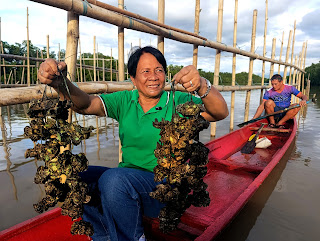
Along the coast in San Enrique, the Luguay Talaba (Oyster) Growers Association, also with strong participation of women, has improved household incomes through oyster farming. This livelihood not only provides economic benefits but also contributes to ecosystem health, as oysters naturally filter water and support coastal biodiversity.

These examples highlight how GAD funding can translate into tangible, on-the-ground impact, linking women’s economic empowerment with sustainable natural resource management.
PEMO’s work has also strengthened women’s confidence and leadership in governance structures. Women are increasingly taking on active roles within people’s organizations and decision-making processes, while communities adopt practices that reduce pressure on forests and marine ecosystems.
Categories
Countries
Archives
- November 2024 (5)
- October 2024 (14)
- September 2024 (6)
- August 2024 (9)
- July 2024 (7)
- June 2024 (3)
- May 2024 (6)
- April 2024 (5)
- March 2024 (3)
- February 2024 (6)